
The Amazing Howard Hughes 1977

Directed by

Ken Scott
Made by

Roger Gimbel Productions
Where to Watch The Amazing Howard Hughes
See current US streaming, rental, and purchase options for The Amazing Howard Hughes (1977) via JustWatch.

Fawesome
HD
Hoopla
SD
Amazon Video
SD
Fandango At Home
HD Streaming availability powered by 
The Amazing Howard Hughes Plot Summary
Read the complete plot summary and ending explained for The Amazing Howard Hughes (1977). From turning points to emotional moments, uncover what really happened and why it matters.
Howard Hughes, Tommy Lee Jones, emerges on screen as a figure of dazzling talent and growing isolation. The film traces a life built on relentless pursuit—first a wealthy heir who could afford ambitious bets, then a Hollywood mover who reshaped the era’s cinema with a knack for pushing boundaries. He shows a genius for spotting potential and a willingness to bankroll projects that would become enduring milestones, from the thrill of the sky to the allure of the screen. The narrative follows his evolution from an energetic producer who could assemble big-scale productions to a man whose insistence on perfection borders on compulsion, colorfully illustrating how brilliance can coexist with fragility.
As a producer, Hughes helps launch some of the era’s most memorable films, weaving a path through early aviation-infused cinema and pushing the limits of what could be achieved on screen. The story highlights his hands-on approach to filmmaking, where every frame, every crew decision, and every budgetary choice reflects his uncompromising standards. The result is a portrait of a man who could see a shot or a flight in his head and demand it be realized, no matter the cost. Alongside the film world’s triumphs, the camera captures the silhouette of his aviation obsession, a second, equally consuming dream that would shape his company’s future and his own legend. He becomes a driving force at Hughes Aircraft Company, pursuing design innovations and ventures that turn him into a pioneer in the air as well as on the screen.
The personal dimension of his life is sketched through the famous women who appear in his orbit. Katharine Hepburn, Tovah Feldshuh, and Jane Russell, Marla Carlis, among others, are presented as vivid figures who intersect with Hughes’s public ambitions and private obsessions. The film also anchors these relationships with the era’s broader cultural touchstones, including the notable connection to Jean Harlow, Susan Buckner, offering a glimpse into how romance and fame braided together in Hughes’s world. The result is a layered tapestry that shows how his personal life could be as dramatic and carefully choreographed as his films and flights.
A turning point arrives in the mid-1940s with the XF-11 test flight. The sequence is depicted with gravity and precision: a high-stakes experiment that ends in a catastrophic crash, leaving Hughes with a concussion and consequential brain damage. The accident sets in motion a slow and difficult transformation, as his health and mental state change in ways that ripple through every subsequent decision. The portrayal maintains a steady, neutral tone, detailing how the injury compounds an already intricate personality—shaping a life that grows increasingly reclusive as years pass.
The film’s mood shifts as Hughes retreats from the public eye, spending long days in isolation while continuing to chase ambitious projects. The narrative does not sensationalize his decline; instead, it presents a careful, humanized arc that shows how a man who once moved mountains of film stock and metal can become haunted by memory, fear, and the need to maintain control. Even in withdrawal, the instinct to push forward persists, whether in refining a private air program, chasing a new invention, or revisiting old ideas with tenacious stubbornness. The result is a portrait that remains faithful to the complexities of a man who navigated immense success and deep personal struggle in parallel.
In the end, the story returns to the image of a private traveler, someone who could command the most daring aircraft and the most ambitious film projects, yet could not fully escape the consequences of his own eccentric, meticulous nature. Hughes dies while aboard a private flight to Houston, closing a life that the film has chronicled with nuance, empathy, and a steady eye for detail. What lingers is not only a legend of wealth and invention but a portrait of a man whose relentless pursuit, flaws, and triumphs left an indelible mark on both Hollywood and aviation.
The Amazing Howard Hughes Timeline
Follow the complete movie timeline of The Amazing Howard Hughes (1977) with every major event in chronological order. Great for understanding complex plots and story progression.
Wealth, isolation and early obsession
Howard Hughes grows up wealthy and sheltered, developing a restless fixation on precision and control. The combination of privilege and isolation helps shape his later approach to filmmaking and engineering, where obsession with perfection becomes a driving force. These traits set the pattern for his public persona as a meticulous, uncompromising creator.
Hollywood producer and Hell's Angels (1930)
Hughes uses his wealth to finance ambitious film projects, breaking into Hollywood as a producer. Hell's Angels (1930) exemplifies his appetite for spectacle and scale, pushing the limits of production. The project establishes his reputation as a relentless, money-driven force behind the camera.
Scarface (1932) and new risk-taking
Hughes continues to fund and influence major productions, including Scarface (1932). He demands technical innovation and brash, boundary-pushing storytelling, often clashing with studios. His willingness to chase controversy fuels his notoriety in Hollywood.
The Outlaw production and release challenges (1943-1946)
The Outlaw becomes a focal point of his film ambitions, marred by censorship battles and public intrigue. Hughes bankrolls the project while navigating controversy surrounding its stars. The film's troubled release window stretches from 1943 into 1946, underscoring his risk-taking approach.
Aviator passion and the Hughes Aircraft Company
Beyond films, Hughes pursues aviation with relentless energy, taking leadership at Hughes Aircraft Company. He pushes into aircraft design as a serious industry player, treating aviation like a new frontier for his perfectionist impulses. His venture merges engineering genius with ambitious public attention.
Top-secret flight tests and the H-1 Racer
Hughes pilots or oversees tests of cutting-edge aircraft, pursuing speed and endurance beyond conventional limits. The H-1 Racer and other prototypes become symbols of his obsession with pushing technology. His test program blends secrecy with the culture of daring exploits.
The H-4 Hercules project
Driven by grandiose engineering dreams, he funds the massive H-4 Hercules project, a legendary attempt to build a flying boat on a scale few could imagine. The project embodies his appetite for legacy and spectacle more than immediate profitability. It becomes a hallmark of his public persona as a larger-than-life innovator.
Romantic life: Jean Harlow
Hughes's life intersects with Hollywood stars, including a notable period with Jean Harlow. The relationship reflects his larger-than-life status and the media's fascination with his personal life. It illustrates how his celebrity extended beyond engineering and production.
Romantic life: Ginger Rogers
Another notable association is with Ginger Rogers, illustrating his pattern of high-profile liaisons. These relationships reinforce his image as a powerful, enigmatic figure in Hollywood. The personal life feeds into the public mythos surrounding him.
Romantic life: Katharine Hepburn
The summary mentions Katharine Hepburn as part of his life in the circle of famous women, reflecting his enduring appeal and influence. The connection with Hepburn underscores his ability to attract leading stars and drive film collaborations. It shows how his personal and professional realms intersected.
Romantic life: Jane Russell
Jane Russell's presence in his orbit demonstrates Hughes's lasting impact on Hollywood's leading ladies. The relationship contributes to the mosaic of his public image as both a fearless producer and a mythic, reclusive genius. It also reveals the human side of the man behind the industrial empire.
XF-11 test flight crash and brain injury (1946)
A test flight of the XF-11 ends in a horrific crash, inflicting a concussion and brain damage that alters his cognitive function. The accident accelerates a decline in health, leading to a more reclusive final chapter of his life. The event becomes a turning point that shapes his later years.
Final years as a recluse
From his injury onward, Hughes withdraws from public life and becomes increasingly isolated. He spends his remaining years entangled in health problems, eccentricities, and private ventures away from the film studios. The narrative portrays his slow slide into seclusion.
Death aboard a private flight to Houston
Hughes dies while aboard a private flight bound for Houston, marking the end of a life defined by spectacle and secrecy. His death closes the chapter on a man who rewrote both aviation and cinema on his own terms. The circumstances emphasize his lifelong preference for privacy and control.
The Amazing Howard Hughes Characters
Explore all characters from The Amazing Howard Hughes (1977). Get detailed profiles with their roles, arcs, and key relationships explained.
Howard Hughes
Howard Hughes is portrayed as a wealthy, isolated figure whose genius for film production and aviation is shadowed by eccentricity and later hypochondria. His relentless pursuit of perfection drives his most ambitious projects while narrowing his social world. As the story follows his ascent in Hollywood and aviation, it also hints at the personal costs of his obsessions.
Jean Harlow
Jean Harlow is depicted as one of Hughes's early iconic leading ladies, symbolizing the glamorous relationships that marked his personal life and public image. Her star power embodies the allure and turbulence of Hughes's romances with Hollywood's elite.
Katharine Hepburn
Katharine Hepburn appears as one of Hughes's relationships, illustrating his draw to strong, intelligent women. The dynamic hints at a partnership of intellect and fame within his whirlwind life in film and aviation.
Jane Russell
Jane Russell is shown as another star in Hughes's orbit, representing the glamour and star power that surrounded his productions and personal life. Her presence highlights the blend of cinema glamour with Hughes's intense personal world.
The Amazing Howard Hughes Settings
Learn where and when The Amazing Howard Hughes (1977) takes place. Explore the film’s settings, era, and how they shape the narrative.
Time period
1930s–1940s
The timeline spans Hughes's rise in the 1930s as a film producer and aviation pioneer through the mid-1940s, including the XF-11 crash in 1946. It hints at his later, reclusive years as age and brain damage take a toll. The period captures the peak of his cinematic influence and the beginning of his isolation.
Location
Hollywood, California, Houston, Texas
Set in Hollywood's film industry milieu, the story centers on Hughes's influence over major productions. The action also follows his later life, including a private flight that ends in Houston, marking a turning point toward his isolation. The setting contrasts glamorous studio life with the high-stakes world of aviation that defined Hughes.
The Amazing Howard Hughes Themes
Discover the main themes in The Amazing Howard Hughes (1977). Analyze the deeper meanings, emotional layers, and social commentary behind the film.
🧠
Obsession
The film portrays Hughes as a relentless perfectionist whose fixation drives both his cinematic and aviation endeavors. His pursuits shape every project, from lavish productions to secretive aircraft experiments. This obsession isolates him from others and blurs the line between genius and madness. The theme examines how extreme focus can fuel breakthrough as well as personal decline.
✈️
Innovation
Hughes's ventures push boundaries in both film and flight, turning each field into a proving ground for risk-taking. The XF-11 incident demonstrates how ambition can yield both technological leaps and tragedy. The story frames breakthroughs as inseparable from sacrifice and control, showing the costs of pursuing unprecedented feats.
🎬
Fame
The narrative intertwines Hughes's public image with his romantic liaisons and professional reach, creating a myth around the man. His associations with legendary stars reflect Hollywood's power to elevate and complicate a private life. The film questions whether fame offers influence or serves as a trap that accelerates his isolation.

Coming soon on iOS and Android
The Plot Explained Mobile App
From blockbusters to hidden gems — dive into movie stories anytime, anywhere. Save your favorites, discover plots faster, and never miss a twist again.
Sign up to be the first to know when we launch. Your email stays private — always.
Explore the mobile appThe Amazing Howard Hughes Spoiler-Free Summary
Discover the spoiler-free summary of The Amazing Howard Hughes (1977). Get a concise overview without any spoilers.
In an era when the sky seemed limitless and the silver screen demanded ever‑greater spectacle, the film opens on the larger‑than‑life figure of Howard Hughes, a charismatic heir whose restless ambition drives both his business empire and his artistic ventures. The narrative paints a world where aviation and Hollywood intersect, each feeding the other’s hunger for invention and grandeur. From the humming assembly lines of aircraft factories to the bustling backlots of Hollywood studios, the story immerses the viewer in a vibrant, fast‑moving tapestry of 1920s‑and‑30s America, where risk‑taking is both a currency and a calling card.
Surrounding Hughes is a cast of iconic personalities who both challenge and cherish his vision. The luminous presence of Katharine Hepburn and the dazzling allure of Jane Russell hint at the magnetic pull his world exerts on the era’s most celebrated talent, while fleeting glimpses of the legendary Jean Harlow underscore the intertwining of romance, fame, and ambition. These relationships are rendered with a tone that balances admiration with a subtle undercurrent of tension, suggesting that the man’s relentless pursuit of perfection can be both a source of inspiration and an unspoken burden.
The film’s mood swings between the exhilaration of daring feats—whether a daring flight across the desert or the audacious production of a cinematic epic—and the quieter moments when the towering ambitions begin to cast long shadows. A measured, almost contemplative narration keeps the focus on Hughes internal landscape, hinting at the complex dance between his visionary genius and the growing need for control. The result is an evocative portrait that invites curiosity about how a man who could command the heavens and the movie reel might grapple with the very forces he set in motion.
Movies with Similar Twists and Themes
Uncover films that echo the narrative beats, emotional arcs, or dramatic twists of the one you're exploring. These recommendations are handpicked based on story depth, thematic resonance, and spoiler-worthy moments — perfect for fans who crave more of the same intrigue.
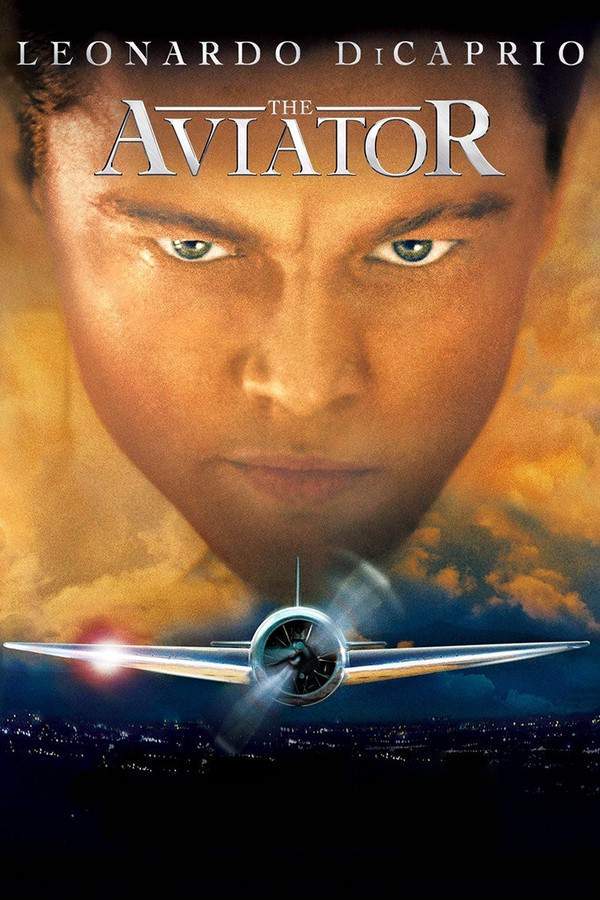


Featured on this page

What's After the Movie?
Not sure whether to stay after the credits? Find out!
Check out our other apps:

SAT Sphere
Build confidence for the Digital SAT.

Mori Atlas
Discover wild places worth protecting.

Luntero
Search smarter for a home in Amsterdam.

Plot Explained
Unravel movie endings and hidden clues.

Pokechamp
Dive into Pokémon data and battle logic.

Driving Theory
Get ready for your European theory test.

Movie Dust
Plan your next cinema trip with ease.

Musemap
Find art and culture as you travel.

Selkobase
Compare credentials before committing.

Local Manual
Turn an unfamiliar country into practical next steps.

Lernavi
Compare school systems before your next move.

GymRoam
Find a workout stop wherever your plans take you.
Explore Our Movie Platform
New Movie Releases (2026)
Famous Movie Actors
Top Film Production Studios
Movie Plot Summaries & Endings
Major Movie Awards & Winners
Best Concert Films & Music Documentaries
Movie Collections and Curated Lists
© 2026 What's After the Movie. All rights reserved.
Privacy Policy