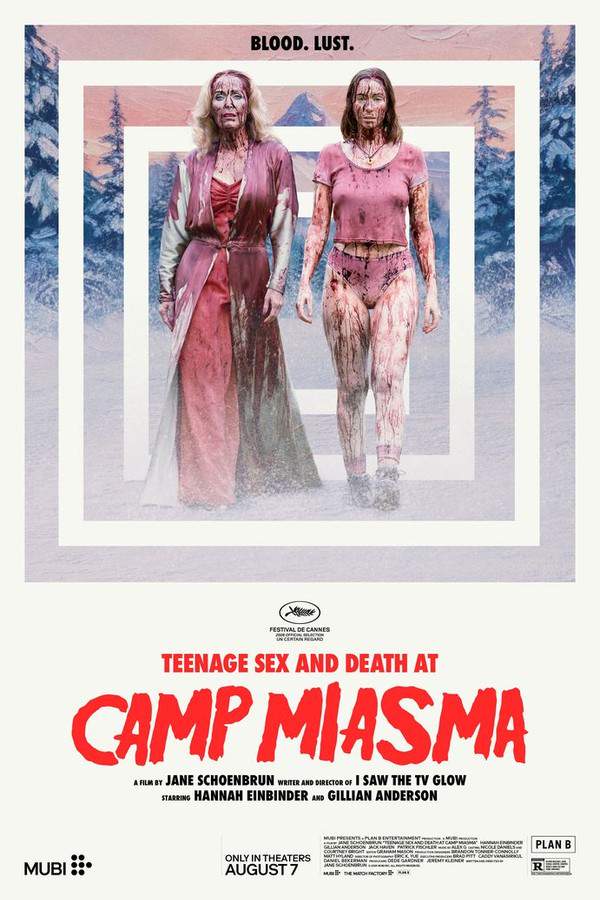
Teenage Sex and Death at Camp Miasma 2026

Directed by

Jane Schoenbrun
Made by

MUBI
Where to Watch Teenage Sex and Death at Camp Miasma
See current US streaming, rental, and purchase options for Teenage Sex and Death at Camp Miasma (2026) via JustWatch.

Amazon Video
4K
Apple TV Store
4K
Fandango At Home
4K Streaming availability powered by 
Teenage Sex and Death at Camp Miasma Plot Summary
Read the complete plot summary and ending explained for Teenage Sex and Death at Camp Miasma (2026). From turning points to emotional moments, uncover what really happened and why it matters.
Camp Miasma is a long-running slasher franchise that began in the 1980s and is known for its recurring antagonist, “Little Death.” This malevolent spirit is the ghost of a child who was raised by parents as both a boy and girl. After being brutally drowned by a group of campers filled with hatred, Little Death has made it a point to rise periodically from the lake bordering Camp Miasma, wielding a spear and taking out anyone unfortunate enough to cross his path. While the initial installments of the series garnered significant success, the franchise has since been bogged down by a series of low-quality sequels that failed to resonate with audiences, leaving it in a state of stagnation.
In a fresh attempt to revive the franchise, queer filmmaker Kris Williams is brought on board to direct a reboot of Camp Miasma. Recognizing that her role involves softening the transphobic narrative that has plagued the original series, Kris feels a passionate connection to the films due to her nostalgic childhood memories of watching them. Her focus centers specifically on casting Billy Presley, an actress who had previously retired after her memorable role as the original film’s “final girl.” Kris makes the journey to the picturesque landscapes of the Pacific Northwest to meet Billy, only to discover that she resides on the same desolate grounds where the films were shot. Billy is portrayed as warm, insightful, and deeply fascinated by Little Death. This connection allows Kris to confide in her about her frustrations related to her polyamorous relationship, while Billy interestingly dismisses Kris’s overly analytical interpretation of the franchise but expresses an eagerness to act once more.
Their relationship begins to unfold as they watch the original Camp Miasma together, with Kris displaying her extensive knowledge of the film and its various filming techniques. However, Billy seems uncomfortable during specific scenes. A particular moment in a sex scene triggers Kris’s memories, but the campgrounds suddenly lose power just as the scene reaches its climax. Later, after returning to Billy’s home, Kris initiates a romantic encounter, only to pause abruptly, candidly sharing her struggles with enjoying sex. In a poignant revelation, Billy discloses her own traumatic past, explaining that she was sexually assaulted during the shooting of the sex scene from the original film. This led her to find pleasure in her imagination, picturing Little Death watching her before drawing near to end her life. Kris admits that her pleasure usually only comes when she envisions herself in the role of a sexualized final girl. Billy encourages Kris to tap into her fantasies, proposing they create a film together.
The following day brings a crucial pitch meeting with studio executives, but instead of presenting a traditional storyline, Kris unveils a mind-bending concept: Little Death actually resides beneath the lake, interpreting the world through the lens of the Camp Miasma movies, and all those involved—including Kris—are characters in one of those films. As she returns to the camp, the season has shifted to summer, and Little Death has resumed his deadly spree. Billy pushes Kris to embrace her destiny as the final girl. In a series of harrowing events, Kris witnesses Little Death kill her partner, her agent, and several studio heads. Ultimately, she finds herself cornered in a cabin with Billy. During their intimate moment, Little Death converges upon them; in a moment of desperation, Kris begs for her life but ultimately embraces her fate. The scene climaxes with an unexpected twist as Little Death spears both Kris and Billy.
In a surreal afterlife under the lake, they come across a VHS tape of a new film titled Teenage Sex and Death at Camp Miasma. The next morning, Kris and Billy awaken amidst the chaos, their bodies still stained with blood. Together, they depart the campgrounds, passing through the aftermath left by Little Death. When they arrive at the original gas station where their journey began, Kris recites lines from a previous Camp Miasma film, reflecting on Little Death’s lingering presence beneath the lake, hinting that he is still waiting to return. The story concludes with Kris and Billy sharing a smile, walking away hand in hand, united by their profound experiences.
Teenage Sex and Death at Camp Miasma Timeline
Follow the complete movie timeline of Teenage Sex and Death at Camp Miasma (2026) with every major event in chronological order. Great for understanding complex plots and story progression.
Franchise Origins
Camp Miasma is established as a slasher franchise in the 1980s, focusing on the ghostly villain known as 'Little Death'. The franchise quickly gains a following due to its chilling premise and haunting atmosphere, setting a cultural backdrop for future horror films.
Little Death's Creation
The backstory of Little Death is revealed, a ghost of a child who was raised as both boy and girl. After being drowned by cruel campers, the spirit rises from the lake to exact revenge on anyone who dares to trespass near Camp Miasma.
Downward Spiral of Sequels
Despite the early success of the original films, the Camp Miasma franchise suffers from a series of low-quality sequels, which leads to dwindling profits and interest. This decline leaves the franchise in a state of limbo, struggling to regain its former glory.
Kris Williams Takes the Helm
Queer filmmaker Kris Williams is hired to reboot Camp Miasma, tasked with modernizing its controversial and transphobic themes. Kris, who has a deep connection to the original films from her childhood, feels both excited and apprehensive about the responsibility of revitalizing the iconic franchise.
Meeting with Billy Presley
Kris travels to the Pacific Northwest to meet Billy Presley, the actress who played the original final girl and has since retired. Discovering that Billy lives on the abandoned campgrounds, Kris forms a connection with her that rekindles a sense of nostalgia and purpose.
Shared Passions
Kris and Billy bond over their shared history with Camp Miasma while watching the original film together. However, amidst their excitement, Billy appears uneasy, highlighting the nuanced emotions tied to their past experiences with the franchise.
Exploring Sexuality
Kris and Billy's intimate moment leads to a revealing conversation about their struggles with sexuality. They share personal stories of trauma and how it has shaped their ability to enjoy intimate relationships, highlighting a deeper connection between their characters and the themes of the films.
Pitch Meeting Gone Awry
During a critical pitch meeting, Kris surprises everyone by presenting a radical interpretation of the Camp Miasma story. She argues that Little Death embodies the collective perception of the characters, creating an artful but controversial premise that challenges norms.
Summer Comes Again
Kris returns to Camp Miasma, where she finds herself in a surreal summer setting. Little Death has unleashed a new wave of terror, and Kris is thrown unexpectedly into a life-and-death struggle that feels both familiar and terrifying.
Chasing the Final Girl
As Little Death begins a killing spree, Kris must step into the role of the final girl she idolized. As she witnesses her loved ones fall to the specter, the chilling reality of her situation becomes stark as she fights for survival against the relentless ghost.
Encounter with Little Death
In a moment of unexpected intimacy, Kris and Billy find themselves face to face with Little Death. As they embrace their fates, Kris experiences a blurring of reality and fantasy, culminating in a powerful, tragic climax as they succumb to their fears.
Resurrection
Miraculously, Kris and Billy revive the next morning, bloodied yet alive. They emerge from the chaos and carnage left by Little Death, symbolizing resilience and a new beginning for the characters in the franchise.
Back to the Start
Returning to the gas station where the original Camp Miasma story began, Kris muses over the film's legacy. She repeats iconic lines from the franchise, acknowledging the lingering presence of Little Death and the impact it has left on their lives.
A Hopeful Future
In a moment of shared hope, Kris and Billy walk hand in hand away from the nightmares of Camp Miasma. Their smiles reflect a collective escape from the shadows of the past and an embrace of possibilities yet to come.
Teenage Sex and Death at Camp Miasma Characters
Explore all characters from Teenage Sex and Death at Camp Miasma (2026). Get detailed profiles with their roles, arcs, and key relationships explained.
Kris Williams
Kris is a queer filmmaker who passionately revisits her childhood love for the Camp Miasma franchise. Driven by a desire to reshape the narrative and infuse it with modern sensibilities, she confronts her own struggles with intimacy and identity. Her connection with Billy propels her into a journey of self-discovery amidst horror.
Billy Presley
Billy is a warm and perceptive actress who retired after the original film's success. Her complicated history with the Camp Miasma franchise and her traumatic experiences during filming shape her character. Obsessed with Little Death, she represents both vulnerability and strength, encouraging Kris to embrace her fantasies and explore her identity.
Teenage Sex and Death at Camp Miasma Settings
Learn where and when Teenage Sex and Death at Camp Miasma (2026) takes place. Explore the film’s settings, era, and how they shape the narrative.
Time period
1980s, Modern Day
The movie spans two time periods: the original Camp Miasma films of the 1980s and the modern-day reboot attempt. The 1980s era is noted for its iconic slasher films, which laid the foundation for the franchise, while the current timeline reflects contemporary sensibilities and the push for inclusivity in storytelling.
Location
Camp Miasma, Pacific Northwest
Camp Miasma is a fictional slasher film setting, known for its dark and eerie atmosphere. Nestled in the Pacific Northwest, it serves as the backdrop for a long-running horror franchise, infusing both nostalgia and terror. The camp's secluded nature makes it an ideal location for the gruesome tales revolving around the infamous Little Death.
Teenage Sex and Death at Camp Miasma Themes
Discover the main themes in Teenage Sex and Death at Camp Miasma (2026). Analyze the deeper meanings, emotional layers, and social commentary behind the film.
🎭
Identity
The film explores themes of identity through the lens of horror and representation. Kris's journey highlights the complexities of her own sexual identity and her connection to the franchise's past. The relationship she forms with Billy represents a reconciling of personal trauma and the reclamation of one's narrative within a historically problematic genre.
🔪
Fear and Survival
Fear and survival are central themes, exemplified by the constant threat of Little Death. The film delves into how characters navigate fear, not just of physical harm, but of confronting their pasts and desires. Kris's transformation into the final girl embodies the struggle to survive both the horror of the slasher and the intricacies of personal trauma.

Coming soon on iOS and Android
The Plot Explained Mobile App
From blockbusters to hidden gems — dive into movie stories anytime, anywhere. Save your favorites, discover plots faster, and never miss a twist again.
Sign up to be the first to know when we launch. Your email stays private — always.
Explore the mobile appTeenage Sex and Death at Camp Miasma Ending Explained
Unravel the ending of Teenage Sex and Death at Camp Miasma (2026) with our detailed explanation. Understand the final scenes, character fates, and unresolved questions.
Kris and Billy’s intimacy in the cabin merges with the imagery of the original Camp Miasma until Little Death kills them both. The apparent slasher conclusion is then destabilized when the final scenes show Kris and Billy alive, while Little Death puts away their video. Elsewhere, Kris and Eric appear blood-soaked but comfortable as they buy snacks at a convenience store after their own violent, ecstatic encounter. These conflicting images do not establish a simple resurrection or reveal that the killer was imaginary; they collapse the boundary between the old movie, the reboot Kris hoped to make, and the experience through which she finally confronts desire.
Kris began by trying to solve the franchise intellectually and to correct its history from a safe critical distance. Her survival with Billy reframes the masked figure whose name also means orgasm: Little Death becomes a passage through fear and self-observation rather than only a punishment for sex. By storing their video, the killer seems to take possession of a new installment even as Kris and Billy escape the victim roles assigned by the older story. The ending’s ambiguity is therefore functional. It refuses to tell viewers which layer is objectively real because Kris’s change comes from entering the flesh-and-fluids world she analyzed, allowing feeling and vulnerability to rewrite the genre from inside it.
Teenage Sex and Death at Camp Miasma Spoiler-Free Summary
Discover the spoiler-free summary of Teenage Sex and Death at Camp Miasma (2026). Get a concise overview without any spoilers.
Camp Miasma franchise has carved a permanent place in horror lore, its blood-soaked legacy stretching back decades. At the heart of the series looms Little Death, the vengeful spirit of a child whose tragic origin and signature weapon have become the stuff of midnight movie mythology. Once a pop culture sensation, the franchise has grown stale under a string of forgettable sequels, leaving its iconic imagery — fog-draped cabins, a glassy lakeside, and a masked figure lingering in the trees — waiting to be reclaimed.
Queer filmmaker Kris Williams arrives as the studio’s choice to reinvent the series for a new era. Though she understands the commercial reasons behind her casting, Kris’s bond with Camp Miasma runs far deeper, rooted in childhood memories of watching the films with rapt devotion. Eager to honor what made the original resonate, she sets her sights on the one person who could anchor her vision: Billy Presley, the actress who vanished from Hollywood after playing the original’s final girl and has since retreated into total seclusion.
Tracking Billy to the overgrown campgrounds where the first film was shot, Kris finds her subject living among the very sets and structures that defined her career. Billy is magnetic and unpredictable, equally warm and guarded, and her obsession with Little Death borders on the spiritual. As the two women fall into late-night conversations and shared screenings of the original film, an intimate and electric dynamic takes shape, one that blurs the line between professional collaboration and something far more personal.
What begins as a creative reunion slowly tightens into a feverish entanglement, steeped in desire, terror, and delirium. The abandoned camp seems to breathe with its own memories, and the franchise’s darker mythology stirs beneath the surface. Drawn deeper into Billy’s world and into Little Death’s lingering presence, Kris begins to sense that revisiting Camp Miasma may demand far more than she ever intended to give.
Featured on this page

What's After the Movie?
Not sure whether to stay after the credits? Find out!
Check out our other apps:

SAT Sphere
Build confidence for the Digital SAT.

Mori Atlas
Discover wild places worth protecting.

Luntero
Search smarter for a home in Amsterdam.

Plot Explained
Unravel movie endings and hidden clues.

Pokechamp
Dive into Pokémon data and battle logic.

Driving Theory
Get ready for your European theory test.

Movie Dust
Plan your next cinema trip with ease.

Musemap
Find art and culture as you travel.

Selkobase
Compare credentials before committing.

Local Manual
Turn an unfamiliar country into practical next steps.

Lernavi
Compare school systems before your next move.

GymRoam
Find a workout stop wherever your plans take you.
Explore Our Movie Platform
New Movie Releases (2026)
Famous Movie Actors
Top Film Production Studios
Movie Plot Summaries & Endings
Major Movie Awards & Winners
Best Concert Films & Music Documentaries
Movie Collections and Curated Lists
© 2026 What's After the Movie. All rights reserved.
Privacy Policy