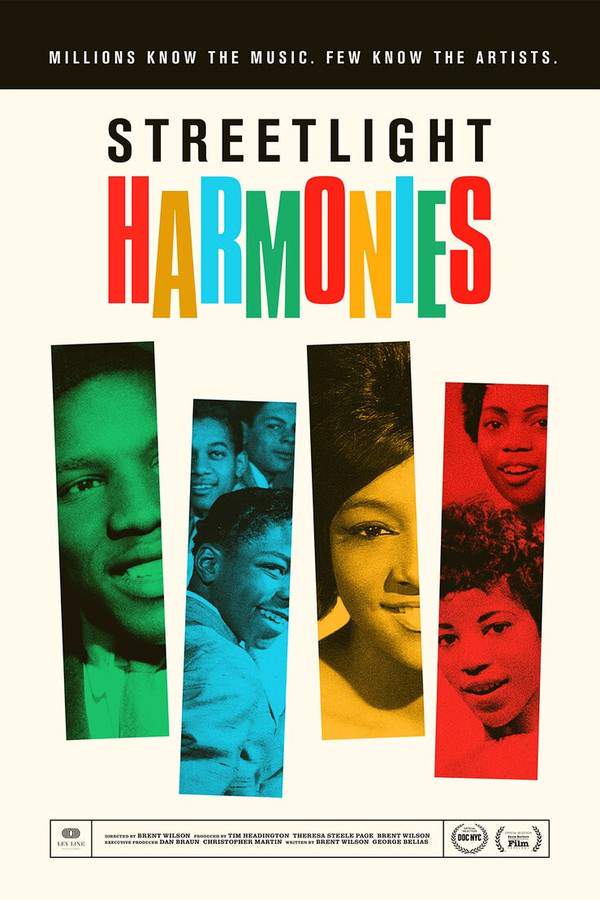
Streetlight Harmonies 2020


Directed by

Brent Wilson
Made by

Gravitas Ventures
Where to Watch Streetlight Harmonies
See current US streaming, rental, and purchase options for Streetlight Harmonies (2020) via JustWatch.

Amazon Prime Video
HD
Amazon Prime Video with Ads
HD
Hoopla
SD
Kanopy
HDProvider 1898
HD
Amazon Prime Video Free with Ads
HD
Fandango at Home Free
HD
Pluto TV
SD
The Roku Channel
HD
Tubi TV
SD
Xumo Play
HD
Amazon Video
SD
Apple TV Store
HD Fandango At Home
SD
Google Play Movies
SD
YouTube
SD Streaming availability powered by 
Streetlight Harmonies Plot Summary
Read the complete plot summary and ending explained for Streetlight Harmonies (2020). From turning points to emotional moments, uncover what really happened and why it matters.
It’s the unmistakable falsetto leads, lilting harmonies, and deep backing vocals, all set to a bluesy street corner rhythm that birthed the timeless sounds of classics like “Up On The Roof” by The Drifters, “Tears On My Pillow” by Little Anthony & The Imperials, “Smoke Gets In Your Eyes” from The Platters, and “Why Do Fools Fall in Love” by The Teenagers. This documentary, Streetlight Harmonies, takes viewers on a captivating journey through the genre of Doo-Wop, celebrated for its unique ability to evoke the innocence of a nation and the bittersweet pangs of love.
As the film unfolds, it reveals an endless jukebox of melodies and memories, offering an entertaining exploration of the bands, songs, and harmonies that not only defined a definitive music era but also continue to resonate through today’s hits. While millions may recognize the music, few are aware of the stories and the artists behind it. These artists laid the groundwork for rock and roll, rhythm and blues, and helped pave the way for the civil rights movement.
Iconic musicians featured include Al Jardine and Brian Wilson from the Beach Boys, Jimmy Merchant of The Teenagers, Anthony Gourdine of Little Anthony and the Imperials, and many more. Legends like Charlie Thomas (The Drifters), Sammy Strain (Imperials, O’Jays), and Terry Johnson (The Flamingos) also share the spotlight, along with contributions from Brian McKnight, Lance Bass, and Freda Payne.
Streetlight Harmonies explores not just the spectacular melodies but the rich history that nurtured these artists and their music, shedding light on an era that remains an essential part of American cultural identity.
Streetlight Harmonies Timeline
Follow the complete movie timeline of Streetlight Harmonies (2020) with every major event in chronological order. Great for understanding complex plots and story progression.
Introduction to Doo-Wop
The documentary *Streetlight Harmonies* begins with an exploration of the Doo-Wop genre, introducing its signature sound characterized by falsetto leads, lilting harmonies, and deep backing vocals. This segment sets the stage for understanding the cultural impact and musical innovation of this unique style.
Classic Hits Showcased
The film showcases timeless classics such as 'Up On The Roof' by The Drifters and 'Tears On My Pillow' by Little Anthony & The Imperials. These songs epitomize the Doo-Wop sound and evoke nostalgia for the innocence of an entire generation.
Evolution of a Music Genre
Throughout the documentary, the evolution of Doo-Wop is highlighted, emphasizing its transition from street corner harmonies to chart-topping tracks. The film illustrates how these musicians not only shaped a genre but also influenced the rise of rock and roll and rhythm and blues.
Showcasing Iconic Musicians
Featured artists like Al Jardine and Brian Wilson from the Beach Boys share their experiences and connection to Doo-Wop. Their insights help underscore the genre's influence on future music and its artists.
Interviews with Legends
In-depth interviews with legends such as Charlie Thomas of The Drifters and Sammy Strain of the Imperials provide personal narratives about their contributions to Doo-Wop. These interviews reveal the challenges and triumphs faced by these pioneers in the music industry.
Connection to Civil Rights
The documentary explores the significant role of Doo-Wop in the civil rights movement, showcasing how the music resonated with the struggles and aspirations of the time. Through this lens, the film illustrates the genre as a voice for change, reflecting societal issues in a melodious form.
Cultural Impact Assessment
As *Streetlight Harmonies* progresses, it assesses the pervasive cultural impact of Doo-Wop, noting how its melodies continue to resonate in contemporary music. The film emphasizes that while many recognize these songs, few understand the stories behind them.
Tribute to Forgotten Artists
The documentary pays tribute to many forgotten artists who laid the groundwork for the Doo-Wop genre. It highlights their contributions and celebrates the sounds that have been overshadowed over time by more commercial genres.
The Jukebox of Melodies
The film offers an engaging visualization of a jukebox filled with melodies, representing the vast array of songs and harmonies that defined the Doo-Wop era. This metaphor underscores how these tunes evoke memories and emotions connected to love and longing.
Modern Connections
Contributions from contemporary artists like Brian McKnight, Lance Bass, and Freda Payne bridge the past with the present, illustrating how the Doo-Wop legacy influences today's music. Their perspectives reveal a continued appreciation for the sound and style birthed from this genre.
Legacy and Recognition
The documentary concludes by recognizing the lasting legacy of Doo-Wop music in American culture. It serves not only as a nostalgic reminder of a bygone era but also as an essential piece of history that shaped the musical landscape we know today.
Streetlight Harmonies Characters
Explore all characters from Streetlight Harmonies (2020). Get detailed profiles with their roles, arcs, and key relationships explained.
Al Jardine
Al Jardine is a key figure in the documentary, known for his contributions to the Beach Boys and his influence on the Doo-Wop genre. His insights reflect the evolving landscape of American music and his personal experiences within this rich tradition.
Brian Wilson
Brian Wilson, another iconic musician featured in the film, is recognized for his innovative songwriting and harmonization techniques that shaped the sound of the Beach Boys. His presence adds depth to the exploration of Doo-Wop's impact on popular music.
Streetlight Harmonies Settings
Learn where and when Streetlight Harmonies (2020) takes place. Explore the film’s settings, era, and how they shape the narrative.
Time period
Mid-20th Century
The film reflects the mid-20th century, a pivotal time in America for music and civil rights. It captures the essence of an era where Doo-Wop was a prominent genre, influencing the evolution of rock and roll and rhythm and blues while intertwining with the movements for social justice and equality.
Location
America
The documentary takes place in America, a country known for its diverse musical landscapes and rich cultural history. It showcases the evolution of Doo-Wop as a significant genre that embodies the social and emotional fabric of the nation during the mid-20th century.
Streetlight Harmonies Themes
Discover the main themes in Streetlight Harmonies (2020). Analyze the deeper meanings, emotional layers, and social commentary behind the film.
🎤
Musical Heritage
Streetlight Harmonies highlights the legacy of Doo-Wop music, emphasizing its intricate harmonies and emotional depth. This theme serves as a reminder of the cultural significance of music, not only as entertainment but as a vehicle for social change and collective memory.
❤️
Love & Innocence
The theme of love and innocence permeates the film, exemplified through the heartfelt lyrics and melodies of the era. It explores how music can evoke powerful emotions tied to youthful experiences and romantic memories, resonating with audiences across generations.

Coming soon on iOS and Android
The Plot Explained Mobile App
From blockbusters to hidden gems — dive into movie stories anytime, anywhere. Save your favorites, discover plots faster, and never miss a twist again.
Sign up to be the first to know when we launch. Your email stays private — always.
Explore the mobile appStreetlight Harmonies Spoiler-Free Summary
Discover the spoiler-free summary of Streetlight Harmonies (2020). Get a concise overview without any spoilers.
In the glow of neon‑lit avenues and the echo of late‑night street corners, Al Jardine and Brian Wilson step into a world where falsetto leads and tight‑knit harmonies once ruled the airwaves. The documentary “Streetlight Harmonies” opens its doors to that golden era, inviting viewers to wander through the birth‑places of timeless songs like “Up On The Roof” and “Why Do Fools Fall in Love.” With a reverent yet playful tone, the film paints a portrait of neighborhoods where teenagers gathered in front of jukeboxes, their voices weaving together the innocent optimism and bittersweet longing that defined a generation.
From the bustling avenues of Harlem to the quieter suburbs where doo‑wap groups practiced on porches, the film introduces a choir of legends whose stories have rarely been heard beyond the music itself. Jimmy Merchant of The Teenagers, Anthony Gourdine of Little Anthony & the Imperials, and Charlie Thomas of The Drifters each share glimpses of the camaraderie, competition, and cultural shifts that shaped their sound. Interlaced with vibrant performances by contemporary artists such as Brian McKnight and Lance Bass, the narrative balances archival footage with fresh interpretations, underscoring how those early harmonies continue to reverberate through today’s hits.
The mood is simultaneously nostalgic and celebratory, a warm tapestry stitched from anecdotes, archival photos, and the unmistakable cadence of a genre that helped lay the groundwork for rock‑and‑roll, rhythm and blues, and even the civil‑rights movement. As the camera lingers on smiling faces and weathered microphones, the audience feels the pulse of a musical tradition still alive in modern studios and street‑corner gatherings. “Streetlight Harmonies” thus becomes more than a historical recount—it is a love letter to the enduring spirit of doo‑wap, inviting anyone with an ear for harmony to discover the heartfelt stories behind the songs that have shaped America’s cultural identity.
Featured on this page

What's After the Movie?
Not sure whether to stay after the credits? Find out!
Check out our other apps:

SAT Sphere
Build confidence for the Digital SAT.

Mori Atlas
Discover wild places worth protecting.

Luntero
Search smarter for a home in Amsterdam.

Plot Explained
Unravel movie endings and hidden clues.

Pokechamp
Dive into Pokémon data and battle logic.

Driving Theory
Get ready for your European theory test.

Movie Dust
Plan your next cinema trip with ease.

Musemap
Find art and culture as you travel.

Selkobase
Compare credentials before committing.

Local Manual
Turn an unfamiliar country into practical next steps.

Lernavi
Compare school systems before your next move.

GymRoam
Find a workout stop wherever your plans take you.
Explore Our Movie Platform
New Movie Releases (2026)
Famous Movie Actors
Top Film Production Studios
Movie Plot Summaries & Endings
Major Movie Awards & Winners
Best Concert Films & Music Documentaries
Movie Collections and Curated Lists
© 2026 What's After the Movie. All rights reserved.
Privacy Policy