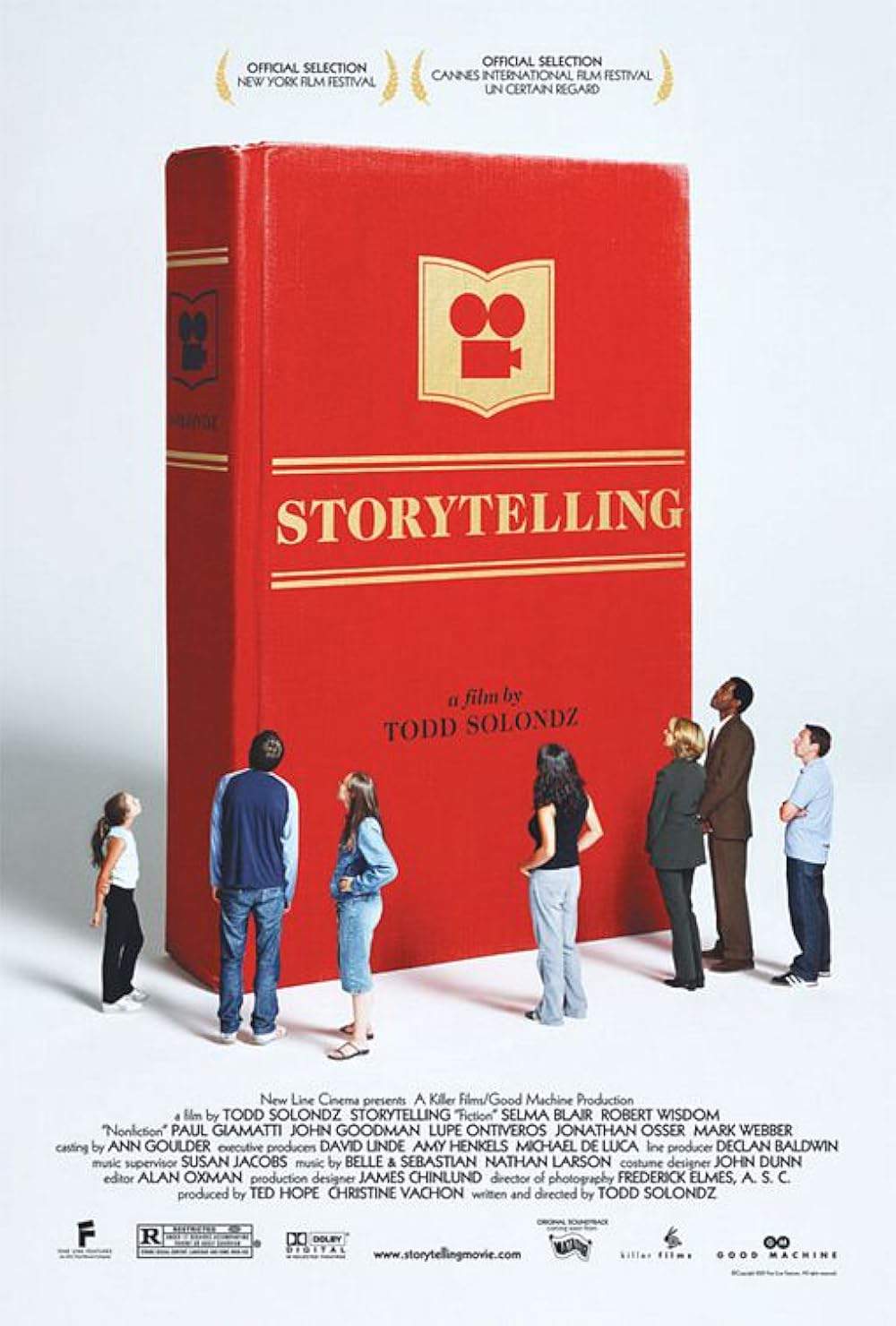
What Is Storytelling About?
The premise of Storytelling in 320 words, with nothing given away. The full story follows below.
In a bustling town where the ordinary constantly brushes against the uncanny, a teenage girl seems to materialize exactly where she is needed most. Her inexplicable knack for appearing at pivotal moments catches the eye of a tenacious detective who, instead of treating it as a case, embarks on a light‑hearted, feel‑good quest to uncover the mystery behind her timing. The film’s tone balances gentle humor with quiet wonder, inviting the audience to contemplate how small miracles can ripple through everyday lives.
The story unfolds in two interwoven parts, the first rooted in the world of creative writing classes and youthful ambition. Vi, a sharp‑tongued student, navigates the complexities of love, friendship, and self‑expression while grappling with the expectations of her peers and instructors. Her relationship with Marcus, a compassionate boyfriend living with cerebral palsy, offers a tender glimpse into intimacy and the fragile balance of honesty. Around them, a charismatic professor and a circle of classmates provide a lively backdrop that pulses with artistic tension and the search for authentic voice.
Switching gears, the second segment follows an aspiring documentary filmmaker as he shadows a teenage boy exploring his own identity amid a turbulent home environment. Toby brings a camera and curiosity, while Scooby reveals the raw edges of adolescence, family dynamics, and the yearning for something beyond his current circumstances. Their partnership is less about observation and more about the subtle dance of trust, revelation, and the bittersweet realization that the act of storytelling can be both a mirror and a magnifier.
Together, these parallel narratives paint a portrait of storytelling itself—how fiction and nonfiction intertwine, how personal mythos shape reality, and how the simple act of being in the right place at the right time can spark connections that linger long after the camera stops rolling. The film remains warm, curious, and ultimately uplifting, leaving viewers eager to discover what lies just beyond the next unexpected appearance.
What Happens in Storytelling?
The complete story of Storytelling, from the first scene to the last, in 438 words (about 2 minutes). Spoilers throughout.
Spoilers ahead
Fiction, the first segment of Storytelling, begins with Vi entwined in an intimate moment with her boyfriend Marcus, who lives with cerebral palsy. Following their encounter, Vi displays a sense of urgency to leave, prompting Marcus to suspect that she may have lost interest in him due to his disability. Despite his love for writing, Marcus’s short stories are subpar, and Vi, along with their creative writing classmates, are aware of this but hesitate to voice their opinions out of fear of offending him. However, the truth eventually emerges when a classmate courageously critiques his writing, leading to a harsh reprimand from their professor, Mr. Scott. In a moment of vulnerability, Marcus feels betrayed by Vi’s lack of honest feedback, leading him to end their relationship.
As the story unfolds, Vi crosses paths with Mr. Scott at a bar, and they share intimate moments that escalate quickly. While preparing in his bathroom, she stumbles upon compromising photographs of several of her white female classmates, whispering a reminder to herself: “Don’t be racist.” Stepping out, the encounter takes a dark turn as Mr. Scott demands she remove her clothing and engage in degrading acts that challenge both her identity and values. This traumatic experience inspires her to pen a provocative fictional short story, which, upon presenting it to her classmates, garners severe backlash. Critics label it as racist and misogynistic, dismissing it as the shallow expression of a “spoiled white girl.”
The narrative transitions into the second segment, Nonfiction, featuring Toby, an aspiring yet unsuccessful documentary filmmaker, alongside his subject Scooby, a youth caught in the throes of adolescence and familial strife. The tension within Scooby’s household often erupts during dinner conversations, revealing a tumultuous relationship with his parents. As Toby documents their lives, he recognizes his project’s potential aimlessness. The revelation of Scooby’s bisexuality unfolds when he indifferently allows a male classmate to engage in sexual acts while fantasizing about drastic changes to his miserable home life. As the documentary morphs from a respectful exploration into a mocking representation, an unanticipated screening reveals the audience’s laughter at the portrayal of Scooby’s family.
In a tragic twist, while Scooby is away, their ex-housekeeper, embittered by her dismissal, retaliates by poisoning the family. Upon returning, Scooby discovers the horrifying scene of his family’s demise. In a cold and detached manner, he tells Toby not to feel pity for him, asserting that “the movie is a hit.” Through these intertwined stories, Storytelling boldly navigates themes of vulnerability, exploitation, and the often harsh realities of existence, leaving the audience to ponder the moral implications of both fiction and non-fiction in our lives.
Storytelling Timeline: Every Key Event in Order
14 key events in the order they happen, from “Vi and Marcus's Intimacy” to “Scooby's Cold Reality”. 9 events name a place, across 5 locations.
- 1
Vi and Marcus's Intimacy
The film begins with Vi engaged in a sexual encounter with her boyfriend, Marcus, who lives with cerebral palsy. This moment highlights the complexity of their relationship, revealing underlying tensions regarding Marcus's disability.
- 2
Marcus's Insecurity
After their intimate moment, Marcus senses Vi's anxiousness to leave, suspecting that her feelings towards his disability may have changed. This marks the beginning of their emotional strain as he questions her support and affection.
- 3
Creative Writing Class
In a creative writing class, Marcus presents his short stories, which everyone privately considers poorly written. The classmates' fear of offending him due to his handicap leads to insincere praise, which ultimately stifles genuine feedback.
Where:Creative Writing Class
- 4
Harsh Criticism from Mr. Scott
Katherine, a classmate, finally voices her honest critique of Marcus's work during a session. This prompts Mr. Scott, the class's black professor, to launch into a scathing attack on Marcus's writing, leaving him devastated and vulnerable.
Where:Creative Writing Class
- 5
Breakup with Vi
Feeling hurt and unsupported, Marcus decides to end his relationship with Vi. This pivotal moment in the story underscores the emotional fatigue stemming from his battles with self-worth and societal perception.
- 6
Vi's Encounter with Mr. Scott
After the breakup, Vi meets Mr. Scott at a bar, leading to an unexpected and disturbing turn in her narrative. Their encounter escalates as Mr. Scott's demands turn increasingly violent and exploitative.
Where:Bar
- 7
Discovery of Photos
While preparing for intimate moments in Mr. Scott's apartment, Vi stumbles upon naked photographs of her classmates. This shocking discovery forces her to confront issues of race and exploitation, lingering in her mind as she whispers to herself.
Where:Mr. Scott's Apartment
- 8
Vi's Short Story
Vi channels her traumatic experience into a thinly-veiled fictional short story for her class. However, upon presenting it, she faces harsh criticism from her classmates, who label it as racist and exploitative, leaving her feeling isolated.
Where:Creative Writing Class
- 9
Introduction of Toby and Scooby
The second half of the film shifts focus to Toby, an unsuccessful documentary filmmaker, and his subject, Scooby. This introduces a contrasting narrative with themes of directionlessness and familial conflict surrounding Scooby's life.
- 10
Scooby's Family Dynamics
The audience witnesses the escalating tensions at the dinner table as Scooby frequently clashes with his parents. This dynamic illustrates the challenges he faces in finding his own identity amid familial strife.
Where:Scooby's Home
Show the other 4 events of Storytelling Hide the last 4 events
- 11
Toby's Documentary Shift
As Toby continues filming, the tone of his documentary changes, evolving from an educational study into a mockery of Scooby and his family. This transformation raises questions about exploitation in storytelling.
- 12
Scooby's Discovery
Scooby sneaks into an early screening of Toby's documentary, only to be met with laughter and ridicule at his family's expense. This painful moment reflects his deepening sense of alienation and betrayal by Toby.
Where:Screening Room
- 13
Tragedy Strikes
While Scooby is out, his family's ex-housekeeper, resentful after being fired, poisons them using gas. This sudden and tragic turn disrupts any semblance of family stability that Scooby once had.
Where:Scooby's Home
- 14
Scooby's Cold Reality
Upon returning home, Scooby discovers the horrific aftermath of the poisoning, finding his entire family dead. His chilling remark to Toby about not feeling sorry for him highlights his emotional detachment and reflects on the movie's success.
Where:Scooby's Home
Who Are the Main Characters in Storytelling?
5 characters, among them Vi, Marcus and Toby: who each one is and the part they play in the story.
- V
Vi
Vi embodies youthful naivety and ambition, yet her actions often reflect a lack of empathy. She quickly vacillates between relationships, showcasing how personal insecurities can lead to harmful decisions. Her character serves as a lens through which the film critiques white privilege and exploitation in creative spaces.
- 💔 Love
- 🎭 Complexity
- 👩🎓 Student
- M
Marcus
Marcus represents vulnerability and the struggle for acceptance amid disability. His attempts to express himself creatively are undermined by societal biases, which lead to a painful breakup with Vi. He highlights the sensitivities surrounding critiquing marginalized voices.
- ❤️ Struggle
- 🍂 Vulnerability
- ✍️ Writer
- T
Toby
Toby, the documentary filmmaker, reflects the ethical challenges artists face when portraying real-life subjects. His journey from a respectful observer to an exploitative creator illustrates the fine line between documentary and mockery, forcing audiences to consider the consequences of their gaze.
- 🎥 Filmmaker
- 🗣️ Exploitation
- 💡 Awareness
- S
Scooby
Scooby is a complex character caught between adolescence and the harsh realities of life. With his ambitious yet aimless nature, he represents disillusionment, particularly within familial and societal constructs. His ultimate acceptance of his circumstances reveals resilience amid tragedy.
- 🌀 Adolescence
- 🏳️ Bisexuality
- 🎭 Rebellion
- MS
Mr. Scott
Mr. Scott plays the role of an unpredictable mentor figure who challenges students in unconventional ways. His aggressive critique of Marcus's work juxtaposed with his predatory behavior towards Vi reveals the multifaceted nature of authority, exposing both mentorship and exploitation.
- 🎓 Authority
- 💔 Predator
- 📖 Critic
Where and When Is Storytelling Set?
Storytelling is set in Classroom, Bar and Family Home. Here is why the place matters to the story.
When
The film captures contemporary societal issues, particularly surrounding identity, sexuality, and the dynamics of power in relationships. It explores the challenges and absurdities faced by its characters in a modern setting, reflecting ongoing dialogues about race, privilege, and artistic responsibility.
Where
Classroom, Bar, Family Home
The movie unfolds in various settings, including a classroom where writing critiques come to life, a bar where personal boundaries blur, and a family home filled with tension and conflict. Each location plays a vital role in highlighting the characters' struggles and the story's themes of exploitation and vulnerability.
- 🏫 Classroom
- 🍸 Bar
- 🏠 Home
What Are the Themes of Storytelling?
3 ideas the story keeps returning to, among them Identity, Exploitation and Disconnection.
-
01
Identity
Identity is a central theme as characters navigate their personal and social identities, grappling with societal expectations and their own desires. The clash between how individuals perceive themselves and how they are perceived by others offers a critical examination of race and gender dynamics.
-
02
Exploitation
Exploitation runs rampant in the narrative as characters are used for the entertainment and gain of others. This theme is prominently illustrated through Toby's documentary, which morphs into a mockery of Scooby's life, showcasing the ethical dilemmas faced by creators when their work impacts real lives.
-
03
Disconnection
The theme of disconnection is prevalent as characters struggle with their relationships, whether through broken romantic ties or familial discord. Vi's encounter with Marcus reveals the emotional distance created by societal prejudices, while Scooby's home life reflects a deep disconnect from his family.
What Kind of Film Is Storytelling?
Dark in tone, with steady pacing and a complex story, going by the plot summary.
- Tone
- Dark
- Pacing
- Steady
- Story
- Complex
- Intensity
- High
- Ending
- Bleak
A dark and unsettling social satire that confronts themes of exploitation, racial tension, and the ethical ambiguity of storytelling, leaving the viewer with a cynical and provocative perspective on art and reality.
- unsettling
- cynical
- exploitative
- anxious
- detached
- critical
- social satire
- exploitation of subjects
- creative dishonesty
- racial dynamics
Content notes: sexual assault, degrading sexual acts, family death, poisoning, emotional abuse, racial exploitation.
Quiz
How well do you remember Storytelling? Test yourself on the story.