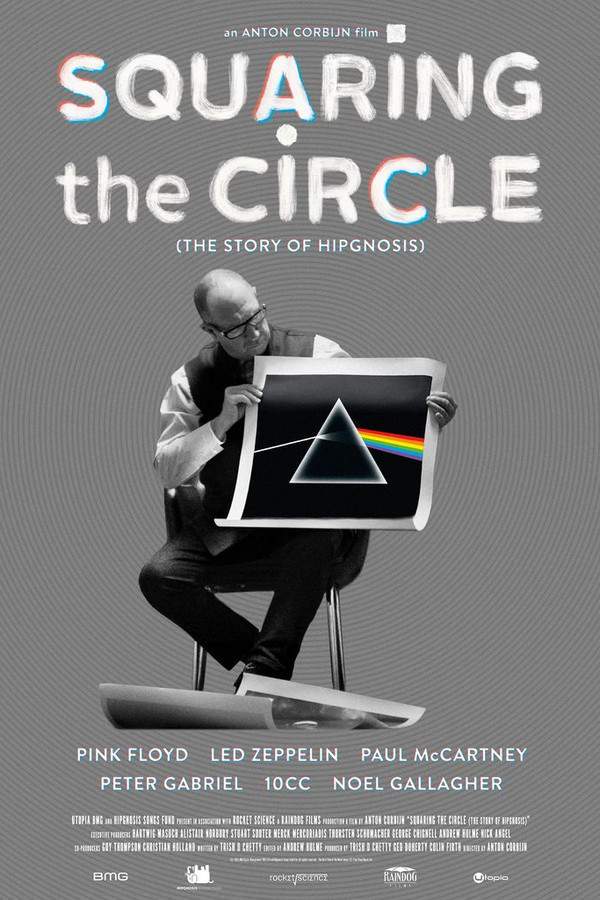
What Is Squaring the Circle (The Story of Hipgnosis) About?
The premise of Squaring the Circle (The Story of Hipgnosis) in 285 words, with nothing given away. The full story follows below.
A chance encounter in Cambridge in 1964 brings together Aubrey “Po” Powell and Storm Thorgerson, two young associates of Pink Floyd whose creative chemistry leads to an unlikely but lasting partnership. This documentary explores the origins of Hipgnosis through their shared instincts, unconventional ideas, and determination to treat album packaging as a form of visual art. Rather than unfolding as a conventional biographical drama, it creates an immersive portrait of two artists discovering what they can achieve by challenging one another’s approaches.
From their connection, the Hipgnosis studio begins to take shape in 1968, initially receiving a commission from Pink Floyd for A Saucerful of Secrets. The film inhabits the progressive-rock world of the late 1960s and 1970s, where music, photography, graphic design, and emerging countercultural style converge. Within this atmosphere, the album cover becomes more than an advertisement: it can suggest a musician’s private creative universe. Hipgnosis’s work grows out of this belief, combining meticulous planning with startling, dreamlike images that give iconic records an unmistakable identity.
At its heart, the documentary studies a partnership defined by experimentation and the freedom to follow an idea wherever it leads. Powell’s reflections provide an intimate window into the studio’s hands-on methods, while contributions from Storm and fellow musicians illuminate how abstract concepts are translated into memorable sleeves. Contemporary admirers, including Noel Gallagher, add a sense of generational reach, showing how Hipgnosis’s imagery continues to resonate beyond the artists who commissioned it. Guided by director Anton Corbijn’s own knowledge of photography and design, the film has the texture of a visual retrospective: affectionate toward its subjects, alive with creative ambition, and continually asking how an image can communicate the spirit of a song without explaining it away.
What Happens in Squaring the Circle (The Story of Hipgnosis)?
The complete story of Squaring the Circle (The Story of Hipgnosis), from the first scene to the last, in 161 words (about 1 minute). Spoilers throughout. Names in the text link to 8 cast member pages.
Spoilers ahead
This documentary explores the rich history of the Hipgnosis design studio, tracing its origins back to 1968. Founded by Storm Thorgerson and Aubrey Powell, the duo began their journey as associates of Pink Floyd, starting with the cover for the album A Saucerful of Secrets.
The film provides a detailed look at the production of several iconic album covers throughout the 1970s. It highlights their work for legendary artists such as Paul McCartney, Jimmy Page, Robert Plant, Roger Waters, David Gilmour, and Nick Mason. Through extensive interviews, including insights from Noel Gallagher, the documentary examines the experimental photography and unconventional design methods that defined the Hipgnosis aesthetic.
Aubrey Powell serves as a primary narrator, sharing the creative process and speaking on behalf of the late Storm Thorgerson. The story eventually concludes in the late 1970s, illustrating how the rise of punk rock shifted artistic trends away from elaborate covers, leading the founders to pivot toward video production and other artistic ventures.
Squaring the Circle (The Story of Hipgnosis) Timeline: Every Key Event in Order
14 key events in the order they happen, from “Hipgnosis is founded” to “Anton Corbijn's directorial lens”.
- 1
Hipgnosis is founded
Storm Thorgerson and Aubrey 'Po' Powell establish the Hipgnosis art studio in 1968. The duo were close associates of the band Pink Floyd, a connection that would define the early direction of their work in album artwork.
When:1968
- 2
First album cover commission
Hipgnosis receives its breakthrough commission to design the cover for Pink Floyd's album A Saucerful of Secrets. This debut artwork marks the beginning of the studio's long and celebrated history in album cover design.
When:1968
- 3
A golden era of cover art begins
Throughout the 1970s, Hipgnosis produces a string of classic album covers for the biggest names in rock music. The studio establishes itself as a leading creative force in album artwork of the era.
When:1970s
- 4
Iconic covers for rock's biggest names
The studio creates memorable covers for artists including Led Zeppelin, Peter Gabriel, Paul McCartney and Wings, and 10cc. Each project showcases Hipgnosis's growing reputation for bold and imaginative imagery.
When:1970s
- 5
A lasting bond with Pink Floyd
Beyond their first commission, Hipgnosis designs several more covers for Pink Floyd over the years. The collaboration becomes one of the most enduring partnerships between a band and a design studio in rock history.
When:1970s
- 6
Experimental photography methods
The documentary highlights Thorgerson and Powell's experimental approach to photography, relying on inventive practical techniques rather than conventional methods. Their unconventional working style becomes the signature of the Hipgnosis aesthetic.
When:1970s
- 7
Influence on rock album art
Hipgnosis's unconventional designs reshape expectations of what an album cover can be. Their work exerts a wide-reaching influence on rock album artwork throughout the era.
When:1970s
- 8
Musicians recall the Hipgnosis process
The film features interviews with several notable musicians who worked with the studio. They discuss the unique Hipgnosis process of designing their album covers, offering firsthand accounts of the creative collaboration.
- 9
Punk rock changes the game
In the late 1970s, the rise of punk rock makes Hipgnosis's elaborate and polished album covers less fashionable. The shift in musical and visual culture signals the beginning of the end for the studio's signature style.
When:Late 1970s
- 10
A new creative direction
As elaborate album cover work falls out of fashion, Thorgerson and Powell move into video production and other artistic projects. The partnership adapts to the changing industry and carries their creativity into new mediums.
When:Late 1970s
Show the other 4 events of Squaring the Circle (The Story of Hipgnosis) Hide the last 4 events
- 11
The death of Storm Thorgerson
Storm Thorgerson passes away in 2013, marking the loss of one half of the Hipgnosis creative partnership. His life and legacy are honored in the documentary through the recollections of those who knew and worked with him.
When:2013
- 12
Aubrey Powell tells the story
Aubrey 'Po' Powell is interviewed extensively for the documentary, serving as one of the film's central voices. He also speaks on behalf of his late partner Thorgerson, offering insight into their shared creative journey.
- 13
Modern fans of the classic covers
The documentary includes interviews with modern-day fans of Hipgnosis's classic album covers, including musician Noel Gallagher. Their appreciation underlines the lasting cultural impact of the studio's artwork decades after its creation.
- 14
Anton Corbijn's directorial lens
Director Anton Corbijn brings his own deep knowledge of photography and graphic design to the film. Reviewers noted how this personal expertise informed the documentary's visual sensibility and its appreciation of Hipgnosis's craft.
What Kind of Film Is Squaring the Circle (The Story of Hipgnosis)?
Bittersweet in tone, with steady pacing and a moderate story, going by the plot summary.
- Tone
- Bittersweet
- Pacing
- Steady
- Story
- Moderate
- Intensity
- Low
- Ending
- Bittersweet
A warm, nostalgic documentary that celebrates radical album art while tracing the creative partnership, cultural shifts, and bittersweet twilight of a legendary design studio.
- nostalgic
- reflective
- celebratory
- gently melancholic
- creative
- visually imaginative
- album cover design
- creative partnership
- experimental photography
- graphic design
Content notes: drug references.
Quiz
How well do you remember Squaring the Circle (The Story of Hipgnosis)? Test yourself on the story.