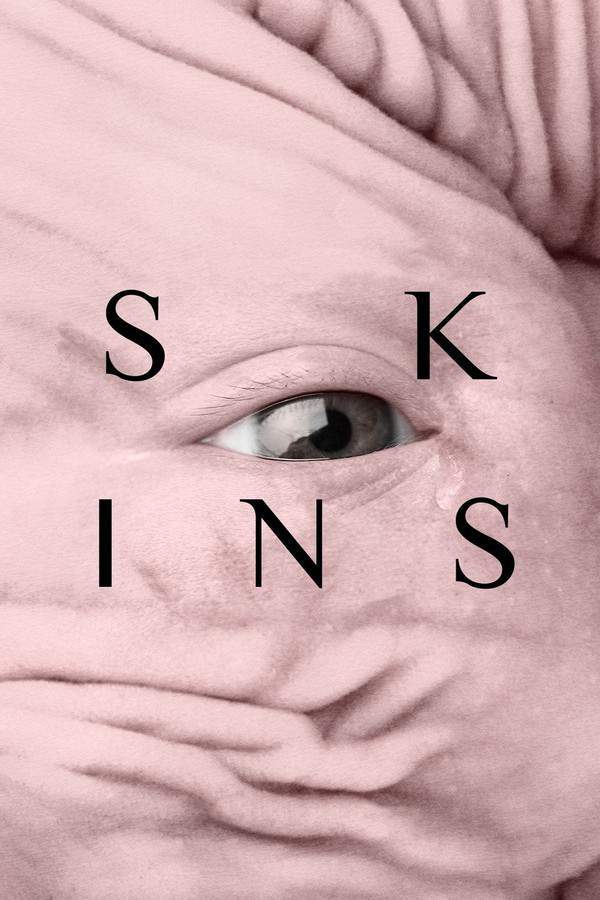
Skins 2002


Directed by

Chris Eyre
Made by

First Look International
Where to Watch Skins
See current US streaming, rental, and purchase options for Skins (2002) via JustWatch.

Amazon Prime Video
HD
Amazon Prime Video with Ads
HD
Howdy Amazon Channel
HD
Fawesome
HDProvider 1898
HD
Amazon Prime Video Free with Ads
HD
The Roku Channel
HD
Tubi TV
SD
YouTube Free
HD
Amazon Video
SD Streaming availability powered by 
Skins Plot Summary
Read the complete plot summary and ending explained for Skins (2002). From turning points to emotional moments, uncover what really happened and why it matters.
Rudy Graham Greene and Mogie Eric Schweig Yellow Lodge are Lakota Sioux brothers living on the Beaver Creek Indian Reservation in South Dakota. Mogie is unemployed and has a teenage son. Rudy, a police officer, struggles to care for his brother, his nephew, and the rest of the town through the hands of the law. Mogie resists Rudy’s helpful attempts, preferring to drink and joke about the depressed state of their people and town. As a child, Rudy had been bitten by a spider, and Mogie told him it was Iktomi, the trickster spider; this spider re-appears to Rudy early in the film and Rudy’s attempts to help begin to wander outside the lines of the law.
When Rudy is sent on a police call to an abandoned house, he finds the bloodied, dead body of a young man who has been kicked to death. Rudy sees someone in the darkness, but the stranger escapes and Rudy trips and falls onto a rock before he can identify his quarry. Rudy’s friend tells him that rocks are very spiritual, and Rudy begins to worry that something has gotten into him, turning him vigilante. He sees a teenage boy wearing the same shoes as the figure who ran away from the scene of the murder, and follows him. Rudy overhears the boy talk with a friend about disposing a pair of boots that connects them to the murder. Disguising himself with black paint on his face, Rudy sneaks up on the boys with a baseball bat and viciously beats their kneecaps, announcing himself as the ghost of the boy they murdered. While washing the paint off his face, he again sees Iktomi.
Angered by a news report about a liquor store in the bordering town profiting off of alcoholic Native Americans, Rudy sets out - again with a painted face - and sets the store on fire. Unknown to Rudy, Mogie was on the roof of the building trying to steal some alcohol. Mogie escapes and survives, but is burned and severely scarred. Shocked, Rudy visits a friend to get instructions on how to deal with Iktomi’s spirit; a combination of home remedies and a sweat lodge ceremony.
During Mogie’s stay in the hospital, the doctors discover that he is dying, because of his failing liver. After he is released from the hospital, Mogie, his son Herbie, Rudy, and Aunt Helen have dinner, and Mogie brings up American Horse, an Oglala Indian who testified against the 7th Cavalry. This conversation brings up the story of the Wounded Knee Massacre, which Rudy tells to Herbie.
Rudy tells Mogie that he started the fire, and Mogie replies that the one thing he can do to make up for it is blow the nose off of George Washington’s face on Mount Rushmore. Rudy calls the idea crazy, and refuses.
Responding to a police call of a man stuck in a trap, Rudy arrives outside a house to find that the victim, now dead, is Mogie’s drinking partner. The owners of the house seem to have no remorse for the man’s death. When Mogie finds out the story behind his friend’s death, he goes to the family’s house with a gun, but is dissuaded from using it when a child appears in the room.
Mogie dies of pneumonia shortly after his son’s 18th birthday. A letter Mogie wrote before his death asks Rudy to care for his son. Rudy finds out that the liquor store is being rebuilt, and will now be twice as big and have two drive-in windows. He buys a large can of oil-based red paint and drives to Mount Rushmore. He climbs to the top, and standing on the head of George Washington, he ponders whether his plan is stupid, he once again sees Iktomi crawling across the paint can. Seeing this, he makes his tribute to Mogie by throwing the can of paint so that it drips down the side of George Washington’s nose, almost like a rivulet of bloody tears. On the drive back, he sees a hitchhiker that looks like Mogie in his youth and laughs.
Skins Timeline
Follow the complete movie timeline of Skins (2002) with every major event in chronological order. Great for understanding complex plots and story progression.
Beaver Creek life and two brothers
Rudy, a police officer, and Mogie Yellow Lodge, unemployed, live on the Beaver Creek Indian Reservation in South Dakota. The brothers' tense relationship frames the town's struggles as Rudy tries to shield his family while Mogie drinks and jokes about their decline. The film establishes a precarious balance of duty, humor, and despair that defines their days.
Iktomi returns to Rudy
As a child, Rudy was bitten by a spider and was told it was Iktomi, the trickster spider. The spider reappears early in the film, foreshadowing how superstition and guilt will influence Rudy's actions. The encounter hints that Rudy's sense of justice may wander outside the law.
Murder discovery
On a police call to an abandoned house, Rudy discovers the bloodied, dead body of a young man who has been kicked to death. He glimpses a shadowy figure in the darkness, but the stranger escapes and Rudy trips on a rock before he can identify him. The case unsettles him and triggers his obsession with the killer.
Rudy notes the boots and a warning about rocks
Rudy's friend tells him rocks are spiritual, blurring the line between law and vigilante justice. He spots a teenage boy wearing the same shoes as the fleeing suspect and tails him, overhearing talk about disposing of the boots that connect them to the murder. The hints push Rudy toward a dangerous, self-appointed pursuit.
The vigilante attack
Disguised with black paint on his face, Rudy sneaks up on the teens with a baseball bat and savagely breaks their kneecaps, declaring himself the ghost of the boy they murdered. The brutal act marks his falling further from the law. He sees Iktomi again while washing off the paint, intensifying his inner turmoil.
Arson and a victim on the roof
Angered by a news report about a liquor store exploiting Native Americans, Rudy sets the store on fire wearing the painted face. Unbeknownst to him, Mogie is on the roof trying to steal alcohol and narrowly escapes the blaze, but is burned and scarred in the process. The incident strains their fragile bond and alters both of their lives.
Seeking guidance against Iktomi
Shocked by the consequences, Rudy seeks help from a friend for dealing with Iktomi's spirit. They turn to home remedies and a sweat lodge ceremony, attempting to restore balance and reverse the creeping vigilante influence. The sequence shows the community trying to heal the rift between spirit and law.
Mogie's hospital and grim prognosis
Mogie is hospitalized after his injuries and doctors discover he is dying from liver failure. The news deepens Rudy's sense of guilt and responsibility toward Mogie's son and foreshadows the family's looming loss. Mogie's condition underscores the cost of their choices and the town's decay.
Dinner and history lesson
During Mogie's hospital stay, the family gathers for dinner and Mogie brings up American Horse, prompting a recounting of the Wounded Knee Massacre. Rudy narrates the historical trauma to his nephew Herbie, connecting personal regrets with collective memory. The conversation deepens the bond and sets a framework for Mogie's dying wish.
Confession and Mount Rushmore plan proposed
Rudy tells Mogie that he started the fire, and Mogie responds that the one thing he can do to atone is blow the nose off Mount Rushmore's George Washington. Rudy calls the idea crazy and refuses, signaling a boundary between vengeance and responsibility. The moment marks a turning point in their dynamic.
A fatal trap and Mogie's confrontation
Rudy responds to a police call where the victim is Mogie's drinking partner, now dead. The owners display no remorse for the death, echoing the town's moral numbness. When Mogie learns the truth, he goes to the family's house with a gun, but is talked down by a child who appears in the room.
Mogie dies and a final request
Mogie dies of pneumonia shortly after his son Herbie's 18th birthday. Before dying, he writes a letter asking Rudy to take care of Herbie, cementing Rudy's obligation to the family. The loss compounds the film's themes of responsibility and community.
The Mount Rushmore act, a tribute to Mogie
Rudy learns that the town's liquor store is being rebuilt with two drive-in windows. He buys a large can of red oil-based paint and drives to Mount Rushmore. He climbs to the top, confronts his Iktomi vision, and contemplates his plan before finally dumping the paint down the side of Washington's nose as a bloody tribute to Mogie. The moment fuses personal vengeance with national memory.
A final image and a hitchhiker
On the drive back, Rudy spots a hitchhiker who resembles Mogie in his youth and laughs, signaling a bittersweet, ambiguous ending. The film closes on a note of uneasy humor amid unresolved pain and healing. The presence of Iktomi lingers as a moral undercurrent.
Skins Characters
Explore all characters from Skins (2002). Get detailed profiles with their roles, arcs, and key relationships explained.
Rudy Yellow Lodge
Rudy is a Lakota police officer who bears responsibility for his brother Mogie, his teenage nephew, and his town. He begins with a sincere desire to help, but the influence of Iktomi and his own growing anger push him toward vigilante acts, including disguising his face and using violence. His struggle to maintain the line between law and vengeance drives the film’s moral conflict.
Mogie Yellow Lodge
Unemployed and prone to drinking, Mogie is a father to a teenage son and a source of warmth and humor in a troubled town. He is scarred by a catastrophic arson and battles illness, ultimately dying of pneumonia after his son's eighteenth birthday. His debate with Rudy over how to address past wrongs helps propel the story toward its emotional climax.
Skins Settings
Learn where and when Skins (2002) takes place. Explore the film’s settings, era, and how they shape the narrative.
Location
Beaver Creek Indian Reservation, South Dakota
Beaver Creek is a Lakota Sioux community on the South Dakota plains. The reservation setting grounds the film in a close-knit town facing economic hardship and social strain. The landscape and community life reflect a culture of resilience amid ongoing challenges.
Skins Themes
Discover the main themes in Skins (2002). Analyze the deeper meanings, emotional layers, and social commentary behind the film.
⚖️
Justice vs. Vigilantism
Rudy's shift from lawman to vigilante exposes the tension between official justice and personal morality. The appearance of Iktomi blurs the line between sanity and superstition, pushing him to act outside legal bounds. The narrative uses his struggle to examine how trauma and community pressure can derail a sense of justice.
🔥
Violence & Community Trauma
Mogie's alcoholism and the store arson highlight how addiction, poverty, and anger ripple through the Lakota community. Rudy's retaliatory actions intensify cycles of violence and mistrust. The film presents tragedy as a burden carried by families and the wider town, not just individuals.
🕸️
Spirituality & Iktomi
Iktomi, the trickster spider, repeatedly appears to Rudy, tying supernatural motifs to personal guilt and fear. Sweat lodge rites and traditional beliefs offer a framework for processing pain and loss. The spider's presence underscores how spirituality and myth shape responses to violence and suffering.

Coming soon on iOS and Android
The Plot Explained Mobile App
From blockbusters to hidden gems — dive into movie stories anytime, anywhere. Save your favorites, discover plots faster, and never miss a twist again.
Sign up to be the first to know when we launch. Your email stays private — always.
Explore the mobile appSkins Spoiler-Free Summary
Discover the spoiler-free summary of Skins (2002). Get a concise overview without any spoilers.
The stark beauty of the Pine Ridge Indian Reservation, framed against the looming granite faces of Mt. Rushmore, forms a landscape of contrasts—vast sky and barren land, ancient traditions and modern hardship. This isolated corner of South Dakota carries the weight of generations, its communities marked by deep poverty, lingering colonial wounds, and a quiet resilience that hums beneath everyday life. The film settles into a contemplative, almost reverent tone, letting the wind‑swept plains and the muted sounds of the reservation speak as much as the dialogue.
Rudy Yellow Lodge is a Lakota Sioux police officer tasked with keeping order in a place where the law often feels as fragile as the cracked earth beneath his boots. He walks a difficult line between duty and kinship, striving to protect his neighbors while wrestling with the expectations placed on him by both his badge and his heritage. His presence is a steady, if uneasy, anchor in a community where personal and collective struggles intertwine, and his internal conflict is hinted at through quiet moments of doubt and a lingering sense of responsibility that stretches beyond the uniform.
His older brother, Mogie Yellow Lodge, embodies a different response to the same hardships. Unemployed and haunted by the shadows of addiction, he offers a sharp, sometimes bitter commentary on the reservation’s plight, often using humor as a shield. Their relationship crackles with love, frustration, and a shared history that includes childhood myths—most notably the trickster spider Iktomi—which surface as symbolic threads throughout their lives. The dynamic between the brothers, set against the reservation’s stark beauty and its undercurrent of spiritual folklore, promises a narrative rich in atmosphere, cultural nuance, and the relentless search for redemption in a place that refuses to be forgotten.
Movies with Similar Twists and Themes
Uncover films that echo the narrative beats, emotional arcs, or dramatic twists of the one you're exploring. These recommendations are handpicked based on story depth, thematic resonance, and spoiler-worthy moments — perfect for fans who crave more of the same intrigue.

Featured on this page

What's After the Movie?
Not sure whether to stay after the credits? Find out!
Check out our other apps:

SAT Sphere
Build confidence for the Digital SAT.

Mori Atlas
Discover wild places worth protecting.

Luntero
Search smarter for a home in Amsterdam.

Plot Explained
Unravel movie endings and hidden clues.

Pokechamp
Dive into Pokémon data and battle logic.

Driving Theory
Get ready for your European theory test.

Movie Dust
Plan your next cinema trip with ease.

Musemap
Find art and culture as you travel.

Selkobase
Compare credentials before committing.

Local Manual
Turn an unfamiliar country into practical next steps.

Lernavi
Compare school systems before your next move.

GymRoam
Find a workout stop wherever your plans take you.
Explore Our Movie Platform
New Movie Releases (2026)
Famous Movie Actors
Top Film Production Studios
Movie Plot Summaries & Endings
Major Movie Awards & Winners
Best Concert Films & Music Documentaries
Movie Collections and Curated Lists
© 2026 What's After the Movie. All rights reserved.
Privacy Policy