
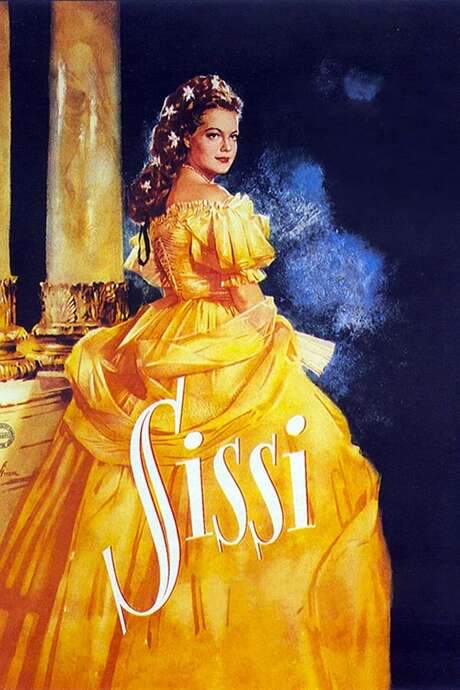
Sissi: The Young Empress 1956

Directed by

Ernst Marischka
Made by

Erma-Film
Where to Watch Sissi: The Young Empress
See current US streaming, rental, and purchase options for Sissi: The Young Empress (1956) via JustWatch.

Fawesome
HD
Kanopy
HD
The Roku Channel
HD
Xumo Play
HD
Amazon Video
SD Streaming availability powered by 
Sissi: The Young Empress Plot Summary
Read the complete plot summary and ending explained for Sissi: The Young Empress (1956). From turning points to emotional moments, uncover what really happened and why it matters.
Empress Elisabeth Romy Schneider slowly adapts to life as empress of Austria, yet the shadow of her mother-in-law looms large. Archduchess Sophie Vilma Degischer adheres to the long-standing rules, protocol, and etiquette, and she actively interferes not only with the emperor’s governance of the empire but also with Sissi’s private life. The tension between personal happiness and formal duty creates a careful, often prickly balance for the young empress, who must navigate a rigid system while trying to find her own voice within it.
When Sissi’s first child is born, Sophie insists on taking the baby to raise, arguing that Sissi is still too young and inexperienced to assume full maternal responsibility. This demand signals a deeper struggle over who should shape the future of the imperial family, and it highlights Sophie’s conviction that Sissi’s role should be defined by ceremony and service rather than motherly tenderness. The archduchess also believes that Sissi should be constantly present with her husband, Emperor Franz Joseph, wherever the empire’s official duties may lead, rather than spending long stretches away in the nursery or at home.
The strain reaches a turning point when Sissi, seeking solace and truth, leaves Vienna and travels back to Bavaria to see her own parents. She withholds the full truth from her mother, but reveals the frustration and the sense of being stifled by Sophie’s relentless criticism. Franz Joseph follows her, determined to mend the rift, and after a heartfelt confrontation, he persuades her to return to Vienna. This reunion strengthens Sissi’s bond with the emperor and solidifies her influence at court, even as she continues to push for a broader, more inclusive vision of the empire.
Back in Vienna, Sissi uses her growing clout to support political reform and romantic nationalism. She aligns herself with Count Gyula Andrássy Walther Reyer and backs the Hungarian cause for equal standing within the Empire. Her stance helps to bridge royal authority with the aspirations of Hungarian leaders, underscoring her evolving role not just as a favored consort but as a catalyst for real political dialogue. The film foregrounds her complex position—between courtly duty and personal conviction—and presents a nuanced portrait of a ruler who seeks harmony amid competing forces.
The narrative culminates in a triumph that echoes across the realm: Sissi is crowned Queen of the Hungarians in Buda, a ceremony that embodies her dual impact as both empress and a champion of Hungarian rights. The moment marks a significant shift in the imperial dynamic, underscoring her capacity to shape policy while remaining steadfast to her own convictions. Throughout, the portrayal balances intimate moments of family life with the broader currents of empire, illustrating how one royal figure can influence the delicate interplay of tradition, national identity, and political possibility.
Sissi: The Young Empress Timeline
Follow the complete movie timeline of Sissi: The Young Empress (1956) with every major event in chronological order. Great for understanding complex plots and story progression.
Sissi adapts to life as empress
Sissi slowly settles into her role as Empress of Austria, learning the routines, etiquette, and expectations of life at court. She navigates the rigid authority and constant scrutiny, trying to remain true to herself within the palace’s strict norms. This period marks the beginning of a tense relationship with Archduchess Sophie.
Archduchess Sophie enforces protocol
Archduchess Sophie imposes the long-established rules and etiquette, intervening not only in the emperor's government but in Sissi's personal life. She treats Sissi as a subject of court ritual rather than a partner in the marriage. The tension between them grows as Sophie’s interference becomes more controlling.
First child is born and Sophie takes custody
Sissi's first child is born, but Sophie insists on taking the baby to raise him because she believes Sissi is too young and inexperienced. The move underscored Sophie's control over both child-rearing and political life. Sissi is left to wrestle with her new role while her mother-in-law dictates terms from the nursery.
Sophie assigns Sissi to be with the Emperor, not the nursery
Sophie makes it clear that Sissi's place is with her husband, not in the nursery, while the emperor travels around the empire. The imperial couple's private life is scrutinized, and Sissi feels increasingly marginalized. The arrangement reinforces Sophie’s dominance over both the crown and the family.
Sissi leaves Vienna for Bavaria; scandal looms
A scandal threatens when Sissi leaves Vienna to visit her parents in Bavaria, choosing distance over obligation. She withholds the truth from her mother, letting rumors swirl in court circles. The departure tests her marriage and public image just as her influence begins to stir.
Sissi confesses to her father in Bavaria
In Bavaria, Sissi confesses to her father that she cannot live under Sophie's constant criticism and tyranny. Her honesty reveals the depth of her unhappiness and the personal toll of court life. The exchange sets the stage for her husband to intervene.
Franz Joseph follows and persuades her to return
Franz Joseph follows her, determined to mend the rift and bring her back to Vienna. He convinces Sissi to return, appealing to their shared life and political purpose. The reunion marks a turning point in their relationship and in her influence within the empire.
Sissi's return strengthens influence with the Emperor
Upon returning, Sissi's influence with the Emperor grows, strengthening her voice in court and politics. She uses this new sway to advocate for causes she believes in, signaling a shift from passive consort to active partner. The reconciliation solidifies their alliance against the archducal control.
Support for Gyula Andrássy and the Hungarian cause
Sissi aligns with Count Gyula Andrássy and backs the Hungarian push for equal standing within the empire. Her support broadens her political reach and challenges the old order from within the ruling house. The alliance demonstrates her growing influence beyond domestic life.
Hungarian cause gains momentum
Her advocacy helps bring attention to minorities and nationalist demands within the empire, reflecting a broader reformist stance. The court begins to acknowledge the shifting currents of politics, empowered by Sissi's increased clout. The film moves toward its climactic acceptance of the Hungarian status.
The crowning: Queen of the Hungarians
The film concludes with Sissi being crowned Queen of the Hungarians in Buda, symbolizing a triumph for herself and the Hungarian cause. The ceremony marks a dramatic turn in her public role from empress-consort to a champion of national identity. It reinforces her complex legacy within the empire.
Sissi: The Young Empress Characters
Explore all characters from Sissi: The Young Empress (1956). Get detailed profiles with their roles, arcs, and key relationships explained.
Empress Elisabeth (Romy Schneider)
Sissi slowly adapts to life as empress and must endure constant scrutiny from the court. She asserts growing influence while balancing her private desires with public duties, ultimately forging a stronger alliance with the emperor and pursuing Hungary's role within the empire.
Emperor Franz Joseph (Karlheinz Böhm)
The emperor seeks stability amid courtly turbulence and gradually recognizes Sissi's political voice. He navigates traditional authority while responding to her influence, especially on matters concerning Hungary and imperial policy.
Archduchess Sophie (Senta Wengraf)
Archduchess Sophie enforces strict etiquette and exerts control over both the emperor and court life. She embodies the conservative, rule-bound faction that resists Sissi's evolving role and the empire's broader reforms.
Count Gyula Andrassy (Walther Reyer)
Andrássy advocates for equal standing for Hungarians within the empire and gains Sissi's support, signaling a shift in imperial policy toward Hungarian concerns.
Sissi: The Young Empress Settings
Learn where and when Sissi: The Young Empress (1956) takes place. Explore the film’s settings, era, and how they shape the narrative.
Time period
Mid-19th century (1850s–1860s)
The film is set in the Austrian Empire during a period of rigid court protocol and growing nationalist tensions. It follows Elisabeth's emergence as empress and her navigation of political and familial pressures. The plot culminates in events surrounding Hungary's status within the empire, reflecting the era's push for reform and balance of power.
Location
Vienna, Austria, Bavaria, Germany, Budapest, Hungary
The story unfolds in Vienna, the imperial capital and heart of Habsburg power, where court life and etiquette shape events. It also shows a brief return to Bavaria during a family visit, and ends in Budapest, highlighting the Hungarian dimension of the empire.
Sissi: The Young Empress Themes
Discover the main themes in Sissi: The Young Empress (1956). Analyze the deeper meanings, emotional layers, and social commentary behind the film.
👑
Duty vs Autonomy
Elisabeth's transition to empress tests her personal autonomy against a rigid court. She must navigate Archduchess Sophie's strict rules while seeking room to shape her own role. The tension between ceremonial duty and personal agency drives her growth and choices throughout the story.
🇭🇺
Hungarian Identity
The narrative foregrounds the Hungarian question within the empire, with Elisabeth supporting greater equal standing for Hungary. Her stance signals a shift in imperial policy and underscores national identity as a force within a multinational empire. The plot links personal influence to broader political currents.
🤝
Influence & Politics
Elisabeth's relationship with the emperor evolves from tension to partnership as she gains leverage in governance. The couple's dynamic demonstrates how personal bonds can intersect with state affairs. The climax emphasizes how influence can reshape court politics and imperial decisions.

Coming soon on iOS and Android
The Plot Explained Mobile App
From blockbusters to hidden gems — dive into movie stories anytime, anywhere. Save your favorites, discover plots faster, and never miss a twist again.
Sign up to be the first to know when we launch. Your email stays private — always.
Explore the mobile appSissi: The Young Empress Spoiler-Free Summary
Discover the spoiler-free summary of Sissi: The Young Empress (1956). Get a concise overview without any spoilers.
In the opulent yet stifling halls of the Austrian imperial court, Empress Elisabeth—known affectionately as Sissi—faces the daunting reality of her new position. No longer just a carefree young woman, she must navigate a world where every glance is measured and every action dictated by centuries of rigid etiquette. The transition from a pastoral upbringing to the golden cage of the palace creates a stark contrast, setting a tone of melancholy beauty and underlying tension. The weight of the crown brings with it an expectation of perfection, challenging Sissi to find her footing in a system designed to suppress the very individuality that defines her.
The primary obstacle in her path is not external warfare, but the formidable presence of her mother-in-law, Archduchess Sophie. As the custodian of tradition, Sophie represents the old guard, actively interfering in the governance of the empire and the private lives of the royal couple. Her insistence on strict adherence to protocol creates a suffocating environment for Sissi, who finds her every move scrutinized. The tension mounts as Sophie pushes Sissi toward motherhood and ceremonial duty, driving a wedge between the young Empress and her own desires, while Emperor Franz Joseph struggles to balance his love for his wife with the demands of his mother and the state.
Caught between the demands of the court and the longing for personal freedom, Sissi’s journey is defined by a quiet struggle for autonomy. The film paints a portrait of a young ruler trying to master the art of being an Empress while refusing to lose her soul in the process. Amidst the grand balls and state dinners lies a deeper conflict over who will shape the future of the imperial family. It is a story of resilience and grace, where the battle lines are drawn over issues of influence and identity, promising a captivating look at a woman fighting to carve out her own space within a dynasty.
Movies with Similar Twists and Themes
Uncover films that echo the narrative beats, emotional arcs, or dramatic twists of the one you're exploring. These recommendations are handpicked based on story depth, thematic resonance, and spoiler-worthy moments — perfect for fans who crave more of the same intrigue.




Featured on this page

What's After the Movie?
Not sure whether to stay after the credits? Find out!
Check out our other apps:

SAT Sphere
Build confidence for the Digital SAT.

Mori Atlas
Discover wild places worth protecting.

Luntero
Search smarter for a home in Amsterdam.

Plot Explained
Unravel movie endings and hidden clues.

Pokechamp
Dive into Pokémon data and battle logic.

Driving Theory
Get ready for your European theory test.

Movie Dust
Plan your next cinema trip with ease.

Musemap
Find art and culture as you travel.

Selkobase
Compare credentials before committing.

Local Manual
Turn an unfamiliar country into practical next steps.

Lernavi
Compare school systems before your next move.

GymRoam
Find a workout stop wherever your plans take you.
Explore Our Movie Platform
New Movie Releases (2026)
Famous Movie Actors
Top Film Production Studios
Movie Plot Summaries & Endings
Major Movie Awards & Winners
Best Concert Films & Music Documentaries
Movie Collections and Curated Lists
© 2026 What's After the Movie. All rights reserved.
Privacy Policy