
Ship of Fools 1965

Directed by
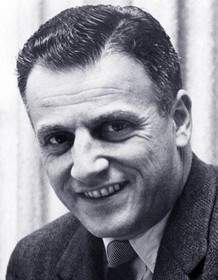
Stanley Kramer
Made by

Stanley Kramer Productions
Where to Watch Ship of Fools
See current US streaming, rental, and purchase options for Ship of Fools (1965) via JustWatch.

Plex
HD
Plex Channel
HD
The Roku Channel
HD
YouTube Free
HD
Amazon Video
HD
Apple TV Store
HD
Fandango At Home
HD
Google Play Movies
SD
YouTube
SD Streaming availability powered by 
Ship of Fools Plot Summary
Read the complete plot summary and ending explained for Ship of Fools (1965). From turning points to emotional moments, uncover what really happened and why it matters.
The ship’s medical officer, Dr. Schumann Oskar Werner, takes a special interest in La Condesa Simone Signoret, a Spanish countess with an opiate addiction who is being deported from Cuba to a Spanish prison in Tenerife for aiding agitators. As she boards the vessel under police escort, the 600 field workers in steerage, deported to Spain because of the low market price of Cuban sugar, cheer her passage. The Condesa confides in the doctor about the brutal poverty that haunts 5,000 laborers living in squalor, under the patronage of the man she once shared a life of luxury with. She manipulates the doctor to secure drugs, yet their growing bond rests on a shared humanitarian impulse: to treat the steerage passengers as human beings rather than cargo. Those feelings bloom into a fragile love, even as both sense the hopelessness of their situation, and the doctor quietly hides a heart condition.
Selected passengers—mostly Aryan Germans—are invited to dine each night at the captain’s table, a ritual that reveals simmering tensions below deck. Some are amused, others offended, by the anti-Jewish rants of German businessman Rieber José Ferrer, who begins an affair with Lizzi Christiane Schmidtmer and expands his nationalist talk to justify his worldview. The captain is soothed by Rieber’s rhetoric, believing that no one will take the Nazi party seriously. The ship’s social order flirts with cruelty and whimsy alike: Jews and a dwarf are kept at its edges, while Baby the dog is allowed at the table—until Baby’s rescue from steerage opponents ends in tragedy when the rescuer dies rather than be saved. The Hutten family’s concern for the dog contrasts with the real danger that confronts the people who pull the ship’s social engine.
At another table, the Jewish Lowenthal Heinz Rühmann sits with the dwarf Glocken Michael Dunn, a pairing that underscores exclusion and camaraderie in equal measure. When Freytag Alf Kjellin learns his wife is Jewish, he joins this circle, and the conversation turns to history, duty, and the Nazi rise in Germany. Freytag reveals that he remains estranged from his Jewish wife due to pressure from family and his employer, and the two men debate what it means to be German in the shadow of a regime that might rewrite their loyalties.
An American artist couple, David George Segal and Jenny Elizabeth Ashley, navigate a fiercely passionate and unsettled partnership. David longs for social commitment through his art, yet feels defeated by his own lack of recognition, while Jenny resists competing with his work and questions whether lasting harmony is possible when art and love pull in opposite directions. Their private turmoil mirrors the ship’s broader conflicts, where personal ambition, artistic integrity, and romantic longing ride side by side with political convictions and disquieting ideologies.
The onboard flamenco troupe provides a sultry, vibrant counterpoint to the stern formalities above deck. Their leader commands attention, but the quartet’s dynamic includes predatory behavior and vulnerability alike, as a dancer contends with a man who tries to manipulate her, and another dancer endures the price of a moment of longing. Elsa Gila Golan appears as one of the dancers, a focal point in the troupe’s shifting power, desire, and danger.
Mary Treadwell Vivien Leigh is a divorced, fading beauty trying to recapture a spark in Paris. She treats the ship’s lieutenant with scorn at first, then finds herself entangled with Bill Tenny Lee Marvin, a former baseball player whose brashness clashes with her restrained self-image. Tenny’s bluntness and her sharp, almost cruel humor collide as he flirts with danger and provokes a candid confrontation. She even offers him the cabin number of Mrs. Treadwell, an action that leads to a drunken intrusion into a cabin, where a moment of confusion almost erupts into something more intimate before she realizes the mix-up and ejects him with a sharp rebuke.
As the voyage continues, the ship’s social experiment unravels under the weight of history and humanity. In Tenerife, the deported steerage workers disembark, and the Condesa makes a brief, poignant choice to leave with Civil Guard escort, after the doctor contemplates staying with her but recognizes how she manipulated him for relief from her own suffering. The captain dismisses his passion as foolishness, but the doctor confronts him in a moment of explosive honesty: they merely carry out orders, while she acted to counter injustice. The captain warns the doctor not to answer a call from a passenger, but the doctor ignores the warning and dies of a heart attack, his body later unloaded in Bremerhaven in a coffin attended by his estranged wife and sons.
Back on deck, as the ship’s hull returns to its ordinary routine, Glocken steps forward to break the fourth wall in a quietly cryptic farewell. He laments the audience’s distance from the ship’s moral questions with a wry shrug, saying, “What has all this to do with us?… Nothing,” before walking away. The final image lingers on a procession of passengers descending into their familiar lives, the memory of the voyage unresolved, and the question of responsibility—personal and political—still echoing long after the vessel reaches harbor.
Ship of Fools Timeline
Follow the complete movie timeline of Ship of Fools (1965) with every major event in chronological order. Great for understanding complex plots and story progression.
Condesa boards the ship under escort
The Spanish countess La Condesa is deported from Cuba to a Spanish prison in Tenerife and boards the ship under police escort. The ship's medical officer, Dr. Schumann, takes a special interest in her. 600 field workers in steerage cheer as she sails away, signaling the tension aboard the vessel.
Condesa sparks a connection with the doctor
The Condesa confides to Dr. Schumann about seeing impoverished conditions endured by thousands of laborers, explaining her motives. She manipulates the doctor to obtain opiate drugs, but her activism aligns with his humanitarian ideals. Their sympathy grows into a fragile love, even as both realize the situation is hopeless and the doctor hides a heart condition.
Captain's table: anti-Jewish rants and flirtations
Selected passengers are invited to dine at the captain's table each night, where Rieber's anti-Jewish rants unsettle some and amuse others. Lizzi admires him for his vitality and mind, while the captain seems reassured that the Nazi party will not be taken seriously. Jews and a dwarf are excluded from the table, but the Hutten’s dog, Baby, is allowed.
Baby thrown overboard; rescue and death
Baby is thrown overboard by children from steerage, and a laborer drowns attempting the rescue despite the doctor's ministrations. The Hutten family fusses over the dog, oblivious that the rescuer has died. The event underscores the moral complexity of life aboard the ship.
Lowenthal and Glocken: bonding over exclusion
The Jewish Lowenthal sits at a side table with the dwarf Glocken, and the two bond over their social exclusion. Lowenthal discusses the Nazi party and its anti-Jewish sentiment, hoping Jews have been good for Germany, while Glocken remains pessimistic. Freytag is later moved to this table.
Freytag joins after wife is revealed Jewish
Rieber moves Freytag to the same side table after learning his wife is Jewish. Freytag discloses that he is separated from his Jewish wife due to pressure from his family and his employer. He reveals his Iron Cross from World War I, deepening the debate about German identity.
David and Jenny: a turbulent American artist couple
The American artist couple David and Jenny share a passionate but turbulent relationship. David is convinced his art will always come first, while Jenny resents having to compete with his ambitions. They fear a life defined by endless fighting unless one compromises.
Flamenco troupe and Johann's pursuit
Passengers are entertained nightly by a troupe of flamenco musicians and dancers, whose leader pimps the women in the troupe. Johann, an unpaid caregiver to his invalid uncle, is attracted to one of the dancers and loses his virginity after paying. The episode reveals the power dynamics and economic coercion shaping relationships aboard.
Mary Treadwell vs Bill Tenny
Mary Treadwell, a divorced fading beauty, dismisses the lieutenant who shows interest, first as duty to unattended women, then as insignificant. When Bill Tenny sits at her table, he pesters a flamenco dancer and later uses her cabin number to pursue Mrs. Treadwell. In a drunken moment, Tenny barges into the cabin, mistaken for a prostitute, and Mary hits him and ejects him.
Disembarkation in Tenerife and Condesa's departure
The ship arrives in Tenerife and the deported workers disembark. The Condesa is escorted off the vessel under Civil Guard protection, and the captain tells the doctor that she is not worth his anguish. The doctor angrily rebukes him, claiming she acted against injustice while they merely follow orders.
The Doctor's death
Ignoring the captain's warning, the doctor remains emotionally overwhelmed and dies of a heart attack soon after the Tenerife confrontation. His death underscores the human cost of the voyage and the clash of ideals aboard the ship.
Bremerhaven: the doctor's body returned
Upon arrival in Bremerhaven, the doctor's body is unloaded in a coffin, attended by his estranged wife and sons. The passengers descend back into their ordinary lives as the voyage concludes and the ship returns to routine.
Glocken breaks the fourth wall
The last passenger to leave the ship is Glocken, who breaks the fourth wall and says, 'What has all this to do with us?...Nothing,' then chuckles and walks off. The moment underscores the film's meditation on moral culpability and audience complicity.
Ship of Fools Characters
Explore all characters from Ship of Fools (1965). Get detailed profiles with their roles, arcs, and key relationships explained.
Bill Tenny (Lee Marvin)
An American ex-baseball player whose brash, loud demeanor masks insecurity and a readiness to clash with others. He pursues Mary but often acts selfishly, revealing a raw craving for attention that clashes with the ship’s fragile social codes.
Dr. Schumann (Oskar Werner)
The ship’s medical officer who blends professional duty with humanitarian sympathy. He hides a heart condition and forms a deep, conflicted bond with La Condesa, leading to a moral crisis that ends in tragedy.
La Condesa (Simone Signoret)
A Spanish countess with an opiate addiction who uses charm to manipulate those around her. Her activism against labor conditions conflicts with her escort’s duties, and her relationship with the doctor becomes a poignant counterpoint to the voyage.
David (George Segal)
An American artist yearning for social commitment, whose relationship with Jenny is turbulent and reflects doubts about love, success, and compromise.
Jenny (Elizabeth Ashley)
An independent American woman who resists conventional roles and challenges David’s view of art and life. She fears losing herself in the relationship and fights to preserve her artistic identity.
Rieber (José Ferrer)
A German businessman whose anti-Jewish diatribes reveal nationalist zeal. His affair with Lizzi complicates social dynamics and hints at the era’s dangerous politics.
Lizzi (Christiane Schmidtmer)
A statuesque dancer drawn to vitality and social climbing, navigating the ship’s moral and financial hierarchies while entangled with Rieber.
Lowenthal (Heinz Rühmann)
A Jewish passenger who bonds with Glocken at a side table, offering a measured perspective on German identity and the Jewish experience aboard a ship under scrutiny.
Glocken (Michael Dunn)
A dwarf passenger who, despite his marginal status, forms connections with others and becomes a symbol of the vulnerable without power aboard the voyage.
Frau Hutten (Lilia Skala)
A German passenger’s wife who navigates class tensions and social expectations, showing concern for crew and even the ship’s dogs amid the voyage’s pressures.
Hutten (Stanley Adams)
A German passenger at the captain’s table whose anti-Jewish diatribes reflect the era’s bigotry and the normalization of prejudice among ordinary travelers.
Captain Thiele (Charles Korvin)
The ship’s captain who presides over the captain’s table and navigates between decorum and dissent, embodying authority while facing moral ambiguity.
Elsa (Gila Golan)
A young dancer traveling with her parents, navigating social rules and her own desires for independence and love.
Graf (John Wengraf)
An elderly caregiver to his invalid uncle, whose quiet presence contrasts with the ship’s lively social drama and hints at personal endurance.
Amparo (Barbara Luna)
A Gypsy dancer traveling with the troupe who participates in the ship’s social dynamics and reflects the lives behind the spectacle.
Ship of Fools Settings
Learn where and when Ship of Fools (1965) takes place. Explore the film’s settings, era, and how they shape the narrative.
Time period
1930s
Set in the 1930s, during a period of rising Nazi influence and mounting political turmoil in Europe. The onboard conversations reflect contemporary ideology, antisemitism, and nationalistic fervor, while past memories of World War I loom over the characters. The timing amplifies the moral conflicts faced by individuals choosing loyalty, humanity, or self-preservation.
Location
Cuba, Atlantic Ocean, Tenerife (Canary Islands), Bremerhaven
The action unfolds on a passenger ship carrying deported workers from Cuba to Spain, crossing the Atlantic toward Tenerife before arriving in Bremerhaven. The ship becomes a closed microcosm where steerage and privileged passengers mingle, exposing class tensions and social pretenses. The journey itself is a stage for political undercurrents, humanitarian impulses, and personal dramas to collide.
Ship of Fools Themes
Discover the main themes in Ship of Fools (1965). Analyze the deeper meanings, emotional layers, and social commentary behind the film.
🤝
Compassion
Compassion emerges across the ship when Dr. Schumann and La Condesa connect over shared concern for the laborers and human dignity. Their bond challenges the surrounding indifference and shows how empathy can persist even in dire circumstances. The theme contrasts personal tenderness with a system that treats people as cargo.
⚖️
Ethics & Power
Ideology and authority shape behavior at the captain’s table and among the passengers, revealing how power can corrupt or justify cruelty. Characters debate loyalty to country, class, and duty, exposing the moral costs of following or resisting orders. The narrative uses the voyage to test ethical boundaries under pressure.
💔
Love & Loss
Romantic entanglements unfold amid social divides and political unease, with the doctor–Condesa relationship embodying a fragile hope crushed by circumstance. Love becomes a counterpoint to the era’s brutality, often ending in separation or tragedy. The doomed romance underscores the personal cost of a world headed toward catastrophe.

Coming soon on iOS and Android
The Plot Explained Mobile App
From blockbusters to hidden gems — dive into movie stories anytime, anywhere. Save your favorites, discover plots faster, and never miss a twist again.
Sign up to be the first to know when we launch. Your email stays private — always.
Explore the mobile appShip of Fools Spoiler-Free Summary
Discover the spoiler-free summary of Ship of Fools (1965). Get a concise overview without any spoilers.
A sleek ocean liner cuts through the restless Atlantic of the 1930s, ferrying a hodgepodge of souls toward a European shore that feels both distant and imminent. The vessel is more than a means of transport; it is a floating stage where class, nationality, and ambition collide beneath the hum of engines and the whisper of sea breezes. The atmosphere is thick with the conventions of the era—formal dining rooms, cramped steerage, and a palpable undercurrent of political change that drifts through the corridors as surely as the salt‑laden wind.
On deck, the ship’s medical officer, Dr. Schumann, finds himself drawn to a mysterious passenger, La Condesa, whose guarded poise hints at stories far beyond the ship’s rails. The German crew, led by a pragmatic captain, watches a nightly ritual where a select group of passengers join the officers at the table, exposing raw cultural and ideological tensions. Among them, the outspoken businessman Rieber spreads nationalist rhetoric, sparking both amusement and discomfort, while his affair with Lizzi adds a personal edge to the dialogue. Across the table, the quiet yet sharp‑tongued Lowenthal shares a bench with the diminutive Glocken, their conversation reflecting the precarious balance between exclusion and camaraderie. The married German officer Freytag wrestles with his loyalties when familial ties pull him toward a Jewish spouse, underscoring the ship’s role as a microcosm of a continent on the brink.
Below the polished decks, an American artist couple navigates their own turbulence. David, driven by a yearning for social relevance through his work, grapples with creative frustration, while Jenny balances love’s intensity against the uncertainty of an itinerant life. Their artistic fervor mirrors the broader clash of ideals aboard, where personal ambition, love, and fear intersect. Adding a vivid splash of color, a flamenco troupe performs with intoxicating rhythm, their dancers—among them the striking Elsa—embody both allure and vulnerability, further highlighting the vessel’s eclectic tapestry.
Through its layered interactions, the ship becomes a suspended world where language, power, and desire swirl together, inviting the audience to contemplate how each passenger’s story reflects larger questions of identity, responsibility, and the uneasy promise of a new horizon.
Movies with Similar Twists and Themes
Uncover films that echo the narrative beats, emotional arcs, or dramatic twists of the one you're exploring. These recommendations are handpicked based on story depth, thematic resonance, and spoiler-worthy moments — perfect for fans who crave more of the same intrigue.


Featured on this page

What's After the Movie?
Not sure whether to stay after the credits? Find out!
Check out our other apps:

SAT Sphere
Build confidence for the Digital SAT.

Mori Atlas
Discover wild places worth protecting.

Luntero
Search smarter for a home in Amsterdam.

Plot Explained
Unravel movie endings and hidden clues.

Pokechamp
Dive into Pokémon data and battle logic.

Driving Theory
Get ready for your European theory test.

Movie Dust
Plan your next cinema trip with ease.

Musemap
Find art and culture as you travel.

Selkobase
Compare credentials before committing.

Local Manual
Turn an unfamiliar country into practical next steps.

Lernavi
Compare school systems before your next move.

GymRoam
Find a workout stop wherever your plans take you.
Explore Our Movie Platform
New Movie Releases (2026)
Famous Movie Actors
Top Film Production Studios
Movie Plot Summaries & Endings
Major Movie Awards & Winners
Best Concert Films & Music Documentaries
Movie Collections and Curated Lists
© 2026 What's After the Movie. All rights reserved.
Privacy Policy