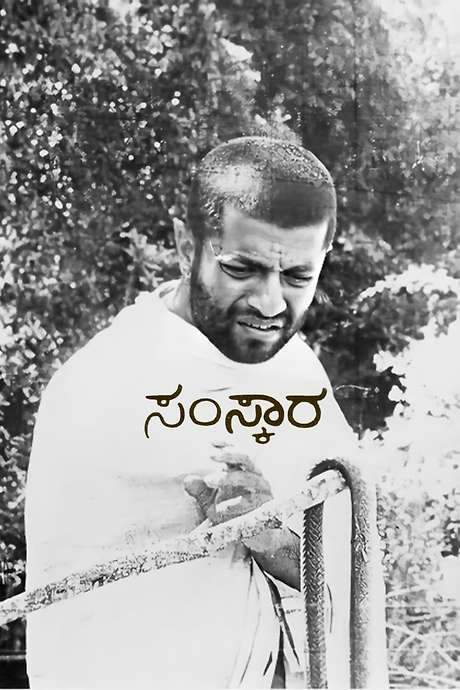
Samskara 1970

Directed by

Pattabhirama Reddy
Made by

Ramamanohara Chitra
Samskara Plot Summary
Read the complete plot summary and ending explained for Samskara (1970). From turning points to emotional moments, uncover what really happened and why it matters.
In a narrow street of Durvasapura, a village perched in the Western Ghats of Karnataka, life revolves around a traditional Madhwa Brahmin community that upholds strict ritual rules. At the center of its spiritual life is Praneshacharya, Girish Karnad a devout scholar who has returned from Varanasi with the singular aim of attaining moksha. He is regarded as the village’s moral and spiritual leader, a man who believes that personal sacrifice can clear the path to enlightenment. To preserve his focus and celibacy, he undertakes a calculated act of self-denial: he marries an invalid woman so he can devote himself wholly to spiritual pursuits, a decision that shades the life of the community with quiet tension and complexity.
Opposite him stands Narayanappa, P. Lankesh, a Brahmin by birth who refuses to live by the rigid codes that define his caste. He rejects many Brahminical conventions—eating meat, keeping company with a prostitute named Chandri, and even defying temple rituals that others hold sacred. Narayanappa and his friends venture into the temple tank to fish, then cook and eat the sacred catches, provoking a sharp backlash from the village Brahmins. They appeal to Praneshacharya to expel Narayanappa from Durvasapura, but the leader hesitates, believing there might be a way to persuade Narayanappa to renounce his transgressions rather than exile him.
When Narayanappa travels to Shimoga and returns with a high fever, he dies, throwing the Brahmins into a knot of ritual crisis. The core dilemma crystallizes: in Brahmin practice, cremation must occur quickly to avoid ceremonial pollution, but a non-Brahmin cannot cremate a Brahmin. Praneshacharya must find a solution, yet the ancient scriptures offer no clear answer. He searches the sacred texts, reads aloud with a hopeful heart, and prays at a temple to seek guidance. The day ends with no resolution, leaving him to walk home in a state of unresolved doubt.
On the road, a moment of fascination disrupts Praneshacharya’s rigid detachment. He encounters Chandri, and under her spell he wakes up later to find himself in her arms. Chandri, who has already faced the community’s disapproval, discreetly cremates Narayanappa’s body and leaves Durvasapura for good, hoping to shield the town from further scandal. The village is left with a wound and a question: will Praneshacharya reveal what happened, or remain silent to protect the fragile order of the community? The weight of guilt presses on him as he momentarily contemplates disclosure, but he ultimately leaves the village to live with the consequences of his choices, returning only to confront the truth.
The film’s quiet, ethical tension remains unresolved, inviting viewers to weigh duty, desire, and the price of ascetic ideals. The ensemble performances—[Lakshmi Krishnamurthy], [Dasharathi Dixit], and [B.R. Jayaram]—support the dense moral landscape, while the pivotal figures of Praneshacharya and Narayanappa anchor a story that interrogates tradition from within. The narrative never prescribes an easy answer; instead, it lingers on the consequences of devotion—both to the divine and to the self—leaving the final fate of Praneshacharya in the viewer’s imagination.
Samskara Timeline
Follow the complete movie timeline of Samskara (1970) with every major event in chronological order. Great for understanding complex plots and story progression.
Praneshacharya returns as village leader seeking moksha
Praneshacharya, a devout Brahmin who has completed Vedic studies, returns to Durvasapura and is revered as the spiritual leader of the Brahmin community. His overarching goal is liberation (moksha) and he is willing to endure personal sacrifices to pursue it. The setting establishes his authority and single-minded pursuit.
Praneshacharya marries an invalid woman for celibacy-laden sacrifice
To remain focused on moksha, he takes a wife who is invalid, thereby choosing celibacy as the price of his spiritual quest. This act signals his willingness to bear harsh personal consequences for his goal. It also sets up the moral tension surrounding his future decisions.
Narayanappa rejects Brahmin rules by eating meat and associating with Chandri
Although a Brahmin by birth, Narayanappa embraces a lifestyle outside the strict caste norms. His acts spark controversy among the villagers and threaten the social order of Durvasapura.
Sacred fish incident in temple tank
Narayanappa and his companions catch sacred fish in the temple tank and cook them, feeding a direct challenge to Brahmin authority. The act triggers collective outrage among the Brahmins and a demand for Narayanappa's expulsion.
Brahmins urge Praneshacharya to expel Narayanappa
The Brahmins confront Praneshacharya, asking him to remove Narayanappa from the community. Praneshacharya considers the request, weighing the severity of the offense against the possibility of reform.
Praneshacharya chooses reform over expulsion
He decides against taking the extreme step of banishment, hoping to convince Narayanappa to renounce his immoral acts. He believes dialogue and reform are possible within the village's frame of Brahmin ethics.
Narayanappa travels to Shimoga and dies after returning
Narayanappa leaves for Shimoga to escape the pressure, but returns with a high fever and dies. His death deepens the crisis of ritual purity and raises questions about who can perform the necessary rites.
Cremation dilemma: pollution vs tradition
With Narayanappa dead, the Brahmins face a cruel dilemma: cremating a Brahmin's body risks pollution, but a non-Brahmin cannot perform the rite. They search for a solution within their constraints but find none.
Praneshacharya searches for an answer in scriptures and prayer
He studies the holy books and goes to a temple to pray for guidance, spending a full day in contemplation. The scriptures fail to offer a clear solution, leaving him spiritually unsettled.
Encounter with Chandri and the night awakening
On his way home, he encounters Chandri and is entranced by her beauty. In a moment of weakness, he falls under her influence, an act that exposes a hidden guilt within him.
Chandri secretly cremates Narayanappa and leaves
Chandri rushes home, discovers Narayanappa's body decaying, and arranges for a private cremation away from Durvasapura. She then flees the village, leaving the others to their complicating secrets.
Guilt drives Praneshacharya away from the village
Feeling the weight of his own indiscretion, Praneshacharya departs Durvasapura, hoping to escape the repercussions of his actions. The departure marks a drastic break from his role as community guide.
He returns to face his act and perhaps confess
Eventually he returns to the village, determined to own up to his act and bear the consequences. The narrative stops short of revealing whether he finally confesses, leaving the outcome to the viewer.
Ending left to imagination
The story closes with ambiguity about whether Praneshacharya reveals his indiscretion. The moral and spiritual dilemma lingers, inviting reflection on guilt, power, and reform.
Samskara Characters
Explore all characters from Samskara (1970). Get detailed profiles with their roles, arcs, and key relationships explained.
Praneshacharya (Girish Karnad)
A devout Brahmin and village leader who has completed Vedic studies and returned to Durvasapura. He pursues moksha and sacrifices personal happiness by taking a celibate path, but his encounter with Chandri tests his principles and resolve.
Narayanappa (P. Lankesh)
A Brahmin who rejects strict Brahminism by eating meat and keeping company with a prostitute. His transgression destabilizes the village’s rules, triggering a crisis over ritual purity and communal judgment.
Chandri
A prostitute whose beauty captivates Praneshacharya; her presence catalyzes his momentary lapse and drives the central conflict. She leaves Durvasapura after the incident, fueling the village’s moral dilemma.
Samskara Settings
Learn where and when Samskara (1970) takes place. Explore the film’s settings, era, and how they shape the narrative.
Location
Durvasapura, Western Ghats, Karnataka, India
The action unfolds on a narrow street in Durvasapura, a small village in the Western Ghats of Karnataka. Most residents belong to the Madhwa Brahmin community and adhere to strict religious customs. The setting highlights a tight-knit, tradition-bound society where social norms govern daily life.
Samskara Themes
Discover the main themes in Samskara (1970). Analyze the deeper meanings, emotional layers, and social commentary behind the film.
🏛️
Tradition vs Desire
Rigid Brahmin tradition collides with personal longing as Praneshacharya pursues moksha and celibacy while Narayanappa challenges caste and lifestyle norms. The narrative explores how duty and spiritual aims can clash with human impulses. This tension reveals the fragility of social order when faced with individual choices.
💔
Guilt and Confession
Praneshacharya carries a growing sense of guilt after a private lapse involving Chandri. The story probes whether private remorse can or should translate into public accountability. The tension between inner conscience and communal perception drives the moral core of the drama.
⚖️
Purity and Social Rules
Brahmin notions of ritual purity depend on caste boundaries, complicating even death rites. Narayanappa’s actions force the village to confront the limits of tradition versus compassion. The crisis exposes the rigidity and cost of strict social codes.

Coming soon on iOS and Android
The Plot Explained Mobile App
From blockbusters to hidden gems — dive into movie stories anytime, anywhere. Save your favorites, discover plots faster, and never miss a twist again.
Sign up to be the first to know when we launch. Your email stays private — always.
Explore the mobile appSamskara Spoiler-Free Summary
Discover the spoiler-free summary of Samskara (1970). Get a concise overview without any spoilers.
In the mist‑cloaked hills of the Western Ghats lies Durvasapura, a tight‑knit village where a Madhwa Brahmin community lives by the rhythm of ancient ritual. Every sunrise finds the streets humming with prayers, the temple’s bells marking the passage of time, and the villagers’ lives measured against a strict code of conduct that leaves little room for deviation. The atmosphere is one of quiet reverence, but beneath the surface a subtle current of tension flows, hinting at the fragility of the order that sustains the settlement.
At the heart of this world stands Praneshacharya, a scholar returned from Varanasi whose pursuit of moksha has turned him into the village’s spiritual anchor. He embodies the ideal of self‑denial and solemn devotion, yet his personal choices—most notably an arranged marriage to an ailing woman—add layers of complexity to his role as moral guide. In contrast, Narayanappa is a Brahmin who deliberately flouts the very norms that define his caste, sharing meals of meat, keeping the company of a prostitute named Chandri, and challenging the sanctity of temple rituals. Their opposite paths set the stage for a clash of philosophies that reverberates through every corner of the community.
When Narayanappa passes away, the village is thrust into a ritual dilemma: Brahmin tradition demands a swift cremation, yet the very transgressions that marked his life now cloud who is authorized to perform the rites. The dispute forces the community to confront the limits of its own doctrines, exposing the uneasy balance between prescribed duty and lived reality. As the elders deliberate, the atmosphere tightens, charged with questions that go beyond a single ceremony.
The film unfolds with a measured, almost meditative tone, letting the lush landscape and the austere interiors reflect the inner struggles of its characters. It invites viewers to linger on the moral ambiguity that arises when rigid belief meets human imperfection, offering a portrait of a society caught between reverence for tradition and the inevitable pull of personal desire. The unresolved tension promises a thoughtful exploration of faith, responsibility, and the cost of devotion.
Movies with Similar Twists and Themes
Uncover films that echo the narrative beats, emotional arcs, or dramatic twists of the one you're exploring. These recommendations are handpicked based on story depth, thematic resonance, and spoiler-worthy moments — perfect for fans who crave more of the same intrigue.
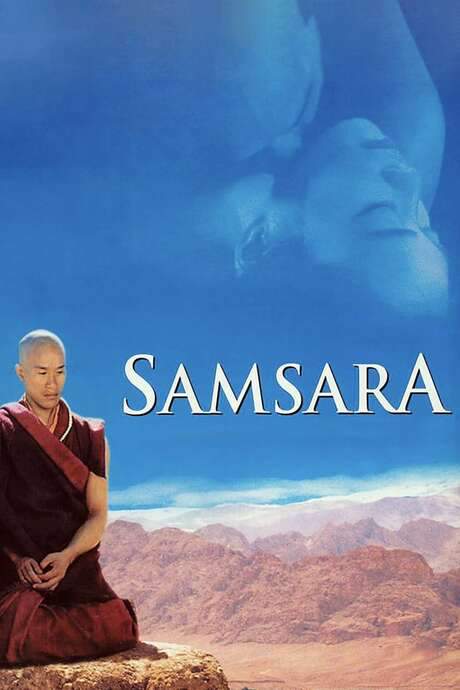
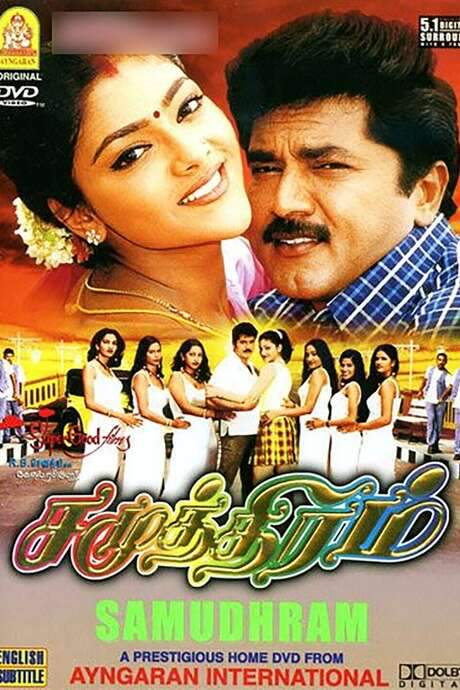
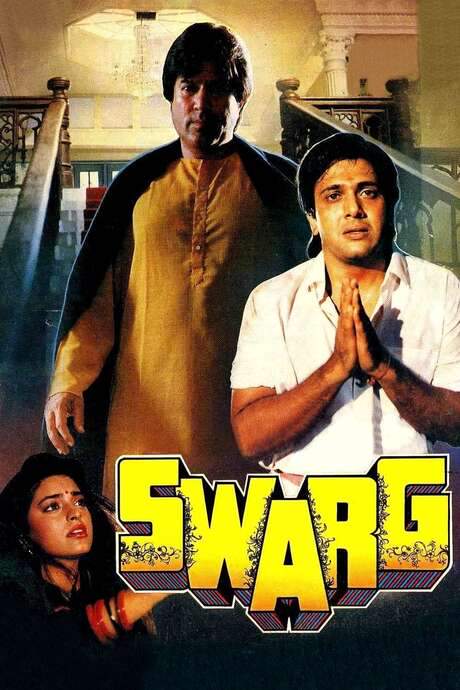


Featured on this page

What's After the Movie?
Not sure whether to stay after the credits? Find out!
Check out our other apps:

SAT Sphere
Build confidence for the Digital SAT.

Mori Atlas
Discover wild places worth protecting.

Luntero
Search smarter for a home in Amsterdam.

Plot Explained
Unravel movie endings and hidden clues.

Pokechamp
Dive into Pokémon data and battle logic.

Driving Theory
Get ready for your European theory test.

Movie Dust
Plan your next cinema trip with ease.

Musemap
Find art and culture as you travel.

Selkobase
Compare credentials before committing.

Local Manual
Turn an unfamiliar country into practical next steps.

Lernavi
Compare school systems before your next move.

GymRoam
Find a workout stop wherever your plans take you.
Explore Our Movie Platform
New Movie Releases (2026)
Famous Movie Actors
Top Film Production Studios
Movie Plot Summaries & Endings
Major Movie Awards & Winners
Best Concert Films & Music Documentaries
Movie Collections and Curated Lists
© 2026 What's After the Movie. All rights reserved.
Privacy Policy