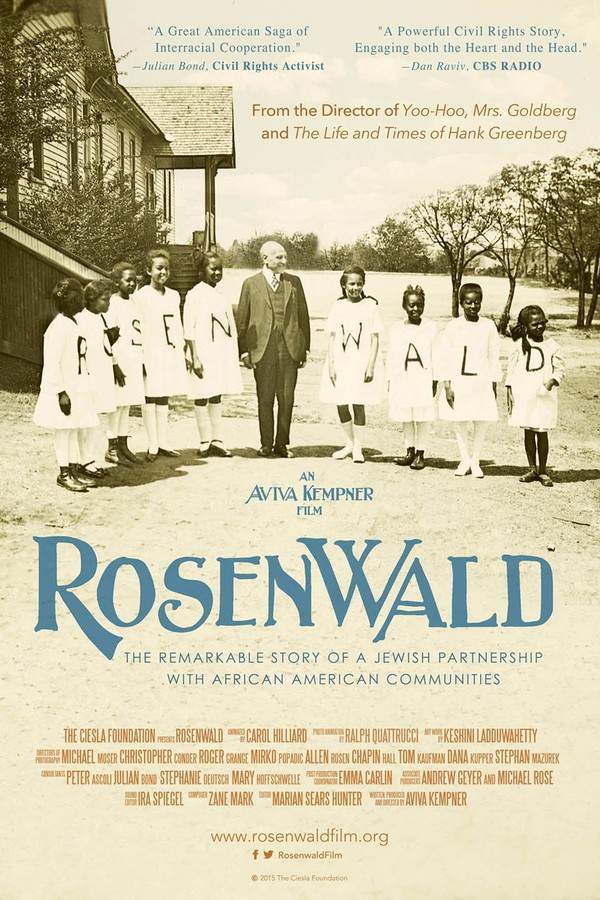
Rosenwald 2015

Directed by

Aviva Kempner
Made by

Ciesla Foundation
Rosenwald Plot Summary
Read the complete plot summary and ending explained for Rosenwald (2015). From turning points to emotional moments, uncover what really happened and why it matters.
Julius Rosenwald’s extraordinary path from a modest role in his father’s clothing business to the chairmanship of Sears, Roebuck & Company is the backbone of this thoughtful documentary, and the film uses that ascent to frame a larger story about philanthropy, race, and lasting community impact. The narrative unfolds with a clear, steady arc: a powerful businessman becomes a dedicated benefactor whose actions reshape education and opportunity for African Americans in the rural South.
The documentary weaves in candid perspectives from a small group of voices close to Rosenwald’s world. It includes conversations with his grandson and biographer, as well as civil rights leaders, scholars, journalists, and filmmakers. Through their insights, the film paints Rosenwald as a complex figure who balanced commercial genius with a deep, personal commitment to social change. Their reflections help illuminate not only what he did, but why his choices mattered in the broader arc of American history.
At the start, the film explains Rosenwald’s rise to one of the world’s most influential retailers, a transformation born of shrewd business sense and strategic leadership. Yet the story soon pivots to a foundational moral conviction: the distress he saw around the world—pogroms in other lands—made him question the moral cost of American segregation and inequality. This moment of empathy becomes the catalyst for a lifelong project: to use wealth to uplift Black communities and to create real, tangible opportunities where they were most needed.
A central thread follows Rosenwald’s friendship with Booker T. Washington and his early philanthropic giving to the Tuskegee Institute. The film details a practical, almost architectural approach to reform: supporting a model project in which Tuskegee’s architects designed simple schoolhouses, with the school staff overseeing their operation. This blend of design, hands-on oversight, and community involvement sets the stage for a larger, scalable campaign that would later be formalized through a dedicated foundation.
After Washington’s death in 1915, Rosenwald establishes the Rosenwald Foundation in 1917, expanding the scope of the work with a structured, grant-based strategy. The foundation’s hallmark is its matching construction funds model, a collaboration that required white school boards to approve plans and commit funds for ongoing operation. The film makes it clear that the process was not just about money; it was a community endeavor. Local communities rallied through fundraising and sweat equity, with some contributing land for school sites. This participatory approach helped secure local buy-in and created a sense of shared responsibility for the schools’ future.
By the time of Rosenwald’s death in 1932, the impact of this approach was monumental. The documentary notes that some 5,357 Rosenwald schools had been built, a staggering number that represented roughly one-third of all elementary schools available to African American children in the era before Brown v. Board of Education shattered the legal basis for segregated schooling in 1954. The film emphasizes how these schools were more than buildings; they were living gateways to education, mobility, and community resilience in the face of segregation.
The film also broadens its lens to other Rosenwald-supported ventures that reshaped urban and cultural life. It highlights the creation of 25 YMCA-YWCA facilities for African Americans, the founding of the Museum of Science and Industry, and the construction of the Michigan Boulevard Garden Apartments, a housing project that hosted many who moved to Chicago during the Great Migration. The narrative also acknowledges Rosenwald’s role in supporting the training of the Tuskegee Airmen, linking his philanthropy to both education and national service.
In its closing chapters, the documentary traces the enduring influence of the Rosenwald Fund beyond bricks and mortar. It chronicles how the fund awarded grants to a generation of Black artists and writers who helped shape mid-twentieth-century culture and thought. The story underscored here is one of a private donor whose impact extended into schools, housing, civil rights, and the arts, illustrating a multidimensional approach to social change that continued to echo long after his lifetime.
Throughout, the film relies on archival materials, interviews, and historical context to present a balanced portrait of a man whose wealth enabled a remarkable shift in opportunities for Black Americans. It remains a careful, nuanced examination of how strategic philanthropy—grounded in community involvement and sustained by partnerships—can alter the trajectory of schools, neighborhoods, cultural life, and, ultimately, a nation’s ongoing struggle for equality.
Rosenwald Timeline
Follow the complete movie timeline of Rosenwald (2015) with every major event in chronological order. Great for understanding complex plots and story progression.
Film opens with interviews
The documentary opens with interviews featuring Peter Ascoli, Julian Bond, Stephanie Deutsch, Richard J. Powell, Eugene Robinson, and George C. Wolfe. These voices frame Rosenwald's significance and guide viewers into the historical narrative. The conversations touch on his impact in business, civil rights, and culture.
Rosenwald's rise at Sears-Roebuck
The film recounts Rosenwald's ascent from his father's clothing business to the chairmanship of Sears-Roebuck, transforming the company into the world's largest retailer. It highlights how his business savvy built the wealth that would later fuel his philanthropy. The narrative links corporate success to social ambition.
Response to pogroms motivates philanthropy
Shocked by reports of anti-Jewish pogroms in Russia, Rosenwald resolves to use his fortune to improve conditions for marginalized people in America. He recognizes that African Americans face systemic oppression similar to what he witnessed abroad. This realization redirects his energy toward social reform.
Friendship with Booker T. Washington
Rosenwald forms a close relationship with Booker T. Washington and begins donating to the Tuskegee Institute. The partnership signals a strategic shift from wealth accumulation to targeted, education-focused philanthropy. The foundation of trust accelerates his later campaigns.
Model schoolhouses initiative
He funds a model project where Tuskegee architects design simple schoolhouses to serve rural Southern communities. The school staff oversee operation, ensuring schools are practical and well-managed. The project demonstrates how thoughtful design and local involvement could transform education.
Rosenwald Foundation established
After Washington's death in 1915, Rosenwald creates the Rosenwald Foundation in 1917 to expand the school-building program. The foundation uses matching funds to secure community investment and ensure operating support from local school boards. The approach relies on local fundraising and sweat equity.
Scale of rural school construction
The Foundation funds thousands of rural Black schools across the South, with communities contributing land and labor. By 1932, the program has produced a staggering number of schools and significantly expanded Black educational access. The model becomes a cornerstone of segregated-era schooling.
Impact statistic: 5,357 Rosenwald schools
By Rosenwald's death in 1932, about 5,357 Rosenwald schools exist, comprising roughly one-third of all Black elementary schools before Brown v. Board. The film emphasizes the scale and lasting influence of the initiative. It connects school access to broader civil rights progress.
YMCA-YWCA network for African Americans
Beyond schools, Rosenwald helps establish 25 YMCA-YWCA facilities for African Americans. These centers provide community spaces, leadership development, and social infrastructure in Black communities. The initiative broadens his impact beyond education.
Museum of Science and Industry and Chicago influence
The film covers Rosenwald's role in founding the Museum of Science and Industry in Chicago. It reflects his commitment to public education, science, and culture, as well as providing a platform for Black and urban achievement. The museum endures as a cultural landmark.
Housing project: Michigan Boulevard Garden Apartments
Rosenwald backs the Michigan Boulevard Garden Apartments, a housing project in Chicago for Black migrants during the Great Migration. The project demonstrates how housing policy complemented educational and cultural aims. It highlights the broader strategy of improving living conditions.
Training for the Tuskegee Airmen
The documentary notes Rosenwald's support for training the Tuskegee Airmen, helping Black servicemen gain skills and opportunities in World War II. This extended his philanthropic reach into military and vocational training. It illustrates a long arc from education to national service.
Legacy of the Rosenwald Fund for artists and writers
The film closes by tracing how the Rosenwald Fund granted awards to many Black artists and writers who became prominent mid-century figures. The fund's cultural grants helped shape American arts and letters and left a lasting imprint on the cultural landscape. The narrative ties philanthropy to enduring creative achievement.
Rosenwald Characters
Explore all characters from Rosenwald (2015). Get detailed profiles with their roles, arcs, and key relationships explained.
Julius Rosenwald
Industrialist who rose from the family clothing business to chair Sears-Roebuck and drive the company's growth into the world’s largest retailer. The film portrays his awakening to racial injustice after pogroms in Europe and his decision to marshal wealth toward improving Black Americans’ conditions. He collaborates with Booker T. Washington, funds Tuskegee Institute initiatives, and establishes the Rosenwald Foundation in 1917 to expand rural school construction, ultimately helping build thousands of schools. By his death in 1932, his philanthropic reach extended to multiple civic projects including housing, museums, and the training of Black professionals.
Booker T. Washington
A key early partner whose influence on Rosenwald helped shape the direction of Black educational reform. The film presents their friendship and collaboration as a driving force behind the model-school program and Tuskegee-related initiatives. Washington’s leadership and vision provide context for how private philanthropy could align with Black educational advancement during Jim Crow.
Peter Ascoli
Grandson and biographer of Julius Rosenwald; he provides family context and biographical framing for the documentary. Ascoli’s presence helps connect Rosenwald’s business achievements with his philanthropic motives and the personal stakes behind his public works.
Julian Bond
Civil rights leader who appears in interviews to contextualize Rosenwald’s impact on Black education and civil rights. Bond offers perspective on how Rosenwald’s funding intersected with broader social movements and helped empower communities in the struggle for equality.
Stephanie Deutsch
Scholar and interviewer whose contributions provide historical framing of Rosenwald’s era and the significance of his philanthropic projects. Deutsch helps connect archival material to the lived experiences of the communities affected by Rosenwald’s investments.
Richard J. Powell
Interviewer and scholar who adds analysis on the cultural and educational impact of Rosenwald’s funding. Powell helps articulate how the Rosenwald program influenced Black arts, culture, and the broader national conversation on race and opportunity.
Eugene Robinson
Journalist whose presence as an interviewee foregrounds the historical and social implications of Rosenwald’s philanthropy. Robinson’s perspective links the documentary’s historical arc to ongoing discussions about race, education, and civic responsibility.
George C. Wolfe
Director of the documentary who appears as an interviewee to reflect on the storytelling and cinematic approach. Wolfe frames the film’s structure and emphasizes the legacy of Rosenwald’s contributions to American society.
Rosenwald Settings
Learn where and when Rosenwald (2015) takes place. Explore the film’s settings, era, and how they shape the narrative.
Time period
Late 19th century – early 20th century (1870s–1930s)
The documentary follows Rosenwald from the late 19th century through the early 20th century, noting his ascent to Sears-Roebuck’s chair and his evolving philanthropic mission. It covers the founding of the Rosenwald Foundation in 1917 and the rapid expansion of school-building projects until his death in 1932. The period sits alongside Jim Crow, the Great Migration, and growing civil rights efforts, situating private generosity within a broader historical arc. The film places these efforts in the context of American social reform across decades.
Location
Chicago, Illinois, Rural South, United States, Tuskegee, Alabama
The film’s narrative traces Rosenwald’s rise in urban Chicago and his philanthropy’s reach into the rural South. It also highlights Tuskegee, Alabama, and the Tuskegee Institute’s role in shaping educational initiatives tied to Black communities. The settings span early 20th-century America, showing industrial centers alongside segregated rural areas in a period of social change. These places anchor the story of private wealth transforming public education.
Rosenwald Themes
Discover the main themes in Rosenwald (2015). Analyze the deeper meanings, emotional layers, and social commentary behind the film.
🎓
Education
Rosenwald’s philanthropic model funded thousands of schools for African American children in the rural South, transforming access to education. The program depended on matching funds, community sweat equity, and local government support, illustrating a cooperative path to reform. By 1932, Rosenwald schools helped reshape the educational landscape for Black communities and left a lasting legacy in American schooling.
💼
Wealth & Philanthropy
The narrative tracks Rosenwald’s rise to the top of Sears-Roebuck and his decision to use wealth for social good. It emphasizes the fund’s matching-grant approach and the idea that private fortune could be mobilized for public advancement. His initiatives extended into housing, museums, and broader community projects, underscoring a multifaceted philanthropic footprint.
🤝
Collaboration
A central thread is the partnership with Booker T. Washington, blending Black leadership with philanthropic capital. The film shows negotiations with white school boards and Black communities, reflecting cross-racial cooperation in a segregated era. It also highlights how philanthropy amplified education, culture, and even military training through related programs.

Coming soon on iOS and Android
The Plot Explained Mobile App
From blockbusters to hidden gems — dive into movie stories anytime, anywhere. Save your favorites, discover plots faster, and never miss a twist again.
Sign up to be the first to know when we launch. Your email stays private — always.
Explore the mobile appRosenwald Spoiler-Free Summary
Discover the spoiler-free summary of Rosenwald (2015). Get a concise overview without any spoilers.
In the deep‑south of early‑20th‑century America, a nation split by segregation provides the stark backdrop for a tale of ambition and conscience. Julius Rosenwald arrives as the son of an immigrant tailor, navigating the bustling world of a fledgling department store that will become Sears, Roebuck & Company. His ascent from modest clerk to the helm of a retail empire is rendered against the quiet rhythms of towns where the color line dictates every opportunity, setting a tone that blends the gritty realism of commerce with the lingering hope of change.
The film hints at a pivotal moral awakening, sparked by the horrors Rosenwald witnesses abroad and the stark inequities at home. This inner conflict draws him into a partnership with the visionary educator Booker T. Washington, whose quiet determination to uplift African‑American youth through practical schooling resonates with Rosenwald’s own desire to put wealth to purposeful use. Their collaboration is portrayed as a meeting of minds—business acumen meeting educational idealism—suggesting a quiet, yet potent, rebellion against the era’s accepted norms.
Through a careful weave of archival photographs, period footage, and intimate interviews with family members, scholars, and contemporaries, the documentary adopts a reflective, almost reverent tone. It invites viewers to linger over the textures of libraries, schoolrooms, and community halls that emerged from this partnership, emphasizing the nuanced interplay between private philanthropy and public responsibility. The narrative breathes life into the quiet determination of ordinary people who, with sweat and modest contributions, helped shape a network of institutions that promised a brighter future.
Beyond schools, the story gestures toward a broader canvas of cultural and civic projects—YMCA‑YWCA centers, modest housing blocks, and artistic patronage—that collectively sketch a vision of a more equitable society. The film remains rooted in the sense that a single individual’s strategic generosity can ripple outward, sparking community resilience and sowing the seeds of lasting transformation, all while leaving the full scope of those ripples to the audience’s imagination.
Movies with Similar Twists and Themes
Uncover films that echo the narrative beats, emotional arcs, or dramatic twists of the one you're exploring. These recommendations are handpicked based on story depth, thematic resonance, and spoiler-worthy moments — perfect for fans who crave more of the same intrigue.
Featured on this page

What's After the Movie?
Not sure whether to stay after the credits? Find out!
Check out our other apps:

SAT Sphere
Build confidence for the Digital SAT.

Mori Atlas
Discover wild places worth protecting.

Luntero
Search smarter for a home in Amsterdam.

Plot Explained
Unravel movie endings and hidden clues.

Pokechamp
Dive into Pokémon data and battle logic.

Driving Theory
Get ready for your European theory test.

Movie Dust
Plan your next cinema trip with ease.

Musemap
Find art and culture as you travel.

Selkobase
Compare credentials before committing.

Local Manual
Turn an unfamiliar country into practical next steps.

Lernavi
Compare school systems before your next move.

GymRoam
Find a workout stop wherever your plans take you.
Explore Our Movie Platform
New Movie Releases (2026)
Famous Movie Actors
Top Film Production Studios
Movie Plot Summaries & Endings
Major Movie Awards & Winners
Best Concert Films & Music Documentaries
Movie Collections and Curated Lists
© 2026 What's After the Movie. All rights reserved.
Privacy Policy