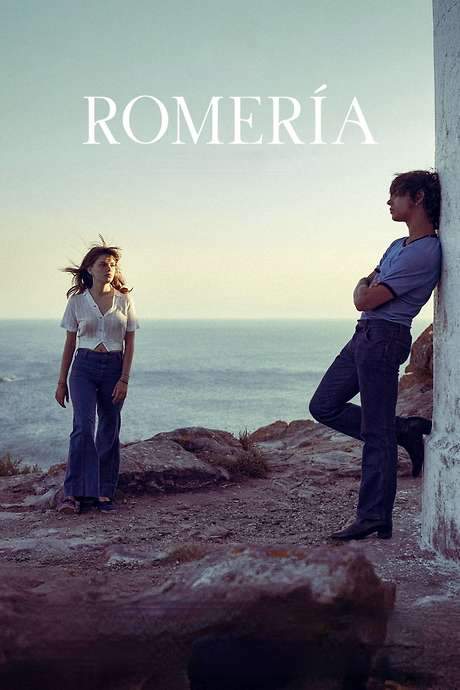
Romería 2025


Directed by

Carla Simón
Made by

Elastica Films
Where to Watch Romería
See current US streaming, rental, and purchase options for Romería (2025) via JustWatch.

Criterion Channel
HD
Amazon Video
HD
Apple TV Store
4K
Fandango At Home
SD Streaming availability powered by 
Romería Plot Summary
Read the complete plot summary and ending explained for Romería (2025). From turning points to emotional moments, uncover what really happened and why it matters.
In 2004, Llúcia Garcia as Marina Piñeiro, an 18-year-old orphan, travels to Vigo for five days to uncover the truth about her biological father, who died of AIDS, and to pursue a scholarship to study film. She lands on a houseboat where she stays with her uncle Lois, his wife Denise, and their children Nuno, Basilio, and Eugene. She asks about where her parents lived; Lois insists they resided in Playa Samil, but Marina presses that they really lived in Toralla—a version later echoed by her uncle Iago and by Marina’s mother’s diary, which she carries with her. Throughout her stay, family members repeatedly note the striking physical resemblance between Marina and her mother, a fact that both unsettles and draws her deeper into their shared history.
During the days, she visits her Aunt Olalla, who crafts a red dress for her in a boutique before they head to the beach with Aunt Virxinia. As the news of Marina’s arrival spreads, awkward moments surface, including a tense moment when some young cousins claim Olalla warned them not to touch her, insisting, > she is sick because of her blood. The line lands with a chill, underscoring the secrecy and stigma that shadow Marina’s family. Meanwhile, Marina grows closer to Alberto Gracia as Iago, a figure the family regards with disappointment because he reminds them of Marina’s father. Tension peaks during a visit to Aunt Xulia’s cabin, where Xulia reveals that Marina’s father died in 1992, contradicting the version Marina had believed for years—that he died in 1987 when she was a baby.
When the family visits the grandparents, Marina is met with coldness from her Grandmother, while her Grandfather hands her an envelope of money to support her future film career. Marina would have preferred a scholarship, but she accepts the money nonetheless. She later learns from Nuno that her grandparents kept her father isolated and socially distant from the time he contracted AIDS until his death, a revelation that deeply colors Marina’s understanding of her roots.
That night, Marina and Nuno slip away from the houseboat. She leaves the envelope at the grandparents’ doorway and tosses old leaves into their swimming pool, then the pair join the Fiestas de Vigo. There, she encounters Iago at a bar, who explains that her father didn’t abandon her out of neglect, but because he could not resist the pull of heroin and chose to stay away before the situation worsened. Marina then walks the streets of Vigo until she reaches the port and takes a rowboat back to Toralla.
In a dreamlike sequence, Marina is transported back to 1983, arriving in Toralla and catching sight of her parents on the rooftop of the building they once shared. Her mother’s voice narrates fragments from a diary written in Catalan, revealing scenes of the couple traveling by boat, playing naked on the beach, and attending the Fiestas de Vigo while struggling with addiction. Their relationship collapses in 1986 after severe heroin withdrawal, forcing Marina’s mother to leave Vigo while pregnant with Marina.
Back in the present, Marina returns to the grandparents to sign documents proving she is her father’s daughter so she can secure the scholarship to study film in Barcelona. Her Grandmother remarks on how closely Marina resembles her father as Marina gazes out at the sea from a window. Later that afternoon, she sails on Lois’s boat with him and his family, filming dolphins that leap beside the vessel with the video camera she has used to document her Vigo journey. The voyage completes as Marina comes to terms with the family’s past, her own future in film, and the fragile, lasting bond that ties her to the sea and to Toralla.
Romería Timeline
Follow the complete movie timeline of Romería (2025) with every major event in chronological order. Great for understanding complex plots and story progression.
Arrival in Vigo and stay on Lois's houseboat
On arriving in Vigo, Marina checks into her uncle Lois's houseboat where the family welcomes her. She begins to gauge how much information about her biological father is available and what the five-day visit might yield for her scholarship plans. The trip is framed as both a search for family history and a chance to secure film studies funding.
Marina probes where her parents lived and carries her mother's diary
She asks Lois about where her parents actually lived; Lois references Playa Samil, but Marina insists it was Toralla, a point later echoed by Iago and her mother's diary. The exchange reveals early tension between memory and official family lore. She keeps the mother's diary as a guide to the past.
Aunt Olalla makes a red dress for Marina
Marina visits her aunt Olalla, who sews a red dress for her and invites her to moments of intimate family connection. The boutique setting offers a glimpse of female influence in Marina's search for identity. The dress becomes a symbolic bridge to her mother's past.
Afternoon at the beach with Virxinia
Marina spends time at the beach with her aunt Virxinia, hoping to connect with the Vigo described in her mother's diary. The seaside setting deepens themes of memory and longing as she steps into the city’s sunlit surface. The moment blends ordinary life with the pull of history.
Cousins’ remark about illness and Olalla’s warning
Some young cousins relay a claim that Olalla warned them not to touch Marina, suggesting she is sick because of her blood. The remark highlights family stigma and secrecy surrounding Marina’s lineage. It foreshadows the fragile trust within the clan as she digs into the past.
Marina grows closer to Iago
Marina finds herself drawn to Iago, a figure the family regards with disappointment because he resembles her father. Their growing bond becomes a counterpoint to the family’s judgment and offers another path to understanding the past. It also complicates the emotional terrain of her quest.
Xulia’s cabin reveals the father’s death year
During a visit to aunt Xulia's cabin, Marina learns that her father died in 1992, contradicting the years she had believed since childhood. The revelation unsettles her and reframes her understanding of family history. It intensifies her search for a coherent narrative.
Grandparents visit with an envelope of money
The grandparents greet Marina with a cold welcome yet offer an envelope of money to support her future career. Marina asks for a scholarship instead, but ultimately accepts the money as a means to continue her education. The gesture underscores how the family manages opportunities and resources.
Learning about the father's AIDS isolation
Marina discovers that her grandparents kept her father isolated from others after he contracted AIDS, even up to his death. The revelation reframes Marina’s image of her parents and their sacrifices. It also highlights the stigma surrounding AIDS in the community.
Night escape to the Fiestas de Vigo
That night Marina and Nuno slip away from the houseboat, leaving the envelope on the grandparents’ doorstep and tossing old leaves into their swimming pool. They head to the Fiestas de Vigo to seek answers and belonging amid the city’s celebrations. The escape marks a turning point toward self-guided discovery.
Bar talk at the Fiestas: the father’s withdrawal explained
In a bar at the festival, Iago explains that Marina’s father did not raise her because he could not, due to his heroin addiction, and chose to stay away before things worsened. The explanation reframes the past through the lens of addiction and distance. Marina absorbs the new truth while continuing to seek her own path.
Port walk and a rowboat to Toralla
After the festival, Marina walks alone through the streets to the port and rows a boat to Toralla, bridging the gap between memory and reality. The journey physically reconnects the present with the world she imagined her parents inhabited. Toralla represents the tangible link to her parents’ story.
Dream sequence: 1983 in Toralla
In a dream-like sequence, Marina is transported to 1983 in Toralla, where she sees her parents on the rooftop and hears fragments of her mother's diary in Catalan. They travel by boat, play naked on the beach, attend the Fiestas de Vigo, and struggle through heroin withdrawal in 1986. The dream blurs time to reconstruct a vanished world.
Signing documents and grandmother’s memory
Back in the present, Marina reunites with the grandparents to sign the documents proving she is her father’s daughter so she can obtain a scholarship to study film in Barcelona. Her grandmother remarks on how Marina resembles her father as she gazes at the sea. The moment binds memory, appearance, and future aspirations.
Afternoon sail with Lois and dolphins
That afternoon Marina sails on Lois's boat with his family as dolphins surface alongside them, providing a living, cinematic backdrop to her journey. She films the encounter, capturing a sense of belonging and closure with the sea that framed her search. The voyage marks a quiet, hopeful culmination of her five-day odyssey.
Romería Characters
Explore all characters from Romería (2025). Get detailed profiles with their roles, arcs, and key relationships explained.
Marina Piñeiro (Marina) - played by Llúcia Garcia
An 18-year-old orphan who travels to Vigo to uncover her biological father’s whereabouts and pursue a scholarship for film. She is curious, resolute, and observant, documenting her trip with a video camera. Throughout the visit, she confronts family legends, discovers inconsistencies, and begins to define her own path in the shadow of her family’s past.
Lois (Uncle) - played by Tristán Ulloa
Marina’s uncle who welcomes her aboard his houseboat and hosts her along with his wife Denise and their sons. He represents one side of the family’s warmth and hospitality, but his explanations about the past also carry ambiguities that fuel Marina’s investigation.
Denise - played by Celine Tyll
Lois’s wife and a member of the household who contributes to the familial dynamic aboard the houseboat. Her presence adds to the sense of a blended family navigating memory, secrecy, and care for Marina during her stay.
Nuno - played by Mitch
Lois and Denise’s son, a teenage cousin who becomes part of Marina’s circle during the visit. His perspectives help illuminate the family’s past and present tensions, including the revealed truths about Marina’s father.
Iago - played by Alberto Gracia
A figure in the family who evokes Marina’s father and becomes a focal point for discussion about legacy. His presence unsettles some relatives and anchors key moments where past choices echo into the present.
Virxinia - played by Sara Casasnovas
Marina’s aunt who shares moments with her and contributes to the recollection of family history, helping Marina connect with her origins through memory and conversation.
Olalla - played by Miryam Gallego
Marina’s aunt who makes her a red dress and shares intimate moments that reveal cultural and family ties. Her warmth contrasts with other relatives’ distance, offering Marina a gentle connection to heritage.
Xulia - played by Janet Novás
Aunt Xulia who provides crucial information about Marina’s father, including conflicting dates. Her testimony becomes a turning point in Marina’s understanding of the past.
Grandfather - played by José Ángel Egido
Coldly greeting Marina at the grandparents’ home, he later gives her an envelope of money meant to support her future but also embodies the legacy of distance and control within the family.
Grandmother - played by Marina Troncoso
A stern matriarch who embodies the family’s reluctance to fully embrace Marina. She reveals uncomfortable truths after initial coldness, highlighting the tension between affection and protection.
Marina's Father
Marina’s biological father, whose life was defined by heroin addiction and AIDS. His absence and the uncertainty surrounding his death drive Marina’s journey to uncover her roots and understand the sacrifices that affected her upbringing.
Romería Settings
Learn where and when Romería (2025) takes place. Explore the film’s settings, era, and how they shape the narrative.
Time period
2004
The principal timeline is 2004, when Marina arrives in Vigo to search for her biological father. The narrative frequently shifts into dreamlike flashbacks to the early 1980s (1983–1986), revealing her parents’ youth, their drug use, and the events that shaped Marina’s family. These shifts connect the present search with the past, showing how history casts a long shadow over the present.
Location
Vigo, Playa Samil, Toralla, houseboat
The story unfolds in Vigo, a Galician port city known for its sea, beaches, and festive atmosphere. Marina stays on a houseboat tied to her relatives, with key scenes near Playa Samil and the islandlike Toralla, which are tied to her parents' history. The setting includes the Fiestas de Vigo and maritime landscapes that frame the family’s secrets and personal journeys.
Romería Themes
Discover the main themes in Romería (2025). Analyze the deeper meanings, emotional layers, and social commentary behind the film.
🧬
Identity
Marina’s quest to understand who she is is inseparable from the bloodline she seeks. The film tracks how physical resemblance, diaries, and fragmented memories pull her toward a coherent sense of self. As truths about her father and mother emerge, Marina must decide how much of their story belongs to her. The journey becomes a study of how lineage shapes identity and belonging.
🕰️
Secrets & Memory
Family history is unraveled through conflicting testimonies and a Catalan diary that surfaces hidden truths. Memory proves malleable, with new revelations overturning Marina’s long-held beliefs about her father. The narrative blurs fact and recollection, showing how memories are curated and sometimes distorted. The revelations force the family to confront what has been kept hidden.
💊
Addiction & Consequences
The heroin addictions of Marina’s parents underpin much of the family’s tension and tragedy. Addiction shapes choices, distance, and the decisions that lead to separation and sorrow. The film uses these struggles to explain the barriers Marina faces in her search for the truth. It also contextualizes the generational impact of addiction on relationships and opportunity.

Coming soon on iOS and Android
The Plot Explained Mobile App
From blockbusters to hidden gems — dive into movie stories anytime, anywhere. Save your favorites, discover plots faster, and never miss a twist again.
Sign up to be the first to know when we launch. Your email stays private — always.
Explore the mobile appRomería Spoiler-Free Summary
Discover the spoiler-free summary of Romería (2025). Get a concise overview without any spoilers.
In the mist‑kissed streets of Vigo, a quiet Atlantic city where the sea seems to whisper its own history, an eighteen‑year‑old orphan arrives with a notebook, a camera, and a fragile hope of earning a film scholarship. Marina carries the weight of a fragmented past, a diary of her mother’s hand, and the longing to trace the roots she has never known. Her journey is as much about securing a signature from distant grandparents as it is about confronting the silence that has shaped her identity.
The family she encounters lives on the water’s edge: a houseboat shared with Lois, his wife, and their lively sons, a bustling household that feels both intimate and alien. Around her, cousins and aunts move through the rhythm of daily life—cooking, dressing, and preparing for the town’s lively celebrations—while an undercurrent of unspoken stories lingers in their gestures. The coastal landscape, with its salty breezes and open horizons, mirrors Marina’s own sense of possibility and unease, offering a vivid backdrop to her tentative steps into a world that feels simultaneously familiar and foreign.
In this close‑knit community, bonds form and fray with each conversation. A gentle aunt crafts a red dress, a distant uncle offers quiet companionship, and the grandparents’ guarded presence hints at histories that have been carefully hidden. The atmosphere is tinged with melancholy and warmth, a blend of hushed curiosity and quiet generosity that invites Marina to explore the gaps in her memory. As she navigates the houseboat’s cramped decks and the town’s festive streets, she feels the slow stir of long‑dormant emotions, a tenderness that begins to surface alongside the questions that have haunted her since childhood.
Amid the rhythm of waves and the hum of everyday life, Marina’s artistic eye captures fleeting moments, recording the textures of a place that may finally hold the answers she seeks. The filmic quality of her observations—whether it’s a dolphin’s silhouette against the sunset or the simple cadence of conversation—underscores a subtle, introspective tone. In this delicate dance between past and present, the story promises a quiet, emotional pilgrimage toward understanding, belonging, and the elusive truth hidden within family ties.
Featured on this page

What's After the Movie?
Not sure whether to stay after the credits? Find out!
Check out our other apps:

SAT Sphere
Build confidence for the Digital SAT.

Mori Atlas
Discover wild places worth protecting.

Luntero
Search smarter for a home in Amsterdam.

Plot Explained
Unravel movie endings and hidden clues.

Pokechamp
Dive into Pokémon data and battle logic.

Driving Theory
Get ready for your European theory test.

Movie Dust
Plan your next cinema trip with ease.

Musemap
Find art and culture as you travel.

Selkobase
Compare credentials before committing.

Local Manual
Turn an unfamiliar country into practical next steps.

Lernavi
Compare school systems before your next move.

GymRoam
Find a workout stop wherever your plans take you.
Explore Our Movie Platform
New Movie Releases (2026)
Famous Movie Actors
Top Film Production Studios
Movie Plot Summaries & Endings
Major Movie Awards & Winners
Best Concert Films & Music Documentaries
Movie Collections and Curated Lists
© 2026 What's After the Movie. All rights reserved.
Privacy Policy