Romería 2025


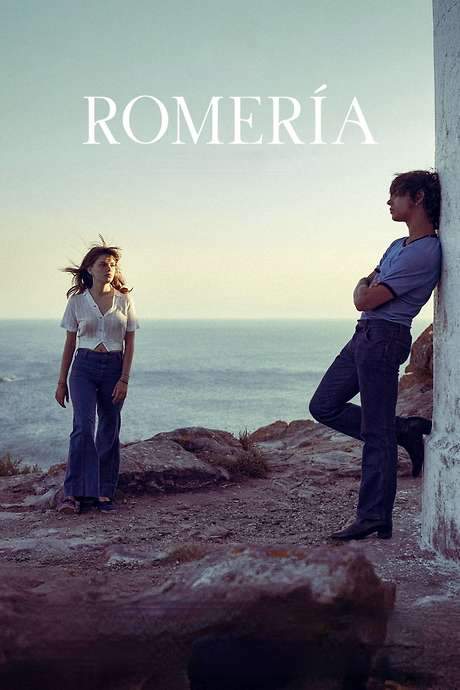
Eighteen-year-old Marina, orphaned as a child, journeys to the Spanish Atlantic coast to secure a scholarship signature from grandparents she’s never known. Surrounded by unfamiliar relatives, she grapples with uncertainty, unsure if she’s welcome. As she spends time with her extended family, long-dormant emotions surface, tenderness is rekindled, and painful truths about her parents’ past are revealed, helping her understand her fragmented memories.


Does Romería have end credit scenes?
No!
Romería does not have end credit scenes. You can leave when the credits roll.
Where to Watch Romería
See current US streaming, rental, and purchase options for Romería (2025) via JustWatch.

Criterion Channel
HD
Amazon Video
HD
Apple TV Store
4K
Fandango At Home
SD Streaming availability powered by 
Meet the Full Cast and Actors of Romería
Explore the complete cast of Romería, including both lead and supporting actors. Learn who plays each character, discover their past roles and achievements, and find out what makes this ensemble cast stand out in the world of film and television.

External Links and Streaming Options
Discover where to watch Romería online, including streaming platforms, rental options, and official sources. Compare reviews, ratings, and in-depth movie information across sites like IMDb, TMDb, Wikipedia or Rotten Tomatoes.






Ratings and Reviews for Romería
See how Romería is rated across major platforms like IMDb, Metacritic, and TMDb. Compare audience scores and critic reviews to understand where Romería stands among top-rated movies in its genre.

The Movie Echo Score
Romería stands out for its striking visual composition and nuanced performances, delivering a contemplative look at family legacies. Critics highlight the film’s elegant cinematography, graceful direction, and emotionally resonant acting as its primary strengths. However, a few reviewers note that the narrative occasionally falters, lacking the clarity and solidity of the director’s earlier work. The sensory palette and lingering thematic questions contribute to its replay value. Overall, the film is regarded as a compelling, though not flawless, addition to contemporary art‑house cinema.
The Movie Echo Score Breakdown for Romería

Art & Craft
In terms of direction and cinematography, Romería is repeatedly praised for its exquisite visual style. Critics describe the camera work as poetic, with sun‑dappled coastal imagery and an understated color palette that enhances the film’s contemplative tone. While one reviewer mentions a slight dip in subtlety compared to earlier works, the overall craftsmanship is viewed as a strong asset.

Character & Emotion
When evaluating acting and character depth, reviewers commend Llucía Garcia’s performance and the film’s ability to lower emotional barriers. The nuanced portrayals generate a touching and saddening splendor that resonates with audiences. Although a single critique points to occasional indifference, the consensus underscores a compelling emotional core throughout the narrative.

Story & Flow
The narrative structure of Romería receives mixed feedback. Positive notes emphasize its sincere exploration of familial silence and thematic relevance, while some critics find the plot less lucid and the pacing uneven compared to the director’s prior work. This tension creates an engaging yet occasionally fragmented storytelling experience, positioning the film between originality and narrative ambiguity.

Sensory Experience
Regarding sensory experience, the film’s score and sound design complement its visual poetry, with reviewers highlighting a graceful, quietly intelligent atmosphere. The auditory palette supports the dream‑like imagery, reinforcing the thematic undercurrents. No significant criticisms are noted, indicating that the sensory elements consistently enhance the overall immersion.

Rewatch Factor
The rewatch factor is seen as relatively high, as critics note the film’s lingering thematic questions and potential for future continuation. Its visual richness and emotional depth invite repeated viewings to uncover subtle layers, while the occasional narrative opacity may motivate audiences to revisit for clarity. Overall, the lasting appeal is considered a notable strength.


%
TOMATOMETER

0%
User Score

6.8 /10
IMDb Rating

66
%
User Score
Full Plot Summary and Ending Explained for Romería
Read the complete plot summary of Romería, including all major events, twists, and the full ending explained in detail. Explore key characters, themes, hidden meanings, and everything you need to understand the story from beginning to end.
In 2004, Llúcia Garcia as Marina Piñeiro, an 18-year-old orphan, travels to Vigo for five days to uncover the truth about her biological father, who died of AIDS, and to pursue a scholarship to study film. She lands on a houseboat where she stays with her uncle Lois, his wife Denise, and their children Nuno, Basilio, and Eugene. She asks about where her parents lived; Lois insists they resided in Playa Samil, but Marina presses that they really lived in Toralla—a version later echoed by her uncle Iago and by Marina’s mother’s diary, which she carries with her. Throughout her stay, family members repeatedly note the striking physical resemblance between Marina and her mother, a fact that both unsettles and draws her deeper into their shared history.
During the days, she visits her Aunt Olalla, who crafts a red dress for her in a boutique before they head to the beach with Aunt Virxinia. As the news of Marina’s arrival spreads, awkward moments surface, including a tense moment when some young cousins claim Olalla warned them not to touch her, insisting, > she is sick because of her blood. The line lands with a chill, underscoring the secrecy and stigma that shadow Marina’s family. Meanwhile, Marina grows closer to Alberto Gracia as Iago, a figure the family regards with disappointment because he reminds them of Marina’s father. Tension peaks during a visit to Aunt Xulia’s cabin, where Xulia reveals that Marina’s father died in 1992, contradicting the version Marina had believed for years—that he died in 1987 when she was a baby.
When the family visits the grandparents, Marina is met with coldness from her Grandmother, while her Grandfather hands her an envelope of money to support her future film career. Marina would have preferred a scholarship, but she accepts the money nonetheless. She later learns from Nuno that her grandparents kept her father isolated and socially distant from the time he contracted AIDS until his death, a revelation that deeply colors Marina’s understanding of her roots.
That night, Marina and Nuno slip away from the houseboat. She leaves the envelope at the grandparents’ doorway and tosses old leaves into their swimming pool, then the pair join the Fiestas de Vigo. There, she encounters Iago at a bar, who explains that her father didn’t abandon her out of neglect, but because he could not resist the pull of heroin and chose to stay away before the situation worsened. Marina then walks the streets of Vigo until she reaches the port and takes a rowboat back to Toralla.
In a dreamlike sequence, Marina is transported back to 1983, arriving in Toralla and catching sight of her parents on the rooftop of the building they once shared. Her mother’s voice narrates fragments from a diary written in Catalan, revealing scenes of the couple traveling by boat, playing naked on the beach, and attending the Fiestas de Vigo while struggling with addiction. Their relationship collapses in 1986 after severe heroin withdrawal, forcing Marina’s mother to leave Vigo while pregnant with Marina.
Back in the present, Marina returns to the grandparents to sign documents proving she is her father’s daughter so she can secure the scholarship to study film in Barcelona. Her Grandmother remarks on how closely Marina resembles her father as Marina gazes out at the sea from a window. Later that afternoon, she sails on Lois’s boat with him and his family, filming dolphins that leap beside the vessel with the video camera she has used to document her Vigo journey. The voyage completes as Marina comes to terms with the family’s past, her own future in film, and the fragile, lasting bond that ties her to the sea and to Toralla.

Coming soon on iOS and Android
The Plot Explained Mobile App
From blockbusters to hidden gems — dive into movie stories anytime, anywhere. Save your favorites, discover plots faster, and never miss a twist again.
Sign up to be the first to know when we launch. Your email stays private — always.
Explore the mobile appWatch Trailers, Clips & Behind-the-Scenes for Romería
Watch official trailers, exclusive clips, cast interviews, and behind-the-scenes footage from Romería. Dive deeper into the making of the film, its standout moments, and key production insights.
Romería Other Names and Titles
Explore the various alternative titles, translations, and other names used for Romería across different regions and languages. Understand how the film is marketed and recognized worldwide.
Quick Links: Summary, Cast, Ratings, More

What's After the Movie?
Not sure whether to stay after the credits? Find out!
Check out our other apps:

SAT Sphere
Build confidence for the Digital SAT.

Mori Atlas
Discover wild places worth protecting.

Luntero
Search smarter for a home in Amsterdam.

Plot Explained
Unravel movie endings and hidden clues.

Pokechamp
Dive into Pokémon data and battle logic.

Driving Theory
Get ready for your European theory test.

Movie Dust
Plan your next cinema trip with ease.

Musemap
Find art and culture as you travel.

Selkobase
Compare credentials before committing.

Local Manual
Turn an unfamiliar country into practical next steps.

Lernavi
Compare school systems before your next move.

GymRoam
Find a workout stop wherever your plans take you.
Explore Our Movie Platform
New Movie Releases (2026)
Famous Movie Actors
Top Film Production Studios
Movie Plot Summaries & Endings
Major Movie Awards & Winners
Best Concert Films & Music Documentaries
Movie Collections and Curated Lists
© 2026 What's After the Movie. All rights reserved.
Privacy Policy