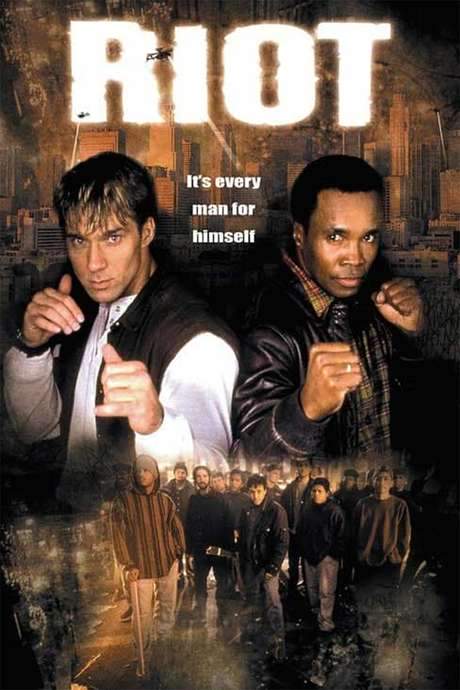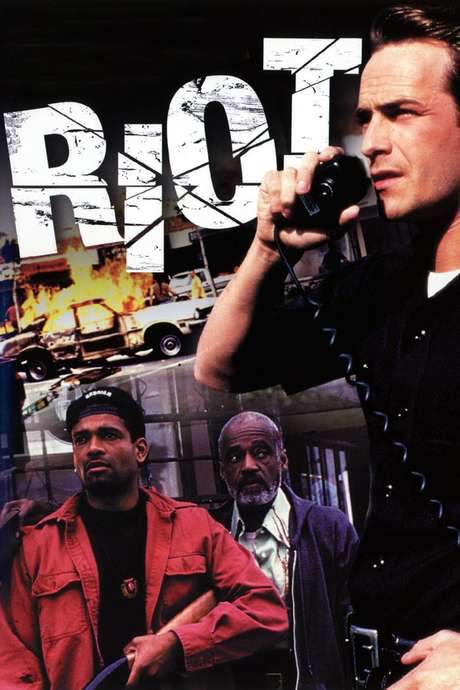
What Is Riot About?
The premise of Riot in 315 words, with nothing given away. The full story follows below.
In April 1992 Los Angeles teeters on the edge of explosive unrest, its streets humming with a fragile mix of anger, fear, and a desperate yearning for normalcy. The city’s backdrop—a sprawling urban landscape scarred by racial tension and lingering memories of past uprisings—creates a tense, almost reverent atmosphere where every conversation feels weighted by the looming possibility of violence. The film captures the electric mood of a community caught between hope and chaos, using a subdued visual palette that mirrors the simmering unease of a society on the brink.
Amid this charged setting, we meet a Chinese liquor store owner who strives to reconcile his traditional, non‑aggressive Buddhist values with the modern aspirations of his teenage son, who sees those beliefs as a sign of weakness. Their uneasy dialogue reflects a generational clash and the broader struggle of immigrant families trying to hold onto identity while navigating an increasingly hostile environment.
Parallel to that, a Hispanic teenager walks a tightrope between the promise of a straight‑line future—school, work, family—and the shadow of his older brother’s missteps. His quiet determination offers a counterpoint to the surrounding turbulence, hinting at the personal stakes each resident carries. Across town, a white LAPD officer grapples with the demands of a new romantic relationship and the remnants of a former marriage, all while confronting an unexpected, aggressive stance from his fellow officers that challenges his sense of duty and morality.
Finally, an African‑American man who has recently moved his family out of the inner‑city reaches back to his roots by visiting the store his father once owned. He carries news meant to soothe his mother’s lingering trauma from the Watts riots three decades earlier, underscoring how history reverberates through generations. These intersecting lives weave a mosaic of ordinary people forced to confront the extraordinary, setting the stage for a portrait of a city where personal and collective tensions collide.
What Happens in Riot?
The complete story of Riot, from the first scene to the last, in 408 words (about 2 minutes). Spoilers throughout. Names in the text link to 1 cast member page.
Spoilers ahead
The film examines the aftermath of the Rodney King verdict and the riots that followed, unfolding through four intertwined vignettes that quietly map the strains of a city rebuilt, reeling, and searching for meaning in the wake of upheaval. Each thread perspectives a different community and set of loyalties, yet all ripple across one another in surprising ways.
Mr. Lee [Mako] faces a poignant test as he tries to bridge the gap with his assimilating teenage son, whose view of his father’s Old World customs and his non-aggressive Buddhist approach reads as signs of weakness. The friction between tradition and modern identity sits at the heart of their relationship, shaping conversations about respect, safety, and the path to belonging in a city where old codes clash with new realities.
The second thread centers on the Hispanic teenager Carlos [Alexis Cruz], who strives to live straight and excel in school in hopes of securing a steadier future for his current and future family. He carries the weight of his older brother’s mistakes as a cautionary shadow, and his efforts to chart a responsible course highlight both the pressures of family obligation and the pull of opportunity in a neighborhood scarred by recent violence and shifting opportunities.
A white LAPD officer Ciaco [John Ortiz] navigates a complex personal landscape, balancing obligations to his girlfriend and the partially defined boundaries of his not-quite-wife, while contending with a blue-collar culture that sometimes prizes bravado over restraint. His perspective sheds light on how professional duty and personal loyalties can become entangled in a climate of suspicion, fear, and fast-changing community dynamics.
Vernon [Melvin Van Peebles], an African American middle-class man who has recently moved his family out of the ghetto, returns to visit the store his father once owned in the old neighborhood. He hopes to bring good news to his mother, Mrs. Lee, whose memories of living through the Watts riots barely thirty years earlier remain vivid. His visit underscores the persistent ache of generational memory and the ways in which past traumas echo into present choices and hopeful futures.
Though these stories run parallel, they constantly interact and influence one another, painting a broader portrait of a city trying to reconnect, rebuild trust, and redefine what safety, belonging, and community mean in a landscape still haunted by the echoes of upheaval. The film favors a steady, observant tone, letting small moments—glances, conversations, and decisions—illuminate larger social currents without overplaying their significance.
Riot Timeline: Every Key Event in Order
12 key events in the order they happen, from “Verdict sparks unrest” to “The city endures; the four stories continue”. 12 events name a place, across 11 locations.
- 1
Verdict sparks unrest
Following the Rodney King verdict, Los Angeles erupts in riots and unrest. The film uses four interwoven stories to show ordinary people trying to cope with fear, anger, and chaos in the city. The setting becomes a pressure cooker where personal tensions are tested against social upheaval.
When:Evening of the verdict Where:Los Angeles, CA
- 2
Father-son clash in the liquor store
In the liquor store, the Chinese owner grapples with his assimilating teenage son. The son's non-aggressive Buddhist stance and view of his father's Old World ways are seen as weakness by the father. Their disagreement centers on how to navigate identity in a city tearing itself apart.
When:Night Where:Liquor store
- 3
Hispanic teen pursues schooling to escape his past
The Hispanic teenager strives to stay straight and excel in school to support his family. He tries to resist gangs and his older brother's mistakes, steering toward a lawful path. The narration follows the tension between aspiration and social pressures.
When:Daytime Where:Home and School
- 4
Officer confronts personal relationship conflicts
The white LAPD officer struggles with obligations to his girlfriend and not-quite-wife, balancing private life with the demands of law enforcement. He confronts a culture at the station that prizes aggression and a 'tough guy' mentality. His inner conflict tests his sense of duty and identity.
When:Night shift Where:LAPD precinct
- 5
Colleagues push a hardline stance
Within the squad, a surprisingly aggressive attitude emerges from fellow officers, pressuring him to conform. He weighs whether to go along with the hardline approach or to chart a more restrained path. The tension captures the moral gray areas of policing during a riot.
When:Evening Where:Police precinct / street patrol
- 6
Middle-class Black man returns to old neighborhood
An African American man who has moved his family into a better area revisits the storefront his father once owned. He hopes to bring good news to his mother, who carries vivid memories from the Watts riots. The visit underscores the contrast between aspiration and communal history.
When:Afternoon Where:Old neighborhood liquor store
- 7
Mother remembers Watts; seeking reassurance
The mother reflects on the Watts riots and the losses she endured decades earlier. Her memories color her reaction to the current crisis, shaping how she guides her son and the community. Her emotional steadiness anchors the family’s responses to upheaval.
When:Evening Where:Mother's home
- 8
Intersections reveal shared tensions
The liquor store becomes a crossroads where different generations, races, and ambitions intersect. Across the counter, each character's worries about safety, belonging, and future prospects surface. The interactions highlight how personal and collective history collide.
When:Evening Where:Liquor store
- 9
Small acts of solidarity amid chaos
In the midst of upheaval, small acts of care emerge—a customer checks on others, a family stays together, a neighbor safeguards a storefront. These moments show resilience even when the streets tremble. They hint at bridging divides despite the rioting.
When:Night Where:Neighborhood storefronts
- 10
A test of temper and loyalty
A confrontation near the store pushes characters to choose between self-preservation and responsibility to others. The decision has ripple effects across the four narratives. The scene crystallizes the film’s exploration of competing loyalties.
When:Night Where:Near the liquor store
- 11
Glimmers of possible reconciliation
As the peak of the unrest passes, each character contemplates paths toward reconciliation. The son rededicates himself to his studies, the father rethinks his expectations, the officer questions his approach, and the mother remains a steady voice of memory and hope. Small resolutions feel earned amid ongoing tensions.
When:Post-riot aftermath Where:Various: home, store, precinct
- 12
The city endures; the four stories continue
The film closes with a sense that life goes on despite scars. The four stories remain nominally separate but their choices and struggles echo across each other. The viewer is left with questions about belonging, accountability, and the possibility of change in a divided city.
When:Aftermath Where:Los Angeles
Who Are the Main Characters in Riot?
6 characters, among them Mr. Lee (Mako), Jeff Lee (Dante Basco) and Turner (Mario Van Peebles): who each one is and the part they play in the story. Every profile links to the actor’s page.
-

Mr. Lee (Mako)
Played by MAKO
A Chinese liquor store owner who struggles to understand his assimilating teenage son. He clings to Old World traditions and a non-aggressive Buddhist philosophy, viewing them as strengths rather than weaknesses. He seeks to bridge the generational gap through calm persistence and dialogue.
- 🧧 Family heritage
- 🧭 Cultural clash
- 🕊️ Peaceful traditions
- JL
Jeff Lee (Dante Basco)
Played by Dante Basco
The assimilating teenage son who questions his father’s customs in favor of a modern American life. His push for independence creates tension at home, while he strives to define identity in a city still reeling from social upheaval. He embodies the younger generation navigating post-riot expectations.
- 🎒 Teenage rebellion
- 🧭 Assimilation
- 👨👩️ Family
-
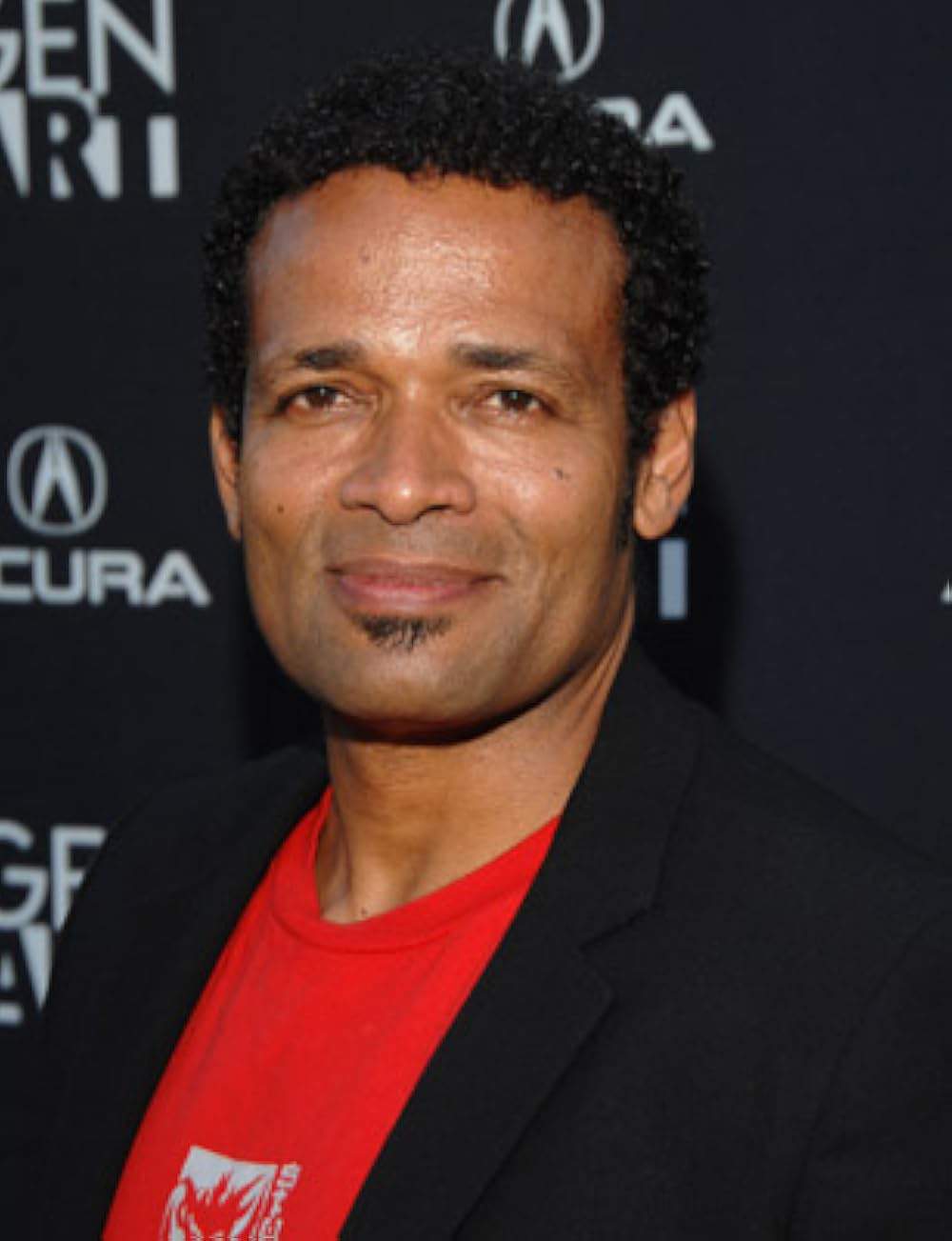
Turner (Mario Van Peebles)
Played by Mario Van Peebles
A white LAPD officer who wrestles with obligations to his girlfriend and the frictions within a force that often appears overly aggressive. His arc examines personal accountability and the pressure of upholding a tough, communal persona in a racially charged environment.
- ⚖️ Authority
- 👮 Cop culture
- 💬 Personal conflict
- V(
Vernon (Melvin Van Peebles)
Played by Melvin Van Peebles
An African American middle-class man who recently moved his family out of the ghetto and returns to the old neighborhood to share good news with his mother. His visit highlights the contrast between upward mobility and rooted community memories, especially regarding past riots.
- 🏡 Mobility
- 🧭 Generational memory
- 🫂 Family
- C(
Carlos (Alexis Cruz)
Played by Alexis Cruz
A Hispanic teenager striving to live straight and excel in school so he can support his family and avoid his brother’s missteps. His journey centers on responsibility, ambition, and the weight of family expectations in a city facing social strife.
- 🎓 Education
- 🕊️ Family duty
- 🌟 Ambition
- ML
Mrs. Lee (Kieu Chinh)
Played by Kieu Chinh
Mr. Lee’s wife, whose memories and perspective shape how the family negotiates respect, tradition, and resilience. She embodies a bridge between generations as the city confronts change and memory of past upheavals.
- 👵 Family
- 🧭 Tradition
- 🕊️ Peaceful resilience
Where and When Is Riot Set?
Riot is set in Los Angeles and Watts (1992). Here is why the time and place matter to the story.
When
1992
The events unfold in the early 1990s, centered around the Rodney King verdict and the Los Angeles riots. The period is defined by civil unrest, tense police-community relations, and the slow process of rebuilding trust after violence. The stories portray a city navigating fear, anger, and the longing for change during a pivotal moment in American history.
Where
Los Angeles, Watts
Set in Los Angeles, particularly the Watts area, the film captures a dense urban landscape where immigrant families and longtime residents share a fragile peace. The neighborhood’s small businesses, crowded streets, and close-knit communities reflect a city grappling with social upheaval. These settings ground the interwoven stories in a real, volatile environment.
- 🏙️ Urban
- 🔥 Post-riot atmosphere
- 🌐 Multicultural city
What Are the Themes of Riot?
3 ideas the story keeps returning to, among them Cultural Clash, Authority and Trust and Impact of Violence.
-
01
Cultural Clash
The four interconnected stories reveal how immigrant families balance tradition with adaptation to American life after the riots. Generational gaps emerge as children push for independence while parents uphold Old World values. Language, religion, and customs become focal points in negotiations within the home. Navigating cultural differences drives much of the drama.
-
02
Authority and Trust
An LAPD officer’s arc probes the tension between duty, personal relationships, and community expectations. The film contrasts rigid police attitudes with the community’s desire for accountability and fairness. Individual choices reveal how trust or distrust can redefine justice in a post-riot city. These questions about authority echo through every interaction.
-
03
Impact of Violence
The aftermath of the verdict and riots frames the characters’ actions and fears. Violence reshapes families, neighborhoods, and futures, while trauma and memory linger. The stories explore how a city tries to heal and how individuals find resilience amid collective hardship. Rebuilding is portrayed as a difficult, ongoing process.
What Kind of Film Is Riot?
Tense in tone, with variable pacing and a complex story, going by the plot summary.
- Tone
- Tense
- Pacing
- Variable
- Story
- Complex
- Intensity
- High
- Ending
- Mixed
A tense, gritty, and emotionally heavy drama that plunges viewers into the chaotic heart of the LA riots, interweaving multiple personal stories of survival, conflict, and societal breakdown.
- tense
- oppressive
- urgent
- anxious
- gritty
- socially charged
- racial tension
- societal dysfunction
- interwoven narratives
- police brutality
Content notes: police brutality, racial violence, murder, looting, drug addiction, societal collapse.
Quiz
How well do you remember Riot? Test yourself on the story.