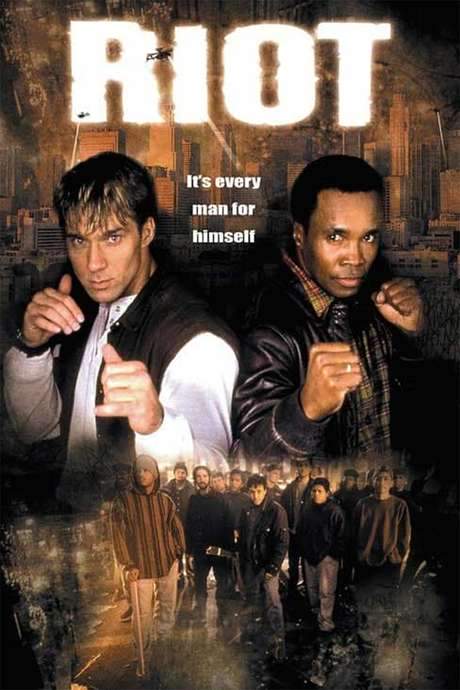
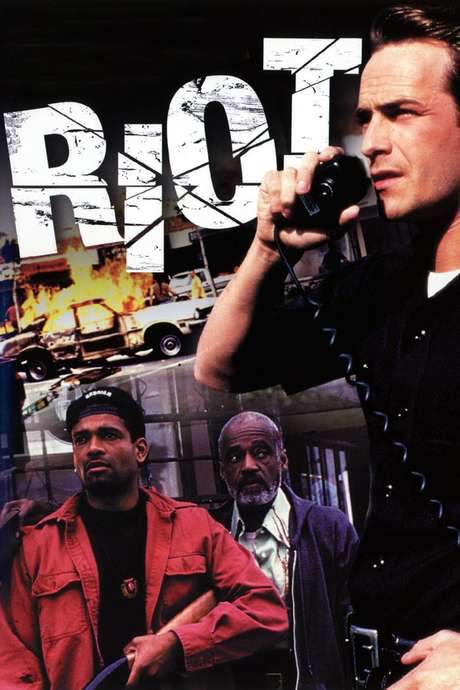
Riot 1996


Directed by

Joseph Merhi
Made by

PM Entertainment Group
Where to Watch Riot
See current US streaming, rental, and purchase options for Riot (1996) via JustWatch.

Cineverse
HD
fuboTV
HD
Howdy Amazon Channel
HD
Fawesome
HD
Plex
HD
Plex Channel
HD
The Roku Channel
HD Streaming availability powered by 
Riot Plot Summary
Read the complete plot summary and ending explained for Riot (1996). From turning points to emotional moments, uncover what really happened and why it matters.
Four intertwined stories unfold in the wake of the Rodney King verdict and the riots that followed, offering a careful, human look at a city graphed by fear, memory, and the stubborn persistence of everyday life. The film threads together experiences from different corners of Los Angeles, showing how a single moment can reverberate through families, friendships, and neighborhoods.
In one thread, a Chinese liquor store owner seeks to bridge a widening gap with his assimilating teenage son. The son perceives his father’s Old World values and a calm, non-confrontational Buddhist stance as signs of weakness, while the father clings to tradition and a sense of duty to his family. This dynamic becomes a quiet, stubborn negotiation between generations and cultures, where respect and misunderstanding collide in small gestures and shared silences.
Another thread follows a Hispanic teenager determined to chart a steady course—doing well in school, avoiding the mistakes of his older brother, and setting up a future where he can support his family. The boy’s resolve is tested by the surrounding chaos, yet his hope remains a counterpoint to the turmoil outside his door, illustrating how ambition and responsibility push against the pull of circumstance.
The third storyline centers on a white LAPD officer navigating complex loyalties. He grapples with obligations to a new girlfriend and a fragile, evolving relationship with a not-quite-ex-wife, all while contending with a work culture that can feel aggressively insular. His internal struggles about duty, trust, and the line between professionalism and personal appetite for camaraderie provide a lens on the pressures within the police force and how those pressures influence choices when the city is burning.
A fourth narrative follows an African American middle-class man who has recently moved his family out of the neighborhood deemed the “ghetto.” He returns to the store his father once owned in the old neighborhood, hoping to bring good news to his mother, whose memories of living through the Watts riots linger. The visit becomes a quiet meditation on legacy, memory, and the persistence of hope even as the past continues to shape the present.
Though these four vignettes appear separate at first glance, they continually intersect through small encounters and shared atmospheres. The film crafts a mosaic of lives pulled by competing forces—desire for safety, hunger for dignity, longing for belonging, and the ache of a community trying to heal. With a restrained, observational tone, it invites viewers to reflect on how violence, outrage, and resilience coexist in a city still processing a watershed moment in its history. The result is a thoughtful exploration of human responses to fear, how families negotiate with history, and how ordinary people seek to rebuild trust when the ground beneath them remains unsettled.
Riot Timeline
Follow the complete movie timeline of Riot (1996) with every major event in chronological order. Great for understanding complex plots and story progression.
Rodney King verdict and unrest
The film opens in the wake of the Rodney King verdict, as tension in Los Angeles spirals into riots. Authorities struggle to maintain order while communities brace for what comes next. This event sets the stage for the intersecting stories that follow.
Chinese liquor store owner and son clash over values
The Chinese liquor store owner wrestles with assimilation as his teenage son challenges his Old World values. The son views his father’s traditional ways and Buddhist restraint as signs of weakness, pushing their relationship toward strain. Their conversations take place amid the store’s aisles and the surrounding city’s mounting stress.
Store as focal point amid unrest
The liquor store becomes a microcosm of the broader tension, drawing attention from neighbors and the police during the chaotic aftermath. The owner weighs protecting his shop and family against the demands of a city burning outside. Conversations and wary glances reveal how fear, distrust, and cultural differences shape decisions.
Hispanic teenager aims for a straight path
The Hispanic teen strives to live straight and excel in school to avoid his older brother’s mistakes. He hopes to provide for his current and future family by staying on a lawful path and investing in his education. The pressure to succeed intensifies as the city’s turmoil seeps into his daily life.
Family-centered motivation
He weighs the temptations of street life against the promise of education and a stable future. He understands that his success could uplift his family and perhaps future generations. The looming city-wide tension makes every choice feel consequential.
White LAPD officer's personal conflict
A white LAPD officer negotiates obligations to a girlfriend and a not-quite-wife while facing a gung-ho culture among some colleagues. He struggles to balance personal life with professional duty in a city on edge. The aftermath of the verdict forces him to confront how his department’s actions affect civilians and trust.
Cops' aggressive camaraderie vs restraint
The officer’s fellow officers display a hard-charging attitude that collides with his more measured impulses. He questions where loyalty to the force ends and morality begins as tensions rise in the streets. This inner conflict foreshadows potential consequences of policing during a riot.
African American middle-class man returns home
An African American man who recently moved his family out of the ghetto visits the store his father once owned, seeking to share good news with his mother. He wants to celebrate progress and stability while acknowledging memories of the Watts riots. The visit reconnects generations and highlights persistent gaps between neighborhoods.
Mother's memories surface
The mother recalls living through the Watts riots less than thirty years earlier, and the visit stirs memories of fear and resilience. She offers perspective on change, continuity, and the cost of progress in a city scarred by violence. The past informs the present tension.
Interweaving fates in the city
Though each vignette follows a separate thread, the stories interact throughout the film as incidents ripple from one character to another. A chance encounter or shared moment in a crowded street reveals how their choices affect each other. The riot’s aftermath provides common ground for reflection on family, loyalty, and survival.
Store’s proximity to the violence
The liquor store and its surrounding area become a staging ground for tension as neighbors confront fear and suspicion. Small acts of kindness collide with rumors and distrust, illustrating how communities test bonds in crisis. The store’s fate looms over the four family narratives.
Resolution glimpses
The film closes with glimpses of resolution and continued challenges. Each character reflects on what they learned about assimilation, responsibility, and belonging. The movie leaves a sense that personal histories persist even as the city tries to heal.
Riot Characters
Explore all characters from Riot (1996). Get detailed profiles with their roles, arcs, and key relationships explained.
Liquor Store Owner
A Chinese immigrant who runs a neighborhood liquor store and becomes a focal point for cross-cultural tensions. He tries to understand his assimilating teenage son, who views his father's Old World ways and Buddhist non-aggression as weakness. The store embodies the clash between tradition and modern city life, highlighting immigrant resilience in a volatile environment.
Teenage Son
An assimilating teenager striving to do well in school and stay out of trouble so he can support his family. He navigates pressures to succeed and to fit into a multicultural city, while clashing with his father's Old World values and Buddhist beliefs.
White LAPD Officer
A white LAPD officer grapples with obligations to his girlfriend and not-quite-ex-wife, while facing a surprisingly gung-ho culture among his fellow officers. He must balance personal loyalties with professional duty in a city riven by unrest.
African American Middle Class Man
An African American middle-class man who recently moved his family out of the ghetto visits the storefront his father once owned, hoping to share good news with his mother who remembers Watts riots from decades past. His return to the old neighborhood confronts memory with progress.
Riot Settings
Learn where and when Riot (1996) takes place. Explore the film’s settings, era, and how they shape the narrative.
Time period
Early 1990s (1992)
Events take place in the immediate aftermath of the Rodney King verdict in 1992, during a period of intense civil unrest in Los Angeles. The film captures a tense mood as protests spill into the streets and communities confront long-standing tensions. Personal lives unfold against a backdrop of headlines, sirens, and the search for accountability.
Location
Los Angeles, Watts
The film unfolds across Los Angeles, centered on the Watts neighborhood and its surrounding urban streets. The cityscape blends storefronts, homes, and police presence, reflecting a community under strain in the wake of the verdict. The setting grounds the four intersecting stories in a real, volatile urban environment.
Riot Themes
Discover the main themes in Riot (1996). Analyze the deeper meanings, emotional layers, and social commentary behind the film.
🕊️
Racial Tension
Racial tension sits at the core of the film, shaping every decision and interaction. Four disparate lives are drawn into a shared moment of crisis, exposing how stereotypes and prejudice influence perceptions and actions. The vignettes reveal how fear, anger, and misunderstanding escalate conflicts. Yet the interconnected stories also suggest potential empathy and reconciliation when people confront their biases.
🧭
Identity & Assimilation
Characters grapple with identity in a city defined by diversity and division. The liquor store owner's struggle to preserve tradition clashes with his son's assimilation into mainstream culture and modern sensibilities. The film examines how beliefs, values, and worldviews survive or adapt under pressure. It highlights the personal cost of trying to belong in a divided society.
🎭
Family & Memory
Family ties anchor the characters, even as generations clash and memories of past riots linger. The mother's recollections of Watts and the father's expectations shape choices and loyalties. The narrative uses intimate, domestic scenes to contrast with public upheaval, showing how private lives absorb collective trauma. Through memory, the film explores resilience and the slow process of healing.

Coming soon on iOS and Android
The Plot Explained Mobile App
From blockbusters to hidden gems — dive into movie stories anytime, anywhere. Save your favorites, discover plots faster, and never miss a twist again.
Sign up to be the first to know when we launch. Your email stays private — always.
Explore the mobile appRiot Spoiler-Free Summary
Discover the spoiler-free summary of Riot (1996). Get a concise overview without any spoilers.
markdown In the volatile aftermath of the Rodney King verdict, a city holds its breath as simmering tensions rise to the surface. The air is thick with anticipation and unrest, setting the stage for a narrative that explores the human stories hidden within the headlines. Through a series of interlocking vignettes, the film captures a society on the brink, where the lines between safety and chaos blur with every passing moment.
The story introduces four distinct lives, each anchored by their own struggles and aspirations. A Chinese liquor store owner clings to his Buddhist principles in a changing world, finding his peaceful resolve at odds with his teenage son’s desire to assimilate. Parallel to this, a Hispanic teenager works tirelessly to forge a path of legitimacy and hope, striving to avoid the pitfalls that claimed his older brother.
On the other side of the thin blue line, a white LAPD officer grapples with the friction between his personal obligations and the aggressive culture of his peers. Meanwhile, an African American middle-class man returns to his roots, bridging the gap between his family’s new life and the history of the neighborhood his father once served. These individuals navigate a landscape defined by duty, identity, and the weight of history.
As the city erupts into chaos, their separate worlds begin to collide in unexpected ways. The film weaves these threads into a complex tapestry, observing how moments of crisis force characters to confront their deepest divides. It is a study of resilience and perspective, painting a vivid portrait of a community wrestling with its own fragility during a long, dark night.
Movies with Similar Twists and Themes
Uncover films that echo the narrative beats, emotional arcs, or dramatic twists of the one you're exploring. These recommendations are handpicked based on story depth, thematic resonance, and spoiler-worthy moments — perfect for fans who crave more of the same intrigue.




Featured on this page

What's After the Movie?
Not sure whether to stay after the credits? Find out!
Check out our other apps:

SAT Sphere
Build confidence for the Digital SAT.

Mori Atlas
Discover wild places worth protecting.

Luntero
Search smarter for a home in Amsterdam.

Plot Explained
Unravel movie endings and hidden clues.

Pokechamp
Dive into Pokémon data and battle logic.

Driving Theory
Get ready for your European theory test.

Movie Dust
Plan your next cinema trip with ease.

Musemap
Find art and culture as you travel.

Selkobase
Compare credentials before committing.

Local Manual
Turn an unfamiliar country into practical next steps.

Lernavi
Compare school systems before your next move.

GymRoam
Find a workout stop wherever your plans take you.
Explore Our Movie Platform
New Movie Releases (2026)
Famous Movie Actors
Top Film Production Studios
Movie Plot Summaries & Endings
Major Movie Awards & Winners
Best Concert Films & Music Documentaries
Movie Collections and Curated Lists
© 2026 What's After the Movie. All rights reserved.
Privacy Policy