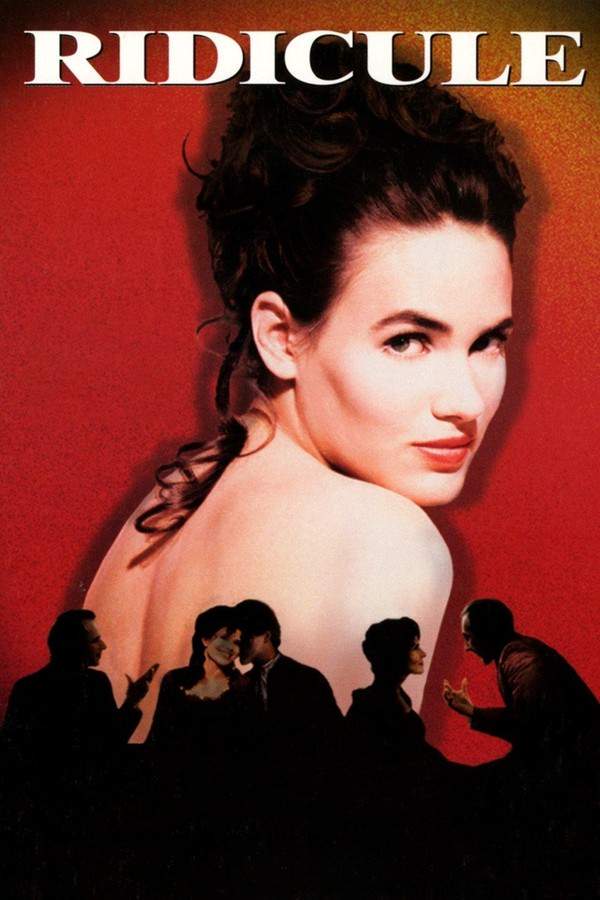
What Is Ridicule About?
The premise of Ridicule in 321 words, with nothing given away. The full story follows below.
In the glittering world of 18th‑century Versailles, where every glance can be a weapon and every conversation a battlefield, the film glides through a court that thrives on elegance, intrigue, and the razor‑sharp edge of wit. The atmosphere is a blend of sumptuous decadence and restless ambition, a place where reputation is as precious as a royal decree and where the art of ridicule is a finely honed survival skill. The tone balances the sumptuousness of the period with a biting, almost satirical undercurrent, hinting at the precariousness hidden beneath the gilded surface.
At the heart of this swirl of grandeur is Baron Grégoire Ponceludon de Malavoy, a youthful aristocrat and inventive engineer whose dream of draining the malarial swamps of the Dombes could lift countless lives out of suffering. Driven by idealism and a desire for public service, he journeys to Versailles hoping to win the favor of King Louis XVI and secure the funds his ambitious project requires. Yet the path to royal patronage is anything but straightforward; to be heard, Ponceludon must learn to navigate the court’s labyrinth of vanity and subtle cruelty, mastering the delicate choreography of clever insults and polished repartee.
Guiding him into this world is Marquis de Bellegarde, a seasoned physician whose own mastery of courtly intrigue offers both mentorship and a glimpse into the hidden mechanisms of power. Alongside him, Mathilde de Bellegarde—the Marquis’s brilliant and independent daughter—embodies the tension between intellect and the expectations placed upon women of her standing. The dazzling Madame de Blayac, a wealthy widow, and her enigmatic lover L’abbé de Vilecourt swirl through the salons, adding layers of charm, rivalry, and hinted alliances. Together, these characters create a tapestry of sharp dialogue and social maneuvering, setting the stage for a story where ambition collides with elite politics and where the true contest may be as much about mastering ridicule as it is about achieving a grand engineering vision.
What Happens in Ridicule?
The complete story of Ridicule, from the first scene to the last, in 604 words (about 3 minutes). Spoilers throughout.
Spoilers ahead
In 18th-century France, a young, penniless aristocrat and engineer named Baron Grégoire Ponceludon de Malavoy dreams of a bold public works project: draining the swampy Dombes to end the disease that afflicts its peasants. With idealism fuelled by a desire to do good, he heads for Versailles to seek an audience with King Louis XVI and win backing for his plan. The road to power, however, proves rough: he is robbed and beaten along the way, only to be taken in by the compassionate but calculating Marquis de Bellegarde, a physician who becomes his mentor in the ways of wit, courtly manners, and the cruel politics that govern Parisian society. Through Bellegarde, Ponceludon learns that the royal court is a labyrinth of vanity, opportunism, and hidden agendas—an environment where sincerity often meets with indifference or danger.
At the heart of the court’s intrigues stands Mathilde de Bellegarde, the physician’s brilliant daughter who uses her intellect to pursue science and independence, even as she contends with familial debt and the social expectations that pressure her toward a financially advantageous marriage to a wealthy older man. The humbling, sometimes merciless landscape of court life is further complicated by the presence of Madame de Blayac, a dazzling and wealthy widow who, along with her lover, L’abbé de Vilecourt, plays a game of wit that Ponceludon begins to sense but does not aggressively expose. When Blayac’s scheming helps secure a form of legitimacy for Ponceludon’s lineage, enabling his suit to move forward, it becomes clear that his rise will depend as much on navigating deception as on any noble ambition.
Yet Ponceludon’s ambitions come at a personal cost. He engages with Madame de Blayac in a risky arrangement to gain a private audience with the King, hoping to advance his drainage project. The plan backfires in a painful, painful moment of betrayal: Blayac manipulates events so that Bellegarde is present as Mathilde discovers the affair, souring any chance of pure, straightforward support from the Bellegardes. Still determined, Ponceludon presses on, moving into the King’s orbit and finally securing a private meeting to discuss his project. His path, though, is abruptly interrupted when an insult from a cannoneer drives him into a duel, and he kills the man.
The aftermath reveals the rigid rules of honor that govern the court: the King cannot meet with someone who has killed one of his officers, even if the act is framed as an essential defense of his own honor. Madame de Blayac returns with a calculated revenge—inviting Ponceludon to a costume ball “only for wits” where he is deliberately tripped and mocked. Yet in a dramatic reversal, he casts off his mask, denounces the court’s decadence, and proclaims his resolve to drain the Dombes on his own terms, departing the social circle with Mathilde by his side.
Years pass, and the Revolution reshapes the world Ponceludon sought to influence. In 1794, the Marquis de Bellegarde—now a refugee in Great Britain—speaks with a mix of nostalgia and sober truth about the fates of the old nobles. From this conversation we learn that Ponceludon, ever steadfast, has persevered with his mission, and that Mathilde has become his wife. Together, they persist in pursuing the dream of transforming the Dombes, turning a tale of court intrigue into a testament to perseverance, partnership, and a patient, ongoing effort to improve the lives of those he set out to help.
The story remains a measured portrait of ambition colliding with elite power, the costs of reform, and the quiet strength of a couple whose shared goal endures beyond the glittering salons and the upheaval of revolution.
Ridicule Timeline: Every Key Event in Order
12 key events in the order they happen, from “Ponceludon's plan to drain the Dombes” to “A lasting triumph in the Dombes”. 12 events name a place, across 9 locations.
- 1
Ponceludon's plan to drain the Dombes
In 18th-century France, the penniless aristocrat and engineer Ponceludon de Malavoy devises a plan to drain the marshes of the Dombes to reduce disease and improve the peasants' lives. He believes solving a practical problem will win him influence at court and advance his standing. This ambition sets the story in motion.
When:Start of story Where:Dombes, France
- 2
Journey to Versailles and rescue
Ponceludon sets off for Versailles to seek support from King Louis XVI for his drainage project. On the road he is robbed and beaten, but he is taken in by the Marquis de Bellegarde, a physician who becomes his mentor. Through Bellegarde, he begins to glimpse the realities of court life and its pretenses.
When:On the way to Versailles Where:Road to Versailles; Bellegarde's care
- 3
Awakening to court intrigues
Bellegarde teaches him wit and introduces him to the court's social machinery, giving him access to the inner workings of Versailles. Ponceludon realizes the court is corrupt and hollow, chasing status and spectacle rather than noble aims. This awakening sharpens his resolve to pursue his project on moral terms.
When:Early court education Where:Versailles / Bellegarde's home
- 4
Mathilde's support and romance
Mathilde de Bellegarde, Bellegarde's daughter, becomes a beacon of possibility for his future. She agrees to marry a rich old man to support her scientific experiments and help pay her father's debts. Their evolving bond complicates but also deepens his mission.
When:During court years Where:Bellegarde's household / court
- 5
Blayac's wits and deception
Madame de Blayac, a wealthy widow who was to sponsor Ponceludon's court ascent, cheats at a game of wits with her lover, L'abbé de Vilecourt. Ponceludon notices the deception but chooses not to expose her to protect her reputation. The episode foreshadows how court morals can be murky and self-serving.
When:Early in court Where:Court, during a wits game
- 6
Lineage certification as leverage
Blayac arranges for certification of Ponceludon's lineage to legitimize his marriage prospects and enable his suit at court. The strategic move buys him time and lends weight to his project. Ponceludon remains wary of the court, yet recognizes the value of such maneuvering.
When:During court maneuvering Where:Versailles
- 7
Affair and revelation
Ponceludon sleeps with Madame de Blayac in exchange for help arranging a meeting with the King. Blayac then has Bellegarde attend, ensuring that Mathilde learns of the relationship. The revelation hardens Mathilde's stance and tests Ponceludon's loyalties.
When:Before the King's meeting Where:Blayac's residence / court
- 8
Private audience and duel
Ponceludon joins the King's entourage and secures a private meeting to present his drainage plan. A cannoneer insults him, forcing him into a duel that tests his honor and risk of royal disfavor. The incident marks a turning point in his relationship with the court.
When:During the private audience for his project Where:Versailles
- 9
The kill and the consequence
Ponceludon kills the cannoneer in the duel, and learns that the King cannot meet with someone who has killed one of his officers. He is told that defending honor may come at the cost of royal favor. This moment underscores the court's dangerous, unforgiving logic.
When:Shortly after the duel Where:Versailles
- 10
The ball and the vow
Madame de Blayac schemes revenge by inviting Ponceludon to a costume ball 'only for wits.' At the ball he is tripped and ridiculed, but he tears off his mask and condemns the court's decadence. He vows to drain the swamp himself and leaves the court with Mathilde.
When:After the ball Where:Versailles ball
- 11
Revolution and nostalgia
Some years later, in 1794, the Revolution has forced many nobles into exile. The Marquis de Bellegarde, a refugee in Great Britain, speaks in nostalgic terms about his old acquaintance. He reveals that Ponceludon, ever faithful, has continued their work alongside Mathilde.
When:1794 Where:Great Britain (Bellegarde's exile)
- 12
A lasting triumph in the Dombes
Ponceludon finally completes draining the Dombes with Mathilde as his wife, fulfilling his lifelong goal. The couple's partnership endures despite court chaos, illustrating a patient, enduring victory. The story closes on their quiet triumph amid upheaval.
When:Late 18th century (after 1794) Where:Dombes, France
Who Are the Main Characters in Ridicule?
6 characters, among them Baron Grégoire Ponceludon de Malavoy, Marquis de Bellegarde and Mathilde de Bellegarde: who each one is and the part they play in the story.
- BG
Baron Grégoire Ponceludon de Malavoy
A young, penniless aristocrat and engineer whose grand drainage project for the Dombes reveals his idealism and naivety. He travels to Versailles to seek royal support but quickly learns the court’s superficial intrigues. Driven by social ascent and a desire to help the peasants, he remains stubborn, witty, and morally conflicted as events unfold.
- 🎯 Aristocrat
- 🧠 Engineer
- 🕊️ Idealist
- MD
Marquis de Bellegarde
A physician who mentors Ponceludon and teaches him the courtiers’ rules. He embodies integrity and skepticism toward the court’s pretenses. His debts and influence bring him into social danger, prompting him to guide Ponceludon while navigating aristocratic politics.
- 🧭 Mentor
- 🏥 Physician
- 🗝️ Skeptic
- MD
Mathilde de Bellegarde
Bellegarde’s daughter, who has scientific aspirations and agrees to marry a wealthy man to fund her experiments. She becomes Ponceludon’s ally and, later, his wife, balancing intellect with pragmatic choices under social pressure.
- 💡 Scientist
- 💍 Partner
- 👩🎓 Independent
- MD
Madame de Blayac
A beautiful, wealthy widow who manipulates the court’s wits for her own amusement and advantage. She cheats at games of intelligence and orchestrates real-world consequences to protect or advance her interests, ultimately driving Ponceludon toward personal jeopardy.
- 🤑 Manipulator
- 🃏 Schemer
- 🧩 Power broker
- LD
L’abbé de Vilecourt
Madame de Blayac’s lover, a schemer who collaborates in the court’s intrigues. His actions expose the moral ambiguities and intra-affairs of the aristocracy and demonstrate how personal alliances shape political outcomes.
- 💫 Confidant
- 🃏 Schemer
- 👔 Court insider
- KL
King Louis XVI
The monarch whose authority governs access to power at court. He embodies the aloof, ceremonial center of a system where deficit of trust and favor can derail a project born from good intentions.
- 👑 Monarchy
- 🕰️ Authority
Where and When Is Ridicule Set?
Ridicule is set in Versailles and Dombes (Late 18th century). Here is why the time and place matter to the story.
When
Late 18th century
The action unfolds in the decades before the French Revolution, during Louis XVI's reign. It satirizes the Ancien Régime’s rituals, scheming courtiers, and the obsession with appearance. The era’s tension between tradition and change underpins Ponceludon's mission and the upheaval hinted at in the final reflections.
Where
Versailles, Dombes
Set mostly around the royal court at Versailles and the marshy Dombes region, the film contrasts opulent halls with rural disease-prone land. Versailles represents the center of political theater and social maneuvering, while the Dombes marshes symbolize neglected peasants awaiting reform. The setting emphasizes the clash between aristocratic decadence and the real-world needs of the people.
- 🏛️ Versailles
- 🗺️ Dombes
- 👑 Court life
What Are the Themes of Ridicule?
3 ideas the story keeps returning to, among them Wit vs Power, Class & Hypocrisy and Love & Pragmatism.
-
01
Wit vs Power
Cleverness and satire become social currency as Ponceludon tests his wits against the court’s rules. The humor exposes hollow status and the moral ambiguity of those who wield influence. The film argues that wit can challenge authority, but it also shows the danger of public ridicule as a weapon of power. The tension between intelligence and status drives the plot and its outcomes.
-
02
Class & Hypocrisy
Ridicule uncovers the pretensions of the aristocracy and the way wealth, lineage, and favor shield corruption. The court rewards appearances while moral integrity is easy to overlook. The contrast with the peasants’ practical needs highlights systemic inequality. The satire reveals how social games govern life and death at court.
-
03
Love & Pragmatism
Personal affection collides with political and financial concerns. Mathilde’s pragmatism—supporting science through advantageous marriage—shows how relationships are used to navigate power. Ponceludon’s devotion is tested by ambition, deceit, and honor. The romance becomes a lens through which sacrifice and resilience are explored.
What Kind of Film Is Ridicule?
Bittersweet in tone, with steady pacing and a moderate story, going by the plot summary.
- Tone
- Bittersweet
- Pacing
- Steady
- Story
- Moderate
- Intensity
- Medium
- Ending
- Bittersweet
A sharply witty and bittersweet period drama that follows an idealistic engineer navigating the treacherous, reputation-driven world of the French court, where ambition is tempered by betrayal and sincerity is a liability.
- witty
- calculating
- romantic
- nostalgic
- satirical
- determined
- social climbing
- political intrigue
- battle of wits
- the power of language
Content notes: duel, class discrimination.
Where to Watch Ridicule
. US availability and prices from JustWatch.
Streaming availability in the US, powered by