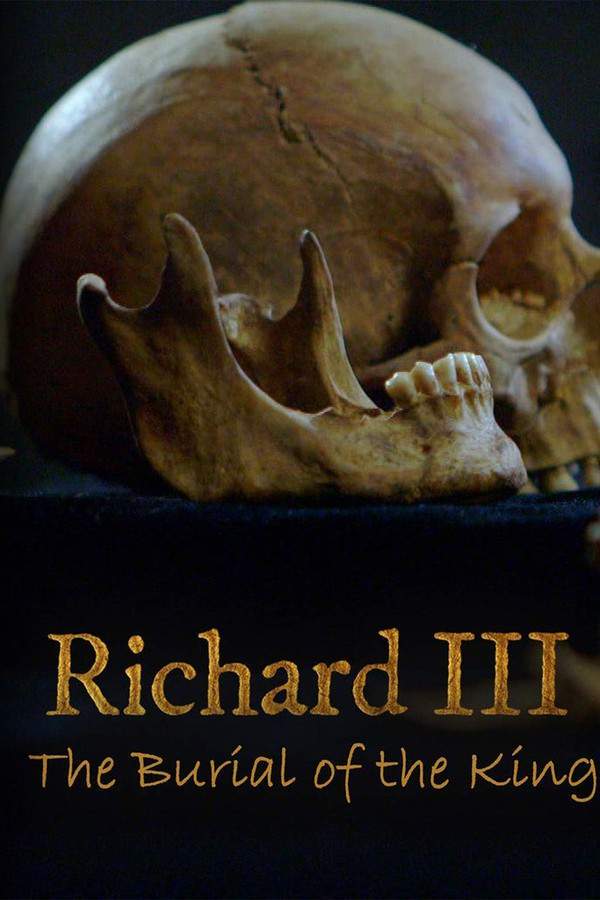
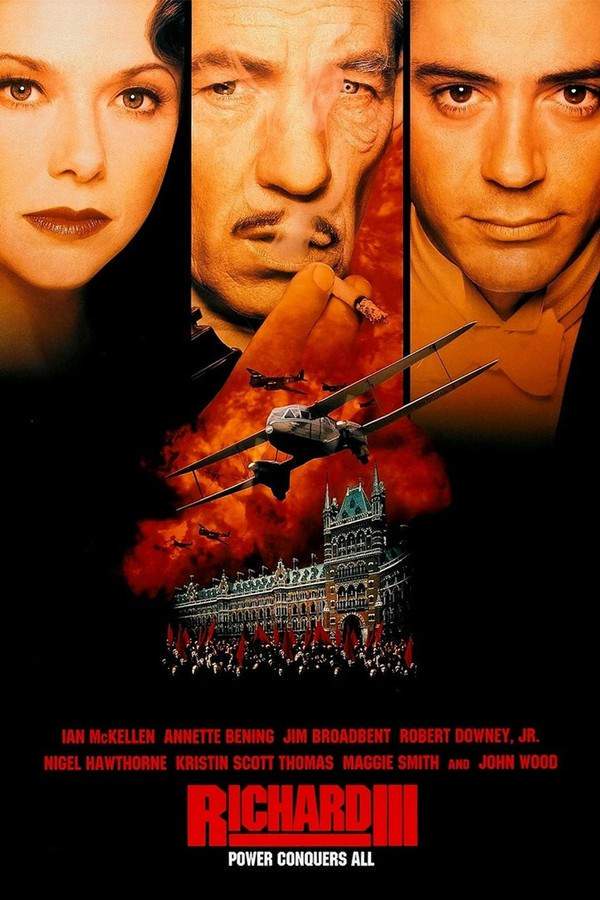
Richard III 1995


Directed by

Richard Loncraine
Made by

United Artists
Where to Watch Richard III
See current US streaming, rental, and purchase options for Richard III (1995) via JustWatch.

Amazon Prime Video
HD
Amazon Prime Video with Ads
HD
fuboTV
HD
MGM Plus
HD
MGM Plus Roku Premium Channel
HD
MGM+ Amazon Channel
HD
Philo
HD
Hoopla
SD
Kanopy
HD
Tubi TV
SD
Fandango At Home
HD Streaming availability powered by 
Richard III Plot Summary
Read the complete plot summary and ending explained for Richard III (1995). From turning points to emotional moments, uncover what really happened and why it matters.
In a fictional timeline of England in the late 1930s, a civil war—set 450 years after the real events—ends with the assassination of the Lancastrian King Henry and his son Prince Edward by Field Marshal Richard III Gloucester, a rival faction leader backed by the House of York. [Edward York] becomes King, but [Richard III] is determined to seize the crown, pitting King Edward against his brother George Clarence, who is imprisoned under a death sentence. Richard deceives and marries Prince Edward’s widow Lady Anne Neville.
Queen Elizabeth intercedes on Clarence’s behalf and persuades Edward to spare his life. Yet Richard destroys the royal pardon and commissions James Tyrrell to murder Clarence, ostensibly in compliance with the original death sentence. Richard informs Edward of Clarence’s death at a meeting with Prime Minister William Hastings, and the shocked King dies from a stroke. As Edward’s sons are underage, Richard becomes Regent, taking the title of Lord Protector with the support of the ambitious and corrupt Henry Buckingham.
To undermine his rivals for the throne, Richard has Rivers, the Queen’s brother, assassinated and uses the sordid circumstances of his death to damage the Queen’s reputation and cast doubt on her sons’ legitimacy. Hastings’ reluctance to support Richard’s claim to the crown so enrages Richard that he manufactures false charges of treason against the Prime Minister, who is sentenced to hang. Having made an example of his only vocal opponent, Richard persuades the Lord Mayor of London and members of the House of Lords to acknowledge his claim to the throne and crown him King. Acting on the advice of Archbishop Thomas and Lord Stanley, the Lancastrian heir, Henry Richmond, flees to France.
Following his coronation [Richard III], seeks to make his throne secure. He employs Tyrrell to murder the princes after failing to convince Buckingham to do so. Aware that Richmond intends to marry Elizabeth, he instructs Sir William Catesby to spread rumours that Lady Anne is ill and likely to die, intending to marry Elizabeth. Lady Anne is found dead sometime later from an apparent drug overdose.
Impatient for the promised reward for his loyalty, Buckingham demands the Earldom of Hereford. Richard dismisses this in a high-handed manner, with the line
I am not in the giving vein
Buckingham, also disturbed by the murders of the princes and Hastings, flees to meet Richmond but is later captured and killed by Tyrrell on Richard’s orders. Richmond gathers supporters, among them Archbishop Thomas and Richard’s mother, the Duchess of York. They are joined by Air Marshal Thomas Stanley. Richmond marries Elizabeth and unites both Houses and political factions against Richard.
With the army’s loyalty slipping and the legitimacy of his claims to the crown weakened, Richard prepares for the final battle against the Lancastrians, who plan an invasion and an advance on London. Richard’s remaining loyal troops, assembling in a marshalling yard, are attacked from the air, revealing Stanley’s defection to the Lancastrian cause. The two armies meet soon after at a ruined Battersea Power Station. [Richard III] and Richmond seek each other out but when his vehicle stalls Richard flees into the structure. Pursued by Richmond, Richard is forced to climb onto exposed metal beams high above the burning battlefield. Cornered by Richmond and refusing to surrender, Richard falls into the inferno with a maniacal grin, reflected by Richmond.
Richard III Timeline
Follow the complete movie timeline of Richard III (1995) with every major event in chronological order. Great for understanding complex plots and story progression.
Assassination of Henry and Edward
Field Marshal Richard Gloucester orchestrates the assassination of King Henry and his son Edward, shaking the realm and clearing the way for his rivals. The Lancastrian line is erased from the throne, and Richard's Yorkist faction gains a ruthless advantage. This brutal act triggers a ruthless struggle for succession.
Edward York becomes King
Edward York ascends to the throne in the wake of the killings, though his hold is fragile from the start. Richard plots to undermine him from the shadows while rival factions maneuver for influence. The monarchy is destabilized as the power struggle intensifies.
Richard's bid for the crown
Richard engineers a division between Edward and his imprisoned brother George Clarence, using deceit and political pressure to weaken both. He manipulates allies and enemies alike to secure his path to the throne. The fate of Clarence is sealed as Richard tightens his grip on power.
Richard marries Lady Anne Neville
Richard deceives Prince Edward's widow, Lady Anne Neville, and secures a controversial marriage that strengthens his influence at court. The union is widely resented and used to bolster his claim to the throne. Political legitimacy is leveraged through personal manipulation.
Elizabeth intercedes for Clarence
Queen Elizabeth intercedes on Clarence's behalf, persuading Edward to spare his life. The mercy is short-lived, as Richard later overturns the pardon and moves to eliminate Clarence. The queen's intervention only delays the growing clamor against Richard.
Pardon revoked; Tyrrell to murder Clarence
Richard nullifies the royal pardon and commissions James Tyrrell to murder Clarence, presenting it as compliance with the original sentence. The plot reveals Richard's ruthlessness and willingness to sacrifice allies for power. Clarence's murder robs Edward of a potential rival and consolidates Richard's grip.
Clarence's murder and Edward's death
Clarence is killed as planned, and soon after, Edward collapses at a meeting with Hastings, dying of a stroke. Richard's triumph over two potential threats appears complete. The tragedy clears the way for Richard to rule as regent.
Richard becomes Regent
With the princes dead, Richard takes the title of Lord Protector and acts as regent to the underage king, consolidating power at court. He surrounds himself with loyalists and exploits the throne's vulnerability to advance his own agenda. The realm teeters as opposition voices are weakened.
Rivers killed; Hastings charged
Richard orders the assassination of Rivers to stain the Queen's reputation and undermine the young king's legitimacy. Hastings becomes his primary, though reluctant, opponent and is later charged with treason and hanged. The purge damages the last remaining opposition within the government.
Richard crowned King
Richard secures the throne by manipulating public opinion and the political elite, placing himself as king. He defeats traditional rivals by presenting a sense of order and stability amid paranoia. The crown is his, but the realm remains divided.
Henry Richmond flees to France
Henry Richmond, the Lancastrian heir, flees to France to rally support and plan a counterstrike against Richard. He aligns with exiled factions and gathers allies to contest the usurped power. The escape signals the looming confrontation that will decide England's fate.
Buckingham demands Earldom; dismissed
Buckingham presses Richard for the promised reward, demanding the Earldom of Hereford. Richard rebukes him in a scathing display of power, ending any loyalty Buckingham might have offered. The dismissal foreshadows Buckingham's eventual downfall.
Buckingham captured and killed by Tyrrell
Buckingham flees to join Richmond but is captured and executed by Tyrrell on Richard's orders. The act eliminates a key ally of the opposition and further consolidates Richard's control. The death underlines the ruthlessness with which Richard pursues the throne.
Richmond unites opposition; Stanley defects; Elizabeth's marriage
Richmond gathers supporters including Archbishop Thomas and the Duchess of York, while Air Marshal Stanley defects to the Lancastrian cause. His defection strengthens the coalition against Richard and signals a turning point. Richmond marries Elizabeth to seal a united front and prepare for the final confrontation.
Final battle at Battersea Power Station
Richard and Richmond meet in a climactic showdown at a ruined Battersea Power Station. Richard's vehicle stalls and he climbs onto exposed beams, cornered as flames rise around the battleground. Richmond's forces prevail as Richard falls into the inferno, ending his reign.
Richard III Characters
Explore all characters from Richard III (1995). Get detailed profiles with their roles, arcs, and key relationships explained.
Richard III (Ian McKellen)
A brilliant but ruthless strategist who uses charm and brutality to seize and secure the throne. His ascent is marked by calculated murders, political scheming, and a chilling willingness to sacrifice anything for power. He thrives on fear, control, and the perception of inevitability.
Lady Anne Neville (Annette Bening)
Richard’s wife by manipulation, she moves from wary object of his pursuit to a complex partner in his scheme. Her arc explores vulnerability, shifting loyalties, and the tension between personal longing and political necessity. She embodies the personal cost of courtly ambition.
Richard III Settings
Learn where and when Richard III (1995) takes place. Explore the film’s settings, era, and how they shape the narrative.
Time period
late 1930s
The story is set in a reimagined late-1930s England, a pre-war era of intense political tension and societal change. The period provide a backdrop where royal ambition collides with constitutional limits and public perception. Events unfold amid shadow governments, conspiratorial plots, and rapid shifts of authority.
Location
England, London, Battersea Power Station
The film unfolds in a fictitious late-1930s England, blending royal drama with contemporary political tension. Much of the action shifts between London’s political corridors and the ruined Battersea Power Station, a stark backdrop for the collapse of order. The setting merges monarchy, government machinations, and an impending sense of upheaval into a modern political thriller.
Richard III Themes
Discover the main themes in Richard III (1995). Analyze the deeper meanings, emotional layers, and social commentary behind the film.
👑
Power and Ambition
Richard's single-minded pursuit of the crown drives every move, revealing how ambition can corrupt institutions and blur moral lines. The film tracks his ascent from Regent to king, using manipulation and calculated violence to shape events. The theme examines how the lust for power reshapes loyalties and justifies ruthless acts.
🗡️
Betrayal and Deceit
The narrative relies on calculated betrayals, false charges, and staged reversals to dismantle rivals. Richard engineers murders and uses public scandals to fragment opposition and control the narrative. Deceit is a currency that determines who can claim legitimacy and who must fall.
⚔️
Civil War and Instability
The story depicts a country torn by rival factions and a fragile monarchy under siege. Alliances shift as the Lancastrians gain ground, and a key battle occurs at a symbolically ruined site, highlighting the fragility of rule under threat. The final confrontation tests loyalty, courage, and the very idea of rightful succession.

Coming soon on iOS and Android
The Plot Explained Mobile App
From blockbusters to hidden gems — dive into movie stories anytime, anywhere. Save your favorites, discover plots faster, and never miss a twist again.
Sign up to be the first to know when we launch. Your email stays private — always.
Explore the mobile appRichard III Spoiler-Free Summary
Discover the spoiler-free summary of Richard III (1995). Get a concise overview without any spoilers.
In the wake of a startling archaeological find, the film opens with the solemn rediscovery of a 15th‑century tomb that held the remains of Richard III. The documentary uses this moment as a portal into a world where the past is being unearthed—literally and figuratively—inviting viewers to step inside the stone walls of a palace long gone and the modern streets that now guard its memory. The tone is reverent yet inquisitive, balancing the gravity of a formal reburial ceremony with the restless curiosity that drives historians, archaeologists, and ordinary people to question what they have been taught.
Through a tapestry of personal accounts, the narrative threads together voices from scholars, descendants, and witnesses of the excavation, each offering a distinct lens on a monarch who has been cast repeatedly as the era’s archetypal villain. The film’s style is intimate, interspersing hushed reflections in candle‑lit vaults with the bustling energy of museum halls, creating a rhythm that feels both scholarly and emotionally resonant. The audience is gently urged to consider how narratives are constructed, how power and reputation survive long after the crown has fallen, and how the act of remembrance can both heal and provoke.
Against this backdrop, the documentary explores the complexities of legacy, juxtaposing the stark materiality of the king’s bones with the swirling myths that have surrounded his name for centuries. It probes the tension between historical evidence and the lingering allure of Shakespeare’s dramatic portrait, suggesting that the truth may lie somewhere in the quiet spaces between myth and artifact. As the story moves toward its culminating scene at the historic Bosworth Battlefield, the film invites contemplation of how a single life can echo through the ages, leaving a nation forever fascinated by the shadows of its own history.
Movies with Similar Twists and Themes
Uncover films that echo the narrative beats, emotional arcs, or dramatic twists of the one you're exploring. These recommendations are handpicked based on story depth, thematic resonance, and spoiler-worthy moments — perfect for fans who crave more of the same intrigue.

Featured on this page

What's After the Movie?
Not sure whether to stay after the credits? Find out!
Check out our other apps:

SAT Sphere
Build confidence for the Digital SAT.

Mori Atlas
Discover wild places worth protecting.

Luntero
Search smarter for a home in Amsterdam.

Plot Explained
Unravel movie endings and hidden clues.

Pokechamp
Dive into Pokémon data and battle logic.

Driving Theory
Get ready for your European theory test.

Movie Dust
Plan your next cinema trip with ease.

Musemap
Find art and culture as you travel.

Selkobase
Compare credentials before committing.

Local Manual
Turn an unfamiliar country into practical next steps.

Lernavi
Compare school systems before your next move.

GymRoam
Find a workout stop wherever your plans take you.
Explore Our Movie Platform
New Movie Releases (2026)
Famous Movie Actors
Top Film Production Studios
Movie Plot Summaries & Endings
Major Movie Awards & Winners
Best Concert Films & Music Documentaries
Movie Collections and Curated Lists
© 2026 What's After the Movie. All rights reserved.
Privacy Policy