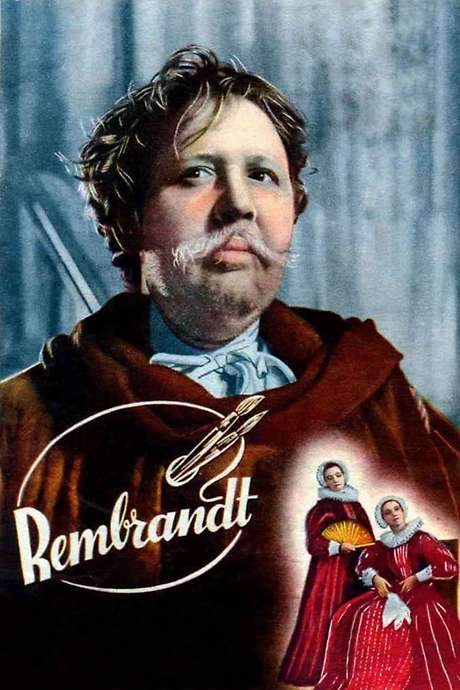
Rembrandt 1936


Made by

London Films Productions
Where to Watch Rembrandt
See current US streaming, rental, and purchase options for Rembrandt (1936) via JustWatch.

Artiflix
4K
Criterion Channel
HD
Darkroom
HD
JustWatch TV
HD
Xumo Play
HD Streaming availability powered by 
Rembrandt Plot Summary
Read the complete plot summary and ending explained for Rembrandt (1936). From turning points to emotional moments, uncover what really happened and why it matters.
Set in mid 17th-century Amsterdam, Rembrandt van Rijn, Charles Laughton, endures the death of his wife Saskia, who was both his great love and his sole model. In his grief, he paints Saskia one final time as her image threatens to fade away. Shortly before Saskia’s death, Rembrandt receives a commission for his famous painting The Night Watch from the civic militia. When the painting is unveiled, the gentlemen who commissioned it cannot recognize themselves, erupt in fury, and threaten not to pay. Rembrandt’s apprentices withdraw, fearing social stigma, and he drinks with Geertje Dirx, Gertrude Lawrence, with whom he shares a mutual attraction.
Ten years pass and Rembrandt is deeply in debt; his possessions have been sold, yet the debt remains overwhelming. He meets Beggar Saul, Roger Livesey, who first models for a painting of King Saul and later teaches him how to beg, but Rembrandt has little talent for this craft. He escapes his creditors by moving to Leiden to stay with his father and brother who run a mill, but the hard labor proves too much for a sensitive artist. He eventually returns home and meets his new maid Hendrickje Stoffels, Elsa Lanchester, who becomes his model and with whom he forms a life together. The couple plans to marry, but a clause in Saskia’s will imposes a heavy burden: Rembrandt must pay his son Titus, John Bryning 20,000 florins if he remarries.
In a fit of jealousy, Geertje accuses Hendrickje of impropriety, and Hendrickje is excommunicated. Rembrandt, Hendrickje, and his son relocate to the countryside, seeking peace and space to paint. Hendrickje discovers a way to shield Rembrandt from creditors by declaring his paintings as her property, enabling him to sell them and stabilize his finances. The couple returns to Amsterdam and finally marries, but tragedy strikes soon after as Hendrickje dies. Years later, an aging Rembrandt lives in greater poverty, surviving on help from friends while continuing to paint. He invests his remaining funds in paint and completes one final work: a self-portrait that closes his long, fraught career.
Rembrandt Timeline
Follow the complete movie timeline of Rembrandt (1936) with every major event in chronological order. Great for understanding complex plots and story progression.
Saskia's death and the last portrait
Saskia, Rembrandt's wife and chief model, dies after a long illness in mid-17th-century Amsterdam. In his grief, Rembrandt paints Saskia one last time, a portrait that seems to resist fading as the image lingers in his memory. This tragedy becomes the emotional anchor of his later work and choices.
The Night Watch commission and a disastrous unveiling
Shortly before Saskia's death, Rembrandt receives the commission for The Night Watch from Amsterdam's civic militia. When the painting is unveiled, the clients cannot recognize themselves as the respectable gentlemen they are, and they react with fury. They threaten not to pay, marking a humiliating setback for the artist and his workshop.
Apprentices leave; Rembrandt drinks with Geertje
Following the unveiling, Rembrandt's apprentices abandon him, fearing social stigma attached to the new work and its reception. In his grief and sense of isolation, he drinks heavily, sharing the night with Geertje, Saskia's maid with whom he has a complicated attraction. The episode underscores a turning point in his social standing.
A decade of debt and a beggar's tutelage
Ten years pass and Rembrandt is deeply indebted, with possessions sold to cover debts. He meets a beggar who models for a painting of King Saul and later tries to teach him how to beg, but Rembrandt proves inept at this harsh road.
Fleeing debt to Leiden
Reluctant to stay in debt-ridden Amsterdam, Rembrandt flees with Geertje's encouragement to Leiden, living with his father and brother who run a mill. The hard physical labor there is intolerable for the sensitive artist, and he struggles to adapt.
Return home; meeting Hendrickje Stoffels
After a few days away, Rembrandt returns home and meets the new maid Hendrickje Stoffels. She becomes his new model and the two find a sense of peace together. They begin plans to marry, hoping to put his tumultuous past behind him.
The will clause and Geertje's jealousy
A clause in Saskia's will requires Rembrandt to pay his son 20,000 florins if he remarries, creating pressure to marry again. Geertje, driven by jealousy, accuses Hendrickje of impropriety, and Hendrickje is excommunicated. This confrontation threatens their budding relationship.
Escape to the countryside and painting in peace
Rembrandt, Hendrickje, and his son relocate to the countryside to paint in peace away from Amsterdam's pressures. The move offers him a quieter environment to create, though his debts still loom. He continues painting and begins to find a steadier rhythm.
Shielding debts: paintings become her property
Hendrickje discovers a way to shield Rembrandt's paintings from creditors by declaring them her property, enabling him to make sales without immediate seizure. This legal maneuver allows the couple to return to Amsterdam and finally get married. Their union marks a hopeful turn, even as financial strain remains.
Hendrickje dies before the wedding
Shortly before the wedding, Hendrickje Stoffels dies, leaving Rembrandt devastated. The loss deepens his sense of loneliness and setbacks in his personal life. The tragedy forestalls their marriage and changes the course of his later years.
Old age, poverty, and a final self-portrait
Years later, Rembrandt is a brokenhearted old man who drinks and lives in greater poverty than before. He survives on handouts from friends and invests what he has in pigments to work on his last work, a self-portrait. The film closes on the image of a solitary artist, his legacy forged in pain.
Rembrandt Characters
Explore all characters from Rembrandt (1936). Get detailed profiles with their roles, arcs, and key relationships explained.
Rembrandt van Rijn (Charles Laughton)
A renowned yet temperamentally sensitive painter who endures personal tragedy and financial precarity. He grieves Saskia's death, seeks solace in his art, and pursues meaningful work amid mounting debts and shifting patronage.
Hendrickje Stoffels (Elsa Lanchester)
Rembrandt's partner and model who helps him regain stability and finds a path toward marriage. She navigates family pressure and strategic moves to protect his work from creditors, even as personal grief shapes their life together.
Geertje Dirx (Gertrude Lawrence)
Saskia's maid who becomes entangled in Rembrandt's life and is driven by jealousy and rivalry. Her accusations threaten Hendrickje and contribute to social friction, highlighting the era's fragile reputations.
Beggar Saul (Roger Livesey)
A beggar who models for a painting of King Saul and later teaches Rembrandt the streetcraft of begging. His presence marks a turning point in the artist's financial and creative journey.
Captain Banning Cocq (Walter Hudd)
A militia captain and one of the figures behind the Night Watch commission. His status as a client and symbol of civic pride frames the clash between art and public spectacle.
Saskia’s Brother (Frederick Burtwell)
A minor relative of Saskia who appears in the broader narrative of loss and memory, underscoring how Saskia's absence shapes Rembrandt's life.
Rembrandt Settings
Learn where and when Rembrandt (1936) takes place. Explore the film’s settings, era, and how they shape the narrative.
Time period
1640s–1650s
The film is set during the Dutch Golden Age, a period of rapid cultural and commercial growth in the Republic. Artists depended on aristocratic and civic patrons, while personal and financial pressures shaped creative choices. The era’s tension between artistic integrity and mercantile demands drives the plot.
Location
Amsterdam, Leiden
The story unfolds in mid-17th-century Amsterdam, a bustling Dutch Golden Age city known for its art market, guilds and thriving trade. The civic militia's commission of The Night Watch highlights the city's appetite for public spectacle and social status. When debts threaten Rembrandt, the narrative also follows his time in Leiden, where he stays with family and contemplates a more modest life before returning to Amsterdam.
Rembrandt Themes
Discover the main themes in Rembrandt (1936). Analyze the deeper meanings, emotional layers, and social commentary behind the film.
🎨
Artistic Struggle
Rembrandt's career hinges on patronage and public commissions. The Night Watch assignment tests his standing with powerful clients, while personal grief and mounting debt press on his creative process. He channels emotion into painting Saskia and other works, balancing artistic vision with financial vulnerability.
💔
Love and Loss
Saskia's death casts a long shadow over Rembrandt's life and art. Hendrickje Stoffels becomes his partner and muse, offering stability even as grief persists. Jealousy from Geertje threatens relationships and social standing, staining the path toward marriage with emotional tension.
💰
Debt & Survival
Rembrandt's finances sag under debt and asset sales. Hendrickje helps shield his earnings by declaring paintings as her property, delaying creditors' access. These moves enable a fragile return to Amsterdam and the prospect of marriage, before Hendrickje's death reshapes his later years.
🏛️
Reputation and Social Pressure
The artist's status is bound to public perception and mercantile patrons. The unmasking of patrons during The Night Watch underscores the tension between art and social image. Hendrickje's involvement leads to social censure, illustrating how morality and commerce intersect in the era.
🕯️
Legacy
In old age, Rembrandt endures poverty while continuing to paint. His late self-portrait becomes a quiet testament to resilience and self-understanding, marking a life defined by art despite material hardship.

Coming soon on iOS and Android
The Plot Explained Mobile App
From blockbusters to hidden gems — dive into movie stories anytime, anywhere. Save your favorites, discover plots faster, and never miss a twist again.
Sign up to be the first to know when we launch. Your email stays private — always.
Explore the mobile appRembrandt Spoiler-Free Summary
Discover the spoiler-free summary of Rembrandt (1936). Get a concise overview without any spoilers.
In the vibrant, mercantile heart of mid-17th century Amsterdam, Rembrandt van Rijn stands as a towering figure of artistic genius. Portrayed by Charles Laughton, the painter is at the height of his celebrity, renowned for his ability to capture not just a likeness, but the very soul of his subjects. His life appears a portrait of success, anchored by his deep affection for his wife and muse, Saskia, whose presence infuses his work with warmth and vitality. Yet, beneath the surface of this Golden Age prosperity lies a man driven by an obsessive fascination with the lives and spirits of the women he paints.
The narrative pivots on a moment of profound personal loss that threatens to shatter Rembrandt’s carefully constructed world. With the death of his beloved wife, the light that once defined his canvas begins to fade, giving way to a darker, more complex palette. This artistic evolution is not merely a change in technique but a reflection of a deepening internal landscape, one that challenges the expectations of the polite society around him. As his style shifts toward the shadowy and profound, he finds himself increasingly at odds with a public that prefers flattering clarity over raw, emotional depth.
What emerges is a compelling study of the friction between creative integrity and commercial demand. Rembrandt’s refusal to compromise his vision places him on a collision course with the wealthy patrons who once championed him, setting the stage for a professional and personal unraveling. The film captures the mood of a man who, having lost his greatest love, must navigate the jagged edges of a life where art is the only remaining truth. It is a contemplative journey into the cost of genius, exploring how the man who would become a master of light and shadow first had to survive the darkness of his own making.
Movies with Similar Twists and Themes
Uncover films that echo the narrative beats, emotional arcs, or dramatic twists of the one you're exploring. These recommendations are handpicked based on story depth, thematic resonance, and spoiler-worthy moments — perfect for fans who crave more of the same intrigue.



Featured on this page

What's After the Movie?
Not sure whether to stay after the credits? Find out!
Check out our other apps:

SAT Sphere
Build confidence for the Digital SAT.

Mori Atlas
Discover wild places worth protecting.

Luntero
Search smarter for a home in Amsterdam.

Plot Explained
Unravel movie endings and hidden clues.

Pokechamp
Dive into Pokémon data and battle logic.

Driving Theory
Get ready for your European theory test.

Movie Dust
Plan your next cinema trip with ease.

Musemap
Find art and culture as you travel.

Selkobase
Compare credentials before committing.

Local Manual
Turn an unfamiliar country into practical next steps.

Lernavi
Compare school systems before your next move.

GymRoam
Find a workout stop wherever your plans take you.
Explore Our Movie Platform
New Movie Releases (2026)
Famous Movie Actors
Top Film Production Studios
Movie Plot Summaries & Endings
Major Movie Awards & Winners
Best Concert Films & Music Documentaries
Movie Collections and Curated Lists
© 2026 What's After the Movie. All rights reserved.
Privacy Policy