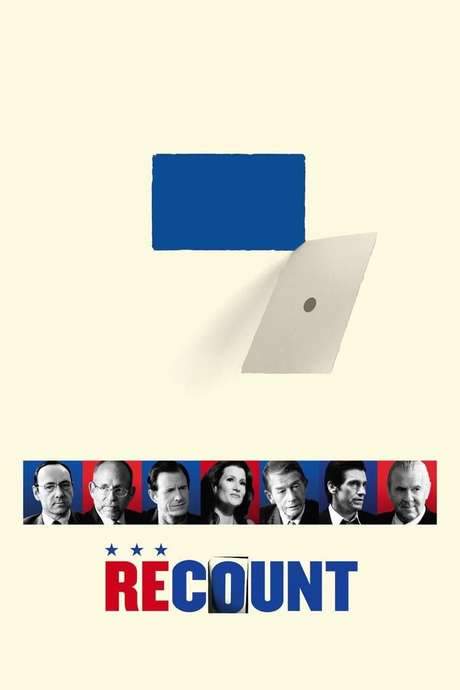
What Is Recount About?
The premise of Recount in 319 words, with nothing given away. The full story follows below.
In the heat of a national election, the United States finds itself holding its breath over a single, razor‑thin margin in a sun‑baked swing state. The familiar hum of campaign rallies is replaced by a quiet, obsessive focus on every ballot, every perforated edge, and a term that will forever echo through the political lexicon. The atmosphere feels simultaneously ordinary—families watching the night’s results from living‑room sofas—and extraordinary, as a whole country is pulled into a delicate, almost surgical scrutiny of democracy itself.
At the heart of the contention stand two towering figures of modern politics. George W. Bush, a governor with a folksy charm and a promise of decisive leadership, projects confidence while navigating an unexpectedly volatile battlefield. Opposite him, Al Gore, a seasoned vice president whose measured demeanor masks a fierce determination to see the vote counted fairly, faces the weight of a nation’s hope and the shadows of past concessions. Their rivalry is less about personal animosity than about the very mechanics that decide who will shape the future.
Adding to the intricate dance are the state officials tasked with upholding the letter of the law. Katherine Harris, Florida’s Secretary of State, becomes a pivotal axis around which procedural debates spin, her every decision magnified by a relentless media glare. Meanwhile, Craig Waters, a voice for the state’s highest court, offers measured updates that only deepen the intrigue, hinting at extensions and possibilities that keep the public guessing. The legal arena looms large, with two towering judicial bodies poised to interpret the fragile balance of votes.
The tone is one of suspenseful gravitas, a blend of constitutional drama and human frailty. Newsrooms buzz, citizens argue, and the country watches a democratic process transform into a high‑stakes contest of interpretation. In this charged environment, every whisper, every paper shuffle, and every courtroom argument feels like a clue to a puzzle that could reshape the nation’s political landscape.
What Happens in Recount?
The complete story of Recount, from the first scene to the last, in 688 words (about 3 minutes). Spoilers throughout. Names in the text link to 3 cast member pages.
Spoilers ahead
Recount chronicles the 2000 U.S. presidential election, centered on the Bush v. Gore showdown between Governor George W. Bush Brent Mendenhall and U.S. Vice President Al Gore Grady Couch. The film unfolds from the election night of November 7 through a long, high-stakes legal saga that culminates in the Supreme Court’s December 12 ruling halting the Florida recount. It presents a meticulous, behind-the-scenes look at how a national election can hinge on both the arithmetic of vote counts and the ethics of legal strategy, journalism, and political maneuvering.
As the initial results tighten into a near dead heat, the story dives into the tactical decisions on both sides. Gore and his advisers push for hand recounts in Democratic-leaning counties where irregularities are alleged, arguing that the rudimentary machine counts do not capture the true vote. This move opens a cascade of courtroom battles, media scrutiny, and partisan pressure that keeps the nation riveted through a winter of legal drama. The film carefully shows how every counting method, every deadline, and every courtroom filing becomes a focal point for a broader political argument about legitimacy and the will of the voters.
Katherine Harris [Laura Dern] is depicted at the center of a political and legal storm, as Republicans press for timely, legally mandated action from Florida’s Secretary of State in the handling of the ballot counts. The narrative underscores how her responsibilities become a battleground, influencing how the state’s votes are interpreted and recalled. The growing attention from the media, the political parties, and the public amplifies the pressure on every decision maker, turning procedure into spectacle and every error into a potential turning point.
The movie also highlights the role of a tight circle of advisers and legal teams who shape strategy and framing. Ron Klain [Kevin Spacey], Monica Klain [Eve Gordon], Michael Whouley [Denis Leary], and a broader roster of political and legal minds navigate the competing interests at stake. Veterans of campaigns and the courtroom—James Baker [Tom Wilkinson], Mac Stipanovich [Bruce McGill], Ben Ginsberg [Bob Balaban], and David Boies [Ed Begley Jr]—are shown crafting arguments, weighing deadlines, and debating the best path forward in a process that blends law, politics, and media image. The film also shows the involvement of other key figures like Clay Roberts [Gary Basaraba], Mitchell Berger [Bruce Altman], and Jeremy Bash [Derek Cecil], whose actions help drive the legal narratives on both sides. The personal stakes are underscored by scenes with Theresa LePore [Jayne Atkinson] and Bill Daley [Mitch Pileggi], among others, whose roles illuminate how individual decisions ripple outward into national consequences. In addition, the portrayal includes figures such as George W. Bush (voiced by Chris Cox and portrayed by Brent Mendenhall) and Al Gore, reminding viewers that the drama spans both the political and the ceremonial faces of the election.
Two landmark moments drive the chronology: the Florida Supreme Court’s late-November and December actions that extended deadlines and ordered a statewide recount, and the eventual intervention by the United States Supreme Court that superseded those state rulings. Craig Waters, the Florida Supreme Court spokesman, features in the background of these pivotal moments, illustrating how rapid, public-facing statements can shape the pacing and framing of a legal battle of this scale. The film does not shy away from the tension and dissent that mark many high-court decisions, highlighting the adversarial postures of both Florida’s judicial system and the U.S. Supreme Court, along with the dissenting opinions that color the competing legal narratives.
Throughout, the film emphasizes the human dimension behind the headlines: the clerks counting ballots, the campaign staff calibrating messages, and the voters who waited as counties, courts, and congress debated the meaning of every vote. The result is a careful, balanced portrayal that remains faithful to the core events described in the original recount while expanding the texture with character-driven storytelling, courtroom drama, and media dynamics. The final act makes clear how a single Supreme Court ruling in a single state could redefine a nation’s sense of its own democratic process, leaving viewers with a nuanced view of how elections are conducted, contested, and interpreted in the public eye.
Recount Timeline: Every Key Event in Order
12 key events in the order they happen, from “Election Day Begins the Bush–Gore Saga” to “Voting Irregularities and Democratic Strongholds Under Scrutiny”. 11 events name a place, across 3 locations.
- 1
Election Day Begins the Bush–Gore Saga
The 2000 U.S. presidential election unfolds across the nation, with Florida as the pivotal battleground. Officials report a razor-thin margin between George W. Bush and Al Gore, triggering early questions about vote counting methodologies. The outcome remains uncertain as networks project a close race late into the night.
When:November 7, 2000 Where:United States
- 2
Gore Concession Call and Retraction
In the early hours after Election Day, Gore publicly concedes to Bush by telephone, signaling a potential end to the race. He quickly retracts the concession, acknowledging ongoing disputes and a difficult path ahead. The moment underscored the contentious, chaotic start to the Florida recount saga.
When:Early hours, November 8, 2000
- 3
Gore Campaign Files for Hand Recounts
The Gore campaign decides to sue for hand recounts in Democratic-leaning counties where irregularities are alleged. The move aims to address statistical uncertainties from the machine recount and to pursue a more exact tally. This legal strategy heightens the tension between the campaigns and state election officials.
When:November 2000 Where:Florida
- 4
Machine Recount Reveals a Statistical Dead Heat
Following the initial hand count requests, a machine recount produces a near-tie result, highlighting the fragility of the outcome and the contested ballots in key counties. The close numbers fuel both campaigns’ arguments and extend the dispute over how to count votes. The data becomes the focal point for legal battles and media scrutiny.
When:November 2000 Where:Florida
- 5
Republican Pressure on Florida Secretary of State
Republicans pressure Florida Secretary of State Katherine Harris to uphold legally mandated responsibilities amid the counting disputes. The political pressure intersects with legal deadlines and court rulings, shaping procedural decisions. The intense lobbying underscores the national stakes of the state’s vote tally.
When:November–December 2000 Where:Florida
- 6
Deadline Extension Announced by Florida Supreme Court
Florida Supreme Court spokesman Craig Waters announces an extension of the deadline for returns in the initial recount, delaying the process and broadening the window for further counting. The alteration provides the campaign with more time to pursue legal options and to influence the tally. The move reflects the court’s pivotal role in shaping the recount timeline.
When:November 21, 2000 Where:Florida
- 7
Statewide Recount Ordered by Florida Supreme Court
Days after the extension, the Florida Supreme Court orders a statewide recount of votes, expanding the scope beyond selective counties. The decision intensifies legal battles and public attention as both campaigns brace for a broader tally. Media and the parties monitor developments closely as the recount unfolds.
When:December 8, 2000 Where:Florida
- 8
Adversarial Postures Intensify Between Courts
As recount arguments escalate, the Florida and U.S. Supreme Courts take adversarial stances, with dissenting opinions emerging from members of both courts. The judicial drama mirrors the political contest, adding layers of complexity to the eventual outcome. The public watches how the courts shape the fate of the election.
When:December 2000 Where:United States
- 9
U.S. Supreme Court Rulings Halt the Recount
The U.S. Supreme Court issues a ruling that temporarily and ultimately halts the Florida recount, stepping in to resolve the national crisis. The decision signals a shift from state-level disputes to federal oversight and constitutional interpretation. The outcome hinges on legal technicalities as the election drama edges toward closure.
When:December 12, 2000 Where:United States
- 10
Final Outcome: Bush Secures the Presidency
With the recount halted, Bush emerges as the winner of the election, and the political battle shifts from ballots to legality and legitimacy. The film emphasizes the controversial path to that result and the lasting impact on how elections are conducted in the United States. The controversy leaves a lasting imprint on political memory.
When:December 2000 Where:United States
- 11
Media and Public Focus on the Recount
Throughout the recount period, media coverage intensifies around the reliability of hand vs. machine counts and the integrity of Democratic-leaning counties. Journalists, parties, and the public debate the meaning of a fair count while the legal clocks tick toward deadlines. The national spotlight magnifies every courtroom and ballot decision.
When:November–December 2000 Where:Florida/United States
- 12
Voting Irregularities and Democratic Strongholds Under Scrutiny
The summary notes alleged irregularities in Democratic strongholds, driving the push for hand recounts and legal challenges. Investigators, attorneys, and campaign staff argue about the legitimacy and accuracy of the vote tally. The central controversy remains the core driver of the entire recount saga.
When:November–December 2000 Where:Florida
Who Are the Main Characters in Recount?
11 characters, among them Ron Klain — Kevin Spacey, Michael Whouley — Denis Leary and Katherine Harris — Laura Dern: who each one is and the part they play in the story. Every profile links to the actor’s page.
-
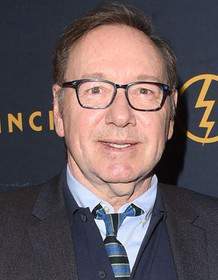
Ron Klain — Kevin Spacey
Played by Kevin Spacey
Gore's campaign chief of staff, a meticulous operator who drives the legal strategy surrounding the recount. He coordinates multiple teams, weighs procedural options, and remains fiercely loyal to Gore while navigating a volatile political landscape. His calculations balance urgency with a disciplined, methodical approach to win or at least secure a fair outcome.
- 🎯 Campaign Strategy
- 🧠 Strategy & Tactics
- 🤝 Loyalty
-

Michael Whouley — Denis Leary
Played by Denis Leary
A key Democratic campaign operative whose role involves orchestrating ground operations and coordinating messaging across the states. He pushes for aggressive strategies in strongholds while negotiating with allies and adversaries alike. His pragmatism clashes with other stakeholders' higher-level ambitions.
- 🧭 Campaign Operations
- 🗳️ Ground Game
- 🤝 Collaboration
-

Katherine Harris — Laura Dern
Played by Laura Dern
Florida Secretary of State tasked with certifying votes under a legally mandated framework. She becomes a focal point of political and legal pressure as her decisions influence the pace and direction of the recount. Her role highlights the tension between official duties and partisan expectations.
- ⚖️ State Official
- 🗳️ Ballot Certification
-

Warren Christopher — John Hurt
Played by John Hurt
Lead counsel for the Gore campaign, navigating complex legal arguments and coordinating with state and federal courts. He emphasizes a disciplined, law-driven approach to the post-election fight. His experience anchors the film’s portrayal of high-stakes litigation.
- ⚖️ Attorney
- 🧠 Legal Strategy
- TL
Theresa LePore — Jayne Atkinson
Played by Jayne Atkinson
Supervisor of Elections associated with ballot design and administration in Florida. Her role underscores the practical and political consequences of ballot formats. The film portrays the scrutiny she endures as deadlines press in and recounts proceed.
- 🗂️ Ballot Design
- ⚖️ Election Law
-

James Baker — Tom Wilkinson
Played by Tom Wilkinson
Bush campaign strategist and veteran political operator coordinating counterpoints to Gore’s legal maneuvers. He brings a blend of media savvy and strategic planning to the defense of the campaign’s interests. His presence highlights how old-school political tactics clash with legal proceedings.
- 💼 Campaign Strategy
- ⚖️ Legal Defense
-

David Boies — Ed Begley Jr
Played by Ed Begley Jr.
Lead attorney for the Gore side, presenting calculated legal arguments in the courtroom. He emphasizes rigorous analysis and persuasive litigation as a means to secure the recount. His character embodies the legal backbone of the campaign’s effort.
- ⚖️ Attorney
- 🧠 Legal Strategy
- GW
George W. Bush (voice) — Chris Cox
Played by Chris Cox
Bush campaign voice and representative, shaping the messaging and legal defense from the campaign side. He brings a measured, authoritative presence to the public face of the effort. His involvement illustrates the executive-level dimension of the recount saga.
- 🏛️ Presidency
- 🗳️ Election
- MK
Monica Klain — Eve Gordon
Played by Eve Gordon
Ron Klain’s spouse, depicted in a supporting role that reflects the personal dimensions of those involved in the political whirlwind. She embodies the non-political perspective within a high-stakes environment. Her presence adds a human angle to the campaign's inner circle.
- 🧭 Personal Life
- 💞 Family
- BD
Bill Daley — Mitch Pileggi
Played by Mitch Pileggi
Campaign aide contributing to the strategic coordination and rapid decision-making required during the recount saga. He represents the logistical side of campaign operations under pressure. His role emphasizes how staffers translate strategy into real-time actions.
- 🏛️ Government
- 🧭 Political Ops
- AG
Al Gore — Grady Couch
Played by Grady Couch
Democratic candidate portrayed through the lens of the election night tension and subsequent recount activism. He embodies the central moral and political stakes of the film, balancing calls for victory with concerns about fairness and due process. His arc individualizes the broader constitutional drama.
- 🗳️ Candidate
- 🎯 Leadership
Where and When Is Recount Set?
Recount is set in Florida, United States, Washington and D.C. (Late 2000). Here is why the time and place matter to the story.
When
Late 2000
Set during November and December 2000, the film chronicles the chaotic aftermath of Election Day and the ensuing hand recounts in Florida. It follows courtroom battles, political bargaining, and rapid procedural changes under intense public attention. The period culminates with the U.S. Supreme Court intervention that halts the recount.
Where
Florida, United States, Washington, D.C.
The story centers on Florida as the political battleground where ballots, deadlines, and legal rulings determine the race. The film also depicts the national stage, with Washington, D.C. as the locus of campaigns, courts, and media scrutiny shaping the outcome. The setting highlights how state procedures intersect with federal oversight in a high-stakes election.
- 🗳️ Florida recount
- ⚖️ Government
- 🗺️ United States
What Are the Themes of Recount?
3 ideas the story keeps returning to, among them Election Chaos, Political Pressure and Media Spotlight.
-
01
Election Chaos
The film foregrounds how razor-thin margins can trigger prolonged legal battles and procedural ambiguities. It examines the fragility of electoral rules when deadlines and recount methods become leverage points for partisan advantage. Public perception and media framing intensify the pressure on decision-makers, turning a vote tally into a political storm.
-
02
Political Pressure
Campaign operatives, lawyers, and state officials collide with institutional duties under relentless scrutiny. The story reveals how personal loyalties, strategic calculations, and public accountability clash in real-time. Choices are driven not only by legal considerations but by the desire to influence the eventual outcome.
-
03
Media Spotlight
News coverage amplifies every decision, delay, and ruling, shaping the narrative and constraining options for all sides. The film shows how headlines, race projections, and court chatter sway public opinion and the urgency of timelines. Media dynamics become a powerful force in the political process itself.
What Kind of Film Is Recount?
Tense in tone, with fast pacing and a complex story, going by the plot summary.
- Tone
- Tense
- Pacing
- Fast
- Story
- Complex
- Intensity
- High
- Ending
- Bittersweet
A fast-paced, tense political drama that chronicles the high-stakes legal and media battle of a contested presidential election, creating a stressful and historically significant viewing experience.
- tense
- stressful
- adversarial
- historic
- gripping
- polarizing
- political drama
- election recount
- legal battle
- democratic process
Quiz
How well do you remember Recount? Test yourself on the story.