
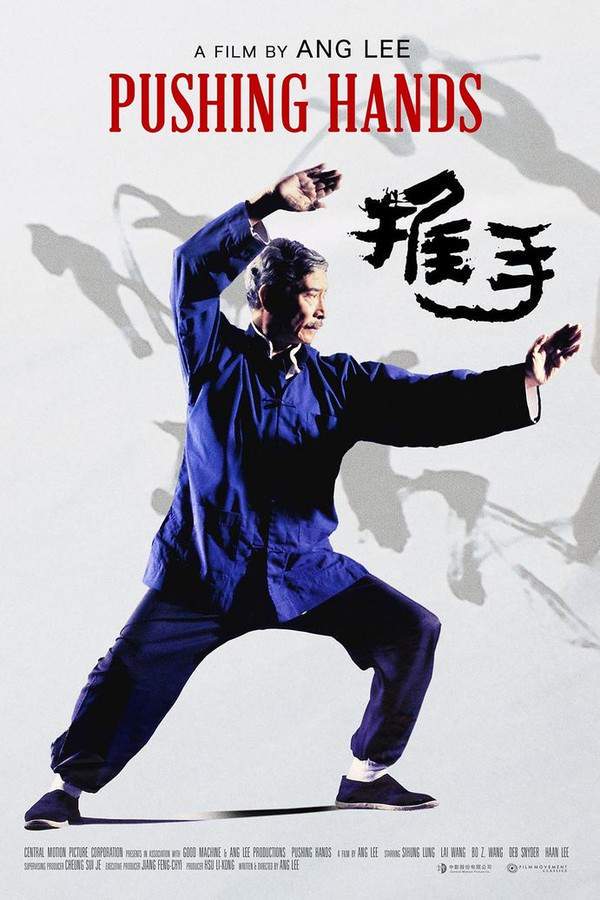
What Is Pushing Hands (1991) About?
The premise of Pushing Hands (1991) in 278 words, with nothing given away. The full story follows below.
In bustling New York, a seasoned Taiwanese tai chi master arrives to share a cramped apartment with his son and his son’s American wife. Chu carries the quiet dignity of generations, his movements a living bridge between centuries of tradition and a city that never pauses. The cramped apartment, the clatter of the subway, and the constant hum of English create a backdrop that feels both intimate and overwhelming, setting the stage for an understated comedy of manners.
Alex stands at the crossroads of two worlds, translating not only language but expectations, while his wife Martha chases her own ambitions, writing and navigating a life that feels suddenly crowded. Their cultural misunderstandings surface with gentle humor—a dinner that turns into a lesson in etiquette, a silent hallway that echoes with unspoken tension. The tone remains warm, inviting the viewer to smile at the inevitable awkwardness without veering into cruelty.
Outside the family’s modest living space, Chu discovers a modest community center where he begins to teach tai chi to a group of curious schoolchildren. The classes become a quiet sanctuary where the fluid motions of an ancient art ripple through a modern neighborhood, hinting at the possibility of finding balance amid chaos. The film’s visual palette blends the muted tones of the apartment with the soft, sun‑lit spaces of the class, reinforcing a mood of quiet reflection tempered by occasional bursts of lively cultural exchange.
Through these gentle observations, the story paints a portrait of generational and cultural negotiation, inviting us to wonder how tradition can adapt without losing its essence, and how love and humor might carve a path toward mutual understanding in a bustling, ever‑changing city.
What Happens in Pushing Hands (1991)?
The complete story of Pushing Hands (1991), from the first scene to the last, in 310 words (about 1 minute). Spoilers throughout. Names in the text link to 4 cast member pages.
Spoilers ahead
The tale unfolds with the Chinese tai chi master, Chu, embarking on a journey to the United States to be with his son, Alex, and his family. The challenge of communication looms large as Chu struggles with English, while his American daughter-in-law, Martha, does not speak Mandarin—a barrier that often leads to misunderstandings. They navigate their way through this linguistic maze with the help of Alex, their bilingual bridge. However, Martha finds Chu’s presence to be an unwelcome disruption as it hinders her progress on her second novel.
Every Sunday, Chu passionately teaches tai chi at a local Chinese cultural center, where he encounters Mrs. Chen, another determined immigrant hailing from Beijing, who shares her culinary skills with eager students.
As the story deepens, we witness the escalating conflict between Chu and Martha, alongside Alex’s internal battle between his duties as a son and the demands of everyday life. Tensions reach a peak one evening when, against Martha’s wishes, Chu decides to take a solitary walk, igniting a family crisis. In the wake of this incident, Chu makes the bold choice to move out, seeking to live independently.
He secures a job as a dishwasher in a modest Chinatown restaurant, only to endure discrimination at the hands of the owner. However, in a gripping display of determination and skill, Chu draws upon his tai chi abilities to stand his ground during a confrontation, earning newfound respect within the community.
As the narrative approaches its conclusion, Alex begins to reassess his perceptions of his father and seeks to mend their fractured relationship. Even though Chu is adamant about his desire for solitude, Alex voices his feelings of love and encourages his father to visit often and engage with his grandson. In the end, Chu and Mrs. Chen continue their individual quests for freedom and independence in the vibrant tapestry of Chinatown.
Pushing Hands (1991) Timeline: Every Key Event in Order
13 key events in the order they happen, from “Chu's Arrival in the United States” to “Continued Journeys”. 5 events name a place, across 3 locations.
- 1
Chu's Arrival in the United States
The story begins with Chu, a Chinese tai chi master, arriving in the United States to reunite with his son, Alex, and his family. This marked the start of a new chapter in Chu's life as he faced the challenge of adjusting to a different culture and environment.
Where:United States
- 2
Language Barriers
Upon arriving, Chu quickly realizes the significant language barrier that exists between him and his American daughter-in-law, Martha. Chu struggles with English, while Martha does not speak Mandarin, leading to frequent misunderstandings and miscommunications.
- 3
Alex as a Bilingual Bridge
Alex, fluent in both English and Mandarin, takes on the role of their translator. He acts as a bridge between his father and Martha, helping them navigate through their language difficulties and ease tensions within the household.
- 4
Martha's Frustration
Martha begins to perceive Chu's presence as a disruption in her life, particularly as it affects her focus on writing her second novel. This creates mounting tension between her and Chu, as they struggle to coexist under the same roof.
- 5
Chu's Tai Chi Classes
Every Sunday, Chu teaches tai chi at a local Chinese cultural center, where he also takes the opportunity to connect with other immigrants. Here, he meets Mrs. Chen, a fellow immigrant from Beijing who shares her culinary expertise with students, fostering a sense of community.
When:Every Sunday Where:Chinese cultural center
- 6
Rising Tensions
As the story continues, the conflict between Chu and Martha intensifies. Alex faces an internal struggle as he balances his obligations as a son against the pressures of his daily life, resulting in a strained family dynamic.
- 7
Family Crisis
One evening, Chu takes a walk without consulting Martha, leading to a family crisis. This unexpected action exacerbates the tensions in the household and forces everyone to confront their feelings and relationships.
- 8
Chu Moves Out
In the aftermath of the crisis, Chu decides to move out, seeking independence and solitude. This bold choice reflects his desire to reclaim his individuality, needing to establish his own space away from the family conflicts.
- 9
New Job in Chinatown
Chu secures a job as a dishwasher in a modest restaurant in Chinatown. Despite facing discrimination from the restaurant owner, Chu's resilience shines through as he refuses to back down during a confrontation, demonstrating his tai chi skills.
Where:Chinatown
- 10
Earning Respect
After standing his ground in the face of adversity, Chu earns newfound respect within the Chinatown community. His determination not only showcases his strength but also helps solidify bonds that begin to form with other locals.
Where:Chinatown
Show the other 3 events of Pushing Hands (1991) Hide the last 3 events
- 11
Alex's Reflection
As the narrative progresses, Alex starts to reconsider his views on his father, realizing the sacrifices Chu has made. This reflection prompts Alex to take steps toward repairing their strained relationship, recognizing the importance of family.
- 12
A Son's Love
Despite Chu's insistence on solitude, Alex openly expresses his love for his father. He encourages Chu to visit often and spend time with his grandson, highlighting the need for familial connections even amid struggles.
- 13
Continued Journeys
In the concluding moments of the film, Chu and Mrs. Chen continue their individual quests for freedom and independence. Their journeys within the rich tapestry of Chinatown reflect their ongoing struggles as immigrants seeking to forge their own paths.
Where:Chinatown
Who Are the Main Characters in Pushing Hands (1991)?
4 characters, among them Chu (B.C. Lee), Martha (Deb Snyder) and Alex (Hung-Chang Wang): who each one is and the part they play in the story. Every profile links to the actor’s page.
- C(
Chu (B.C. Lee)
Played by B.C. Lee
Chu is a Chinese tai chi master whose journey to the United States brings to light the challenges of immigration. He embodies traditional values and struggles with the cultural differences that arise within his American family. His dedication to tai chi and his quest for independence reveal a deeply rooted resilience and wisdom.
- 👴 Elder
- 🥋 Martial Artist
- M(
Martha (Deb Snyder)
Played by Deb Snyder
Martha is Alex's American wife, expressing modern American values and aspirations. Initially feeling disrupted by Chu's presence, she represents the tension between traditional and contemporary lifestyles. Her character evolves as she navigates her relationship with Chu, leading to personal growth and deeper understanding.
- 👩🦰 Young Adult
- 📚 Writer
- A(
Alex (Hung-Chang Wang)
Played by Hung-Chang Wang
Alex serves as a bridge between his father and wife, often caught in the middle of their misunderstandings. He embodies the immigrant experience, balancing his responsibilities to his family while navigating the complexities of his dual cultural identity. His attempts to reconcile the tensions reflect the struggles of many second-generation immigrants.
- 👨💼 Son
- 🌍 Mediator
- MC
Mrs. Chen (Fanny De Luz)
Played by Fanny De Luz
Mrs. Chen is a fellow immigrant who shares her culinary skills, embodying the rich cultural heritage of the Chinese community. Her passion for teaching represents the importance of cultural exchange and community bonding. Through her interactions with Chu, she highlights the pursuit of freedom in a new land.
- 👩🍳 Cook
- 🇨🇳 Immigrant
Where and When Is Pushing Hands (1991) Set?
Pushing Hands (1991) is set in United States and Chinatown. Here is why the place matters to the story.
When
The story unfolds in a contemporary setting, reflecting the challenges of immigrant life in America during the late 20th century. This period is marked by the increasing globalization that influences cultural exchanges and the struggles faced by immigrants in adapting to a new environment while maintaining their heritage.
Where
United States, Chinatown
The movie takes place in the United States, highlighting the cultural clash between Eastern traditions and Western lifestyles. Chinatown serves as a vibrant community hub where immigrants navigate their new lives, sharing their culture and experiences. This neighborhood is known for its rich cultural heritage, bustling markets, and culinary delights, making it a melting pot of Chinese traditions.
- 🇺🇸 USA
- 🏙️ Urban
What Are the Themes of Pushing Hands (1991)?
2 ideas the story keeps returning to, among them Cultural Conflict and Independence.
-
01
Cultural Conflict
The film explores the theme of cultural conflict, particularly through the generational divide between Chu and his daughter-in-law, Martha. Their differing values and communication barriers symbolize the struggles faced by many immigrant families. This theme underscores the importance of understanding and bridging cultural differences to foster harmony within families.
-
02
Independence
Independence is a central theme as Chu seeks to carve out his own identity away from his family. His journey reflects the universal quest for personal freedom and self-reliance, highlighting the balance between familial obligations and individual aspirations. This pursuit ultimately leads to growth and deeper connections with loved ones.
What Kind of Film Is Pushing Hands (1991)?
Hopeful in tone, with steady pacing and a straightforward story, going by the plot summary.
- Tone
- Hopeful
- Pacing
- Steady
- Story
- Straightforward
- Intensity
- Medium
- Ending
- Bittersweet
A gentle and heartfelt drama about an elderly immigrant's quiet struggle to adapt, blending moments of gentle humor and poignant sadness into a hopeful tale of finding independence and connection.
- reflective
- heartfelt
- gentle
- uplifting
- nostalgic
- melancholic
- cultural clash
- generational divide
- immigrant experience
- family conflict
Content notes: discrimination.
Quiz
How well do you remember Pushing Hands (1991)? Test yourself on the story.
