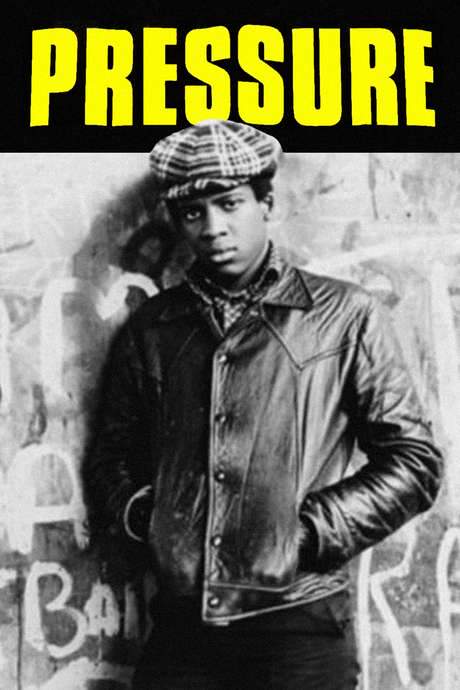
Pressure 1975

Directed by

Ray Burdis
Made by

BFI
Where to Watch Pressure
See current US streaming, rental, and purchase options for Pressure (1975) via JustWatch.


Streaming availability powered by 
Pressure Plot Summary
Read the complete plot summary and ending explained for Pressure (1975). From turning points to emotional moments, uncover what really happened and why it matters.
Tony Herbert Norville is a second-generation Black British teenager, born and raised in Britain. The rest of his family—his mother, father, and older brother—were born in Trinidad in the Caribbean. This shared origin shapes how each generation views the society they live in. Tony’s mother emphasizes a message of hard work, discretion, and strict respect for White people’s laws because those who hold power are white.
The film sets up a tension between generations: the older generation grows comfortable with a society ruled by white English authority, while the younger generation leans toward awareness of discrimination and the need for change. Tony’s brother, Ram John Holder, is active in the Black Power movement and argues that Black people are treated as second-class citizens, and that change requires collective action and political organization. He pushes a message of black consciousness, heritage, and empowerment, insisting that they must organize to confront the system since the government does not stand with them.
Tony strives to assimilate into the white-dominated society even as he tries to honor his family’s traditions. He faces repeated obstacles that test his resolve and sense of belonging. One night, while out dancing with a white friend, a white adult confronts them and warns that if he doesn’t leave, she will call the police, insisting the white girl should be ashamed for bringing a Black boy home. This moment underscores the everyday hostility Tony confronts while trying to fit in.
When Tony attends his brother’s meeting, he witnesses Black activists under pressure from authorities. Police forcefully enter the gathering without warrant, assault the participants, and arrest them. The assault extends into Tony’s home life as officers later tear through his family’s home in search of non-existent drugs, a stark illustration of how state power targets Black communities.
Beyond these scenes of conflict, Tony’s professional life mirrors the broader oppression. He struggles to find employment that aligns with his education, and his frustration grows as he confronts barriers that seem to block his progress in a country that promises opportunity but often delivers exclusion.
The personal struggle of Tony is compounded by the tension of identity. Born in Britain to West Indian parents, he feels caught between two worlds: he can’t fully relate to his brother, whose upbringing was not in Europe, and he can’t quite connect with white friends who do not share his daily obstacles. However, through his experiences, Tony begins to see a larger pattern of power. He concludes that while only a small group of whites may hold visible authority, many white people are unknowingly subject to the same system of inequality—power is distributed unevenly, and awareness matters.
The film thus presents a nuanced portrait of a community navigating racism, generational divides, and the search for belonging. It raises questions about how individuals respond to injustice—whether through assimilation, protest, or a critical rethinking of the social order—while staying rooted in the intimate experiences of Tony and his family.
Pressure Timeline
Follow the complete movie timeline of Pressure (1975) with every major event in chronological order. Great for understanding complex plots and story progression.
Tony's upbringing in Britain
Tony is a second-generation Black British teenager growing up in Britain. His Trinidad-born family anchors his world and shapes how they view society and authority. The film contrasts Tony's experiences with his family's traditional stance on race and integration.
Mother's instruction about respect and law
Tony's mother tells him that as Black people they must work hard, mind their own business, and respect White people's laws because those with power are White. This guidance plants a sense of compliance and fear of authority. Her words reflect the older generation's acceptance of the social order.
Generational divide over British society
The film shows the older generation's satisfaction with a society ruled by White English authorities and a younger generation's dissatisfaction. Tony finds the system obstructive as he pursues progress. The tension fuels the narrative and Tony's internal conflict.
Brother's Black Power activism
Tony's brother is active in the Black Power movement and repeatedly discusses how Black people are treated as second-class citizens. He stresses collective political organizing to push back against oppression. His talks contrast with Tony's assimilation goals.
Tony tries to assimilate into white society
Tony attempts to fit into a white-dominated society while staying connected to his family and their traditions. He sees schooling and social interactions as paths to progress, but systemic barriers keep him from fully belonging. The struggle highlights his sense of being between two worlds.
Dancing with a white friend and public shaming
Tony goes dancing with a white friend and returns to her apartment. A white adult shouts that he should leave and that the white girl should feel ashamed for bringing back a Black boy. The incident exposes the casual racism and social policing Tony faces.
At brother's meeting, police brutality observed
At his brother's meeting, Tony witnesses Black activists being mistreated by police. Officers enter without a warrant, beat people, and arrest participants. The scene underscores the violent response of authorities to Black organizing.
Police raid on Tony's home
Police tear apart Tony's family home in search of non-existent drugs and weapons. The raid disrupts family life and reveals the state's willingness to break up Black communities. The event heightens Tony's fear and disillusionment.
Tony struggles to find a job
Throughout the film, Tony cannot find employment that matches his educational qualifications. The job barriers illustrate the practical effects of systemic racism on everyday life. The repeated rejections contribute to his growing frustration.
Tony's struggle with identity
Tony finds it hard to relate to his brother's stance and to his white friends who do not share his obstacles. He questions where he belongs and what his future in Britain should be. The search for identity becomes a steady theme.
Brother's fatalistic view and awakening
Tony's brother argues that all whites are evil and advocates for Black liberation through solidarity. Tony confronts this sweeping view but deep down starts to suspect that power is concentrated among a small number of whites. The dialogue deepens his critical thinking.
Tony's nuanced conclusion on power
From his experiences, Tony concludes that many whites may be unaware of their own subjugation under power structures, even if a few hold the power. He forms his own nuanced view that liberation must come from understanding systemic oppression rather than blanket judgments.
Pressure Characters
Explore all characters from Pressure (1975). Get detailed profiles with their roles, arcs, and key relationships explained.
Tony
A second-generation Black British teenager born and raised in Britain. He wants to fit into a white-dominated society while grappling with his Caribbean roots and family expectations. Tony faces obstacles like unemployment and social prejudice, leading him to question whether progress is possible within the system.
Brother John
Tony's older brother is an active Black Power activist who argues for collective organization and political consciousness. He challenges Tony's assimilation by stressing systemic racism and the need for community-based action.
Tony's Mother
Tony's mother embodies the older generation's view, emphasizing hard work and respect for laws. She believes Black people should navigate British society from within its rules, creating tension with Tony's evolving views.
Police Inspector
A representative of law enforcement who participates in the intimidation and surveillance of Black activists. The inspector embodies how state authority enforces oppressive norms and maintains control.
2nd CID Officer
A member of the criminal investigations department illustrating the ongoing surveillance and coercive power of police. This character underscores the systemic bias faced by Tony's community.
Pressure Settings
Learn where and when Pressure (1975) takes place. Explore the film’s settings, era, and how they shape the narrative.
Location
Britain, London (Portobello Road)
Set in urban Britain, the film centers on Black British communities in London and their everyday spaces. Tony navigates home, work, and social scenes where prejudice and authority intersect. The city becomes a backdrop for the clash between a white-dominated system and young Black Britons seeking belonging.
Pressure Themes
Discover the main themes in Pressure (1975). Analyze the deeper meanings, emotional layers, and social commentary behind the film.
🌍
Racism & Oppression
The film scrutinizes systemic racism faced by Black Britons, highlighting how authority figures and everyday discrimination constrain Tony and his family. Police raids, biased employment practices, and social exclusion are shown as structural barriers rather than isolated incidents. The theme emphasizes the persistent power imbalance shaping life in Britain.
🧭
Identity & Assimilation
Tony's struggle to fit into a white-dominated society pits him against his Caribbean heritage and family expectations. His attempts to assimilate clash with experiences of racism that erode the ideal of equal opportunity. The narrative probes how personal identity is negotiated under social pressure and unequal structures.
🧓
Generational Conflict
Older family members advocate coexistence within the established system, while the younger generation seeks collective Black Power and political action. The film contrasts parental advice with youth-led activism, illustrating different responses to oppression. This tension drives Tony's inner conflict and growth.
⚖️
Authority & Resistance
Law enforcement is depicted as an instrument of control, interrupting gatherings and curbing dissent. The narrative links state power to everyday oppression, prompting characters to question justice and legitimacy. The themes explore how resistance emerges within communities facing systemic bias.

Coming soon on iOS and Android
The Plot Explained Mobile App
From blockbusters to hidden gems — dive into movie stories anytime, anywhere. Save your favorites, discover plots faster, and never miss a twist again.
Sign up to be the first to know when we launch. Your email stays private — always.
Explore the mobile appPressure Spoiler-Free Summary
Discover the spoiler-free summary of Pressure (1975). Get a concise overview without any spoilers.
In a contemporary British city pulsing with the rhythms of immigrant life, Tony walks a tightrope between two worlds. Born and raised on the streets his parents left behind in Trinidad, he carries the quiet confidence of a native Brit while feeling the echo of distant Caribbean seas in his family’s stories. The film paints a gritty, intimate portrait of a community that is both rooted in its heritage and pressed against the expectations of a society that often overlooks its presence.
Within the household, generational lines are drawn with stark clarity. Tony’s mother instills a doctrine of discretion and hard work, urging respect for a system whose power remains firmly in white hands. Across the table, his older brother, a fervent voice in the Black Power movement, pushes a contrasting creed of collective action, cultural pride, and radical awareness. This clash of philosophies creates a constant undercurrent of tension, positioning the family as a micro‑cosm of broader cultural debates.
For Tony, the pull of assimilation competes with a yearning to honor his roots. He navigates friendships, education, and the job market, all while confronting subtle, sometimes overt, reminders that the world does not always grant him the same latitude as his white peers. These everyday encounters shape his sense of belonging, leaving him feeling adrift—a young man who can’t fully inhabit the comfort of his brother’s activist vigor nor entirely blend into the predominantly white circles he aspires to join.
The film’s tone is a measured blend of realism and quiet introspection, allowing the audience to feel the weight of societal expectations without resorting to melodrama. Through lingering shots of cramped kitchens, bustling streets, and solitary moments of reflection, it invites viewers to consider how identity is negotiated when cultural heritage and the promise of a new homeland intersect, and how the silent currents of power shape the choices of those caught in between.
Featured on this page

What's After the Movie?
Not sure whether to stay after the credits? Find out!
Check out our other apps:

SAT Sphere
Build confidence for the Digital SAT.

Mori Atlas
Discover wild places worth protecting.

Luntero
Search smarter for a home in Amsterdam.

Plot Explained
Unravel movie endings and hidden clues.

Pokechamp
Dive into Pokémon data and battle logic.

Driving Theory
Get ready for your European theory test.

Movie Dust
Plan your next cinema trip with ease.

Musemap
Find art and culture as you travel.

Selkobase
Compare credentials before committing.

Local Manual
Turn an unfamiliar country into practical next steps.

Lernavi
Compare school systems before your next move.

GymRoam
Find a workout stop wherever your plans take you.
Explore Our Movie Platform
New Movie Releases (2026)
Famous Movie Actors
Top Film Production Studios
Movie Plot Summaries & Endings
Major Movie Awards & Winners
Best Concert Films & Music Documentaries
Movie Collections and Curated Lists
© 2026 What's After the Movie. All rights reserved.
Privacy Policy