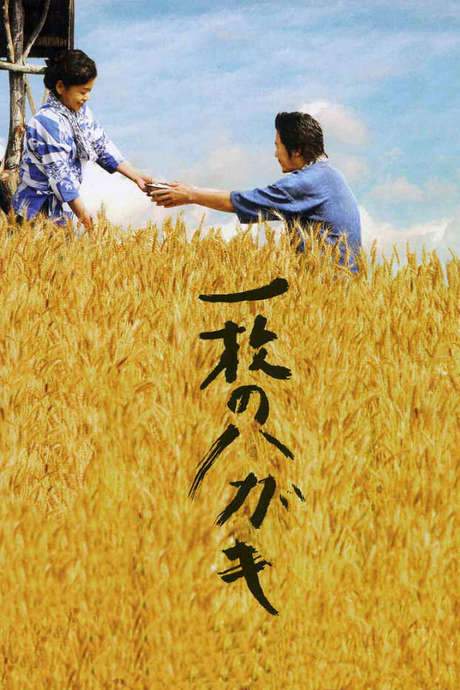
Postcard 2010

Directed by

Kaneto Shindô
Made by

Kindai Eiga Kyokai
Postcard Plot Summary
Read the complete plot summary and ending explained for Postcard (2010). From turning points to emotional moments, uncover what really happened and why it matters.
Near the end of the Pacific War, Sadazo Morikawa [Naomasa Musaka] is one of a hundred overaged conscripts assigned to cleaning duty aboard the navy. When the shift ends, a lottery selects the next tasks, and Sadazo is sent to the Philippines, fearing he may not survive. He entrusts a comrade, Matsuyama [Etsushi Toyokawa], with delivering a postcard to his wife, Tomoko [Shinobu Ôtake], to tell her he received it before he died. This quiet plea threads through a life shaped by duty, fear, and the slow erosion of hope.
Earlier in the siege of life, Sadazo leaves behind his parents, Yukichi Morikawa [Akira Emoto] and Chiyo Morikawa [Mitsuko Baisho], as well as his wife Tomoko, before a new chapter begins. A military official later confirms Sadazo’s death, a blow that reverberates through the family. Desperate and bound by tradition, Sadazo’s parents urge Tomoko not to abandon her obligations and instead consider marrying their younger son Sanpei [Maiko Kawakami]. Tomoko agrees to the match, but Sanpei’s path is grim: enlisted and pressured, he faces the harsh reality of war, ultimately dying in service. The years of conflict tighten their hold on the family, leaving little room for mercy or choice.
Back home, the toll continues: Yukichi Morikawa dies from a heart condition, and Chiyo Morikawa, trying to shield her family from further ruin, gives Tomoko some money before taking her own life. The war’s end arrives as an uneasy calm, and Matsuyama returns to Japan to find a country—and a household—unmade by absence and betrayal. His wife has fled after an affair with his father and now works as a bar hostess in Osaka, a fact that unsettles him as he encounters a version of home that no longer fits.
The encounter with Tomoko at her house becomes a pivotal moment. He recounts Sadazo’s fate and discloses a dream of leaving for Brazil, carrying with him 200,000 yen earned from selling his fishing boat. He even offers Tomoko half of that sum, but she refuses, choosing a harsher independence that tests both of their loyalties. A confrontation with Kichigoro Izumiya [Ren Osugi], another suitor of Tomoko, punctuates the fragility of their attachment and the stubbornness of pride in the face of loss.
Yet out of the tension grows a fragile agreement: Tomoko and Matsuyama will go to Brazil together. They perform a final, intimate act of remembrance by burning Sadazo and Sanpei’s ashes, a ritual that signals both release and renunciation. Tomoko, overwhelmed, drinks heavily and sets fire to the old house, from which Matsuyama rescues her. In the aftermath, they choose to remain in Japan and cultivate barley on the site of the former home, a quiet assertion of steadiness amid ruin. The film closes with the two of them standing together in a barley field, a simple, stubborn image of endurance in the wake of war’s long shadow. The narrative lingers on themes of memory, duty, and the resilience of two people choosing to stay connected to the land they occupy.
Postcard Timeline
Follow the complete movie timeline of Postcard (2010) with every major event in chronological order. Great for understanding complex plots and story progression.
Overaged conscription and cleaning duties
Near the end of the Pacific War, Sadazo Morikawa is among a group of 100 overaged conscripts assigned to cleaning duties for the Japanese Navy. He endures grueling tasks while the outcome of the war grows bleaker. Before departure, he asks his comrade Matsuyama to deliver a postcard to his wife Tomoko if he does not return.
Lottery assigns Sadazo to the Philippines
After the cleaning duty ends, servicemen are selected by a lottery for different duties. Sadazo is chosen to serve in the Philippines, a posting he fears may seal his fate. The sense of looming danger colors his final days before deployment.
The postcard request to Matsuyama
Aware that death could come at any moment, Sadazo asks Matsuyama to return the postcard to Tomoko and to tell her that he received it before he died. The request underscores the distance and fragility of life in wartime. Matsuyama agrees, carrying the weight of the message to Japan.
Farewell to family and wife
Sadazo says goodbye to his parents Yukichi and Chiyo and to his wife Tomoko as he is conscripted. The scene highlights how the war tears families apart and foreshadows the hardship that follows. The moment marks a personal turning point for Tomoko's later life.
Official report confirms his death
A military official later reports Sadazo's death, confirming that he did not return from duty. The family and Tomoko grieve, each in their own way, as the war's reach expands beyond the battlefield. His absence becomes a lingering ache in the household.
Tomoko pressured to marry Sanpei
Yukichi and Chiyo urge Tomoko not to be left alone and to marry their younger son Sanpei. Tomoko agrees to marry him, hoping for stability amid the chaos of war's aftermath. The arrangement ties her fate to another conscripted life.
Sanpei is conscripted and dies
Sanpei is drafted into the army and cannot escape his fate. He considers running away, but his parents insist that resistance is futile. He dies in the war, extending the family tragedy to the younger generation.
Yukichi dies during farm work
While working on the farm, Yukichi suffers a heart condition and dies. His death adds to the cascade of hardship that plagues the family. The land itself bears witness to the generation's losses.
Chiyo's suicide
Chiyo gives Tomoko money and then hangs herself, a desperate act born of despair and loss. The tragedy tightens the family bonds around Tomoko as she tries to navigate a broken home. Her death echoes the collapsing domestic world of wartime Japan.
War ends; Matsuyama returns to Japan
The war ends and Matsuyama returns to Japan, finding that his wife has run away after an affair with his father and is now working as a bar hostess in Osaka. The domestic realm remains a battlefield of its own, far from the front lines. He confronts a country still reeling from years of conflict.
Matsuyama delivers the postcard
Matsuyama goes to Tomoko's house to deliver Sadazo's postcard and to recount Sadazo's fate. The encounter rekindles a shared memory of loss and plants the seed for a possible future together. The two consider what life might look like after the war.
Tomoko and Matsuyama decide to go to Brazil
Their conversation over money and futures escalates into a decision to travel to Brazil together. The plan symbolizes leaving behind wartime grief and seeking a new life abroad. They negotiate their path despite lingering tensions.
Ashes burned: Sadazo and Sanpei
They burn the ashes of Sadazo and Sanpei, a ritual act to let go of their wartime losses. The act marks a turning point as the couple looks toward rebuilding their lives. The act ties the past to the present through shared remembrance.
Fire at the house and rescue
Tomoko, in a drunken state, sets fire to the house. Matsuyama pulls her out of the flames, saving them both from a final catastrophe. The incident strengthens their bond and cements their decision to stay together.
A new life in a barley field
The story closes with Tomoko and Matsuyama choosing to stay in Japan and cultivate barley on the site of the former house. They work side by side in the field, suggesting renewal, resilience, and a quieter future after years of war. The barley field becomes a symbol of endurance.
Postcard Characters
Explore all characters from Postcard (2010). Get detailed profiles with their roles, arcs, and key relationships explained.
Sadazo Morikawa (Naomasa Musaka)
A frightened, dutiful young conscript pressed into the navy's cleaning corps. He clings to the hope of delivering a message to his wife and family as death seems imminent. His fate and the lottery that assigns him to the Philippines highlight the brutal randomness of war.
Tomoko Morikawa (Shinobu Ôtake)
Sadazo's wife who endures loss and social pressure after his death. She agrees to marry Sadazo's younger brother Sanpei, and later forms a complex bond with Matsuyama. Her choices reflect the conflict between duty, survival, and desire in wartime society.
Yukichi Morikawa (Akira Emoto)
Patriarch of the Morikawa family, a quiet man who confronts illness and the burden of keeping his family together. He dies of a heart condition, triggering further upheaval and prompting decisions about remarriage and care for the widow.
Chiyo Morikawa (Mitsuko Baisho)
The mother who bears immense grief and helps Tomoko with money after Yukichi's death. Overcome by sorrow, she ultimately takes her own life, a pivotal moment that intensifies the family tragedy and shapes subsequent decisions.
Keita Matsuyama (Etsushi Toyokawa)
A veteran who returns to Japan to find his life unsettled by his wife’s infidelity and family tensions. He contemplates leaving for Brazil with Tomoko, carrying money as a potential share, and faces rivalries that steer toward a later attempt at rebuilding in Japan.
Kichigoro Izumiya (Ren Osugi)
A rival suitor for Tomoko who adds tension to the love triangle amid wartime scarcity. His presence heightens conflict and complicates Matsuyama’s pursuit for a stable future with Tomoko.
Sanpei Morikawa
The younger Morikawa son pressed into war; he attempts to avoid conscription but ultimately dies in the conflict. His death deepens the family’s sense of loss and pushes later choices toward endurance and renewal.
Riwemon (Masahiko Tsugawa)
Matsuyama's uncle who interacts with Tomoko and Matsuyama, representing wartime familial networks and the social pressures that shape relationships during and after conflict.
Postcard Settings
Learn where and when Postcard (2010) takes place. Explore the film’s settings, era, and how they shape the narrative.
Time period
1944-1945
The story unfolds in the late Pacific War, a period of intense conscription, shortages, and fear of death. Families grieve multiple losses as the war grips every corner of life. With the war's end, characters confront rebuilding and a fragile redefinition of home.
Location
Philippines, Osaka, Japan
Set against the waning Pacific War, the film travels from a Philippine base where Sadazo serves to the home front in Japan. It juxtaposes war-front life with Osaka's intimate interiors and a rural barley field, illustrating the reach of conflict into everyday spaces. The locations together form an arc of loss, memory, and tentative renewal.
Postcard Themes
Discover the main themes in Postcard (2010). Analyze the deeper meanings, emotional layers, and social commentary behind the film.
💣
War Toll
War frames every decision, turning small acts of love into acts of endurance. The lottery assigning Sadazo to the Philippines and the deaths that follow reveal how violence erodes family life. Postcards, payments, and buried ashes underscore the irreparable price of conflict. The narrative shows that personal pain is inseparable from national trauma.
🕯️
Memory & Loss
Memory anchors the characters as they navigate absence and longing. The postcard becomes a tangible link to a life cut short, and the deaths of Sadazo and Sanpei intensify the family’s grief. Grief lingers in daily choices and in the quiet moments that define surviving after tragedy.
🌾
Rebuilding
In the aftermath, the characters seek a quieter future in farming and domestic life. The barley field at the old house site symbolizes renewal and the possibility of stability after devastation. The final decision to stay and cultivate life marks a shift from wartime survival to peacetime healing.

Coming soon on iOS and Android
The Plot Explained Mobile App
From blockbusters to hidden gems — dive into movie stories anytime, anywhere. Save your favorites, discover plots faster, and never miss a twist again.
Sign up to be the first to know when we launch. Your email stays private — always.
Explore the mobile appPostcard Spoiler-Free Summary
Discover the spoiler-free summary of Postcard (2010). Get a concise overview without any spoilers.
In the fading light of the Pacific War, ordinary towns and distant battlefields are painted with a quiet, oppressive stillness. The film opens amid the tired rhythm of soldiers on the front, where the clatter of gunfire is softened by the rustle of paper and the fragile hope it can hold. The world feels both vast and intimate—a landscape scarred by conflict yet still humming with the simple, stubborn life of people trying to survive the inevitable passage of time.
Keita, a seasoned infantryman whose steady demeanor masks a deep well of unspoken memories, is handed a postcard by a fellow soldier who senses his own end is near. The postcard becomes a silent promise, a tiny bridge between the present chaos and a future that may never arrive. As the war draws to a close, the weight of that promise lingers with Keita, shaping his thoughts and guiding his steps long after the guns fall silent.
When peace finally arrives, Keita sets out on a personal pilgrimage to deliver the message to the widow, Yuko. Their impending meeting is framed by a landscape that has been reshaped by loss, yet still holds traces of ordinary beauty—rice fields, modest homes, and the soft glow of lanterns in twilight. The tone is contemplative and reverent, inviting viewers to linger on the unspoken connections between strangers bound by grief. Through restrained cinematography and measured dialogue, the story explores how memory, duty, and quiet resilience can stitch together lives frayed by war, leaving a lingering sense of both melancholy and hope.
Featured on this page

What's After the Movie?
Not sure whether to stay after the credits? Find out!
Check out our other apps:

SAT Sphere
Build confidence for the Digital SAT.

Mori Atlas
Discover wild places worth protecting.

Luntero
Search smarter for a home in Amsterdam.

Plot Explained
Unravel movie endings and hidden clues.

Pokechamp
Dive into Pokémon data and battle logic.

Driving Theory
Get ready for your European theory test.

Movie Dust
Plan your next cinema trip with ease.

Musemap
Find art and culture as you travel.

Selkobase
Compare credentials before committing.

Local Manual
Turn an unfamiliar country into practical next steps.

Lernavi
Compare school systems before your next move.

GymRoam
Find a workout stop wherever your plans take you.
Explore Our Movie Platform
New Movie Releases (2026)
Famous Movie Actors
Top Film Production Studios
Movie Plot Summaries & Endings
Major Movie Awards & Winners
Best Concert Films & Music Documentaries
Movie Collections and Curated Lists
© 2026 What's After the Movie. All rights reserved.
Privacy Policy