
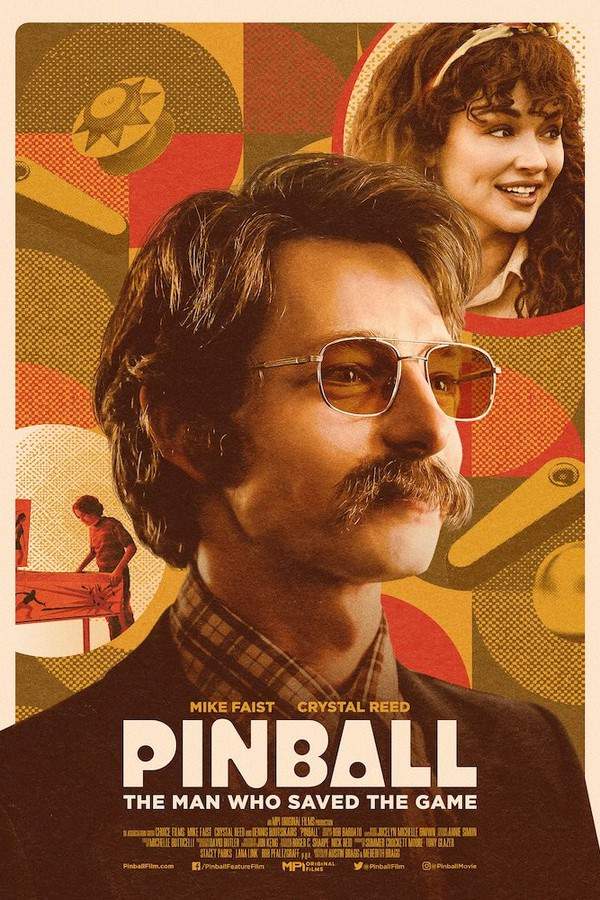
What Is Pinball: The Man Who Saved the Game About?
The premise of Pinball: The Man Who Saved the Game in 312 words, with nothing given away. The full story and the ending follow below.
In 1970s New York City, Roger Sharpe is a writer with an unusual passion: pinball. After mastering the game as a college student in Wisconsin, he brings its colorful energy, unpredictability, and sense of possibility to a city hungry for stories. His ambitions are literary, but the machines he loves keep pulling him into a world where luck, skill, friendship, and self-discovery overlap.
As Roger tries to establish himself in the magazine world, he discovers that New York’s long-standing restrictions on pinball have made the game more than a pastime—they’ve made it a cultural battleground. The same regulations that limit the machines also threaten the people who built their lives around them. Roger’s growing interest draws him toward the Music and Amusement Association, whose members are trying to preserve the game and its place in the city. What begins as research soon becomes a personal challenge, forcing him to balance his writing, his convictions, and the risks of taking a stand.
Alongside this emerging mission, Roger’s personal life takes shape through his relationship with Ellen, an artist whose own struggles make their connection feel lived-in rather than simple. As she helps shape his work on a pinball book, their collaboration brings humor, tenderness, and emotional complexity to the story. Their growing affection offers a counterpoint to the uncertainty surrounding the game, turning questions of commitment into choices that feel both intimate and daring.
The film’s tone is lively and affectionate, with a warm, nostalgic view of New York’s neighborhoods, nightlife, and counterculture. Beneath its playful surface lies a thoughtful exploration of why people are drawn to games, communities, and one another. With Roger caught between creative ambition, romantic possibility, and a public fight over something he loves, the story builds a spirited atmosphere of discovery—one in which every flipper, typed page, and shared conversation hints at the larger stakes still to come.
What Happens in Pinball: The Man Who Saved the Game?
The complete story of Pinball: The Man Who Saved the Game, from the first scene to the last, in 231 words (about 1 minute). Spoilers throughout. Names in the text link to 4 cast member pages.
Spoilers ahead
The story unfolds through an interview with an older Roger Sharpe, weaving together memories from 1971. While studying in Wisconsin, Roger establishes himself as a pinball wizard, mastering the mechanics of the game. Seeking a career as a writer, he relocates to New York City, where he meets and eventually marries Ellen.
While working at GQ Magazine, Roger writes a piece on pinball and is stunned to learn that the game has been banned in NYC and several other American cities for 35 years, as authorities labeled the machines as tools for gambling. This article catches the attention of Harry Coulianos and the Music and Amusement Association (MAA), who have been fighting to overturn the ban. Though Roger initially declines their help to focus on writing a comprehensive book about the game—a project where Ellen helps by typing his handwritten manuscripts—he eventually agrees to support the MAA after traveling the country to research the game’s history.
The climax occurs at a NYC City Council meeting, where Roger is tasked with demonstrating that pinball is a game of skill rather than mere chance. His successful demonstration sways the council, leading to the official end of the ban. When asked if that high-stakes game was the greatest shot of his life, Roger disagrees, noting that his truly greatest shot occurred when he asked Seth, Ellen’s son, for permission to propose to her mother.
Pinball: The Man Who Saved the Game Timeline: Every Key Event in Order
13 key events in the order they happen, from “Interview with Older Roger Sharpe” to “Sharpe's Greatest Shot”. 9 events name a place, across 5 locations.
- 1
Interview with Older Roger Sharpe
The film opens with an interview of an older Roger Sharpe, with flashbacks taking us back to 1971. In these interviews, Sharpe reflects on the pivotal role pinball played in shaping his life and career. This conversation serves as the narrative frame for the entire story that follows.
When:Present day
- 2
Pinball Wizard in College
While a college student in Wisconsin, Roger Sharpe becomes a pinball wizard and a true master of the game. He dedicates himself to perfecting his technique, building the remarkable skills that will later define him. This early mastery lays the foundation for everything that comes next.
When:1971 Where:Wisconsin
- 3
Move to New York City
Sharpe leaves Wisconsin behind and moves to New York City with hopes of becoming a writer. The move marks a major turning point, placing him in the city where both his career and personal life will transform. New York will soon become the stage for his biggest battle over pinball.
Where:New York City
- 4
Chance Encounter with Ellen
Soon after arriving in the city, Roger has a chance encounter with a woman named Ellen. The two hit it off and eventually get married. Ellen becomes a central figure in his personal life and, later, in his work on pinball.
Where:New York City
- 5
Writing for GQ Magazine
Sharpe lands a job at GQ Magazine, moving closer to his dream of being a writer. While there, he writes an article about the game of pinball. This piece proves to be far more consequential than he could have imagined, as it draws unexpected attention to him.
Where:GQ Magazine, New York City
- 6
Discovering the Pinball Ban
Sharpe is shocked to discover that pinball has been banned in New York City for 35 years. He learns that many other major cities across the USA have similar bans, because pinball machines were labeled as a form of gambling. This revelation plants the seed for the fight that lies ahead.
Where:New York City
- 7
The MAA Comes Calling
Sharpe's pinball article in GQ catches the attention of the Music and Amusement Association (MAA), which oversees coin-operated games in NYC. The MAA has long been trying to get the ruling on pinball overturned and approaches Sharpe for his help. However, he turns them down, as he is devoting all his time and energy to writing a book about pinball.
Where:New York City
- 8
Writing the Book with Ellen
As Roger works on his book about pinball, he writes while Ellen types up his handwritten manuscript. Working so closely together on the project, their relationship grows deeper. The book becomes a shared passion between the two of them.
- 9
Cross-Country Research Journey
As part of his research, Sharpe travels across the country to meet the people instrumental in the development and popularization of pinball. These encounters deepen his understanding of the game and its rich history. The journey also helps reignite his passion for the game.
Where:Across the United States
- 10
Agreeing to Help the MAA
Following his cross-country research trip, Sharpe finally agrees to help the MAA in its mission. With his book project behind him, he commits his knowledge and skill to the cause of legalizing pinball. This decision puts him on a direct path to confronting New York's city council.
Show the other 3 events of Pinball: The Man Who Saved the Game Hide the last 3 events
- 11
Preparing to Testify
The head of the MAA and its legal team convince Sharpe to testify at a New York City Council meeting. The plan is for Sharpe to play pinball in front of the council in an attempt to show that pinball is a game of skill, not chance. It is a high-stakes moment that could end the ban once and for all.
Where:New York City
- 12
Demonstration Before the City Council
At the council meeting, Sharpe delivers his testimony and plays a game of pinball before the council members. His demonstration sways the council, proving that pinball is a game of skill rather than a form of gambling. As a result, the 35-year ban on pinball in New York City is finally overturned.
Where:New York City Council
- 13
Sharpe's Greatest Shot
When the narrator asks Sharpe if the game in front of the city council — and one shot in particular — was the greatest shot he ever took, he chuckles and says it wasn't. His greatest shot came when he asked Ellen's son for permission to ask his mom to marry him. The moment reveals that the relationships in his life meant even more than any game.
Who Are the Main Characters in Pinball: The Man Who Saved the Game?
3 characters, among them Roger Sharpe (Mike Faist), Ellen (Crystal Reed) and Mayor La Guardia (Carlos Lopez): who each one is and the part they play in the story. Every profile links to the actor’s page.
-

Roger Sharpe (Mike Faist)
Played by Mike Faist
Roger Sharpe is depicted as a driven and passionate individual, showcasing his talents as a pinball wizard and a writer. His journey highlights his growth, resilience in the face of adversity, and his ability to inspire others while advocating for change.
- 🎮 Pinball
- 📚 Writer
- 💪 Determination
- E(
Ellen (Crystal Reed)
Played by Crystal Reed
Ellen is portrayed as supportive and loving, playing a crucial role in Roger's life. Her character exemplifies the strength and nurturing side of relationships, as she assists Roger in his journey while also pursuing her own aspirations.
- ❤️ Supportive
- ✍️ Writer
- 👩👧👦 Family
- ML
Mayor La Guardia (Carlos Lopez)
Played by Carlos Lopez
Mayor La Guardia is depicted as a pivotal figure within the political landscape of New York City during a time of change. His role emphasizes the influence of leadership in shaping laws and community culture around recreational activities like pinball.
- 🏛️ Politics
- 📈 Leadership
- 👥 Community
Where and When Is Pinball: The Man Who Saved the Game Set?
Pinball: The Man Who Saved the Game is set in Wisconsin and New York City (1971). Here is why the time and place matter to the story.
When
1971
The year 1971 was a time of cultural change and liberation in America, with the rise of various movements challenging societal norms. In the context of pinball, this period marked a significant struggle against the perception of the game as merely a gambling activity, paving the way for its resurgence in popular culture.
Where
Wisconsin, New York City
Wisconsin is known for its vast landscapes and agricultural richness, providing a contrasting backdrop to the bustling urban life of New York City. New York City, a cultural and financial hub, is where Roger Sharpe's journey unfolds as he navigates his dreams of becoming a writer while advocating for the legalization of pinball.
- 🏙️ City
- 🏞️ Nature
What Are the Themes of Pinball: The Man Who Saved the Game?
3 ideas the story keeps returning to, among them Perseverance, Love and Redemption.
-
01
Perseverance
The theme of perseverance is central to Roger Sharpe's story as he fights against the legal ban on pinball. His unwavering commitment to proving that pinball is a game of skill reflects the determination required to challenge societal norms and pursue one’s passion.
-
02
Love
The film highlights the theme of love through Roger and Ellen's evolving relationship. Their partnership not only supports Roger's endeavors but also enriches their personal lives, illustrating how love can be a driving force behind personal and professional success.
-
03
Redemption
Redemption is portrayed through Roger’s quest to reinstate pinball into popular culture. His eventual success not only legitimizes his passion but also serves as a broader metaphor for reclaiming joy and acceptance in a society that previously ostracized the game.
How Does Pinball: The Man Who Saved the Game End?
The last act of Pinball: The Man Who Saved the Game and what it means, in 312 words. The ending lands as happy. Big spoilers: read the plot summary first if you have not seen it.
The final act, in full
In the end, the story focuses on Roger Sharpe’s journey of self-discovery through his passion for pinball. Throughout the film, we see how his love for the game evolves from a simple pastime to something much deeper, representing his desire for control and purpose in life. His efforts to challenge the ban on pinball in New York City find him not only fighting for a game but also confronting his own self-worth and fears. The pivotal moment occurs at City Hall, where Roger takes a bold shot—both literally and figuratively—to influence the city’s decision. This shot, which is the culmination of all his hopes and risks, ultimately helps to lift the ban, allowing pinball machines to return to the city.
But what makes the ending particularly meaningful is how it ties back to Roger’s personal growth. As he faces the chairman and takes the shot, he’s not just playing a game but also making a life-changing decision—one that symbolizes his transformation from a guy who doubted himself to someone brave enough to stand up for what he loves and what he believes is worth fighting for. His victory at City Hall isn’t just about the game; it’s about him overcoming his insecurities and fears, and embracing a new sense of purpose, love, and belonging.
The film closes with Roger having found happiness in both his personal life with Ellen and Seth and his professional achievements. His relationship with Ellen signifies his newfound confidence and ability to connect with others genuinely, which was previously elusive. The victory in the legal battle and his personal growth show that sometimes the biggest wins come from within—when someone dares to take a chance, accept their flaws, and push through their doubts. The ending celebrates this idea: that life, much like pinball, is about taking risks, making choices, and believing in oneself to hit the right targets.
What Kind of Film Is Pinball: The Man Who Saved the Game?
Hopeful in tone, with steady pacing and a moderate story, going by the plot summary.
- Tone
- Hopeful
- Pacing
- Steady
- Story
- Moderate
- Intensity
- Medium
- Ending
- Happy
A warm, lightly comic, nostalgic drama about a writer whose passion for pinball becomes a campaign for its survival, balancing civic stakes with a tender romance.
- warm
- uplifting
- nostalgic
- playful
- hopeful
- gentle
- pinball culture
- fighting censorship
- skill versus chance
- romantic commitment
Content notes: gambling themes.
Quiz
How well do you remember Pinball: The Man Who Saved the Game? Test yourself on the story.
