
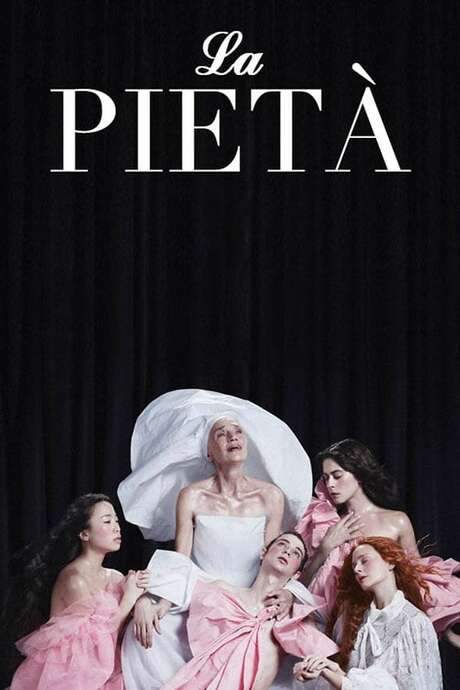
What Is Piety About?
The premise of Piety in 281 words, with nothing given away. The full story follows below.
In a house washed in pastel pink, a world seems to exist for only two people. The walls are soft, the light gentle, and the routines precise, creating a sanctuary that feels both tender and suffocating. Within this carefully curated microcosm, a mother‑son bond is the central pulse, an intimacy that blurs the line between protection and possession.
Mateo lives under the watchful eye of his mother, Libertad, whose devotion shapes every moment—from shared beds to answered questions and a constant presence that borders on control. Their lives are a choreography of dependence, each gesture loaded with affection and an unspoken expectation of togetherness. When a serious health concern emerges for the teenage boy, the fragile balance of their secluded world is quietly tested, prompting questions about autonomy, love, and the limits of caretaking.
Across continents, a starkly different tableau unfolds. In a rigid, austere environment, a high‑ranking officer named Taeyang navigates his own tightly held relationships and the weight of political shadows. The film juxtaposes his stark reality with the pastel intimacy of the Spanish home, hinting at parallel struggles over control, loyalty, and the yearning for freedom within oppressive structures.
The tone is contemplative and unsettling, painted with a visual palette that shifts from soft, almost dream‑like hues to sharper, more somber tones as hidden tensions surface. Psychological nuance drives the narrative, inviting viewers to linger on the quiet moments that reveal deeper undercurrents. As the characters hover on the edge of change, the film offers a rich, immersive portrait of love’s complexity when it becomes both a refuge and a cage, leaving the audience eager to discover how each will navigate the inevitable fractures in their intertwined lives.
What Happens in Piety?
The complete story of Piety, from the first scene to the last, in 605 words (about 3 minutes). Spoilers throughout. Names in the text link to 2 cast member pages.
Spoilers ahead
In Spain, the teenage Mateo (played by Manel Llunell) shares a tightly wound life with his mother Libertad (played by Ángela Molina) in a home bathed in pastel pink. The bond between them feels protective at first, but it quickly reveals itself as possessive: Mateo is not allowed any public separation, they sleep side by side, and Libertad tends to answer for him in conversations. A traumatic moment arrives when Mateo, during a hospital exam, tries to flee and Libertad retaliates by injuring his toenail at home. When Mateo escapes again, a brutal headache erupts, and he collapses on the street, forcing a rescue that will change everything.
The doctors uncover a grim diagnosis: Mateo has a malignant glioblastoma. He undergoes brain surgery to remove the tumor, but the road ahead is grueling, demanding intense treatment. To help them navigate this crisis, the family agrees to involve a psychologist, Carolina López. In their sessions, Carolina (Carolina López) is confronted with Libertad’s instinct to shield Mateo from the harsh truths, repeatedly answering questions aimed at the boy. In private, Libertad recounts a difficult past, including a failed marriage where Roberto, Mateo’s father, left when his son was a baby. Carolina urges Libertad to let Mateo claim his own independence, yet Libertad secretly welcomes the radiotherapy and medications that deepen Mateo’s dependence on her. At times, Mateo regains strength after a pause in therapy, and Libertad’s unease grows: she even contemplates covertly dosing him again, a scheme Mateo eventually uncovers.
Meanwhile, in Pyongyang, Taeyang—a high-ranking officer—faces a stark reversal as his two daughters are executed after plans to escape are discovered. He escapes with his wife Cheong, and years later they sit over dinner in Seoul, where Cheong voices the fear that their gamble yielded little reward: they are poorer, their daughters are gone, and they lack a leader who truly cares. The conversation turns dark when Taeyang realizes Cheong has ingested suicide pills he once gave her, betraying a deeper fracture in their relationship.
Back in Spain, Mateo’s world is pulled further by Roberto’s continued fragility. Marta, Roberto’s current wife, reveals that he has attempted suicide, a testament to the lingering ache of the past. Guided by Carolina López, Mateo is brought to Roberto’s home, where the father explains that despite Libertad’s toxic grip, he and Mateo still need her in their lives. Marta offers Mateo a place to stay, but he declines. The family learns that Libertad has attempted suicide as well, and the two of them share a tearful reunion in the hospital. Guilt shadows Libertad, yet Mateo’s devotion to her remains: he endures further injury, tolerates mismedication, and even tolerates a form of dependency that borders on nurturing, as Libertad’s presence feels essential to his survival.
As the hospital holds Mateo in its anxious grip—overdose, neutropenia, and the looming question of continuing treatment—the two of them drift toward a reckoning about love, control, and protection. Libertad shaves her head, matching Mateo’s appearance as she begins to take on his medications with a more desperate, healthier intention: to help him, even as her health deteriorates. Then one quiet evening, a news bulletin announces the death of North Korea’s Kim Jong Il, a headline that casts a surreal backdrop over the personal tragedies unfolding at home. When Mateo checks Libertad’s room, he discovers her body, surrounded by pills, having died. A stark montage follows, showing North Koreans mourning her as if she were a supreme leader, while Mateo eventually steps into the street and collapses, unable to face life—free from Libertad, yet forever bound to the legacy of her control and his longing for autonomy.
Piety Timeline: Every Key Event in Order
15 key events in the order they happen, from “Life in the pink apartment” to “Libertad's death and Mateo's final collapse”. 15 events name a place, across 9 locations.
- 1
Life in the pink apartment
In Spain, Mateo lives with his mother Libertad in a predominantly pink apartment. Libertad's overbearing rules include never letting them be separated in public, always sleeping together, and answering for Mateo when questioned. Mateo grows increasingly aware of her suffocating control.
Where:Spain, pink apartment
- 2
Hospital examination and escape attempt
During a hospital examination, Mateo tries to flee under Libertad's watch. Libertad asserts control even in medical settings, quelling his attempts to escape. The moment foreshadows the suffocating dynamic that defines their relationship.
When:During hospital examination Where:Hospital
- 3
Toenail injury at home
Back at home, Libertad trims Mateo and intentionally injures his toenail. The action underscores her insistence on domination, even through physical pain. Mateo bears the consequences of her control in silence.
Where:Home
- 4
Escape attempt and collapse
While Libertad sleeps, Mateo tries to escape, but suffers a severe headache and collapses on the street. The collapse exposes Mateo's vulnerability and foreshadows the looming illness. It ends with Libertad finding him and deciding what to do next.
Where:City street
- 5
Rescue and cancer diagnosis
Mateo is rescued by Libertad and taken to a hospital, where doctors diagnose malignant glioblastoma. The prognosis reframes their entire relationship as treatment becomes a long, arduous journey. The family braces for a grim future.
Where:Hospital
- 6
Tumor removal surgery
Brain surgery removes the tumor, offering a glimmer of hope but signaling that Mateo will face radiotherapy and long-term medication. Doctors outline a difficult treatment path ahead. Mateo begins confronting the reality of a life-changing illness.
Where:Hospital
- 7
First therapy session
Libertad and Mateo are offered the aid of psychologist Carolina López to cope with the illness. The session reveals tension as Libertad frequently answers for Mateo, hinting at her need to control. The therapist's presence marks a turning point in how they manage Mateo's condition.
Where:Clinic
- 8
Private session and Libertad's confession
In a private moment, Libertad reveals that her ex-husband Roberto abandoned her when Mateo was a baby. Carolina urges Libertad to allow Mateo to pursue independence, even as Libertad fears abandonment. The scene deepens the conflict between protection and autonomy.
Where:Clinic
- 9
Labors of care: treatment embraced
Despite fears, Libertad secretly welcomes Mateo's radiotherapy and medications, hoping the side effects will tie him more closely to her. She endures the physical toll as the relationship becomes more dependent. The dynamic shifts toward a consuming care-giver role.
Where:Spain
- 10
Secret drugging and discovery
Mateo regains strength after a break from therapy, prompting Libertad to resume secretly dosing him. Mateo discovers the secret, confronting the boundaries of his mother's care. The breach intensifies the struggle between protection and autonomy.
Where:Home
Show the other 5 events of Piety Hide the last 5 events
- 11
Taeyang's brutal escape and Seoul dinner
In Pyongyang, Taeyang orders the execution of his two daughters before fleeing with Cheong. Later, in Seoul, they discuss their precarious life, and Cheong reveals she would not have escaped without his pills. The sequence mirrors how control and despair can shape a family's fate.
Where:Pyongyang; Seoul
- 12
Roberto's crisis and Mateo's visit
Back in Spain, Marta informs Libertad that Roberto has attempted suicide after their separation. Mateo is brought to Roberto's home by Carolina and meets his father, who acknowledges their mutual reliance on Libertad. Marta offers Mateo to stay, but he declines.
Where:Roberto's home, Spain
- 13
Libertad's suicide attempt and hospital reunion
Mateo and Libertad confront a shared crisis as Libertad attempts suicide, and mother and son reunite in tears at the hospital. The bond between them is forced to confront its own fragility. Guilt and fear mix with a desperate desire to protect one another.
Where:Hospital
- 14
Shaving heads and taking the meds
Overcome with guilt, Libertad shaves her head to resemble Mateo and begins taking his medication, damaging her own health in the process. Her illness mirrors Mateo's, deepening their bonding through mutual vulnerability. The act highlights how far the care-giving dynamic has gone.
Where:Home
- 15
Libertad's death and Mateo's final collapse
One evening, Libertad dies, and a news report announces Kim Jong Il's death. A montage shows North Koreans mourning Libertad as if she were a supreme leader. Mateo steps out into the street and collapses, unable to face liberty without her.
Where:Libertad's bedroom; city street
Who Are the Main Characters in Piety?
8 characters, among them Mateo (Manel Llunell), Libertad (Ángela Molina) and Roberto (Antonio Durn Morris): who each one is and the part they play in the story. Every profile links to the actor’s page.
- M(
Mateo (Manel Llunell)
Played by Manel Llunell
A teenager facing a malignant brain tumor who longs for independence while navigating his mother’s overpowering care. His illness amplifies the push-pull between seeking freedom and remaining dependent on others. HeEndures coercive dynamics at home even as he confronts life-altering medical treatment.
- 🔒 Controlling
- 🌱 Autonomy struggle
- 🧬 Illness
-

Libertad (Ángela Molina)
Played by Ángela Molina
Mateo’s mother, whose protective love turns possessive and controlling. She negotiates her son’s independence through manipulation and medication, masking fear of abandonment with relentless care. Her arc probes the danger of unconditional guardianship and the price of keeping a loved one close.
- 🔒 Controlling
- 💔 Toxic love
- 🧭 Family dynamics
- R(
Roberto (Antonio Durn Morris)
Played by Antonio Durán 'Morris'
Libertad’s ex-husband whose life remains entangled with her controlling influence. His failed relationship with Libertad surfaces through a suicide attempt and a complex web of dependency. Their reunion reveals an incompatible dynamic masked by need and history.
- 💔 Broken relationships
- 🤝 Co-dependency
- 🧭 Family ties
- M(
Marta (Ana Polvorosa)
Played by Ana Polvorosa
Roberto’s wife who resents Libertad’s grip on those around her. She becomes a conduit for envy and tension within the family, while also navigating the couple’s evolving situation and the prospect of a new child.
- 💔 Jealousy
- 👶 Family planning
- 🧭 Interpersonal dynamics
- CL
Carolina López (María León)
Played by María León
A psychologist who attempts to help Mateo, but is frustrated by Libertad’s interference. She represents a therapeutic voice pushing for Mateo’s independence while navigating Libertad’s boundary-pushing behaviors.
- 🧠 Therapy
- 💬 Communication
- 🧭 Independence
- T(
Taeyang (Alberto Jo Lee)
Played by Alberto Jo Lee
A high-ranking North Korean officer who orders the execution of his daughters for attempting to escape. His later flight with his wife Cheong exposes the fragility and brutality of authoritarian life, as they adjust to exile in Seoul.
- 🔪 Authority
- 🚶 Escape
- 🌍 Diaspora
- CY
Cheong Yeong-Il (Songa Park)
Played by Songa Park
Taeyang’s wife who endures an unstable life shaped by political danger and personal strain. She exhibits resilience and pragmatism as they navigate exile, while her actions reveal the complicated dynamics of survival and complicity.
- 💔 Spousal dynamics
- 🗺️ Exile
- 🧭 Survival
- NR
Nurse Rutia (Montse Peidró)
Played by Montse Peidró
A hospital nurse who interacts with Mateo during his diagnosis and treatment, representing the medical system's presence in his life and the clinical side of care.
- 🏥 Medical care
- 💉 Hospital life
- 🗝️ Caregiving
Where and When Is Piety Set?
Piety is set in Spain, Pyongyang and Seoul (Early 2010s). Here is why the time and place matter to the story.
When
Early 2010s
The narrative takes place in contemporary times, using modern medical treatments for a malignant brain tumor. A reference to Kim Jong Il places the events in a real-world era around his death, anchoring the period in the early 2010s. The setting relies on present-day hospitals, media coverage, and cross-border movement that define the timeframe.
Where
Spain, Pyongyang, Seoul
The story centers on a Spanish home, depicted through a pastel-pink apartment that frames Mateo and Libertad’s claustrophobic relationship. It then shifts to international locales, with Pyongyang and Seoul highlighting stark contrasts between private family life and political/migrant realities. The film uses these settings to contrast intimate caregiving with broader, impersonal systems at work.
- 🏙️ Spanish urban setting
- 🗺️ International locales
- 🏥 Hospital and medical settings
What Are the Themes of Piety?
3 ideas the story keeps returning to, among them Control, Dependency and Illness and Care.
-
01
Control
Libertad’s protective instincts cross into coercive control, shaping every choice Mateo makes. The home becomes a space where independence is stifled in favor of attachment and surveillance. The theme questions whether care can become imprisonment when fear of loss overrides autonomy.
-
02
Dependency
The relationship tightens into a mutual reliance that blurs lines between love and possession. Mateo and Libertad depend on each other for survival, sometimes through secrecy and manipulation. The film examines whether such dependence sustains or suffocates the individuals involved.
-
03
Illness and Care
Mateo's malignant glioblastoma drives the plot, forcing difficult medical decisions and ethical questions about treatment and autonomy. The care dynamic is intense and invasive, shaping identity through medications and procedures. Illness becomes a lens to explore boundaries between protection and control.
What Kind of Film Is Piety?
Dark in tone, with slow pacing and a moderate story, going by the plot summary.
- Tone
- Dark
- Pacing
- Slow
- Story
- Moderate
- Intensity
- High
- Ending
- Bleak
A slow, deeply unsettling descent into a claustrophobic and surreal mother-son relationship, where terminal illness amplifies toxic dependency, leading to a bleak and emotionally devastating conclusion.
- claustrophobic
- oppressive
- surreal
- melancholic
- disturbing
- unsettling
- dysfunctional family
- toxic motherhood
- illness and dependency
- psychological manipulation
Content notes: suicide, self harm, terminal illness, psychological abuse, dysfunctional family dynamics, mismedication.
Quiz
How well do you remember Piety? Test yourself on the story.

