
Picnic on the Grass 1959

Directed by
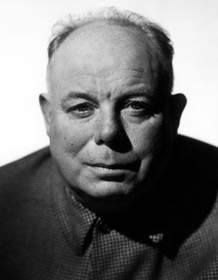
Jean Renoir
Made by

Compagnie Jean Renoir
Picnic on the Grass Plot Summary
Read the complete plot summary and ending explained for Picnic on the Grass (1959). From turning points to emotional moments, uncover what really happened and why it matters.
The famous French biologist Étienne Alexis stands at the center of a provocative political moment. He is the frontrunner in the race to become the first President of Europe, advocating mandatory artificial insemination to improve humanity and align it with modern science. He is newly engaged to his German cousin Marie-Charlotte, a union meant to symbolize a growing, cosmopolitan Europe and to bolster his public image as a reformer who blends science with diplomacy.
Nénette is a farmer’s daughter who is simultaneously wary of men after a broken affair and eager to have children. Despite her reservations, she volunteers to be a test subject in Alexis’s ambitious insemination project. Her path leads her away from the fields and into service as a chambermaid, where she accompanies the group of servants who attend the invited picnic. The event is staged as a cross-section of a new European order: several cousins of the engaged couple, a cadre of scientifically minded guests, and journalists who plan to document the day as a high‑minded symbol of progress. The gathering unfolds next to the ruins of a temple of Diana, the ancient goddess associated with childbirth, a quiet reminder of tradition lingering beneath a modern, technocratic dream.
The day begins with a sudden disturbance. Gaspard, the goatherd whose flute can stir the air, plays and is followed by a fierce wind that scatters chairs and tables, forcing everyone to seek shelter. When the gust dies down, Alexis and Nénette find themselves seated with the campers rather than the formal guests. Alexis explains, in simple terms, his controversial aim to diminish romantic passion in order to forge a purely rational, controllable society. Meanwhile, a Bacchanalia breaks out among the picnic guests, a lively counter‑signal to the scientist’s sterile ideals. The mood shifts as Alexis gets a glimpse of Nénette again—this time while she is swimming nude—an encounter that unsettles him and intensifies the pull between nature and science. When she climbs back onto the shore and joins him, the two slip away together into the high reeds, leaving the others to a rapidly changing dynamic.
After the wind‑driven pause, the lovers decide to retreat from the spectacle and share a night with the campers, who offer shelter and a chance to observe life at a slower pace. The next morning, Alexis and Nénette relocate to her father’s house, where the scientist begins to confront questions about humanity’s bond with the natural world. The step back toward a more intimate, less engineered life unsettles the arranged plans of family and supporters, and the cousins soon track them down, insisting that Nénette return to the social order that Alexis has been trying to redefine.
The pursuit culminates in a tense confrontation. Alexis, driven by a mix of desire and scientific ambition, encounters the goatherd in a moment of stark revelation, and the moral weight of his project becomes impossible to ignore. He is urged to abandon his grand designs, and the moment crystallizes in a declaration he cannot keep to himself. In a powerful, public moment, he cries out a radical line that reframes his quest:
Down with science!
Back in the city’s orbit, the story moves toward a dramatic inversion of expectations. Alexis returns to his former life, but on the day of his wedding, he discovers that Nénette is pregnant with his child and has become a source of real, tangible life rather than a theoretical ideal. She is found working in a hotel kitchen, and he chooses to bring her to the waiting crowd instead of his betrothed, Marie-Charlotte. The conclusion hints at a new political and personal program: Alexis intends to mount a campaign that champions both science and nature, and he plans to marry Nénette, acknowledging that the future of Europe may depend on embracing the very humanity he once aimed to regulate.
In this tale, the cast of characters—ranging from Isabelle the scientist’s secretary to Ritou the cunning cousin, Titine the perceptive servant, and le curé who anchors tradition—all play roles in a broader meditation on power, progress, and the unpredictable stir of life. The sunlit Provencal setting, the ancient Diana temple, the wind on the plains, and the playful yet piercing contrast between rationality and instinct come together to craft a story that stays true to its core questions: what is humanity for, and what will it take to reconcile science with the heart?
Picnic on the Grass Timeline
Follow the complete movie timeline of Picnic on the Grass (1959) with every major event in chronological order. Great for understanding complex plots and story progression.
Étienne's rise and engagement
Étienne Alexis is the frontrunner to become Europe’s first president and promotes a vision of science-based reforms. He is newly engaged to Marie-Charlotte and invites her and their extended family to a picnic near his Provençal mansion where their plans for Europe are on display.
Journalists document the picnic as symbol of Europe
Journalists are invited to document the gathering, aiming to present the picnic as a symbol of Europe's unity through scientific progress. The scene foregrounds the couple and their relatives debating progress, fertility, and the role of science in society.
Gaspard's wind and the sudden disturbance
Gaspard's flute triggers a sudden wind that scatters chairs and tables. The guests scramble for cover, and Étienne and Nénette are separated from the rest, setting the stage for a rupture in the planned social display.
Étienne and Nénette join campers; talk of removing passion
When the wind dies down, Étienne and Nénette sit with the campers. He speaks of eliminating passion to pave the way for a rational future, while nearby a Bacchanalia among the pavilion guests signals a clash between restraint and desire.
Nénette's nude swim and shared moment
Étienne notices Nénette swimming nude and is visibly moved. After she emerges and joins him, Gaspard's flute is heard again and the couple slips away into the high reeds together.
The lovers return and the group disperses
They return to the camp and find the cousins and servants leaving by car. Rather than chasing them, Étienne and Nénette stay with the campers, who offer to shelter them for the night.
Morning departure and escape to Nénette's home
The next morning, Étienne asks to escape the world and travels with Nénette to her father Nino's house. He begins to rethink humanity's relationship with the natural world.
Cousins interrupt; Nénette urged to leave
The cousins locate the couple and arrive at the house, pressing Nénette to leave. Étienne becomes agitated as he searches for her and encounters Gaspard, who guides him toward a ritual that unsettles his rational resolve, including kneeling before a goat.
Gaspard's ritual and Étienne's ecstasy
Gaspard suggests kneeling before his goat to seek help. Étienne obeys, experiences a surge of ecstasy, and shouts Down with science! as his cousins restrain him.
Return to old life; wedding day shock
He returns to his old life, but on the day of his wedding he discovers Nénette is pregnant and working in a hotel kitchen. The revelation unsettles his plans and complicates his future.
Wedding moment pivots to new partner
Instead of marrying Marie-Charlotte, Étienne brings Nénette to the waiting crowd. He announces the start of his presidential campaign with a speech about science and nature and reveals his intention to marry Nénette.
A future blending science, nature, and family
The film closes with Étienne embracing a future where science coexists with nature and with a new family at his side. The campaign continues as he prepares to formalize his union with Nénette.
Picnic on the Grass Characters
Explore all characters from Picnic on the Grass (1959). Get detailed profiles with their roles, arcs, and key relationships explained.
Étienne Alexis (Paul Meurisse)
A renowned French biologist who is a frontrunner in Europe’s political ascent and advocates mandatory artificial insemination to perfect humanity. He seeks to suppress passion through rational science, yet his experience with Nénette unsettles that belief. His arc moves from control to a feverish reevaluation of science and nature.
Nénette (Antoinette dite Nénette) (Catherine Rouvel)
A farmer’s daughter who longs for children and volunteers for the insemination project, seeking connection beyond her disappointed past. She is hired as a chambermaid and becomes entwined with Étienne, pushing social boundaries. Her journey culminates in a dramatic shift that tests love, motherhood, and social order.
Gaspard (le berger) (Charles Blavette)
The goatherd whose flute signals a powerful shift during the picnic. He embodies a rustic, instinctual force that unsettles the rational crowd and nudges Étienne toward a humbler, more primal connection with nature. His presence introduces a wind-driven, almost magical element to the events.
Isabelle, la secrétaire du biologiste (Hélène Duc)
The biologist’s secretary who observes the unfolding drama and frames the ethical debates surrounding progress and personal consequence. She represents the bureaucratic and administrative dimension of the scientific project.
Marie-Charlotte (la comtesse) (Ingrid Nordine)
Étienne's German fiancée and a symbol of European unity, caught between personal loyalty and the political spectacle around progress. Her role emphasizes the diplomatic stakes and the performative nature of the utopian project.
Nino, le père de Nénette (Fernand Sardou)
A farmer and father figure who anchors Nénette’s world in traditional rural life. He embodies practical, family-centered values that contrast with the scientist’s grand scheme and the lure of modern progress.
Picnic on the Grass Settings
Learn where and when Picnic on the Grass (1959) takes place. Explore the film’s settings, era, and how they shape the narrative.
Location
Provence, France, Ruins of the Temple of Diana
The story centers around a picnic near Étienne Alexis's Provençal mansion, set in the sunlit countryside of southern France. The site sits beside the ruins of a temple to Diana, tying fertility myths to a modern scientific project. A camp of campers nearby and the mansion staff create a microcosm of a newly imagined Europe against a backdrop of pastoral beauty.
Picnic on the Grass Themes
Discover the main themes in Picnic on the Grass (1959). Analyze the deeper meanings, emotional layers, and social commentary behind the film.
🧬
Science vs Nature
A famed biologist promotes radical scientific progress, including controlled fertility, in a bid to shape a new European order. Nature punctures rational plans through desire, chance, and instinct, challenging the notion that science alone can master humanity. The narrative weighs the costs of detaching human life from its natural rhythms.
🗳️
Power & Politics
The scientist-leader is a political actor aiming to become Europe’s first president, using a symbolic picnic to showcase a utopian future. The gathering becomes a stage for class, kinship, and diplomacy to intersect with scientific ambition. The tale reveals how public power co-opts private relationships and personal fate.
💞
Desire & Liberation
Desire erupts outside the planned order as Nénette and Étienne form a forbidden bond. Nudity, shared moments, and a sense of freedom challenge the rational creed of the picnic and threaten the social script. The film builds toward a confrontation between calculated science and wild, human passion.

Coming soon on iOS and Android
The Plot Explained Mobile App
From blockbusters to hidden gems — dive into movie stories anytime, anywhere. Save your favorites, discover plots faster, and never miss a twist again.
Sign up to be the first to know when we launch. Your email stays private — always.
Explore the mobile appPicnic on the Grass Spoiler-Free Summary
Discover the spoiler-free summary of Picnic on the Grass (1959). Get a concise overview without any spoilers.
In a not‑yet‑realized Europe that has fused its nations under a single flag, politics feels both hyper‑modern and oddly theatrical. The continent’s newest hope is a charismatic biologist who has turned his laboratory reputation into a political platform, advocating a bold—if controversial—move toward mandatory artificial insemination. His public persona is polished, his speeches precise, and the media watches his every utterance as if it might reshape the very definition of progress.
Étienne Alexis stands at the center of this moment, a scientist‑turned‑candidate whose vision of a perfectly rational society is matched only by his personal ambition to embody European unity. His recent engagement to his German cousin, Marie‑Charlotte, is presented as a living symbol of the continent’s newfound cosmopolitanism, a marriage that intertwines personal and political narratives into a single, highly curated tableau.
To celebrate the union and to demonstrate his ideals, he arranges a grand picnic in the Provencal countryside, inviting an eclectic mix of relatives, fellow intellectuals, and journalists to a spot beside the ruins of an ancient Diana temple—a quiet reminder of older conceptions of birth and fertility. Among the guests is Nénette, a farmer’s daughter whose yearning for a child is tempered by a wary heart after a broken romance. She arrives as a test subject for the scientist’s project, yet she also carries with her the earthy rhythms of the land, a stark contrast to the sterile ambition that surrounds her. The day is set in motion when Gaspard, the goatherd whose flute can coax the wind, unintentionally summons a storm that reshapes the gathering’s atmosphere.
The film hovers between the crisp, clinical language of a technocratic manifesto and the raw, sensual pulse of the natural world. As the wind tears through the tableau and strangers find themselves seated together, the audience senses an undercurrent of tension: the clash between a meticulously engineered future and the unpredictable, passionate forces of humanity. Against this backdrop, the uneasy attraction between Alexis and Nénette hints at a deeper question—whether the heart can ever be fully subordinated to reason, or if the very act of governing must reckon with the untamed essence of life itself.
Movies with Similar Twists and Themes
Uncover films that echo the narrative beats, emotional arcs, or dramatic twists of the one you're exploring. These recommendations are handpicked based on story depth, thematic resonance, and spoiler-worthy moments — perfect for fans who crave more of the same intrigue.

Featured on this page

What's After the Movie?
Not sure whether to stay after the credits? Find out!
Check out our other apps:

SAT Sphere
Build confidence for the Digital SAT.

Mori Atlas
Discover wild places worth protecting.

Luntero
Search smarter for a home in Amsterdam.

Plot Explained
Unravel movie endings and hidden clues.

Pokechamp
Dive into Pokémon data and battle logic.

Driving Theory
Get ready for your European theory test.

Movie Dust
Plan your next cinema trip with ease.

Musemap
Find art and culture as you travel.

Selkobase
Compare credentials before committing.

Local Manual
Turn an unfamiliar country into practical next steps.

Lernavi
Compare school systems before your next move.

GymRoam
Find a workout stop wherever your plans take you.
Explore Our Movie Platform
New Movie Releases (2026)
Famous Movie Actors
Top Film Production Studios
Movie Plot Summaries & Endings
Major Movie Awards & Winners
Best Concert Films & Music Documentaries
Movie Collections and Curated Lists
© 2026 What's After the Movie. All rights reserved.
Privacy Policy