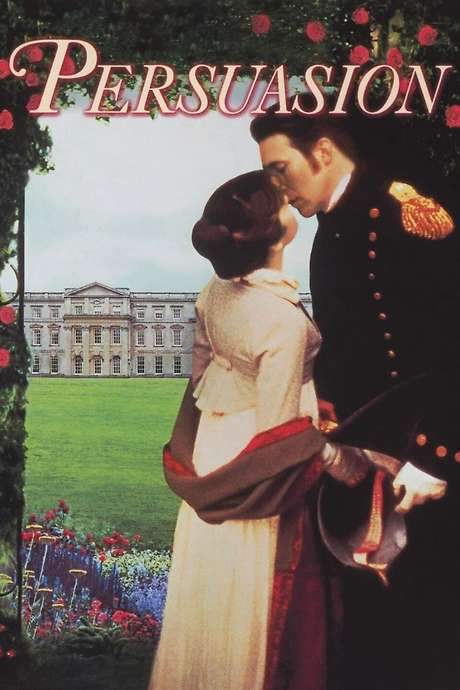
What Is Persuasion About?
The premise of Persuasion in 316 words, with nothing given away. The full story follows below.
In the genteel world of early‑19th‑century England, the Elliot family presides over the once‑grand Kellynch Hall, now shadowed by mounting debts and the uneasy prospect of letting the estate to a new tenant. Anne Elliot navigates this precarious atmosphere with a quiet intelligence, feeling the pull of familial duty while sensing the lingering echo of a love she once set aside. Her father, Sir Walter Elliot, is a proud but financially strained baronet whose decisions shape the household’s future, and the ever‑prudent Lady Russell offers counsel that balances affection with practicality.
Enter Frederick Wentworth, a seasoned naval captain returning from the Napoleonic wars. His presence rekindles memories of a past engagement that was broken under the weight of social expectations, and his confidence and modest fortune stand in stark contrast to the Elliot’s waning fortunes. The arrival of Admiral Croft as a prospective lessee adds another layer of Regency intrigue, linking the world of the navy to the domestic sphere and hinting at renewed connections between the characters.
The drama unfolds amid the elegant cadence of country outings, lively visits to the nearby Musgrove family at Uppercross, and the fashionable whirl of Bath’s social season. Conversations are laced with the era’s refined manners, yet undercurrents of longing, restraint, and the struggle between personal desire and economic necessity give the narrative its emotional depth. Supporting figures such as Mrs. Clay and Mr. Shepherd underscore the ever‑present pressure of debt and reputation, while the landscape of rolling estates and bustling ports paints a vivid backdrop for the characters’ internal journeys.
Through careful direction and a restrained yet evocative visual style, the BBC adaptation captures the quiet intensity of Regency life, inviting viewers to feel the tension between duty and devotion that defines Anne’s world. The tone is one of measured elegance, where every glance and unspoken word suggests the possibility of a love that might yet be reclaimed.
What Happens in Persuasion?
The complete story of Persuasion, from the first scene to the last, in 1,221 words (about 5 minutes). Spoilers throughout.
Spoilers ahead
Captain Wentworth [Ciarán Hinds] returns from the Napoleonic Wars to England, as a fresh, capable naval captain with wealth and temperament tempered by years at sea. The story opens with a contingent of people moving toward Kellynch Hall: a naval ship carries Admiral Croft [John Woodvine], while a horse and buggy bears Mr. Shepherd [David Collings] and his daughter, Mrs. Clay [Felicity Dean], both anxious about debts that threaten the estate of Sir Walter Eliot [Corin Redgrave]. The household is already watching for signs of اقتصاد decline, and the tension sits heavy as creditors circle the man who once presided over a grand hall. Meanwhile, Croft’s presence sparks a quiet undercurrent of possibility, as he is connected by marriage to Wentworth’s sister-in-law, and the navy’s end of the war conversation shades the atmosphere with both relief and caution.
Sir Walter Eliot, a vain and financially strained baronet, must decide how to weather a storm that threatens Kellynch Hall’s future. He resists the idea at first, but the practical option of letting the hall and moving Bath becomes a real possibility, one that Shepherd, the family friend, as well as Lady Russell [Susan Fleetwood] and Sir Walter’s second eldest daughter, Anne [Amanda Root], quietly push toward. Anne, intelligent and perceptive, is acutely aware of the family’s precarious position. The arrival of Admiral Croft as the new tenant adds a complicated layer: his connection to Captain Wentworth—a man whom Anne once rejected nine years earlier—casts a long shadow over the discussions of marriage, fortune, and social standing. The initial discussions reveal the break that happened years before and set up the central moral question of the tale: can pride and prudence outpace genuine affection and lasting partnership?
Anne Elliott, loyal and thoughtful, is deeply unsettled by the prospect of a future that might hinge on money rather than affection. Her heart, shaped by the memory of Wentworth’s proposal, aches as she acknowledges the distance that time and circumstance have placed between them. Wentworth’s return is bound to stir old feelings, and the narrative follows how Anne’s sense of duty to her family competes with the memory of a love she once refused. As the family heads to Bath, Anne visits her sister and the Musgrove clan at Uppercross, where a chorus of voices—Mary [Sophie Thompson], Louisa [Emma Roberts], Henrietta [Victoria Hamilton], and their parents—unfolds in turn. Each member carries worries of health, fortune, and the quiet politics of flirtation and alliance, and Anne listens with a steady, almost clinical attentiveness that tinctures the tale with a restrained, accurate realism.
Captain Wentworth [Wentworth] [Ciarán Hinds] himself becomes a regular visitor at Uppercross, bringing with him ease and charm, but keeping a respectful distance from Anne. He moves through social occasions with grace, while Louisa [Emma Roberts] and Henrietta flirt with him openly, not fully grasping the weight of his past or the depth of Anne’s enduring attachment. The presence of Wentworth unsettles Henry Hayter and the Musgrove family alike, and the tension of past choices resurfaces in conversations and glances. A pivotal moment occurs when Wentworth and Anne are briefly reunited at breakfast after years apart; he notices how she has changed, and the old ache of history returns in his perceptive silence. The narrative uses these small, telling moments to reveal the new balance of their feelings, while also showing how social expectations and family loyalties shape every decision.
The journey to Lyme brings Captain Harville [Robert Glenister] and Captain Benwick [Richard McCabe] into closer proximity with Anne. Benwick, recently bereaved—the loss of his fiancée, Phoebe Harville, casts a long shadow over his days—finds solace in poetry and in the company of thoughtful listeners like Anne. The dynamic at Lyme explores the virtue of constancy, friendship, and the healing power of conversation, even as a new figure, a handsome stranger, appears and turns out to be William Elliot [Samuel West], their estranged cousin and heir to Kellynch Hall. The tension intensifies as Anne learns more about Elliot’s ambitions and, more dangerously, about the fragility of trust when money and inheritance are at stake.
A dramatic incident changes everything: Louisa [Emma Roberts] leaps from a high staircase, hoping Wentworth will catch her. It is a moment that tests all loyalties and demands quick action; Anne remains calm and dutiful, taking charge as Louisa is rushed to the Harvilles’ home to await a surgeon. Wentworth’s instinct is to stay and nurse, but Mary’s insistence draws him away, and he escorts Henrietta and Anne to Uppercross to raise the alarm before returning to Lyme. This crisis cements Anne’s role as the steady center of the family, and it intensifies the emotional stakes as the narrative moves forward toward Bath.
Back in Bath, the Crofts—Admiral Croft [John Woodvine] and Mrs. Croft [Fiona Shaw]—arrive, and the social world of the city becomes a stage for a web of personal revelations. Sir Walter and Elizabeth [Phoebe Nicholls] reveal they have repaired relations with Mr. Elliot [Samuel West], who now seems determined to win Anne’s hand, despite questions about his character. Yet the gossip and exposure of finances push Anne to weigh who she trusts and what she values most. The arrival of the Crofts coincides with the news that Louisa has recovered and become engaged to Benwick, a turn of events that reshapes Wentworth’s own prospects and his approach to Anne.
In Bath, Wentworth’s presence is increasingly charged with possibility. He and Anne cross paths often, their conversations brief but charged with unspoken recognition. The Musgroves, along with Captain Harville [Robert Glenister], return to town in search of wedding clothes, which brings the two sooner into sustained contact. Yet the pressure mounts from Mr. Elliot [Samuel West], who continues to pursue Anne while masking his own financial vulnerability. Anne receives a painful lesson when Mrs. Smith [Helen Schlesinger] reveals Elliot’s bankruptcy and his motive to marry into the Elliott fortune in order to maintain influence over the family line and inheritance. The moral arithmetic becomes clearer: can love survive when wealth and strategy shape so many decisions?
The story heightens as a formal, almost religious debate about the constancy of love unfolds between Anne and Harville; Wentworth, quietly listening, writes a letter that becomes a turning point. He confesses that he has never stopped loving Anne and, in a moment of quiet certainty, proposes again. The moment turns electric when, outside, Wentworth awaits Anne’s answer. At a social gathering later that evening, Wentworth’s announcement that Anne has accepted his marriage proposal shatters the expectations of Mr. Elliot and the town alike. The final image is intimate and hopeful: Wentworth and Anne, now married, aboard a navy warship, united by shared history and a future they choose together. > “I have never stopped loving you,” Wentworth declares, and the sea breeze seems to seal their promise.
This retelling preserves the emotional throughline of a woman navigating duty, desire, and social pressure, while tracing a careful arc of reconciliation, trust, and renewed love. The cast’s performances—[Ciarán Hinds], [Amanda Root], [John Woodvine], [Fiona Shaw], [Robert Glenister], [Richard McCabe], [Sophie Thompson], [Victoria Hamilton], [Sally George], [Corin Redgrave], [Susam Fleetwood], [Samuel West], [Phoebe Nicholls], [David Collings], [Darlene Johnson], [Judy Cornwell], [Jane Wood], [Lonnie James], and others—shape a story that is at once intimate and expansive, modest in its speech and grand in its emotional architecture.
Persuasion Timeline: Every Key Event in Order
15 key events in the order they happen, from “Arrival at Kellynch Hall and the start of financial worries” to “The proposal and ending: a new union”. 15 events name a place, across 8 locations.
- 1
Arrival at Kellynch Hall and the start of financial worries
A naval ship arrives with Admiral Croft to Kellynch Hall, while Mr Shepherd and his daughter Mrs Clay travel by horse-drawn carriage. Local creditors confront Sir Walter Elliot over his mounting debts as the social order begins to strain. The opening scenes establish the Elliots' dwindling fortunes and the sense that change is coming.
When:Opening scene Where:Kellynch Hall
- 2
Sir Walter retrenches and moves to Bath
Sir Walter faces financial ruin and agrees to retrench by letting Kellynch Hall and moving to Bath temporarily. The plan comes from Shepherd, Lady Russell, and Mrs Clay, who see the family’s status as fragile. The arrangement foreshadows Anne's uncomfortable future and the social pressures surrounding her.
When:Early phase Where:Kellynch Hall
- 3
Anne learns Croft will be the tenant at Kellynch Hall
Anne is upset to learn that Admiral Croft will occupy Kellynch Hall, knowing his brother-in-law is her former fiancé Wentworth. She worries that this arrangement will complicate her feelings and the family’s finances. The news also signals Croft’s role in the estate’s future.
When:Soon after retrenchment decision Where:Kellynch Hall
- 4
Nine years earlier: Anne's rejection of Wentworth
The narrative recalls that Lady Russell persuaded Anne to decline Frederick Wentworth’s proposal due to his lack of prospects. Anne’s memory of that rejection sharpens her sense of regret as she faces a dependent future. The past romance nevertheless lingers as Wentworth returns.
When:Nine years earlier Where:Flashback
- 5
Wentworth returns to England without a wife
Wentworth has returned wealthy from his naval service and comes back to England seeking a wife. His status contrasts with the Elliots’ dwindling fortune, and the possibility of a renewed relationship with Anne arises. The dynamics between the two recur as the story unfolds.
When:Upon return Where:England
- 6
Anne confides her unhappiness to Lady Russell
During the Bath trip, Anne confides to Lady Russell that she is unhappy with their finances and regrets rejecting Wentworth. She questions how much her choice has shaped her prospects and happiness. The conversation deepens the emotional stakes for both women.
When:During Bath trip Where:Bath
- 7
Anne visits Uppercross and meets the Musgroves
Anne visits her sister Mary at Uppercross and calmly listens to Mary's various complaints. The Musgrove household provides a contrast to the Elliots’ precarious finances and social games. Anne’s empathy makes her a keystone in the family’s emotional life.
When:During stay at Uppercross Where:Uppercross
- 8
Wentworth sits with the Musgroves; Anne nurses Mary’s son
Wentworth joins the Musgroves for dinner, and Anne volunteers to nurse Mary's injured son to avoid direct contact. His presence stirs unresolved feelings, though he remains guarded. The social tension around them begins to intensify.
When:During stay Where:Uppercross
- 9
Morning visit and recognition of change
The next morning Wentworth visits at breakfast, and Anne and Mary are briefly visited by him again. He remarks that Anne seems altered since their youth. The encounter rekindles the unspoken tension between them.
When:The morning after previous dinner Where:Uppercross
- 10
Wentworth becomes a regular guest; social flirtations
Wentworth becomes a regular guest at Uppercross, his relaxed manners drawing him into the Musgrove circle. Louisa and Henrietta openly flirt with him, provoking jealousy in Henry Hayter. Anne keeps her distance as she tries to navigate her still-strong feelings.
When:During visits Where:Uppercross
Show the other 5 events of Persuasion Hide the last 5 events
- 11
Lyme trip and the appearance of William Elliot
Anne, Wentworth, and the younger Musgroves travel to Lyme to visit Harville and Benwick. Benwick mourns Phoebe Harville but finds solace in poetry, while Anne offers support. A handsome stranger appears—William Elliot, their estranged cousin and heir to Kellynch Hall.
When:During Lyme visit Where:Lyme
- 12
Louisa’s accident and the rescue
On the final day at Lyme, Louisa jumps from a high staircase and suffers a serious head injury. Anne remains calm and takes charge to manage the emergency. Wentworth escorts Henrietta and Anne to Uppercross to raise the alarm before returning to Lyme; Anne then leaves for Bath.
When:Final day at Lyme Where:Lyme, then Uppercross
- 13
Back in Bath: Mr. Elliot emerges; engagements announced
Back in Bath, Sir Walter and Elizabeth repair relations with Mr Elliot, who begins actively pursuing Anne. The Crofts arrive, bringing news of Louisa’s recovery and her engagement to Captain Benwick. Wentworth arrives in Bath and their brief conversations hint at rekindled feeling.
When:After returning to Bath Where:Bath
- 14
Mr. Elliot’s bankruptcy and his scheming
Mrs Smith informs Anne that Mr Elliot is bankrupt and only intends to marry her to secure inheritance. He also seeks to bar a potential match between Sir Walter and Mrs Clay to ensure a male heir. Anne weighs the risks of marrying him and the impact on her future.
When:Before final proposal Where:Bath
- 15
The proposal and ending: a new union
During a morning at the Musgroves’ inn, Captain Harville discusses the constancy of love with Anne while Wentworth quietly pens a note. Wentworth declares that he has never stopped loving her and proposes; Anne accepts. The story closes with them aboard a navy warship, newly married and content.
When:Climax and ending Where:Bath; aboard ship
Who Are the Main Characters in Persuasion?
17 characters, among them Anne Elliott (Amanda Root), Captain Frederick Wentworth (Ciarán Hinds) and Louisa Musgrove (Emma Roberts): who each one is and the part they play in the story. Every profile links to the actor’s page.
- AE
Anne Elliott (Amanda Root)
Played by Amanda Root
Anne is intelligent, reserved, and highly aware of social expectations. She carries a memory of a rejected engagement that continues to shape her sense of self and duty. Throughout the story she balances familial obligations with a growing personal longing, ultimately choosing what she believes is right.
- 🧠 Intelligent
- 💞 Love
- ⚖️ Social expectations
-

Captain Frederick Wentworth (Ciarán Hinds)
Played by Ciarán Hinds
Wentworth returns from the wars with wealth and poise, yet his feelings for Anne remain unresolved. His pride and decisiveness are balanced by a capacity for tenderness and resilience. His persistence catalyzes the romance and tests the boundaries of society.
- 🧭 Naval officer
- 💔 Past rejection
- 💬 Witty
-

Louisa Musgrove (Emma Roberts)
Played by Emma Roberts
Louisa is spirited, bold, and socially adept, often drawing attention with her energy and charm. Her flirtations complicate relationships and highlight the risks of passion without restraint. Her injury becomes a pivotal moment for understanding responsibility and care within the group.
- 💃 Spirited
- 💗 Romantic interest
- ⚡ Impulsive
-

Charles Musgrove (Simon Russell Beale)
Played by Simon Russell Beale
Charles is practical and affable, the steady anchor within the Musgrove clan. He favors sensible plans and family harmony. His decisions ultimately contribute to the eventual union of the couple and the cohesion of the family.
- 🧩 Practical
- 🏡 Family man
- ⚖️ Steady
- MM
Mrs. Musgrove (Judy Cornwell)
Played by Judy Cornwell
Mrs. Musgrove is the family matriarch, navigating social expectations with warmth and firmness. She provides a pragmatic viewpoint within domestic life and supports or critiques romantic possibilities as needed. Her presence anchors the Musgrove household’s values.
- 👩👧 Family matriarch
- 💬 Social guide
- 🏠 Domestic
- MM
Mr. Musgrove (Roger Hammond)
Played by Roger Hammond
Mr. Musgrove embodies rural hospitality and steady family support. He upholds traditions while enduring financial and social pressures. He serves as a calm presence amid evolving romantic tensions.
- 👨 Father figure
- 🧭 Steady
- 🏡 Rural life
- MM
Mary Musgrove (Sophie Thompson)
Played by Sophie Thompson
Mary is the caring sister-in-law with a penchant for expressing concerns and sharing confidences. Her perspective helps shape family dynamics and the reactions of Anne and Wentworth. She embodies practical loyalty within the Musgrove circle.
- 👩 Sister-in-law
- 💬 Confidante
- 💖 Family
- HM
Henrietta Musgrove (Victoria Hamilton)
Played by Victoria Hamilton
Henrietta is socially ambitious and quick to flirt, often testing boundaries within Bath society. Her presence intensifies social maneuvering and heightens the tension between competing suitors. She represents a more outward-facing social role in the family circle.
- 💃 Socialite
- 💗 Rivalry
- 👫 Courtship
- CH
Captain Harville (Robert Glenister)
Played by Robert Glenister
Captain Harville is Wentworth’s naval associate who engages in thoughtful debates about love’s constancy. His conversations with Anne illuminate different philosophies of affection and loyalty. He acts as a moral interlocutor within the social group.
- ⚓ Naval ally
- 🤝 Advisor
- 🗣️ Conversation
- CB
Captain Benwick (Richard McCabe)
Played by Richard McCabe
Captain Benwick is a grieving naval captain who channels sorrow into quiet resilience and literary pursuits. He serves as a sympathetic listener to Anne and Wilmet Wentworth’s evolving story. His engagement later adds another layer to the romantic dynamics.
- ⚓ Naval captain
- 💔 Mourning
- 📚 Poetry
- LR
Lady Russell (Susan Fleetwood)
Played by Susan Fleetwood
Lady Russell is a respected mentor who guides Anne with prudence and care, shaping perceptions about marriage and status. Her influence highlights the tensions between personal happiness and social duty. Her counsel often carries weight in crucial decisions.
- 👩 Mentor
- 🧭 Social strategist
- 🪄 Influence
-

Admiral Croft (John Woodvine)
Played by John Woodvine
Admiral Croft is a cordial naval officer who becomes a key host and ally when the Crofts settle into Bath. He embodies maritime honor and supportive family ties. His presence helps bridge naval life with domestic concerns.
- ⚓ Naval authority
- 🏠 Family ally
-

Mrs. Croft (Fiona Shaw)
Played by Fiona Shaw
Mrs. Croft is the sister-in-law to Wentworth and a stabilizing presence within social circles. She balances charm with practical sense, smoothing tensions in social interactions. Her perspective adds a steady influence to the evolving relationships.
- 👩 Sibling-in-law
- 🔧 Stabilizer
- 🧭 Social grace
- SW
Sir Walter Eliot (Corin Redgrave)
Played by Corin Redgrave
Sir Walter Eliot is vain and financially precarious, a baronet whose pride masks vulnerability. His choices ripple through the family’s fortunes and aspirations. The pressure of maintaining appearances fuels much of the family drama.
- 🎩 Vanity
- 💸 Financial concern
- 🕰️ Social performance
- EE
Elizabeth Eliot (Phoebe Nicholls)
Played by Phoebe Nicholls
Elizabeth Eliot is Anne’s sister who embodies the social status and family dynamics surrounding the older generation. Her relationships reflect the shifting balance of wealth and regard within the family circle. She participates in Bath’s social scene and its expectations.
- 👩 Sister
- 🏛️ Social status
- 💬 Family ties
- ME
Mr. Elliot (Samuel West)
Played by Samuel West
Mr. Elliot is charming and calculating, pursuing Anne for inheritance and social advancement. His demeanor reveals manipulation beneath cordial manners, posing a threat to Anne’s autonomy and the family’s security. His presence adds tension to the moral choices faced by Anne and Wentworth.
- 🃏 Cunning
- 💰 Inheritance
- 🗝️ Social mobility
- HH
Henry Hayter (Isaac Maxwell-Hunt)
Played by Isaac Maxwell-Hunt
Henry Hayter is a suitor who embodies the competitive social arena surrounding Henrietta. His advances contribute to the plot’s love-triangle dynamics and reflect the navigation of courtship in the era.
- 🥇 Rival
- 🕴️ Courtship
- 🏹 Social competition
Where and When Is Persuasion Set?
Persuasion is set in Kellynch Hall, Bath, Uppercross, Lyme and Winthrop (Early 19th century (post-Napoleonic era)). Here is why the time and place matter to the story.
When
Early 19th century (post-Napoleonic era)
Set after the Napoleonic Wars, the narrative unfolds in a society defined by propriety and social standings. Wealth and lineage influence choices about marriage and alliances. The era’s conventions shape how characters navigate love, duty, and reputation during a time of post-war transition.
Where
Kellynch Hall, Bath, Uppercross, Lyme, Winthrop
The story moves among several Georgian settings. Kellynch Hall serves as the ancestral seat under financial strain, while Bath operates as a social hub where reputations and marriages are negotiated. Uppercross is a rural family home that hosts close-knit interactions, and excursions to Lyme and Winthrop bring naval and coastal life into focus.
- 🏰 Estate
- 🗺️ Travel
- 🕰️ Regency-era
What Are the Themes of Persuasion?
3 ideas the story keeps returning to, among them Romance, Society & Class and Persuasion & Agency.
-
01
Romance
Romance in Persuasion centers on second chances and the endurance of true affection. Anne and Wentworth’s relationship evolves from a rejected proposal to a renewed commitment, testing patience, pride, and timing. The interplay of longing, restraint, and reconciliation drives the emotional arc of the story.
-
02
Society & Class
The social ladder and financial pressures shape choices and judgments. Sir Walter’s vanity and Mrs. Croft’s steady pragmatism highlight tensions between appearance and substance. Rumors, inheritance concerns, and marriage markets underscore how status governs opportunity.
-
03
Persuasion & Agency
The power to persuade is theme-driven, influencing decisions and self-perception. Lady Russell’s guidance and Wentworth’s declarations test Anne’s autonomy and willingness to act on her own convictions. The narrative probes how persuasion can both constrain and empower personal destiny.
What Kind of Film Is Persuasion?
Bittersweet in tone, with slow pacing and a moderate story, going by the plot summary.
- Tone
- Bittersweet
- Pacing
- Slow
- Story
- Moderate
- Intensity
- Medium
- Ending
- Happy
A slow, restrained period drama that explores quiet yearning and societal pressure, building a melancholic yet hopeful atmosphere around a central story of second-chance love.
- nostalgic
- restrained
- melancholic
- reflective
- yearning
- dutiful
- second chance romance
- social class and wealth
- family duty
- societal pressure
Quiz
How well do you remember Persuasion? Test yourself on the story.
Where to Watch Persuasion
Stream it on BritBox and Howdy, or rent or buy it from Amazon Video and Apple TV Store. US availability and prices from JustWatch.
Stream 7
 BritBox
  BritBox Amazon Channel
  Britbox Apple TV channel
  Howdy Amazon Channel
  The Roku Channel
  Tubi TV
  YouTube Free





Streaming availability in the US, powered by