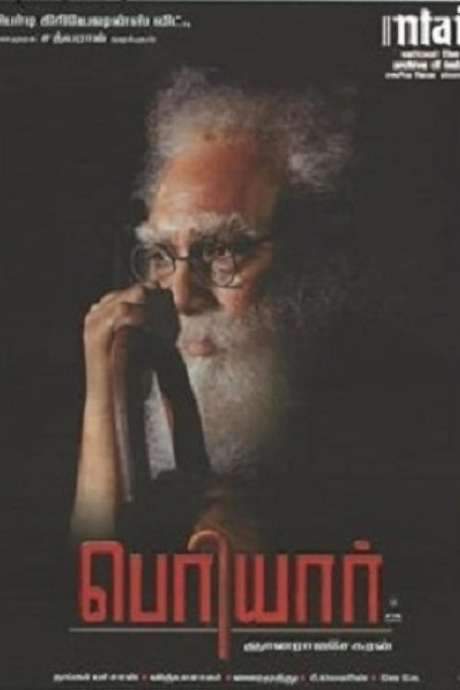



Where to Watch Periyar
See current US streaming, rental, and purchase options for Periyar (2007) via JustWatch.

Streaming availability powered by 
Periyar Plot Summary
Read the complete plot summary and ending explained for Periyar (2007). From turning points to emotional moments, uncover what really happened and why it matters.
The film traces the life of Periyar Sathyaraj E. V. Ramasamy from childhood, through his marriage to Nagammal Jyothirmayi, and a pivotal pilgrimage to Kashi that exposes him to the brutal caste system. In the holy city, he witnesses choultries that exclusively feed Brahmins, while other Hindu castes are turned away. Driven by hunger and a restless sense of injustice, he disguises himself as a Brahmin, wearing a thread on his bare chest to gain entry. The act backfires—he is caught—and the experience leaves him deeply disgusted with life in Kashi. Returning home, he resumes his father’s business and ultimately rises to become the Chairman of the Erode Municipality.
As his public life expands, the narrative follows Periyar’s move from local administration to national struggle. He resigns from the municipal post to join the freedom movement, and soon becomes the President of the Madras Presidency Congress Committee, taking part in the Vaikom struggle that underscores his commitment to reform. The film does not shy away from his disillusionment with the Congress party after it fails to push through reservations, prompting him to leave and join the Justice Party. He would go on to transform that party into Dravidar Kazhagam, reshaping Tamil political discourse. The arc incorporates encounters with reformers and peers, including B. R. Ambedkar [Mohan Raman], illustrating the broader social currents of the era.
In its later chapters, the film places a strong focus on Periyar’s ongoing social activism, his second marriage to Maniammai [Khushboo], and the enduring evolution of the Dravidian movement. His lieutenant C. N. Annadurai, portrayed by S. S. Stanley, plays a pivotal role in the party’s transformation and the eventual birth of the DMK. The story unfolds to chronicle Periyar’s lasting influence on Tamil politics and society, culminating with his death and the way his ideas continue to reverberate through the movements that followed.
Periyar Timeline
Follow the complete movie timeline of Periyar (2007) with every major event in chronological order. Great for understanding complex plots and story progression.
Childhood of Periyar
Periyar's childhood is shown as the seed of his reformist mindset. He grows up amid social hierarchies that later fuel his critique of caste. The early experiences plant his skepticism toward inherited privilege.
Marriage to Nagammal
As a young man, Periyar marries Nagammal, marking a personal milestone in his life. The marriage anchors his domestic life while his public activism grows.
Pilgrimage to Kashi and caste exposure
During a pilgrimage to Kashi, he witnesses the caste system's cruelty, especially choultries that feed Brahmins exclusively. Starving and desperate, he disguises himself as a Brahmin by wearing a thread on his bare chest to enter a choultry. He is caught, and the episode hardens his resolve against social inequity.
Disillusionment in Kashi and return
Periyar becomes disgusted with life in Kashi and returns home. He resumes work in his father's business and begins to build a stable routine that would ground his future public life.
Chairman of Erode Municipality
He rises in public service and becomes the Chairman of the Erode Municipality. This leadership position places him at the intersection of local governance and social reform, shaping his approach to public life.
Resignation to join the freedom struggle
He resigns from the municipality post to join the broader freedom struggle. This marks a defining shift from local administration to nationwide political action. He embraces the nationalist movement and the broader fight for India's independence.
President of Madras Presidency Congress Committee
Periyar becomes the President of the Madras Presidency Congress Committee, steering regional strategies and mobilizations. He uses this platform to push social reforms alongside national independence.
Vaikom struggle participation
He participates in the Vaikom struggle, lending his voice to protests against caste-based barriers in public life. The campaign broadens his strategy, linking anti-colonial nationalism with social justice.
Quits Congress; joins Justice Party
Frustrated by the failure to obtain reservations, Periyar quits the Congress party and joins the Justice Party. He shifts his political focus from national independence to social justice within a regional framework. This move signals a turning point toward redefining Tamil politics through caste reform.
Transforms Justice Party into Dravidar Kazhagam
He leads a transformation of the Justice Party into Dravidar Kazhagam, reframing the political movement around Dravidian identity and social reform. This marks a decisive shift toward a more activist, reform-driven ideology.
Role in Anti-Hindi agitation
Periyar takes a central role in the Anti-Hindi agitation, rallying opposition to language policies perceived as oppressive to non-Hindi speakers. He uses mass mobilization and political rhetoric to advance his Dravidian reform agenda.
Second marriage
The narrative notes Periyar's second marriage, adding a personal dimension to his public life. The sequence balances his intense public role with private life.
Formation of DMK by C. N. Annadurai
His lieutenant C. N. Annadurai forms the DMK, continuing Periyar's reformist project and fueling Dravidian politics. The film marks this as a major milestone in Tamil political history, showing how the movement ecosystem evolves around Dravidian ideology.
Periyar's death
The film ends with Periyar’s death, closing his long arc from reformer to a foundational figure in Tamil political movements. His legacy continues to influence social and political thought in Tamil Nadu.
Periyar Characters
Explore all characters from Periyar (2007). Get detailed profiles with their roles, arcs, and key relationships explained.
Periyar (E. V. Ramasamy) — Sathyaraj
The central figure of the film, Periyar is shown evolving from a conventional upbringing to a radical reformer. His experiences of caste oppression in Kashi fuel his anti-caste stance and rationalist worldview. He becomes a political architect who reshapes Tamil politics by founding and steering major movements, including DMK.
Nagammai (Nagammal) — Jyothirmayi
Periyar's wife and steady companion, Nagammai embodies personal life amid public reform. Her presence anchors the moral stakes of Periyar's journey and reflects the private costs of political struggle. She supports his reformist zeal while navigating family dynamics.
C. N. Annadurai — S. S. Stanley
Annadurai appears as Periyar's lieutenant who becomes a leading voice in Tamil politics. The film traces their collaboration and the evolution of their ideas, culminating in the formation of the DMK. His oratory and organizational skill help shape Dravidian political strategy.
B. R. Ambedkar — Mohan Raman
Ambedkar's presence in the film highlights the broader struggle for caste rights and social justice. The portrayal contrasts federal debates on reservations with Periyar's reformist approach, enriching the discourse on caste in modern India.
Maniammai — Khushboo
Maniammai, Periyar's second wife, adds a personal dimension to the reformist's life. Her relationship with Periyar reflects the complexities of public and private life in a political era. The portrayal examines companionship amid social change.
Ramanathan — Vagai Chandrasekar
Ramanathan appears as an early business associate and part of Periyar's life in Erode, representing the ordinary middle-class support that enables his rise. The character provides a lens on how commerce and local governance intersect with reformist politics.
Periyar Settings
Learn where and when Periyar (2007) takes place. Explore the film’s settings, era, and how they shape the narrative.
Time period
Late 19th century – mid-20th century
Set against British rule and the social reform movements of the time, the film follows Periyar from childhood through his activism. It spans the era of the anti-caste movements, the Vaikom protest, and the early Dravidian movement decades. The period includes political shifts in Madras Presidency and the emergence of DMK in the years after independence.
Location
Kashi (Varanasi), Erode, Madras (Chennai), Vaikom
The story moves between sacred sites and Tamil Nadu towns. Periyar's journey begins with a pilgrimage to Kashi, where caste hierarchies are starkly enforced at choultries. The narrative then tracks his rise through Erode's municipal life and the political heart of Madras Presidency, including sites of reform and protest such as Vaikom.
Periyar Themes
Discover the main themes in Periyar (2007). Analyze the deeper meanings, emotional layers, and social commentary behind the film.
⚖️
Caste and Reform
The film centers on exposure to caste cruelty and the awakening to social inequality. It portrays Periyar's early experiences that spark his lifelong critique of caste hierarchies. The narrative shows reforms he champions, including challenging Brahmin exclusivity at sacred sites and later shaping anti-caste politics.
🗳️
Political Awakening
Periyar moves from municipal leadership to mass politics, leaving conflicts in Congress over reservations. He helps found and transform political organizations into a driver for social reform. The story traces his influence on the Dalit and backward classes' political empowerment and party-building.
🗺️
Dravidian Identity
The film explores Tamil identity, language pride, and anti-Hindi agitation as pillars of the Dravidian movement. It presents how Periyar and his allies reframed politics around regional consciousness and social justice. The arc culminates in a vision of reform through cultural and linguistic assertion.

Coming soon on iOS and Android
The Plot Explained Mobile App
From blockbusters to hidden gems — dive into movie stories anytime, anywhere. Save your favorites, discover plots faster, and never miss a twist again.
Sign up to be the first to know when we launch. Your email stays private — always.
Explore the mobile appPeriyar Spoiler-Free Summary
Discover the spoiler-free summary of Periyar (2007). Get a concise overview without any spoilers.
In the tangled streets of early‑20th‑century South India, the weight of colonial rule and a rigid caste hierarchy presses down on everyday life, creating a backdrop of simmering discontent. The city’s markets, temples, and riverbanks pulse with a mixture of tradition and the restless desire for change, while the air is thick with the promise of a larger, nation‑wide fight for freedom. The film captures this world in a palette of earthy tones and bustling crowds, letting the viewer feel both the oppression of age‑old customs and the faint stir of revolutionary ideas.
At the heart of this tapestry stands Periyar, a thoughtful young man whose early years are marked by love, loss, and a deepening awareness of injustice. His marriage to Nagammal offers him a personal anchor amidst the chaos, yet a pilgrimage to the sacred city of Kashi shatters any lingering naïveté. Witnessing holy inns that turn away the vast majority of pilgrims while reserving space for a privileged few ignites a visceral disgust that fuels his inner turmoil. The film’s tone shifts here, moving from gentle domestic scenes to stark, almost claustrophobic moments that reflect his growing alienation.
Compelled by the stark contrast between spiritual aspiration and social exclusion, Periyar begins to look beyond personal grievances, turning his restless energy toward the broader Indian struggle for independence. The narrative hints at his transition from a local observer to an active participant in a movement that seeks to dismantle both foreign domination and entrenched domestic hierarchies. A quiet determination builds within him, promising that his fight will later broaden to champion the rights of his fellow Tamilians, weaving his personal convictions into the fabric of a larger cultural awakening.
The film’s style blends intimate character study with sweeping historical scope, employing deliberate pacing that allows moments of reflection to sit beside scenes of collective agitation. Through carefully crafted interactions and a reverent yet critical eye on tradition, the story sets up a portrait of a man poised on the cusp of change—driven by conscience, challenged by circumstance, and ready to confront the inequities that define his world.
Movies with Similar Twists and Themes
Uncover films that echo the narrative beats, emotional arcs, or dramatic twists of the one you're exploring. These recommendations are handpicked based on story depth, thematic resonance, and spoiler-worthy moments — perfect for fans who crave more of the same intrigue.

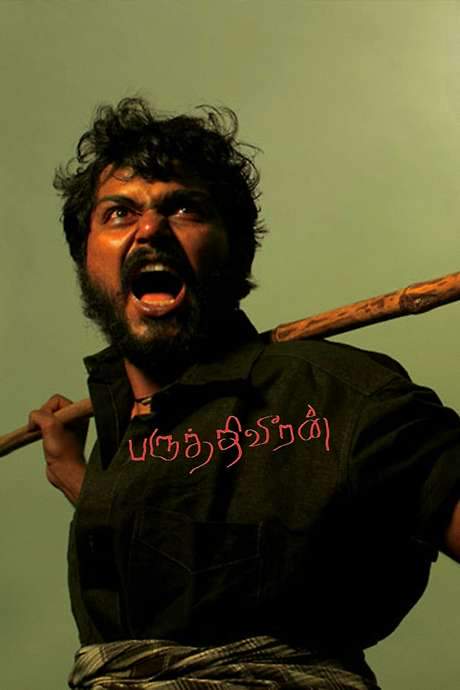
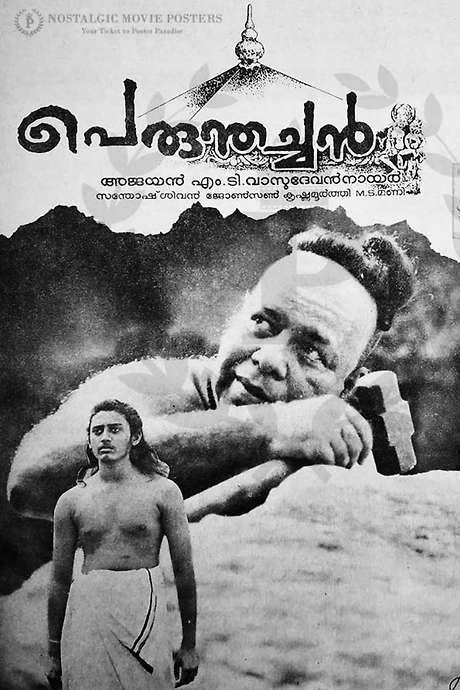

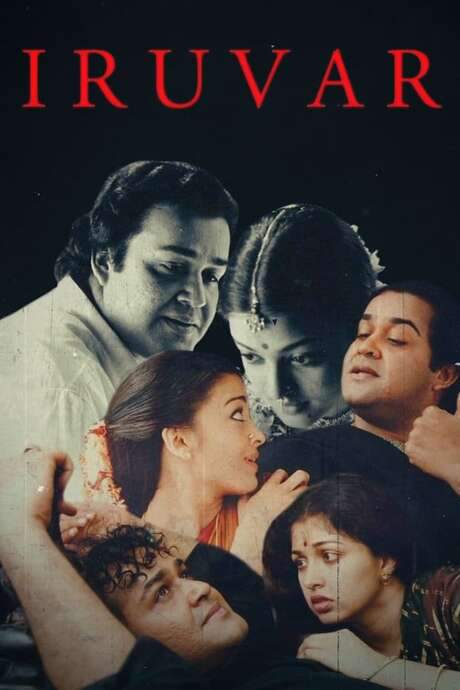


Featured on this page

What's After the Movie?
Not sure whether to stay after the credits? Find out!
Check out our other apps:

SAT Sphere
Build confidence for the Digital SAT.

Mori Atlas
Discover wild places worth protecting.

Luntero
Search smarter for a home in Amsterdam.

Plot Explained
Unravel movie endings and hidden clues.

Pokechamp
Dive into Pokémon data and battle logic.

Driving Theory
Get ready for your European theory test.

Movie Dust
Plan your next cinema trip with ease.

Musemap
Find art and culture as you travel.

Selkobase
Compare credentials before committing.

Local Manual
Turn an unfamiliar country into practical next steps.

Lernavi
Compare school systems before your next move.

GymRoam
Find a workout stop wherever your plans take you.
Explore Our Movie Platform
New Movie Releases (2026)
Famous Movie Actors
Top Film Production Studios
Movie Plot Summaries & Endings
Major Movie Awards & Winners
Best Concert Films & Music Documentaries
Movie Collections and Curated Lists
© 2026 What's After the Movie. All rights reserved.
Privacy Policy