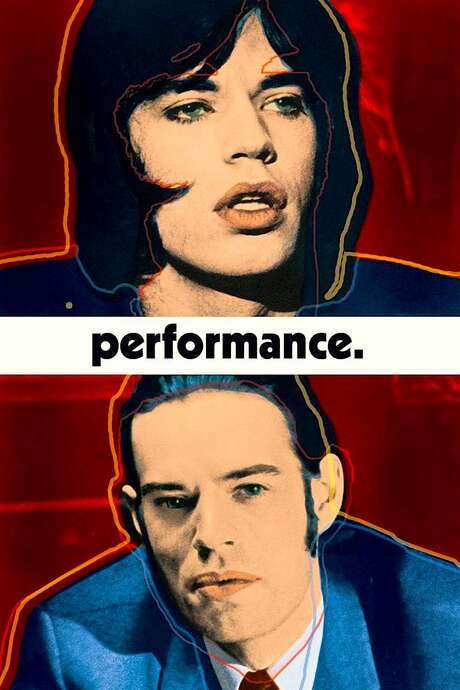
Performance 1970

Directed by
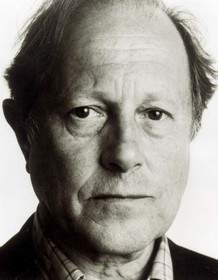
Nicolas Roeg
Made by

Goodtimes Enterprises
Where to Watch Performance
See current US streaming, rental, and purchase options for Performance (1970) via JustWatch.






Performance Plot Summary
Read the complete plot summary and ending explained for Performance (1970). From turning points to emotional moments, uncover what really happened and why it matters.
Chas Devlin is part of an East London gang led by the ruthless Harry Flowers. Chas is known for his brutal efficiency and a taste for violence, and his casual, rough liaisons reflect a world where loyalty is thin and danger is constant. When Flowers intends to seize a betting shop owned by Joey Maddocks, he forbids Chas from getting involved, wary that Chas’s tangled history with Maddocks could ignite trouble. Chas resents the order and later humiliates Maddocks, who retaliates by wrecking Chas’s apartment and attacking him; in the ensuing confrontation, Chas shoots Maddocks and packs a suitcase to vanish.
With Flowers making it clear he won’t offer protection, Chas decides to slip away to the countryside, hoping to disappear. But luck or fate nudges him toward Notting Hill Gate, where he overhears a musician talking about going on tour and leaving his rented room. He arrives, adopts a new persona, and claims to be a fellow performer, though the alias he uses—Johnny Dean—is a deception designed to gain entry.
There he meets Pherber, a woman living with Turner, a reclusive former rock star who has “lost his demon,” and Lucy, with whom Turner shares a non-possessive and bisexual ménage à trois. A child named Lorraine floats in and out of the house, adding a fragile brightness to the tense atmosphere. At first, Chas eye-rolls at Turner, but the two men begin to influence each other in unexpected ways. Pherber and Turner press him to reveal what makes him function so effectively within his world.
To accelerate the process, Pherber tricks him with a psychedelic mushroom, and Chas accuses them of poisoning him. In a hallucinogenic haze, he experiments with clothing and identity, even slipping into feminine clothes. The experience broadens his empathy, and he forms a surprising, caring bond with Lucy.
Before any of this unfolds, he had phoned Tony, a trusted friend who calls him “Uncle,” to help him slip out of the country. Flowers and his henchmen use Tony to trace Chas to Turner’s flat, and they allow him to go upstairs to gather his things. When Chas tells Turner and Pherber that he is leaving, the tension snaps: he shoots and kills Turner and is then escorted into Flowers’s car. As the vehicle pulls away, Chas still wears the feminine clothes and wig, but his face is identical to Turner’s, a brutal final turn of identity and fate.
Performance Timeline
Follow the complete movie timeline of Performance (1970) with every major event in chronological order. Great for understanding complex plots and story progression.
Chas's role in Flowers' East London gang
Chas is a trusted member of an East London gang led by Harry Flowers, specializing in intimidation through violence and collecting pay-offs. He has earned a fearsome reputation for enjoying the brutality of his job. His sexual liaisons are casual and rough, revealing a hard-edged persona that masks deeper loyalties.
Flowers forbids Chas to touch Maddocks' takeover
Flowers makes it clear he has no intention of protecting Chas and instead wants him eliminated. He forbids Chas from getting involved in the betting shop takeover of Joey Maddocks, citing Chas' complicated personal history with Maddocks as a liability. Chas reacts with anger, feeling sidelined and betrayed.
Maddocks retaliates and Chas shoots back
Maddocks retaliates by wrecking Chas's apartment and attacking him, escalating the feud between the two men. In the confrontation that follows, Chas shoots Maddocks, killing him. He packs a suitcase and runs from the scene, already aware that Flowers will turn on him.
Flowers' threat prompts Chas to flee
With Flowers making it clear that he will not offer protection, Chas decides to head for the countryside to hide. The decision marks a turning point as he seeks a safe distance from Flowers' reach. He weighs his options, knowing he may never return to his old life.
Chas moves into Notting Hill Gate and poses as a touring performer
Chas overhears a musician talking about going on tour and leaving his rented room in Notting Hill Gate. He travels to Notting Hill Gate and pretends the musician is a friend who recommended him, presenting himself as fellow performer Johnny Dean to Pherber. He becomes part of Turner, Pherber, Lucy, and the mysterious Lorraine environment.
Chas meets Pherber and Turner; the facade begins
Chas tells Pherber that he is Johnny Dean, a fellow performer, while Turner looks on with wary curiosity. At first, Chas is contemptuous of Turner, who attempts to return the rent in advance. Over time, Turner and Pherber begin to influence him, drawing him into their dynamic.
Turner and Pherber seek to understand Chas
To accelerate a deeper understanding, Turner and Pherber begin to probe Chas's motivations and past, hoping to decode his behavior. They expose him to new influences, nudging him toward vulnerability. The dynamic inside the flat becomes uneasy, with truth and deception mingling.
Pherber drugs Chas to accelerate the transformation
To speed up the psychological process, Pherber feeds him a psychedelic mushroom, pushing him toward a breakdown or breakthrough. Chas initially accuses them of poisoning him, then experiences a disorienting shift. The drug-fueled state loosens his defenses and primes him for a new self-image.
Chas explores identity and clothing
Under the hallucinogenic influence, Chas experiments with clothing and identity, including wearing feminine clothes. The experience broadens his self-image and reveals a more vulnerable side. The transformation hints at a lasting shift away from his former violent persona.
Chas forms a caring relationship with Lucy
As he sheds part of his hard shell, Chas opens up and begins a caring relationship with Lucy. Their bond challenges his violent past and offers him tenderness and human connection. The relationship adds emotional complexity to his arc within the household.
Chas calls Tony to help him escape
Before leaving, Chas phones Tony, a trusted friend who can help him get out of the country. The call signals a practical step toward severing ties with Flowers and the criminal underworld. Tony becomes the conduit to an international escape plan.
Flowers tracks Chas via Tony to Turner's flat
Flowers and his henchmen use Tony to track Chas to Turner's flat, exploiting the connection to locate him. They permit him to go upstairs to collect his things, tightening the net around his temporary sanctuary. The pursuit escalates the tension toward a lethal encounter.
Chas tells Turner and Pherber he is leaving; Turner is killed
Chas informs Turner and Pherber that he is leaving for good, triggering a volatile reaction. He then shoots and kills Turner, removing a key ally and a primary threat in his evolving plan. The act confirms the collapse of the house's fragile arrangement.
Chas is escorted away in Flowers' car
After the killing, Chas is escorted into Flowers' car, carried away from Turner's flat. He still wears feminine clothes and a wig, but his face is identical to Turner’s, masking his identity. The drive away marks the final turn of his transformation and the escape from the immediate world he inhabited.
Performance Characters
Explore all characters from Performance (1970). Get detailed profiles with their roles, arcs, and key relationships explained.
Chas Devlin (James Fox)
An East London gang member who excels at intimidation and violence, yet carries a volatile personal history with Maddocks. He infiltrates Turner’s world by adopting a new persona, revealing a capacity for vulnerability as he navigates betrayal, recruitment, and escape. His arc culminates in a drastic act of violence that redefines his loyalties.
Turner (Mick Jagger)
A reclusive, eccentric former rock star who has 'lost his demon' and lives in a world of art, sexuality, and excess. He cultivates an unconventional household with Pherber and Lucy, challenging social norms and testing Chas’s boundaries. Turner’s fate is sealed when Chas shoots him, underscoring the volatility of fame and desire.
Pherber (Anita Pallenberg)
A woman living with Turner who uses cunning and manipulation to influence Chas’s emergence and actions. She participates in the household’s subversive dynamics and becomes a catalyst for Chas’s psychological transformation through shared risk and psychedelic experimentation.
Lucy (Michèle Breton)
A resident of Turner’s circle with whom Turner enjoys a non-possessive, bisexual ménage à trois. Lucy forms a caring connection with Chas, acting as a bridge between his violence and his capacity for gentleness. Her presence anchors a softer counterpoint to the surrounding hostility.
Joey Maddocks (Anthony Valentine)
Owner of a betting shop who becomes a flashpoint for conflict with Flowers. Maddocks’s friction with Chas triggers a chain of events that destabilizes the underworld alliance and reveals the fragile line between business and brutality.
Tony Farrell (Kenneth Colley)
A trusted friend who becomes a conduit for Flowers and a pawn in the chase to capture Chas. Tony’s role illustrates how alliances can be instrumentalized by those with power, and how personal bonds are exploited for strategic ends.
Noel (Ian McShane)
A Black musician and part of the world that Chas encounters in the Notting Hill Flat. Noel’s presence adds a layer of musical culture to the backdrop and contributes to the atmosphere of performance and disguise that threads through the plot.
Harry Flowers
The gang leader who dictates terms and ultimately orders the removal of threats to his operation. His dominance over the criminal ecosystem drives the pursuit of Chas and the escalating violence that punctuates the story.
Performance Settings
Learn where and when Performance (1970) takes place. Explore the film’s settings, era, and how they shape the narrative.
Time period
1960s
Set against a late-1960s London backdrop, the story blends counterculture vitality with a dangerous underworld. The era’s music, fashion, and psychedelic sensibilities color the characters’ identities and decisions. The tension between public persona and private violence mirrors the decade’s explorations of freedom and risk.
Location
Notting Hill Gate, London
The action unfolds in urban London, centering on Notting Hill Gate where Chas hides in a rented room. The city’s gritty streets and smoky interiors frame a world of gang politics, betrayal, and sudden violence. Towards the end, the narrative shifts toward the countryside, hinting at a brief escape from the city’s claustrophobic atmosphere.
Performance Themes
Discover the main themes in Performance (1970). Analyze the deeper meanings, emotional layers, and social commentary behind the film.
🎭
Identity
Chas undergoes a dramatic shift in self-presentation, adopting a feminine guise and experimenting with clothing and role-playing. This exploration of identity sits at the heart of the narrative, revealing fragility beneath a hard-edged exterior. The interplay with Turner and Pherber accelerates this self-discovery amid danger.
🔪
Power & Violence
A brutal underworld is ruled by Flowers, who orders and enforces with lethal precision. Violence serves both as control and currency, escalating as loyalties fracture. The climactic act of turning on Turner epitomizes the fragile balance of power that governs the story.
🎶
Art & Performance
The film treats performance as both livelihood and disguise, with Turner’s past fame and the characters’ musical pretensions shaping their choices. Pherber and Turner manipulate appearances to influence Chas, blurring art with manipulation. The tension between authentic emotion and performative identities underscores the story’s mood.

Coming soon on iOS and Android
The Plot Explained Mobile App
From blockbusters to hidden gems — dive into movie stories anytime, anywhere. Save your favorites, discover plots faster, and never miss a twist again.
Sign up to be the first to know when we launch. Your email stays private — always.
Explore the mobile appPerformance Spoiler-Free Summary
Discover the spoiler-free summary of Performance (1970). Get a concise overview without any spoilers.
In a world where the hard‑edge of East London crime rubs against the glittering, almost surreal realm of a reclusive rock star’s sanctuary, the city itself becomes a character—glossy neon flickering over shadowed alleys, quiet rooms humming with dissonant chords. The film shimmers between gritty realism and a feverish, dream‑like atmosphere, hinting that the line between vice and its mirror image is far thinner than it appears.
Chas Devlin moves through this landscape as a seasoned “performer” of the underworld—a figure whose reputation for efficiency and intimidation precedes him. Though he is hardened by a life of violence, there is an undercurrent of restless yearning, a sense that the constant churn of danger has left him searching for something beyond the usual rules of his trade. His presence is both unsettling and magnetic, a catalyst that draws the eye even when he tries to stay in the background.
Turner inhabits a markedly different sphere, a former rock star who has retreated into a private, almost hermetic existence. His flat is a collage of eclectic art, lingering melodies, and an unconventional ménage à trois that includes Pherber and Lucy, a fluid partnership that blurs conventional boundaries. Turner’s world pulses with a languid, seductive rhythm, offering a stark contrast to the kinetic, street‑wise energy that Chas embodies.
When the paths of these two unlikely figures intersect, the film teases an exotic collision that feels both inevitable and explosive. Their exchange prompts a subtle reshaping of identity, empathy, and purpose, as each is forced to confront the other’s starkly different reality. The tone remains taut, laced with dark humor and a lingering sense of mystery, inviting the audience to watch how two worlds—one forged in shadow, the other bathed in fading spotlight—might rewrite each other’s stories.
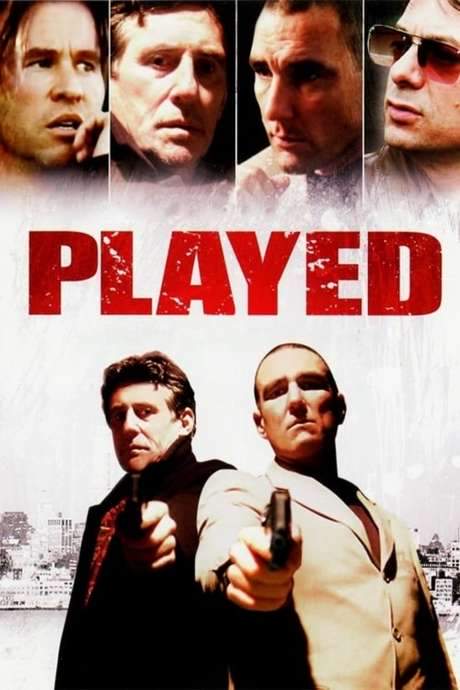
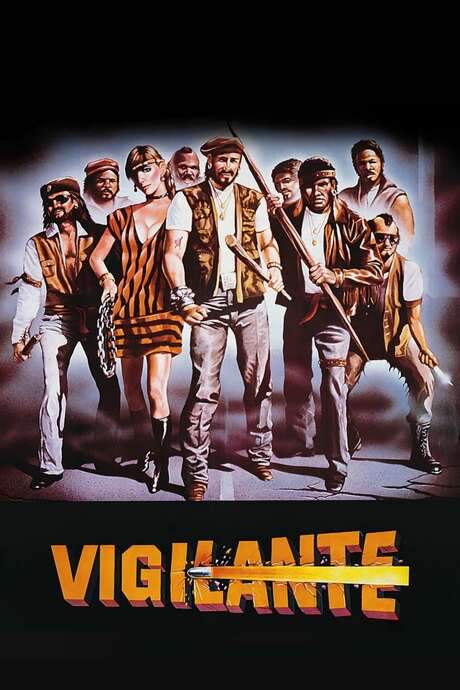
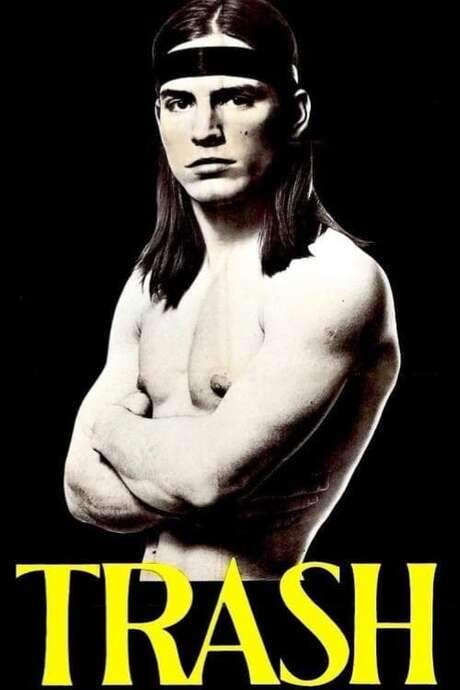
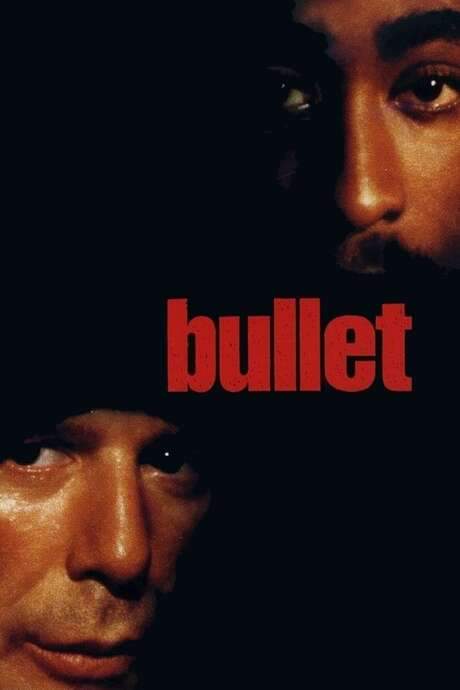
Movies with Similar Twists and Themes
Uncover films that echo the narrative beats, emotional arcs, or dramatic twists of the one you're exploring. These recommendations are handpicked based on story depth, thematic resonance, and spoiler-worthy moments — perfect for fans who crave more of the same intrigue.
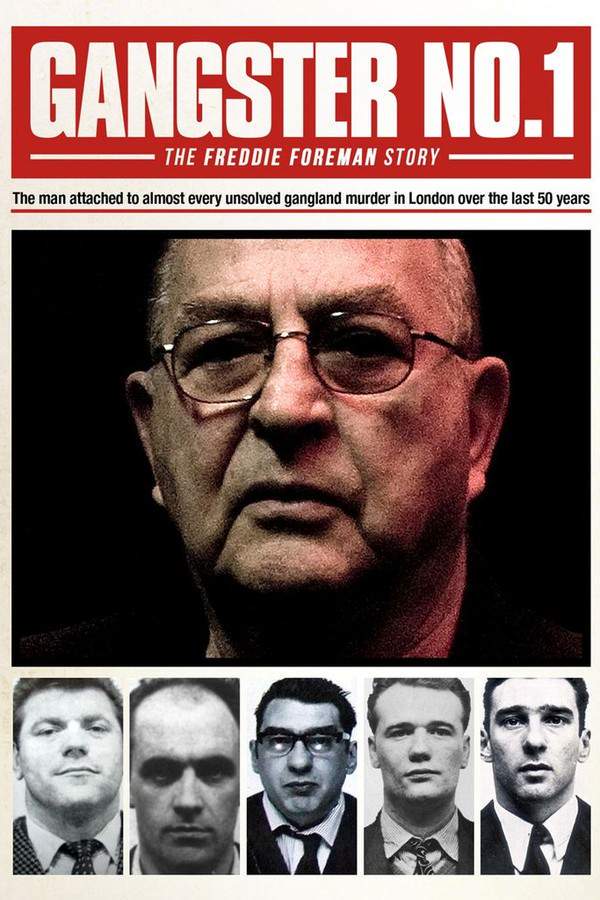
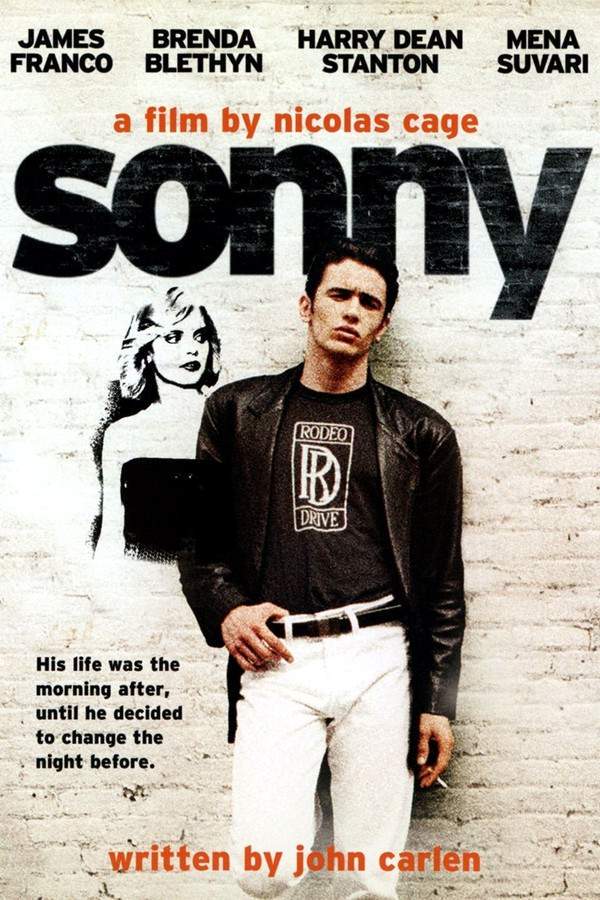

Featured on this page

What's After the Movie?
Not sure whether to stay after the credits? Find out!
Check out our other apps:

SAT Sphere
Build confidence for the Digital SAT.

Mori Atlas
Discover wild places worth protecting.

Luntero
Search smarter for a home in Amsterdam.

Plot Explained
Unravel movie endings and hidden clues.

Pokechamp
Dive into Pokémon data and battle logic.

Driving Theory
Get ready for your European theory test.

Movie Dust
Plan your next cinema trip with ease.

Musemap
Find art and culture as you travel.

Selkobase
Compare credentials before committing.

Local Manual
Turn an unfamiliar country into practical next steps.

Lernavi
Compare school systems before your next move.

GymRoam
Find a workout stop wherever your plans take you.
Explore Our Movie Platform
New Movie Releases (2026)
Famous Movie Actors
Top Film Production Studios
Movie Plot Summaries & Endings
Major Movie Awards & Winners
Best Concert Films & Music Documentaries
Movie Collections and Curated Lists
© 2026 What's After the Movie. All rights reserved.
Privacy Policy