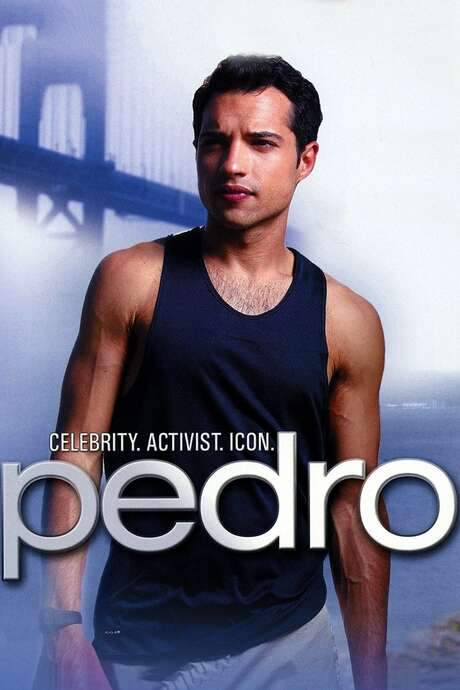



Pedro Plot Summary
Read the complete plot summary and ending explained for Pedro (2008). From turning points to emotional moments, uncover what really happened and why it matters.
The film opens with 22-year-old AIDS activist Alex Loynaz as Pedro Zamora in a New York City hotel room in 1994, getting ready for an appearance on CBS. His contact calls him to ask why he hasn’t arrived, but Zamora, disoriented, cannot recall who he is. Hotel security soon finds him unconscious on the floor, setting a somber, urgent tone that threads through the entire story.
In a searing flashback to Miami, 21-year-old Zamora arrives at a turning point in his life. After submitting an audition tape for MTV’s reality series The Real World: San Francisco, he is interviewed by producers. He makes a bold stand: he will not change his name to “Peter,” nor hide his HIV status. He declares that he would rather speak openly about the disease than shield himself from it, even if that honesty carries personal risk. He is cast, and as he moves into the house, he begins to meet his housemates and test the limits of what the show might reveal about love, prejudice, and the AIDS crisis.
As the housemates settle in, Judd Winick grapples with the knowledge that someone in the house has AIDS, a tension that saturates conversations and glances. Zamora’s decision to be open about his condition becomes a spark for both connection and conflict. Zamora introduces his status by sharing a scrapbook filled with educational pages and personal stories, making his life both a public statement and a private battle. Not everyone welcomes the truth with ease: housemate Rachel Campos is uncomfortable, and she finds herself cast in a villainous light as she processes her fears. Meanwhile, David “Puck” Rainey, a volatile presence in the house, fires off derogatory jokes about Zamora and homosexuality, testing the group’s patience and compassion.
Zamora forms meaningful bonds, spending time with Sean Sasser, DaJuan Johnson, and building friendships with Pam Ling Pam Ling and others. The dynamic among the housemates grows tense and intimate in equal measure as Zamora’s health declines, and the show captures the complexity of living with AIDS under intense public scrutiny. The pressure cooker of the Real World house reaches a turning point when Rainey’s behavior provokes a mass eviction, a moment that underscores the fragility of community in the face of fear and prejudice.
Despite the protests outside, Zamora continues his public speaking and advocacy, driven by a stubborn resolve to educate and inspire. The producers worry about his welfare, but Zamora insists on continuing filming, asking only for a promise that the cameras will stay rolling until the end. The narrative follows his enduring commitment to the public, even as his health deteriorates and time grows shorter.
A painful transition unfolds in 1994 when Zamora is unconscious and rushed to St. Vincent’s Hospital in New York. A family visit is planned, and Justina Machado appears as Mily Zamora, Zamora’s sister, who hopes for more time with her brother even as the hospital weighs difficult decisions. A staff person mentions removing an ankle bracelet, a symbolic tether Zamora refuses to surrender, underscoring the stubborn dignity with which he lives his final days.
In interviews, Mily Zamora speaks of her brother as a “miracle,” a word that frames Zamora’s life within a larger sense of purpose and struggle. A flashback reveals the harrowing story of Zamora’s childhood: a Santería rite, flowers placed on him, and an ankle chain tied to Earth, signaling the family’s deep-rooted beliefs and the forces that push them apart during the Mariel Boat Lift era. The family’s displacement, the loss of Zamora’s mother to cancer when he was just 13, and the sorrow surrounding his early life help illuminate his determination to become a physician and an AIDS educator.
Back in the hospital, Zamora’s sister and family confront the uncertainty of toxoplasmosis or PML as potential diagnoses. The medical tests intensify the emotional stakes, and Zamora’s friends and loved ones rally around him, seeking any path that might extend his life. Zamora’s relationship with Sean Sasser becomes an emblem of love under siege: the couple’s bond is deepened by shared hope and the fear of losing one another.
Young Zamora’s arc continues in flashbacks that reveal his early sexuality, his rejection of unsafe sex education, and his decision to dedicate his life to education after discovering his HIV status at 17. The film shows his evolution from denial—marked by shingles and a bleak sense of a doomed future—to a vocation as a compelling educator who travels to schools, speaks on radio, and uses every platform to demystify AIDS and advocate for compassion and understanding.
As Zamora’s story unfolds, Sean Sasser recounts how their bond began at a rally and evolved into a life together, a relationship that would culminate in a wedding ceremony depicted in the show’s footage. The narrative doesn’t shy away from the harsh realities of stigma, as Zamora’s agent and the realities of public life complicate his choices about visibility and treatment.
A turning point arrives when Zamora endures a brain biopsy, and Mily expresses renewed hope for his appearance on television. Zamora, however, makes a painful choice: he will not pursue further appearances and returns to a Miami hospital, where his loved ones are told that time is limited. Sasser urges every option, including a painful experimental treatment, while Zamora’s family grapples with the possibility that such an intervention could prolong suffering rather than preserve a life he is determined to honor.
The family’s struggle intensifies as they grapple with Sasser’s place in Zamora’s life. After a period of estrangement, they view a videotape of the couple’s Real World wedding ceremony, an emotional moment that prompts a reevaluation of loyalties and the power of love to bridge divides. President Bill Clinton calls Zamora to express gratitude for his work, and the family is finally allowed to come together across generations of Cuban heritage to reunite in Miami.
In his final days, Zamora’s reality becomes a quiet triumph of resilience over fear. The film ends with Zamora’s death on November 11, 1994, and the broadcast of actual footage from Pedro Zamora and Sean Sasser’s real-life commitment ceremony, accompanied by title cards that trace what happened to the others in Zamora’s circle. The closing scenes acknowledge the enduring impact of Zamora’s life and work, leaving viewers with a charged sense of the lasting legacy he forged in the face of hatred and misunderstanding.
Pedro Zamora’s story is presented with care and nuance, balancing intimate family history with public activism, and reminding audiences that even in the harshest circumstances, love, education, and courage can illuminate the path toward greater humanity.
Pedro Timeline
Follow the complete movie timeline of Pedro (2008) with every major event in chronological order. Great for understanding complex plots and story progression.
Opening in New York: Zamora's hotel crisis
The film opens in 1994 with Pedro Zamora in a New York City hotel room, preparing for a CBS appearance. He is disoriented and cannot recall who is calling. Hotel security finds him unconscious on the floor, signaling a sudden medical crisis.
Miami audition and Real World casting
A flashback shows Zamora in Miami at age 21, after emigrating from Cuba, filming an audition tape for MTV. He is interviewed by producers and is cast on The Real World: San Francisco, insisting he will not change his name or hide his HIV status.
San Francisco: moving into the Real World house
Zamora moves into the Real World house in San Francisco and begins to form relationships with his new housemates, setting the stage for the season’s drama and advocacy.
Zamora reveals HIV status to the house
He tells the others about his HIV status by showing a scrapbook about AIDS education, prompting mixed reactions among the housemates as they adjust to his truth.
Rainey’s behavior leads to eviction
Housemate Judd Rainey’s derogatory jokes threaten group harmony, and Zamora threatens to move out. The cast ultimately evicts Rainey to preserve the household’s dynamics.
Activism continues despite illness
Zamora continues to speak publicly about AIDS, facing protesters while his health declines. Even as pressure mounts, Zamora insists the filming continues through the end of the series.
Hospitalization in New York
In 1994, Zamora is taken to St. Vincent’s Hospital in New York while unconscious, and his sister Mily arrives to be by his side. He refuses to remove the ankle bracelet that binds him to his life and identity.
Santería memory and the Mariel Boat Lift
A flashback recounts Zamora as a child in Cuba, where a Santería priest ties a flower and a chain to his ankle. The story also recalls the family’s split during the Mariel Boat Lift that brought them to the United States.
Family life in Miami and his mother’s death
The Zamora family settles in Miami, and Zamora’s mother dies of cancer when he is 13. The loss motivates him to pursue medicine and to become an AIDS educator.
HIV diagnosis during adolescence
As a teenager, Zamora discovers he is HIV-positive after volunteering at a high school blood drive. He experiences denial and illness (including shingles), which ultimately fuels his commitment to education and activism.
Meeting Sean Sasser in D.C.
Zamora meets his future partner, Sean Sasser, at a gay and lesbian march in Washington, D.C. The two begin a relationship that develops as Zamora later moves to San Francisco.
Love in San Francisco and the wedding vows
Zamora and Sasser grow closer, move to San Francisco, and exchange wedding vows in the Real World house, a landmark moment for LGBTQ visibility on television.
Brain biopsy and TV plans
In 1994 Zamora undergoes a brain biopsy as doctors treat his illness. His sister remains hopeful about more TV appearances, but Zamora decides not to pursue further public appearances, even as a production proposal continues. President Bill Clinton later calls to thank him and helps reunite his Cuban- based family.
Zamora’s death and posthumous tribute
Pedro Zamora dies on November 11, 1994, leaving a lasting impact on AIDS activism and LGBTQ representation. The film closes with footage of his Real World wedding and updates on what happened to the other participants in his story.
Pedro Characters
Explore all characters from Pedro (2008). Get detailed profiles with their roles, arcs, and key relationships explained.
Pedro Zamora
AIDS activist and educator who chooses to live openly with HIV, driving the narrative with courage, optimism, and a commitment to public education. He faces hostility and stigma but remains determined to speak truth to power and to his peers.
Sean Sasser
Pedro’s partner who tests positive for HIV. Their relationship anchors the story with love, mutual support, and resilience in the face of discrimination.
Judd Winick
Housemate who is nervous about living with someone with AIDS; he forms friendships and supports Pedro while confronting his own biases.
David Rainey (Puck)
The housemate known as Puck, whose jokes and behavior generate tension and conflict; his eviction marks a turning point in group dynamics.
Mily Zamora
Pedro’s sister, who embodies family love and concern; she searches for truth about her brother while supporting his mission and coping with family dynamics.
Pam Ling
Friend and housemate who provides companionship and differing cultural perspectives; her perspective highlights community and support networks.
Judd (Hale Appleman)
Hale Appleman’s portrayal of Judd in the San Francisco house; a presence in the cast who engages with Pedro and his message.
Pedro Settings
Learn where and when Pedro (2008) takes place. Explore the film’s settings, era, and how they shape the narrative.
Time period
1994 (with flashbacks to the late 1980s and early 1990s)
The narrative moves between Zamora's teenage years and the 1994 events, anchoring itself in the late 1980s through 1994. It traces his HIV diagnosis, his decision to educate publicly, and his eventual decline in 1994. The Real World era and the AIDS crisis provide context for the public debates, protests, and television exposure during this period.
Location
New York City, Miami, San Francisco
New York City provides the 1994 setting for Zamora's hotel-room crisis and CBS appearance, highlighting the urban backdrop of AIDS activism. Miami frames Zamora's Cuban immigrant roots and family life, including the Mariel-era diaspora and his upbringing in a vibrant Cuban-American community. San Francisco hosts The Real World house where Zamora builds relationships and confronts stigma amid rising illness and media spotlight.
Pedro Themes
Discover the main themes in Pedro (2008). Analyze the deeper meanings, emotional layers, and social commentary behind the film.
🧬
Identity & Disclosure
Pedro insists on living openly with HIV and keeping his name, turning personal truth into a catalyst for social change. The film examines the costs and rewards of choosing authenticity in a world wary of difference. It also shows how disclosure strains friendships while offering opportunities for empathy.
🎗️
Activism
Pedro’s lectures, public appearances, and advocacy work place HIV/AIDS education at the center of the story. The film shows how information, courage, and public testimony confront fear, bias, and misinformation. It also highlights the toll activism can take on personal health and relationships.
❤️
Love & Family
Sean Sasser becomes Pedro’s partner, and their relationship stands as a testament to commitment and resilience. The family’s evolving acceptance mirrors broader shifts in attitudes toward LGBTQ+ people. The wedding and care during illness underscore love’s power in tough times.
📺
Media & Reality TV
The Real World: San Francisco frames Pedro’s life in a televised format, amplifying his message while exposing him to public scrutiny. The film critiques sensationalism and showcases how reality TV can shape public perception of AIDS, sexuality, and marginalized voices. It also questions the boundary between documentary truth and entertainment.

Coming soon on iOS and Android
The Plot Explained Mobile App
From blockbusters to hidden gems — dive into movie stories anytime, anywhere. Save your favorites, discover plots faster, and never miss a twist again.
Sign up to be the first to know when we launch. Your email stays private — always.
Explore the mobile appPedro Spoiler-Free Summary
Discover the spoiler-free summary of Pedro (2008). Get a concise overview without any spoilers.
In the early‑1990s, a new kind of television was reshaping how America saw itself, and at its heart stands Pedro Zamora, a young Cuban‑American activist who refuses to let a life‑threatening diagnosis silence him. The film embraces a docu‑drama texture, blending archival footage with intimate reenactments to convey the urgency of a man determined to turn personal hardship into public education. From bustling Miami streets to the brightly lit corridors of MTV’s production offices, the story paints a portrait of a generation grappling with the AIDS crisis while a nascent reality‑TV format thrusts private lives into the national spotlight.
Within the cramped, ever‑watching walls of the Real World house, Pedro becomes a catalyst for conversation, insisting on honesty about his health in a space where secrets normally thrive. The atmosphere crackles with a mixture of youthful curiosity, cultural clash, and the uneasy pressure of being both a housemate and an inadvertent spokesperson for a misunderstood disease. The tone balances the raw immediacy of reality television with quieter moments of reflection, hinting at the deeper currents of prejudice, compassion, and the desire for authentic connection that ripple through the shared living space.
Beyond the cameras, the film gently unveils Pedro’s roots—a family displaced by the Mariel Boat Lift, a mother lost to cancer, and a sister, Mily, whose quiet strength anchors his resolve. These personal threads intertwine with his larger mission, suggesting that his public advocacy is as much a tribute to his heritage as it is a plea for empathy. A budding bond with Sean Sasser offers a glimpse of love’s capacity to flourish amid uncertainty, underscoring the film’s focus on human intimacy rather than spectacle.
The overall mood is both hopeful and reverent, inviting viewers to witness a courageous individual navigating fame, family, and fear with unflinching honesty. By foregrounding Pedro’s steadfast commitment to education and dignity, the biopic promises an immersive, emotionally resonant journey that highlights how one voice can echo far beyond the confines of a television set.
Movies with Similar Twists and Themes
Uncover films that echo the narrative beats, emotional arcs, or dramatic twists of the one you're exploring. These recommendations are handpicked based on story depth, thematic resonance, and spoiler-worthy moments — perfect for fans who crave more of the same intrigue.

Featured on this page

What's After the Movie?
Not sure whether to stay after the credits? Find out!
Check out our other apps:

SAT Sphere
Build confidence for the Digital SAT.

Mori Atlas
Discover wild places worth protecting.

Luntero
Search smarter for a home in Amsterdam.

Plot Explained
Unravel movie endings and hidden clues.

Pokechamp
Dive into Pokémon data and battle logic.

Driving Theory
Get ready for your European theory test.

Movie Dust
Plan your next cinema trip with ease.

Musemap
Find art and culture as you travel.

Selkobase
Compare credentials before committing.

Local Manual
Turn an unfamiliar country into practical next steps.

Lernavi
Compare school systems before your next move.

GymRoam
Find a workout stop wherever your plans take you.
Explore Our Movie Platform
New Movie Releases (2026)
Famous Movie Actors
Top Film Production Studios
Movie Plot Summaries & Endings
Major Movie Awards & Winners
Best Concert Films & Music Documentaries
Movie Collections and Curated Lists
© 2026 What's After the Movie. All rights reserved.
Privacy Policy