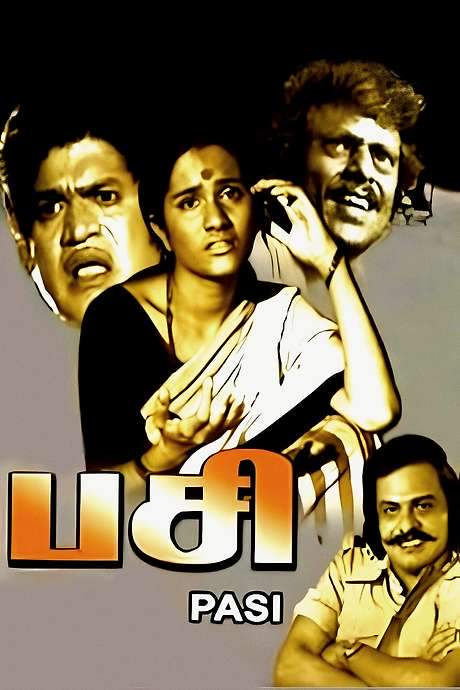



Pasi Plot Summary
Read the complete plot summary and ending explained for Pasi (1979). From turning points to emotional moments, uncover what really happened and why it matters.
Muniyandi, a cycle-rickshaw puller, is a road-side dweller who lives with his wife Valliamma, Tambaram Lalitha, and their seven children — two daughters and five sons. Despite being the family’s sole breadwinner, he spends the majority of his meager earnings on liquor, leaving Valliamma to struggle to stretch every rupee. Her friend Rakkamma, S. N. Parvathi, a street food vendor, helps when money is tight and lends crucial support to Valliamma’s family, acting as a quietly steady presence in a harsh, crowded world.
The household faces more strain when Krishna, one of Muniyandi’s educated sons, elopes with a girl and parts ways with the family. Meanwhile, Kuppamma, Kuppamma, Shoba along with her friend Chellamma, Chellamma, Pasi Sathya, contribute a small income by scavenging for rags on the roads. In time, Kuppamma’s path intersects with Rangan, a lorry driver who befriends her and offers help whenever she needs it, and their friendship deepens into a relationship. Rangan’s involvement forces Valliamma to confront the possibility of disgrace for the family, and the situation drives her to take a drastic step — she commits suicide to spare the others from social judgment and stigma.
As the relationship between Kuppamma and Rangan evolves, she discovers that he is already married. Choosing not to reveal his identity, she keeps her distance while carrying his child. Despite the better judgment of fellow roadside dwellers who urge abortion, Kuppamma refuses to terminate the pregnancy. She also shields Rangan by telling relatives that her lover died in an accident, preserving his name only in the most oblique manner. With the delivery approaching, Kuppamma longs to meet Rangan, only to learn that he has moved to another locality after she refused his continued support.
Rangan’s wife learns of the affair, yet she responds with empathy and urges her husband to bring Kuppamma to their home, seeking some form of resolution. When Rangan finally locates the slum, he finds Kuppamma in the throes of labour. She dies soon after giving birth to their child, and in a final act of penance and compassion, Rangan and his wife decide to adopt the newborn, trying to atone for the wrongs that unfolded in a life marked by poverty, secrecy, and complicated loyalties.
Pasi Timeline
Follow the complete movie timeline of Pasi (1979) with every major event in chronological order. Great for understanding complex plots and story progression.
Muniyandi's struggle and drink
Muniyandi is the sole breadwinner but spends most of his earnings on liquor, leaving Valliamma and their seven children to cope with hunger. Despite his drinking, Valliamma and the family scrape by with a mix of grit and small help from others. Rakkamma, a street food vendor, eventually lends support to Valliamma's family.
Krishna leaves the family
Krishna, the educated eldest son, elopes with a girl and abandons the family. His departure deepens the precarious finances and emotional strain on Muniyandi and Valliamma. The home loses a crucial source of support as the family tries to hold together.
Kuppamma and Chellamma start earning
Kuppamma, Muniyandi's daughter, and her friend Chellamma begin collecting rags on the roads to contribute to the household income. Their effort provides a small but vital lifeline for the family. The sisters supplement Muniyandi's meager earnings with this street-side work.
Rangan befriends Kuppamma
Rangan, a lorry driver, befriends Kuppamma and offers help whenever she is in need. Their growing friendship gives the family some relief and develops into a dependent connection. The bond begins in the slum where both live and work.
Friendship turns intimate
The bond between Kuppamma and Rangan deepens beyond friendship and becomes a physical relationship. The secret weighs on both of them as they navigate their limited circumstances. They keep the affair hidden from others to avoid scandal.
Valliamma's suicide
When Valliamma learns about the relationship, she is overwhelmed by shame and despair and commits suicide. Her death shatters Muniyandi and the family, underscoring the stigma attached to their situation. The tragedy compounds the family’s economic hardship.
Kuppamma discovers Rangan's marriage
Kuppamma is shocked to learn that Rangan is already married. She resolves to protect his identity and avoids disclosing their relationship. This moment forces her to hide the truth while continuing with her pregnancy.
Pregnancy and decision against abortion
Kuppamma becomes pregnant and refuses to abort the child despite the advice of the roadside dwellers. She decides to carry the baby to term, accepting the consequences in a harsh environment. The pregnancy deepens the hidden bond with Rangan.
Kuppamma hides Rangan's identity
To shield Rangan, Kuppamma tells relatives that her lover died in an accident rather than reveal his true identity. She keeps the truth from extended family and tries to protect Rangan’s reputation. This secrecy sustains her pregnancy in a hostile setting.
Desire to meet and relocation
As delivery nears, Kuppamma longs to meet Rangan, but he has relocated to another locality. The distance complicates their plans to acknowledge the child. The secrecy continues as the family awaits the outcome.
Rangan's wife accepts and invites Kuppamma
Rangan’s wife learns of the relationship and offers compassionate understanding, insisting that Rangan bring Kuppamma to their home. The act marks a turning point in how the two households respond to the situation. The wife’s stance introduces a potential family acceptance of the unborn child.
Delivery and Kuppamma's death
Rangan finally returns to the slum and finds Kuppamma in labor. She dies soon after delivering their child, marking a tragic end to the affair. The child survives, left in the care of Rangan and his wife.
Adoption of the child
Rangan and his wife decide to adopt the child as penance for Rangan's sins. The act completes the story’s arc, turning a tragedy into a family reconciliation. The child becomes a living reminder of the consequences of forbidden relationships.
Pasi Characters
Explore all characters from Pasi (1979). Get detailed profiles with their roles, arcs, and key relationships explained.
Muniyandi
Muniyandi is a cycle-rickshaw puller and the family's sole breadwinner. He spends a large portion of his earnings on liquor, which strains the household's finances. His addiction and stubbornness contribute to the ongoing poverty and tension within the family.
Valliamma (Tambaram Lalitha)
Valliamma is Muniyandi's wife, who bears the brunt of daily survival for seven children. She leans on her friend Rakkamma for financial support and tries to hold the family together. Her life ends in tragedy when she commits suicide after learning of the relationship between Kuppamma and Rangan.
Rakkamma (S. N. Parvathi)
Rakkamma is a street food vendor and Valliamma's friend who lends financial and moral support to the family. She embodies the improvised solidarity found among roadside communities.
Krishna
Krishna is the educated son who elopes with a girl, leaving the family in disarray. His actions contribute to the family’s rift and the social pressures they face.
Kuppamma (Shoba)
Kuppamma helps the family by earning with Chellamma, picking up rags. She becomes involved with Rangan, which leads to pregnancy and social complications.
Chellamma (Pasi Sathya)
Chellamma is Kuppamma's friend who participates in informal income-generating work alongside her. She represents the resilient, working-class solidarity among the women in the slum.
Rangan (Vijayan)
Rangan is a lorry driver who becomes involved with Kuppamma. His relationship with her and the subsequent revelation of his wife’s acceptance of the child frame a complicated dynamic of love, duty, and accountability. He and his wife ultimately adopt the child.
Kumudha (Praveena Bhagyaraj)
Kumudha is a family member whose presence adds to the household's dynamics. The summary does not detail her actions, but she forms part of the central cast and contributes to the narrative's unfolding.
Rangan's Wife
Rangan's wife shows empathy toward Kuppamma and agrees to adopt the child with Rangan as a form of penance for the affair.
Pasi Themes
Discover the main themes in Pasi (1979). Analyze the deeper meanings, emotional layers, and social commentary behind the film.
💸
Poverty
Muniyandi is a cycle-rickshaw puller who supports a large family on meager earnings, often spending a major share on liquor. The family survives in roadside settlements where basic needs are precarious and informal networks carry the burden of daily life. Alcohol becomes a damaging coping mechanism that deepens poverty and social strain.
💔
Forbidden Love
Rangan, the lorry driver, forms a close relationship with Kuppamma that leads to pregnancy. The relationship is shrouded in secrecy and social stigma, with Kuppamma concealing the truth to protect herself and others. Valliamma's reaction to the affair triggers tragedy and questions of family honor. Ultimately, Rangan and his wife decide to adopt the child as a form of penance.
👪
Family & Sacrifice
The narrative centers on a large roadside family whose members contribute in small ways yet face enormous hardship. Valliamma's sacrifice and eventual death highlight the costs of poverty and scandal on loved ones. The community's solidarity—Rakkamma's support, Chellamma and Kuppamma's labor, and the complex choices of Rangan—drives the emotional arc. Adoption and reconciliation offer a fragile path toward healing.

Coming soon on iOS and Android
The Plot Explained Mobile App
From blockbusters to hidden gems — dive into movie stories anytime, anywhere. Save your favorites, discover plots faster, and never miss a twist again.
Sign up to be the first to know when we launch. Your email stays private — always.
Explore the mobile appPasi Spoiler-Free Summary
Discover the spoiler-free summary of Pasi (1979). Get a concise overview without any spoilers.
In the cramped, bustling outskirts of a South Indian town, Muniyan makes his living pulling a cycle‑rickshaw. He is the sole provider for a sprawling family: his wife Valliamma, seven children, and the constant hum of traffic and market chatter that surrounds their modest shelter. The film opens on a world where every rupee is stretched to its limit, and the line between survival and surrender is razor‑thin, giving the story an unflinching, earthy realism.
Valliamma bears the weight of the household’s daily grind, her resolve tested by Muniyan’s habit of spending what little they earn on liquor. A quiet pillar of the community, her friend Rakkamma runs a street‑food stall and offers both practical help and emotional steadiness, illustrating the small acts of solidarity that keep the neighbourhood afloat. Their interactions reveal a tapestry of neighborly reliance that feels both intimate and universal.
Further down the lane, Kuppamma and her companion Chellamma survive by scavenging discarded rags, their modest earnings a stark contrast to the aspirations of the family’s more educated members. The arrival of Rangan, a lorry driver who befriends Kuppamma, adds another layer to the social fabric, hinting at connections that bridge the gaps between the various shades of poverty. As the children begin to chart their own courses—some seeking education, others longing for independence—the household’s fragile equilibrium is quietly tested.
Through muted colours, lingering street‑level soundscapes, and a compassionate gaze, the film paints a portrait of hardship laced with humanity. It invites the audience to contemplate dignity amid destitution, the silent negotiations of love and duty, and the fragile hope that can blossom even in the most unforgiving corners of urban life.
Featured on this page

What's After the Movie?
Not sure whether to stay after the credits? Find out!
Check out our other apps:

SAT Sphere
Build confidence for the Digital SAT.

Mori Atlas
Discover wild places worth protecting.

Luntero
Search smarter for a home in Amsterdam.

Plot Explained
Unravel movie endings and hidden clues.

Pokechamp
Dive into Pokémon data and battle logic.

Driving Theory
Get ready for your European theory test.

Movie Dust
Plan your next cinema trip with ease.

Musemap
Find art and culture as you travel.

Selkobase
Compare credentials before committing.

Local Manual
Turn an unfamiliar country into practical next steps.

Lernavi
Compare school systems before your next move.

GymRoam
Find a workout stop wherever your plans take you.
Explore Our Movie Platform
New Movie Releases (2026)
Famous Movie Actors
Top Film Production Studios
Movie Plot Summaries & Endings
Major Movie Awards & Winners
Best Concert Films & Music Documentaries
Movie Collections and Curated Lists
© 2026 What's After the Movie. All rights reserved.
Privacy Policy