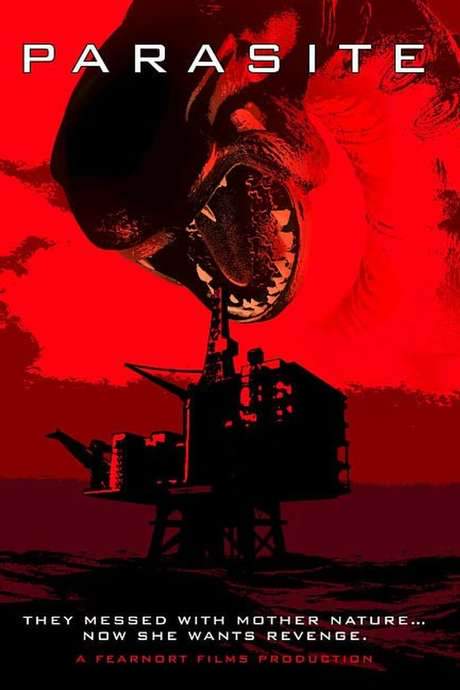



Where to Watch Parasite
See current US streaming, rental, and purchase options for Parasite (2004) via JustWatch.



Streaming availability powered by 
Parasite Plot Summary
Read the complete plot summary and ending explained for Parasite (2004). From turning points to emotional moments, uncover what really happened and why it matters.
Ki-woo Kim grows up in a cramped, poverty-stricken home with his father Ki-taek Kim, mother Chung-sook Kim, and sister Ki-jung. The family scrapes by doing small, low-paid tasks, constantly navigating the awkward realities of living in a tight space with minimal comforts. They watch the world from the edges of wealth, occasionally sharing a small joke about luck and opportunity, while chasing ways to improve their lot.
A glimmer of possibility arrives when Ki-woo’s affluent friend Min-hyuk visits, bringing a peculiar gift: a rock meant to bless its owner with wealth and prosperity. Min-hyuk explains that he has been tutoring the teenage daughter of a wealthy family, but his departure to study abroad means he will miss what could be a lifelong chance to be with her. He asks Ki-woo to take over the tutoring, promising to back him up with a recommendation. Although Ki-woo knows he isn’t officially qualified, Min-hyuk’s assurance gives him a shot, and Ki-jung helps forge the necessary documents so Ki-woo can interview for the job.
At the Park residence, Ki-woo encounters the very rich Park family—Mr. Park, his scatterbrained wife, and their children, Da-hye and Da-song. Ki-woo decides that winning over Da-hye will be essential, and his charm proves effective. The Park household soon notes a need for an art tutor for Da-song, who has a traumatic past involving a frightening “ghost” in the house that has contributed to seizures. Ki-woo’s sister Ki-jung also steps into the family’s life, adopting the alias “Jessica” and fabricating credentials to secure her own position. She instigates a plan to remove the Park family’s driver and, in a calculated move, frames Moon-kwang, the longtime housekeeper, by exploiting her allergy to peaches. This clever set of ruses culminates in the Kim family taking over the housekeeping roles, with Ki-taek posing as the new driver after Ki-jung secretly manipulates a moment that makes the old driver disappear from the scene.
The Kim clan’s fortunes rise dramatically as they integrate into the Park home. They celebrate their growing prosperity during a weekend when the Parks briefly leave town, providing the Kims with the chance to inhabit the massive house themselves. What follows is a tense, almost circus-like sequence of deception, as the Kims juggle their new roles and maintain their cover. The tension escalates when Moon-kwang, the fired housekeeper, returns in secret and unveils a hidden basement passage. There, she reunites with her husband Geun-sae, who has secretly been living in a bunker beneath the house to evade loan sharks. Moon-kwang’s discovery of the hidden space forces the Kim family to improvise, hiding the two guests in the bunker as the Park family unexpectedly returns.
The night unfolds with anxious energy: the Kims manage to keep up appearances at dinner while the two hidden guests are kept out of sight. The couple chosen to guard the secret battles a sense of fear as Moon-kwang’s presence lingers, and the drama spirals into a dangerous confrontation. In a sudden, brutal turn, Moon-kwang’s escape into the home’s upper floors leads to chaos, and a cascade of violence erupts. What began as a careful ruse becomes a catastrophe when a fight breaks out, and the basement secrets threaten to surface in the most deadly way. The result is a shocking sequence of events: a fatal blow is struck, a stabbing occurs, and the Park family is shaken to its core.
Ki-woo awakens weeks later in a hospital, having endured a coma from the traumatic night. He learns that Ki-jung has died, and that he and his mother face probation as punishment for their elaborate deception. The search for Ki-taek intensifies, but the father remains missing, elusive within the bunker’s shadowy confines—an echo of the earlier secrets now turning into a personal vendetta. Ki-woo slowly processes the costs of their actions, while the Park home sits elsewhere, its lights flickering in Morse-code signals that seem to hint at a living presence beneath the surface.
In the quiet hours of reflection, Ki-woo understands that his family’s ruse has permanently altered their lives. He resolves to keep the memory of their father alive, writing a hopeful letter that expresses a dream: to become wealthy enough one day to buy the Park house and reunite the entire family. He leaves the deciding symbol—the rock—at a river, a quiet gesture to mark both the end of one chapter and the possible beginning of another. The story closes on Ki-woo’s quiet determination to rewrite their fate, haunted by the past but driven by a vision of a future where the family can come together again, regardless of the odds.
Parasite Timeline
Follow the complete movie timeline of Parasite (2004) with every major event in chronological order. Great for understanding complex plots and story progression.
Min-hyuk's gift and tutoring offer
Ki-woo and his family live in the slums, barely scraping by. Min-hyuk visits and gives Ki-woo a rock said to bring wealth, explaining that Ki-woo could tutor Da-hye to improve his chances of studying abroad. He promises to vouch for Ki-woo if needed, hoping this will lift his family out of poverty.
Ki-woo lands the Park tutoring job
Ki-woo interviews with the Park family and realizes he must win Da-hye's trust by playing her charm. Mrs. Park pays him generously and mentions they also need an art tutor for Da-song. Ki-woo agrees and Ki-jung starts forging credentials to present at the interview.
Ki-jung forges credentials and enters the Park home
Ki-jung creates forged documents and adopts the alias Jessica to secure a position as the family’s art tutor. She manipulates situations to advance her family's entry, while Ki-woo prepares to fill other roles. The plan brings the Kim siblings closer to the Park household.
Ki-taek becomes the Park driver
To fill the remaining household role, Ki-jung engineers firing the Park's driver by planting a ruse involving underwear; she then suggests her 'Uncle' as the new driver—Ki-taek. Ki-taek starts driving for the Park family and quietly integrates with them. The Kim family expands its control over daily life.
Moon-kwang replaced as housekeeper
The Kims exploit Moon-kwang's peach allergy to trigger allergic reactions and cast doubt on her ability to care for Da-song. Mrs. Park hires Mrs. Kim as the new housekeeper, enabling the Kim family to fill all key Park roles. The Park home is now fully staffed by the Kim clan.
Park family leaves for Da-song's birthday camping trip
The Park family leaves to go camping for Da-song's birthday weekend, leaving the Park house under the Kim family's care. The Kims revel in their new income, moving through the house while maintaining appearances. They anticipate the weekend and their growing influence.
Moon-kwang discovers the bunker
Moon-kwang returns and, claiming she was fired, enters the house and discovers a hidden basement passage. She films the Kim family's reactions, realizing the con they pulled. The Kim siblings realize their secret is at risk of being exposed.
The bunker trapping moment as the Parks near home
As rain cancels the camping trip, the Park family plans to return in eight minutes. The Kims manage to herd Moon-kwang and Geun-sae into the hidden bunker to preserve their ruse. They scramble to clean up before the Park family's arrival.
Moon-kwang's breakout and the chaos in the house
Moon-kwang breaks out and runs upstairs, but Mrs. Kim shoves her back down, injuring her head. Moon-kwang and Geun-sae are locked in the bunker. The Park family sleeps in the living room, while the Kims hide under the table, waiting for daylight.
The party erupts into violence
The Park family hosts an impromptu party for Da-song. Ki-woo retrieves the rock and descends to the bunker, only to be ambushed by Geun-sae, who bludgeons him. Geun-sae then bursts into the party and stabs Ki-jung as Da-song has a seizure, turning the night into a nightmare.
Mr. Park's death and the escape
During the chaos, Mr. Kim kills Mr. Park, insisting on getting the keys to take Da-song to the hospital. Mrs. Park faints, Ki-woo and Ki-jung's fates become precarious, and the Kim family flees the scene as police arrive.
Aftermath and the bunker becomes a haunting presence
Ki-woo wakes up weeks later in the hospital and learns Ki-jung has died; Ki-taek remains missing. Ki-woo and his mother receive probation. He notices Park house lights flickering in morse code, realizing his father is alive inside the bunker and still controlling events from below.
Ki-woo's vow to reunite the family
Ki-woo writes a letter to his father from the hospital, expressing resolve to become rich enough to buy the Park house someday. He leaves the rock behind in a river, marking a symbolic farewell to the past and a step toward reuniting his family.
Parasite Characters
Explore all characters from Parasite (2004). Get detailed profiles with their roles, arcs, and key relationships explained.
Ki-woo Kim (Choi Woo-Shik)
A quick-witted but morally flexible young man who seizes the Park opportunity to lift his family out of poverty. He engineers a series of deceptions, including forged documents, to secure tutoring roles for his relatives and expand their access to wealth. His ambition drives the initial infiltration and sets the story in motion.
Ki-taek Kim (Song Kang-ho)
The pragmatic patriarch who adapts to each scheme with calm, calculating restraint. He leads the family’s infiltration of the Park home and clings to the hope that their labor will secure a better future. His loyalty to the family complicates his moral compass in dangerous ways.
Chung-sook Kim (Jang Hye-jin)
A pragmatic mother who orchestrates the deception with cool efficiency. She keeps the plan coordinated and shows a willingness to bend rules for the sake of family survival. Her practicality masks a readiness to face risk when things go wrong.
Ki-jung Kim (Park So-dam)
The sister who forges credentials and adopts the alias 'Jessica' to secure access for the family. She is sharp, resourceful, and unafraid to manipulate circumstances to open opportunities. Her actions reveal how information and appearances shape social mobility.
Mr. Park (Lee Sun-kyun)
The wealthy, scatterbrained patriarch whose obliviousness to his staff’s true status sets the stage for the Kims’ scheme. His privileged worldview highlights the gulf between affluence and the realities of poverty. His reactions become catalysts for the film’s unraveling.
Mrs. Park (Choi Yeo-jeong)
The polite yet blunt matriarch who misreads the Kim family’s status while maintaining outward goodwill. Her trust in the Park household’s routines is shaken by the creeping infiltration, catalyzing the ensuing chaos.
Da-song Park
The Park family’s young son, sensitive and troubled by trauma, seizures, and a need for specialized attention. His condition becomes a focal point around which the family’s plans interlock and unravel.
Da-hye Park
The Park family’s teenage daughter who becomes Ki-woo’s tutoring target. Her youth and vulnerability intersect with the Kim family’s plans, underscoring the risks of manipulation in a world of social climbing.
Moon-kwang
The long-time housekeeper whose presence becomes a threat when she reveals a hidden basement and later tests the Kim family’s control. Her insistence on keeping secrets adds a volatile edge to the household’s dynamics.
Geun-sae
Moon-kwang’s husband who has been living in the bunker. When discovered, he erupts in violence, triggering the film’s deadly escalation and the collapse of the Kim family’s scheme.
Parasite Settings
Learn where and when Parasite (2004) takes place. Explore the film’s settings, era, and how they shape the narrative.
Time period
Late 2010s
The events unfold in contemporary South Korea, during a period of rapid urban growth and visible income inequality. Everyday technology and modern conveniences anchor the world to the present, from WiFi to smartphones. The mood reflects a society where ambition often collides with structural barriers.
Location
Seoul slums (semi-basement), Park Family Mansion
The Kim family lives in a cramped semi-basement in Seoul, a stark contrast to the Park family's expansive mansion. The setting juxtaposes cramped, damp living with gleaming luxury, underscoring the city’s wealth divide. Hidden architectural features—a bunker beneath the Park home—visualize how social secrecy sustains the disparity.
Parasite Themes
Discover the main themes in Parasite (2004). Analyze the deeper meanings, emotional layers, and social commentary behind the film.
💎
Class Divide
Parasite pivots on the widening chasm between the Kim family's precarious poverty and the Park family's glitzy abundance. The Kim children use cunning and deceit to snatch a slice of the Park world, exposing how luck and leverage determine what is possible. The film tracks how desire to escape poverty drives morally fraught choices, with devastating consequences.
🗝️
Hidden Spaces
Architecture becomes a metaphor for social invisibility. The secret bunker under the Park house literalizes how the wealthy guard and inhabit their private domains, while the poor infiltrate those spaces to survive. The bunker gouges open the relationship between space, power, and danger.
👪
Family Bonds
The Kim family’s unity fuels their schemes and sustains them through escalating peril. Yet loyalty collides with self-preservation, revealing the moral ambiguity of their actions. Tragedy ultimately tests the limits and costs of family solidarity in a world of class struggle.

Coming soon on iOS and Android
The Plot Explained Mobile App
From blockbusters to hidden gems — dive into movie stories anytime, anywhere. Save your favorites, discover plots faster, and never miss a twist again.
Sign up to be the first to know when we launch. Your email stays private — always.
Explore the mobile appParasite Spoiler-Free Summary
Discover the spoiler-free summary of Parasite (2004). Get a concise overview without any spoilers.
In contemporary Seoul, a cramped semi‑basement shelters a family that knows how to make ends meet with ingenuity and a touch of desperation. Ki-woo watches the world from a narrow window, dreaming of a future far removed from the constant hum of traffic and the occasional flicker of Wi‑Fi. Beside him, Ki‑taek shoulders the weight of providing, Chung‑sook keeps the household running despite the leaks and the ever‑present smell of the city, and their resourceful daughter Ki‑jung turns everyday odds into opportunities. Their lives are a study in quiet resilience, punctuated by the occasional absurdity of folding pizza boxes and evading the unwelcome eyes of strangers in cramped alleys.
Across town, the Park family enjoys the spacious luxury of a modern, light‑filled mansion, a world defined by polished surfaces, curated art, and a careful choreography of daily routines. Mr. Park steers a successful tech venture, while Mrs. Park curates the home’s aesthetic and nurtures the children’s futures. Their teenage daughter Da‑hye navigates adolescence with a mixture of privilege and pressure, and little Da‑song captures the innocent curiosity of a child in a world that already seems too big for him. The Park household moves with an effortless grace that seems almost choreographed, its polished veneer hinting at the subtle expectations that bind its members.
A chance encounter of ambition and necessity sets the two families on a collision course. When Ki‑woo secures an opportunity to tutor Da‑hye, the thin line between aspiration and deception begins to blur. The arrangement opens doors for the rest of the Kims, each stepping into a role that feels both foreign and alluring. As they navigate the upstairs world of the Parks, the contrast between the two spheres grows more pronounced, turning ordinary interactions into a quiet contest of wits and survival.
The film unfolds with a tone that twines dark comedy, social satire, and a lingering tension that never quite resolves. Its visual language juxtaposes cramped, dimly lit interiors with bright, open spaces, underscoring the stark divide between the families. Through witty dialogue and understated performances, the story explores what it means to strive for a better life when the walls—both literal and metaphorical—seem designed to keep you where you are.
Movies with Similar Twists and Themes
Uncover films that echo the narrative beats, emotional arcs, or dramatic twists of the one you're exploring. These recommendations are handpicked based on story depth, thematic resonance, and spoiler-worthy moments — perfect for fans who crave more of the same intrigue.







Featured on this page

What's After the Movie?
Not sure whether to stay after the credits? Find out!
Check out our other apps:

SAT Sphere
Build confidence for the Digital SAT.

Mori Atlas
Discover wild places worth protecting.

Luntero
Search smarter for a home in Amsterdam.

Plot Explained
Unravel movie endings and hidden clues.

Pokechamp
Dive into Pokémon data and battle logic.

Driving Theory
Get ready for your European theory test.

Movie Dust
Plan your next cinema trip with ease.

Musemap
Find art and culture as you travel.

Selkobase
Compare credentials before committing.

Local Manual
Turn an unfamiliar country into practical next steps.

Lernavi
Compare school systems before your next move.

GymRoam
Find a workout stop wherever your plans take you.
Explore Our Movie Platform
New Movie Releases (2026)
Famous Movie Actors
Top Film Production Studios
Movie Plot Summaries & Endings
Major Movie Awards & Winners
Best Concert Films & Music Documentaries
Movie Collections and Curated Lists
© 2026 What's After the Movie. All rights reserved.
Privacy Policy