
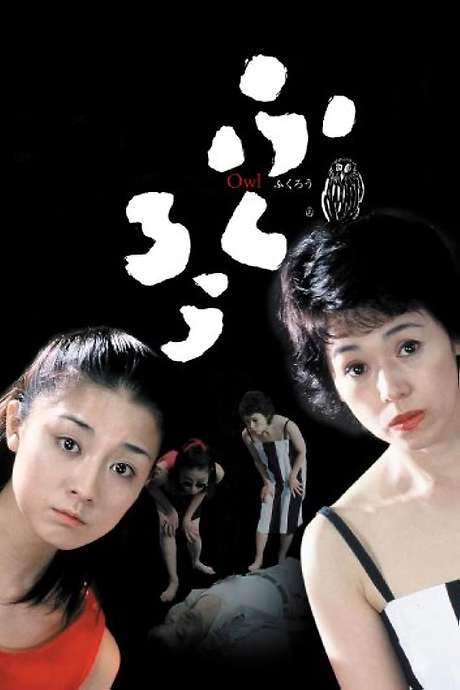
Owl 2003

Directed by

Kaneto Shindô
Made by

Kindai Eiga Kyokai
Owl Plot Summary
Read the complete plot summary and ending explained for Owl (2003). From turning points to emotional moments, uncover what really happened and why it matters.
Around 1980, in a fading farming village named Kibogaoka, the last survivors are two women: a 37-year-old mother and her 17-year-old daughter. Faced with intensifying hunger, the daughter contemplates eating a lizard, but the mother proposes a harsher, more practical way to survive. They make a call to a dam construction site and offer themselves as prostitutes. A worker comes to visit and spends the night with the mother. Afterward, they offer him Shōchū, but the liquid is actually crafted from a poisonous plant. He dies, foaming at the mouth and making animal noises, and the two women haul his body away while celebrating the money they’ve earned.
With the money, they restore basic comforts: food, electricity, and water. They continue to lure and kill men—first the electrician and the plumber, then the boss of the electrician—using the same method to gain more money and access.
The local police inspector arrives to investigate the disappearances of the men. At the same time, Mizuguchi, an employee of the repatriation department (with his father responsible for the village’s creation), appears. The inspector leaves, pretending to have checked the house’s stability. For the first time, the daughter sleeps with Mizuguchi. He offers 500,000 yen and explains an intention to commit suicide in order to atone for his father’s mistakes. The mother decides not to kill him with the special drink. Mizuguchi asks for 20,000 yen back for travel costs to the site of his planned suicide and departs.
Next, the women kill the boss of the dam construction site, who has been seeking missing workers. They lay out a plan to travel the world once they have saved 1.5 million yen. Mizuguchi unexpectedly returns, confessing that after surviving his suicide attempt he now believes his plan was a sin and expresses a wish to marry the daughter. The inspector reappears as well, and the women hide Mizuguchi. A stranger arrives at the door—Koji, the mother’s nephew—who reveals that he avenged his mother after she was mistreated by her employers and that he himself was wounded by a servant’s gun. The three men confront one another, and all three die. After disposing of the bodies, the women drink beer and sing the village’s anthem.
A year later, a group of men—police, the village mayor, and the dam-building company’s chief—return to the deserted house, now slated for demolition. They recount the discovery of nine corpses, some with traces of the poisonous liquid, but they do not link the crimes to the mother and daughter, believing them incapable of such acts.
Owl Timeline
Follow the complete movie timeline of Owl (2003) with every major event in chronological order. Great for understanding complex plots and story progression.
Desperation in Kibogaoka
In Kibogaoka, around 1980, a 37-year-old mother and her 17-year-old daughter are the village's last occupants and are slowly starving. Facing extinction, they decide to survive by offering themselves as prostitutes to a dam construction site worker. The mother convinces the daughter to go along with the plan.
First victim and money
A dam worker visits, has sex with the mother, and pays for the encounter. They drug him with a drink passed off as Shōchū, but it is made from a poisonous plant. He dies, and the women haul his body away, celebrating the money they have earned.
Renewed comforts
The money from the first kill allows them to buy food and restore electricity and water to their home. The renewed comforts give them a temporary sense of normalcy as they plot their next steps.
Murder: the electrician
They seduce the electrician at the dam site and poison him in the same manner as the first victim. The murder yields another significant payout, increasing their wealth and sense of invincibility.
Murder: the plumber
They repeat the pattern with the plumber, seducing him and poisoning him to extract more money. The killing is clinical and cold, underscoring the women’s growing ruthlessness.
Murder: another worker
A third construction worker falls victim to their calculated ruse, adding to the pile of cash and food that sustains them. The body disappears as the disappearances draw attention from the authorities.
Murder: the boss
The women kill the boss of the electrician, a figure of authority who had overseen the workers. The death brings in more money and cements their ability to control their fate in the wrecked village.
Police investigation begins
The local police inspector arrives to investigate the disappearances from the dam project. The mother and daughter prepare to entrap him as part of their survival strategy, while Mizuguchi arrives with his own surprising motives.
Daughter with Mizuguchi
The daughter sleeps with Mizuguchi for the first time, in exchange for a payoff that includes 500,000 yen. He tells her he intends to commit suicide to atone for the village’s creation, and she manipulates the situation to protect herself; he asks for 20,000 yen back to cover his travel costs as he leaves.
Mizuguchi’s return
Mizuguchi returns, telling them that his planned suicide was a sin and that he now wants to marry the daughter. The dynamic shifts as the threat of exposure grows closer and the tension among the trio increases.
The inspector and Mizuguchi hidden
The inspector reappears, and the women hide Mizuguchi from scrutiny. When a stranger arrives at the door, they hide the inspector in another room to keep the men from complicating their plans.
Koji enters
Koji, the mother's nephew, arrives and reveals his own hidden history of vengeance. He explains how he avenged his mother’s mistreatment and shows how deeply the family’s crimes are entangled with past grievances.
The fatal confrontation
Mizuguchi, the inspector, and Koji confront each other inside the house, and all three are killed in the ensuing struggle. The women attempt to control the aftermath as the bodies are dealt with.
Disposal and celebration
The women manage to dispose of the bodies and then sit down to drink beer, quietly singing the village anthem as if nothing is wrong. The victory is hollow, but it marks another step in their self-preservation despite escalating danger.
One year later
A group of men, including police, the mayor, and the dam-building company chief, enter the now-deserted house slated for demolition. They recount nine corpses found with traces of poison but do not suspect the mother and daughter, who remain unseen as culprits in their stories.
Owl Characters
Explore all characters from Owl (2003). Get detailed profiles with their roles, arcs, and key relationships explained.
Mother
A 37-year-old woman who will do anything to keep her daughter alive. She is calculating, fearless, and willing to weaponize sex and poison to secure resources. Her pragmatic ruthlessness drives the cycle of exploitation and murder that sustains their survival.
Yumi
The 17-year-old daughter who participates in the survival scheme yet shows signs of conflict between innocence and a harsh reality. She experiences moments of agency, including relationships that complicate their precarious situation. Her involvement deepens the moral ambiguity of the sisters’ actions.
Mizuguchi
A repatriation department employee who seeks atonement for his father’s failures. He becomes entangled with the women, offering money and proposing a future that clashes with his own sense of guilt. His arc moves from manipulation to attempted redemption and tragedy.
Koji
The mother's nephew who embodies vengeance for his mother’s mistreatment. He speaks of avenging the past and carries the scars of prior violence, influencing the tense confrontation that ends in bloodshed. His presence intensifies the film’s themes of family duty and cyclical violence.
Dam Boss
Boss of the dam construction site who is actively searching for missing workers. His authority and pursuit of workers intersect with the women’s schemes, making him a target of their calculated killings.
Inspector
Local police inspector investigating the disappearances. He becomes entangled in the escalating drama and the cover-ups that surround the women’s actions, representing the law’s attempt to impose order on a decaying system.
Owl Settings
Learn where and when Owl (2003) takes place. Explore the film’s settings, era, and how they shape the narrative.
Time period
Around 1980
The events take place in the late 1970s to around 1980, a period of postwar hardship in rural Japan and within repatriation communities. The setting reflects neglected infrastructure and scarce opportunities, shaping the characters' drastic measures for survival. These conditions frame the moral compromises and lethal choices that drive the plot.
Location
Kibogaoka, Dam construction site
Kibogaoka is a farming village created for Japanese repatriates from Manchuria. By the story's events it is sparsely inhabited and economically strained, a place where basic utilities and resources are fragile. The nearby dam construction site becomes a crucial, yet perilous, source of money and access to electricity and water for the women.
Owl Themes
Discover the main themes in Owl (2003). Analyze the deeper meanings, emotional layers, and social commentary behind the film.
💸
Survival
Survival is pursued at any cost as the mother and daughter exploit men for money to secure food, electricity, and water. The film shows how poverty and isolation can push people to calculated crime, reducing relationships to transactional dynamics. Money becomes the central instrument that sustains life but also intensifies danger and exploitation.
🎭
Morality
The lines between victim and predator blur as deception and murder become tools for survival. The women's actions reveal how societal failures and personal desperation corrode ethical boundaries. The narrative invites reflection on culpability, choice, and the costs of scheming for security.
🌑
Isolation
Kibogaoka's barren setting amplifies isolation, turning the house into a secret-filled space where crimes accumulate unseen. The villagers' separation from broader society allows violence to go unchecked, culminating in a cascade of deaths. The haunting solitude of the environment underlines the tragedy and unfinished history of the village.

Owl Spoiler-Free Summary
Discover the spoiler-free summary of Owl (2003). Get a concise overview without any spoilers.
In a remote snow‑bound cabin, a mother and her teenage daughter find themselves cut off from the world, the biting cold mirroring the hunger that gnaws at their resolve. The barren landscape of the late‑1970s farming village stretches beyond the thin walls, its isolation amplifying a struggle that feels both primal and desperate. Against this stark backdrop, the two women grapple with the erosion of ordinary life, where survival becomes a haunting negotiation with the emptiness that surrounds them.
The mother carries the weight of years in a place where hope has long since been harvested, while the daughter teeters on the edge of adolescence, her curiosity and fear intertwined. Their relationship, forged in the furnace of necessity, flickers between tender companionship and the sharp edge of a shared, unspoken plan. The cabin’s creaking timber and the ever‑present howl of the wind become a silent chorus to their quiet, unsettling pact—a pact that hints at morally ambiguous choices without revealing the specifics.
When the thin line of their isolation is breached by the arrival of the officer, the tension tightens, as the presence of authority stirs both fear and a brief glimmer of normalcy. Shortly after, an unexpected visitor—the relative—emerges from the shadows of the past, adding another layer of complexity to the fragile equilibrium. The film leans into a bleak, atmospheric tone, letting the cold and silence speak louder than dialogue, while the characters navigate a world where every decision is shadowed by the thin ice of survival.
Movies with Similar Twists and Themes
Uncover films that echo the narrative beats, emotional arcs, or dramatic twists of the one you're exploring. These recommendations are handpicked based on story depth, thematic resonance, and spoiler-worthy moments — perfect for fans who crave more of the same intrigue.






Featured on this page

What's After the Movie?
Not sure whether to stay after the credits? Find out!




Explore Our Movie Platform
New Movie Releases (2026)
Famous Movie Actors
Top Film Production Studios
Movie Plot Summaries & Endings
Major Movie Awards & Winners
Best Concert Films & Music Documentaries
Movie Collections and Curated Lists
© 2026 What's After the Movie. All rights reserved.