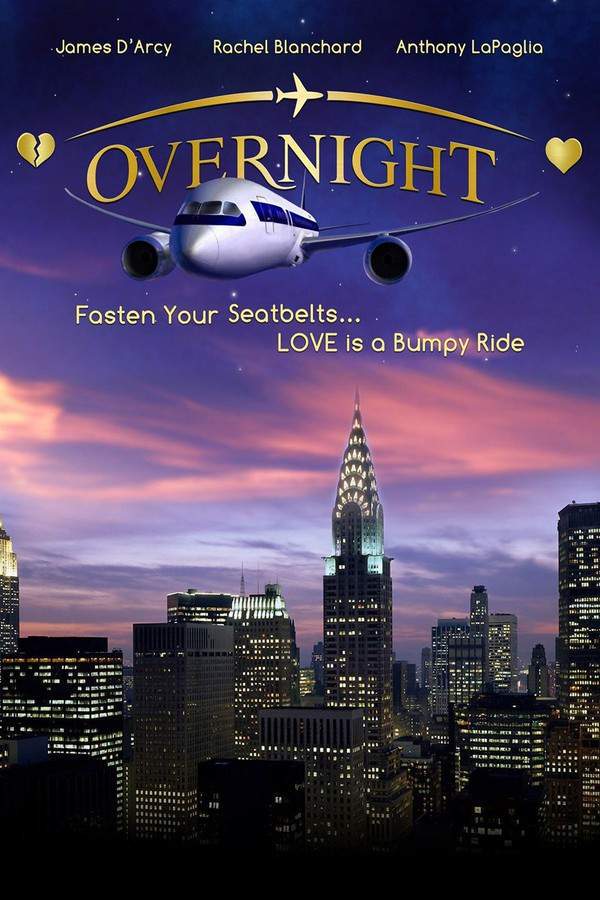
What Is Overnight About?
The premise of Overnight in 278 words, with nothing given away. The full story follows below.
In the thin veil between continents, a sudden storm forces a routine flight into an unexpected stand‑still, turning bustling terminals into temporary crossroads of strangers. The delay stretches the ordinary rhythm of travel into a liminal space where time feels both suspended and accelerated, inviting a mix of impatience, curiosity, and quiet wonder. The world of the film pulses with the hum of rolling suitcases, the glow of departure boards, and the ever‑present hum of airborne possibility, setting the stage for a journey that will span far beyond a single runway.
Rachel Blanchard steps onto the scene with a blend of guarded ambition and reluctant hope, carrying the weight of a personal pilgrimage that seems both urgent and uncertain. Across the aisle, James D’Arcy arrives with a restless charm and a hidden yearning, his easy grin masking an inner turbulence that only the open sky seems to echo. Their paths collide in the cramped aisle of an overbooked aircraft, and the chemistry between them flickers with the tension of strangers forced into proximity, hinting at a fragile alliance that could tip toward companionship or conflict.
Around them, an eclectic crew of passengers and flight attendants adds color and chaos to the atmosphere—an oddball mix of dreamers, skeptics, and wanderers, each with their own quirks and quiet stories. Their interactions weave a tapestry of chance encounters that feels simultaneously intimate and expansive, suggesting that love and human connection can sprout in the most unlikely of corridors. The film’s tone balances witty observation with heartfelt moments, inviting viewers to wonder how brief intersections can reshape the course of a life, all while the sky outside continues its endless, untamed dance.
What Happens in Overnight?
The complete story of Overnight, from the first scene to the last, in 571 words (about 2 minutes). Spoilers throughout. Names in the text link to 1 cast member page.
Spoilers ahead
Troy Duffy, a bartender, musician, and aspiring screenwriter, orchestrates a career-altering breakthrough in 1997 after selling his script for The Boondock Saints to Miramax chief Harvey Weinstein for US$300,000, catching the attention of the William Morris Agency in the process. He is offered the extraordinary chance to direct the film with a US$15 million budget, while his band The Brood is lined up to produce the soundtrack and secure a recording deal with Maverick Records. Miramax even agrees to buy the Los Angeles bar J. Sloan’s where Duffy works and hire him to run it, turning his everyday surroundings into the nerve center of a Hollywood ascent. To document this ascent, he enlists friends Tony Montana and Mark Brian Smith to manage The Brood and capture the rollercoaster on film.
In those early days, Duffy revels in his success, flitting between celebrity hangouts at his bar, dining in luxury hotel restaurants, and moving into a production office where teleconferences with major film producers become part of his daily routine. Yet the shine wears off quickly as his swagger morphs into arrogance and abusive behavior, casting a shadow over the project. He is filmed openly insulting actors who are being considered for roles, including Ethan Hawke and Keanu Reeves, and his temper flares when he mispronounces Kenneth Branagh’s name before abruptly calling him a crude epithet. He also publicly disparages industry producers such as Jerry Bruckheimer. As delays mount and he demands swifter production, he threatens to switch to a rival agency, alienating Weinstein and his own production team in the process. Rumors begin to fly that Weinstein has given him informal blacklisting status, and Miramax eventually places the film in turnaround, cutting off conference calls and leaving Duffy with few real contacts in Hollywood.
Meanwhile, the musical side of his ambitions struggles as well. Jeff “Skunk” Baxter expresses interest in producing The Brood and praises lead vocalist Taylor Duffy, but recording sessions quickly devolve into a clash of egos. Duffy tries to take control, ignoring Baxter’s guidance and dismissing concerns about the band’s heavy drinking. After Maverick Records drops them, the group signs with Atlantic Records and renames themselves The Boondock Saints. The debut CD sells a mere 690 copies, and the band is dropped from the label before they can gain traction, effectively stalling their musical ambitions.
By 1998, financing for the film finally comes together through Franchise Pictures, albeit at a budget that totals less than half of what Miramax had offered. The Boondock Saints is teased at the 1999 Cannes Film Festival, but American distributors pass on it en masse. A limited release in five cities follows, but it performs poorly and is pulled after a week, only to later find life on home video and DVD. On the night of its Palm Springs International Film Festival screening, a car unexpectedly jumps the curb and collides with Duffy and producer Chris Brinker; both escape with minor injuries, while the driver and vehicle escape without identification.
The film’s long-term fate is paradoxical: it becomes a sleeper hit on home video even as franchise financing binds Duffy to financial strictures that block profits from television, home media, or foreign sales. The money from his film and music ventures dwindles, his bar closes, and the dream of a Hollywood breakthrough fades for the foreseeable future, leaving him unable to secure work in the industry for six years after the film’s production.
Overnight Timeline: Every Key Event in Order
12 key events in the order they happen, from “Miramax buys the script and secures initial multi-faceted deals” to “Contract limitations and personal financial collapse”. 12 events name a place, across 8 locations.
- 1
Miramax buys the script and secures initial multi-faceted deals
Troy Duffy sells his The Boondock Saints script to Harvey Weinstein for $300,000. He is immediately taken on by the William Morris Agency, and Weinstein agrees to let him direct the film with a $15 million budget. Miramax also commits to The Brood's soundtrack with Maverick Records and to buying J. Sloan's bar, which Weinstein asks Duffy to run.
When:1997 Where:Miramax offices, New York
- 2
Friends enlisted to manage and document The Brood
Duffy asks Tony Montana and Mark Brian Smith to manage The Brood and to document his activities on film. They prepare to showcase the band’s progress as the Hollywood deal unfolds. This marks the beginning of parallel music and film ventures.
When:1997 Where:Bar and production space, Los Angeles
- 3
Early success and access to a production office
Duffy begins to enjoy the trappings of success, entertaining celebrities at his bar and dining in hotels. He moves into a production office and starts teleconferences with major producers. The aura of momentum masks the growing tensions behind the scenes.
When:1997 Where:Los Angeles
- 4
Hollywood arrogance spirals out of control
Duffy is filmed insulting actors being considered for the film, including Ethan Hawke and Keanu Reeves, and repeatedly mispronounces Kenneth Branagh’s name before derisively calling him 'cunt.' He also disparages producers like Jerry Bruckheimer. This inflammatory behavior sours relationships and foreshadows the project’s slow progress.
When:1997-1998 Where:Hollywood
- 5
Strained relationships and the film in turnaround
As production stalls, Duffy threatens to abandon William Morris for a rival agency and alienates Weinstein and his own team. Rumors circulate that Weinstein has informally blacklisted him. Miramax ultimately puts the film in turnaround, and Duffy finds himself cut off from conference calls and with few industry contacts left.
When:1997-1998 Where:Hollywood
- 6
Music ambitions collide with leadership style
Famed guitarist Jeff 'Skunk' Baxter shows interest in producing The Brood, highlighting lead vocalist Taylor Duffy, and pressure builds as recording sessions begin. Duffy tries to take control and ignores Baxter’s guidance, including concerns about heavy alcohol consumption in the band. Maverick Records drops the group after ongoing clashes.
When:1997-1998 Where:LA recording studios
- 7
Atlantic Records signs the band; debut falls flat
After Maverick drops them, The Brood signs with Atlantic Records and rename themselves The Boondock Saints. The debut CD sells only 690 copies, reflecting a disappointing commercial response. The band is dropped by Atlantic and eventually disbands.
When:1998 Where:Los Angeles
- 8
Franchise Pictures finances the film with a smaller budget
In 1998, Franchise Pictures finally provides financing for The Boondock Saints, though the budget is substantially smaller than Miramax’s initial offer. The reduced budget keeps production moving forward, but with limited financial flexibility. The project still struggles to attract major backers.
When:1998 Where:Hollywood
- 9
Cannes promotion but no major U.S. distribution
The film is promoted at the 1999 Cannes Film Festival, but not a single major American distributor picks it up. A limited five-city theatrical release follows, but box office returns are weak and distribution is halted after a short run. DVD and VHS release later revive interest.
When:1999 Where:Cannes; United States
- 10
Palm Springs Film Festival screening incident
On the night of the Palm Springs International Film Festival screening, a car jumps the curb and collides with Duffy and producer Chris Brinker; neither is seriously injured, and the driver remains unidentified. The incident becomes tabloid fodder but adds to the film’s troubled exhibition history. The event underscores the precarious path of the film’s release.
Where:Palm Springs
- 11
Home video sleeper hit rekindles interest
Despite weak theatrical performance, The Boondock Saints becomes a sleeper hit on home video, drawing audiences long after its limited release. The enduring popularity elevates the film’s reputation far beyond its initial theatrical reception. This later success contrasts sharply with the financial and professional setbacks Duffy faced earlier.
When:Late 1999–2000 Where:Home video market
- 12
Contract limitations and personal financial collapse
Duffy’s contract with Franchise Pictures bars profit from television, home media, and foreign sales, limiting his earnings from the film. He ultimately spends all the money earned from his film and record deals, leading to the closure of his bar. Within six years after production, he has not secured any work in Hollywood.
When:Late 1990s - Early 2000s Where:Los Angeles
Who Are the Main Characters in Overnight?
Troy Duffy: who they are and the part they play in the story. The profile links to the actor’s page.
- TD
Troy Duffy
Played by Troy Duffy
A bartender, musician, and aspiring filmmaker who climbs rapidly through sheer self-confidence and abrasive behavior. The film tracks his appetite for control, his clashes with industry veterans, and the paradox of his charisma alongside his capacity for self-sabotage. His journey reveals a complex blend of talent, stubbornness, and vulnerability under pressure.
- 🎭 Egotistical
- 🎬 Visionary
- 💼 Ambitious
Where and When Is Overnight Set?
Overnight is set in Los Angeles, Cannes and Palm Springs (Late 1990s – Early 2000s). Here is why the time and place matter to the story.
When
Late 1990s – Early 2000s
The events unfold during a volatile period in Hollywood when deals are made and broken rapidly. Duffy negotiates with Miramax and other power players, while production stagnates and miscommunications derail progress. The timeline covers the run-up to the film's eventual financing by Franchise Pictures and its slow, troubled path to release, culminating in a shift from theatrical ambitions to home video notoriety.
Where
Los Angeles, Cannes, Palm Springs
Los Angeles serves as the hub of Duffy's ascent and eventual downfall, anchored by his LA bar, J. Sloan's, and the production offices where he pitches to major players. Cannes is the backdrop for the film’s promotional push, illustrating the gaudy glamour and harsh realities of distribution in the industry. Palm Springs hosts the film festival screening that becomes a pivotal moment, highlighting the precarious fate of independent projects.
- 🎬 Film Industry
- 💼 Hollywood
- 🌆 Cityscape
What Are the Themes of Overnight?
2 ideas the story keeps returning to, among them Ambition and Self-Destruction.
-
01
Ambition
The documentary centers on Troy Duffy's intense drive to make it in Hollywood, moving from bartender to filmmaker and record-label entrepreneur. His confidence teeters into arrogance as he challenges established figures and resists collaboration. The film uses this drive to show how ambition can propel success while also inviting ruin when unchecked.
-
02
Self-Destruction
Duffy's insistence on controlling every aspect of his project leads to costly missteps and toxic dynamics with industry power brokers. As deals fall through and relationships fracture, the documentary portrays how personal flaws can sabotage professional dreams. The narrative underscores the fragility of fame built on ego.
What Kind of Film Is Overnight?
Dark in tone, with fast pacing and a straightforward story, going by the plot summary.
- Tone
- Dark
- Pacing
- Fast
- Story
- Straightforward
- Intensity
- High
- Ending
- Bleak
A sobering and cringe-inducing documentary that chronicles a rapid, ego-fueled ascent and an even faster collapse, creating a gripping yet deeply uncomfortable viewing experience of self-destruction in the entertainment industry.
- cautionary
- uncomfortable
- gripping
- oppressive
- trainwreck
- melancholic
- rise and fall
- documentary filmmaking
- hubris
- self destruction
Content notes: toxic behavior, alcohol abuse, verbal abuse, career downfall.
Quiz
How well do you remember Overnight? Test yourself on the story.