
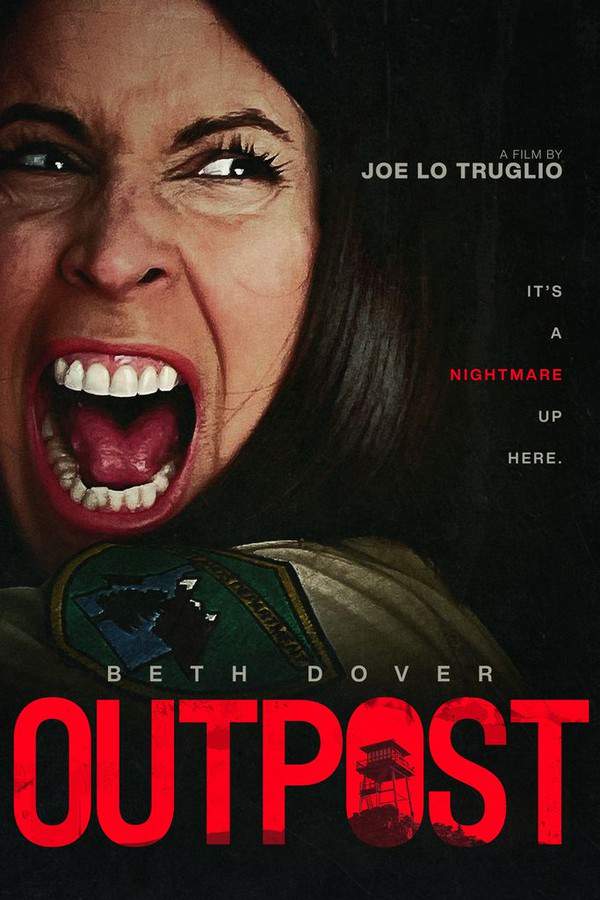
What Is Outpost About?
The premise of Outpost in 261 words, with nothing given away. The full story follows below.
Kate is a woman on the run—not from the law, but from a past that refuses to release its grip. Having survived an abusive relationship with her husband Mike, she carries the invisible scars of trauma, manifesting in disturbing visions that blur the line between memory and nightmare. Desperate for distance and healing, she accepts her best friend Nickie’s suggestion to take a position as a volunteer fire lookout in the remote mountains of northern Idaho, hoping the isolation will offer the peace she so desperately seeks.
The wilderness, however, proves to be anything but tranquil. Perched high in her tower, Kate is surrounded by miles of untouched forest, tasked with watching for smoke and reporting to park ranger Earl on a strict schedule. The job demands discipline and protocol, but as her traumatic visions intensify, maintaining focus becomes increasingly difficult. The solitude she hoped would soothe her instead amplifies every fear, every memory, until the boundaries between reality and hallucination begin to fracture.
As Kate settles into her isolated existence, she crosses paths with a few locals—a fellow ranger named Dan, and Reggie, a grieving widower whose wife recently passed. Brief moments of human connection offer glimpses of normalcy, but the mountain holds secrets of its own. Between the crushing weight of silence and the creeping sense that something is deeply wrong, Kate finds herself caught in a struggle where the greatest threats may come from within—or from the darkness lurking just beyond the trees. What begins as a journey of healing soon transforms into a desperate fight for survival.
What Happens in Outpost?
The complete story of Outpost, from the first scene to the last, in 821 words (about 4 minutes). Spoilers throughout. Names in the text link to 6 cast member pages.
Spoilers ahead
Kate, a woman scarred by years of domestic abuse, seeks to bury her memories in the quiet of an Idaho fire lookout tower. Isolated among pines and wind, she hopes distance will dull the vivid, unsettling visions that plague her nights. The job is supposed to be simple: keep to a routine, report to Earl twice daily, and stay safe high above the valley. Yet the stillness of the mountains feels thick with possibility and danger, and Kate finds the rhythm of the lookout hard to keep.
Early on, her struggle to conform to the routine unsettles her new world. She slips in reporting and misses a scheduled check-in with Earl, a pragmatic park ranger who is preparing to replace her after years on the job. On a routine market trip below the tower, her eyes linger on the life she left behind, and she meets Dan, a fellow ranger with a steady manner, and Reggie, a mountain man who keeps himself distant yet curious about the woman above the trees. Reggie’s situation is touched by sorrow—his wife Bertha has died of cancer—and this fragile bond between the living and the dead is felt in several softly spoken exchanges that hint at what the mountains have kept hidden.
Kate’s stubborn streak grows as she defies protocol to stamp out a small fire near her tower. She believes she’s acting with necessity, not recklessness, and her actions pull others into her orbit—Dan explains the peril of past mistakes, including a fire Earl once failed to report when he chose to meet his wife instead of staying inside his tower; that decision, he says, helped a blaze grow before a pilot could intervene. The revelation casts a shadow over Earl’s authority and deepens the tension between the need for safety and the pull of personal history. The more Kate fights to preserve control, the more her visions intensify, blurring lines between memory, warning, and possibly something real in the smoke-lit distance.
The hours grow stranger. One evening Kate’s most intimate moment with her perceptions leads her to an accident of symbol and fear: she tosses her keys into a nearby outhouse in a frenzied moment, an oddly tactile act that marks the boundary between the tower’s rules and the world outside. In a rare moment of kindness, Reggie shows her how to handle an axe to chop wood, a basic skill that gives her a temporary sense of competence and security in the harsh environment. This small mercy is punctuated by another encounter with the elderly woman traveling the mountains—the two share a quiet, tense connection as the woman teaches Kate how to shoot, a skill Kate believes she might need to sustain herself if food becomes scarce.
The woman’s unearthly revelation shifts the story’s center of gravity. The traveler’s skin begins to rot in a frightening, almost mythic way, and she reveals herself to be Bertha, Reggie’s deceased wife. The moment shadows Kate with the chilling certainty that the mountains conceal more than weather and wildlife. Bertha’s words cut through Kate’s defenses, accusing Reggie of murder and forcing Kate to confront a truth she never wanted to face: the man she’s come to rely on may be capable of terrible harm. The encounter seeds anger and fear, intensifying Kate’s sense of betrayal and isolation.
As the tension climbs, Earl and Dan press toward the tower, and a grim discovery interrupts their approach—a decaying body found along the mountain path, a stark reminder that danger lurks beyond the lookouts. Nickie, Nickie, heads up the mountain to check on Kate, while Reggie returns home and encounters danger of his own—an animal trap that leaves him wounded and vulnerable. When Kate finally reaches the peak, the escalating nightmare erupts into a violent confrontation.
In a brutal turn, Kate confronts the two men who have come after her, and she uses an axe in a moment of desperate protection. The sequence is brutal in its clarity: she eliminates both Earl and Dan on the tower’s slippery stairs, driven by the visions that have haunted her and the fury mounted by Bertha’s accusation. The mountain air carries the echo of gunfire as Nickie arrives, spotting another decaying body hidden in the outhouse, a grim omen that underscores the danger Kate faces from a world that refuses to stay within her control.
Nickie intervenes in the climax with a gun, but she chooses not to kill Kate. Instead, the two women stand on the edge of the tower as dawn begins to break over the ridgeline, and the credits begin to roll. Kate remains inside the lookout, caught between the need to survive and the lure of the visions that have defined her stay in the mountains. The ending lingers with an uneasy, unresolved air, inviting viewers to consider the thin line between protection and peril, reality and illusion, and the moral costs of choosing isolation over connection.
Outpost Timeline: Every Key Event in Order
15 key events in the order they happen, from “Kate's past and new start” to “Final confrontation and escape into the tower”. 15 events name a place, across 14 locations.
- 1
Kate's past and new start
Kate is a survivor of domestic abuse at the hands of her husband Mike, haunted by traumatic visions. She wants to distance herself from the past and, with her friend Nickie's push, is referred to Earl, a park ranger. She starts work at an Idaho fire lookout tower, seeking distance from her past. The isolation becomes the stage for the unfolding distress.
Where:Idaho fire lookout tower
- 2
Disruptive visions and protocol breach
Her visions distract her on the job, causing her to fail to report to Earl on time. This breach of the routine sets up early tension and foreshadows bigger problems. The breakdown foreshadows how perception and danger will intersect in the wilderness.
Where:Lookout tower
- 3
Market encounter with Dan and Reggie
During a shopping trip to a local market, Kate meets fellow ranger Dan and a man living in the mountains named Reggie. The encounters introduce potential allies as well as tensions in the backcountry. These early interactions seed the complex relationships that drive the plot.
Where:Local market
- 4
Disobeying rules to dampen a fire
Despite protocol, Kate extinguishes a small fire near her tower when the situation seems manageable. Her judgment is clouded by visions and a desire to act independently. This act deepens Earl’s concerns about her reliability.
Where:Near the fire lookout tower
- 5
Earl's plan to replace Kate
Earl grows tired of Kate’s erratic behavior and begins planning to replace her. He hallucinates a distant blaze that crews report as nothing, revealing how fear and perception affect judgment in the mountains. The tension between duty and self-preservation escalates.
Where:Tower vicinity
- 6
Dan explains Earl's past mistake
Dan explains to Kate why Earl is so on edge: Earl once failed to report a fire because he chose to meet his wife instead. That delay allowed a large fire to spread and cost a pilot's life. The revelation deepens Kate's mistrust and highlights how critical timing is in the wilderness.
Where:Tower area
- 7
Keys drop into the outhouse
As her visions intensify, Kate inadvertently throws her keys into the nearby outhouse. The loss traps her further in routine and safety risks. The outhouse becomes a recurring symbol of confinement and misfortune.
Where:Tower outhouse
- 8
Reggie teaches axe use; plans to leave
After a kind interaction, Reggie teaches Kate how to use an axe to chop wood. He then tells her that he will leave for a while, signaling his temporary departure from the tower. The mentorship adds a layer of danger as his absence creates a power vacuum.
Where:Reggie's mountain home
- 9
Meeting the elderly woman and learning to shoot
In the mountains, Kate meets an elderly woman who offers companionship. The two bond over Kate's struggles, and the woman teaches her to shoot so she can hunt for food. The lesson marks a shift from reliance on orders to self-sufficiency driven by necessity.
Where:Mountains
- 10
Bertha's revelation and rage
Bertha reveals herself as Reggie's deceased wife, and her skin begins to rot. She accuses Reggie of murder, and Kate's anger boils over as she processes the truth about Reggie's past. The confrontation heightens the danger and mistrust surrounding the group.
Where:Reggie's house
Show the other 5 events of Outpost Hide the last 5 events
- 11
Decaying body discovered on the tower path
Earl and Dan set out toward the tower, and along the way they come across a decaying body on the ground. The grim discovery underscores the peril that lingers in the wild. It foreshadows the violence that will follow.
Where:Tower approach
- 12
Nickie heads up the mountain; Reggie traps
Nickie heads up the mountain to visit Kate, hoping to check on her. Reggie returns to his home and accidentally steps into an animal trap, with Dan arriving soon after to find him.
Where:Mountain path / Reggie's home
- 13
Kate kills Reggie and Dan
Kate arrives during the escalating tension and kills both Reggie and Dan with an axe. The violence demonstrates the depth of her breakdown and her determination to destroy those she blames. The act cements her isolation in the mountains.
Where:Tower vicinity
- 14
Nickie discovers more rot; meets Earl
Nickie spots another decaying body in the outhouse while climbing toward Kate, then meets Earl, linking her fate to his. The grim discovery compounds the mystery of the mountains’ dangers and the losses suffered by the group. The moment ties Nickie’s journey more closely to Earl’s fate.
Where:Outhouse / Mountain path
- 15
Final confrontation and escape into the tower
Kate, driven by visions, tries to attack Nickie and Earl as they confront her. Earl lures Kate onto the top of the tower, where Nickie uses a gun to save Earl but does not shoot Kate. The film closes with Kate remaining inside the tower as the credits roll, leaving her fate unresolved and the question of what she will do next lingering.
Where:Top of the fire lookout tower
Who Are the Main Characters in Outpost?
7 characters, among them Kate (Beth Dover), Reggie (Dylan Baker) and Earl (Ato Essandoh): who each one is and the part they play in the story. Every profile links to the actor’s page.
-

Kate (Beth Dover)
Played by Beth Dover
Kate is a woman haunted by a violent past who uses the remote fire lookout as an escape. Traumatized by domestic abuse, she experiences vivid visions that blur memory and present reality. Her erratic behavior—skipping reports and venturing outside the tower—pushes her toward a breaking point that culminates in deadly violence.
- ❗️ Domestic abuse
- 🧠 Trauma
- 🏔️ Isolation
-

Reggie (Dylan Baker)
Played by Dylan Baker
Reggie is a mountain-dwelling ranger living with the memory of his wife Bertha. He acts as a tentative ally to Kate, teaching her basics like firewood and an axe, before the dynamic becomes complicated by jealousy and danger. His quiet resolve is undone by escalating threats in the mountains.
- 🪵 Survival
- 🕊️ Grief
- 🧭 Loyalty
- E(
Earl (Ato Essandoh)
Played by Ato Essandoh
Earl is Kate's supervisor and a park ranger who grows tired of her erratic behavior and schemes to replace her. He upholds protocols and safety, and his tension with Kate drives the conflict toward a deadly confrontation. He remains a central figure in the tower sequence.
- 🧭 Authority
- 🧠 Tension
- 🗣️ Leadership
-

Bertha (Becky Ann Baker)
Played by Becky Ann Baker
Bertha is Reggie's deceased wife who appears in visions, her skin rotting as she speaks to Kate. She represents memory and accusation, insisting that Reggie killed her and sparking Kate's rage. She exists only as a hallucinatory presence that influences Kate's actions.
- 👁️ Hallucination
- 💔 Grief
- 🕯️ Memory
- D(
Dan (Dallas Roberts)
Played by Dallas Roberts
Ranger Dan is a steady presence who cautions against ignoring protocol and acts as a practical counterbalance to Kate's instability until he is killed in the tower confrontation.
- ⚔️ Violence
- 🛡️ Duty
- N(
Nickie (Ta'Rea Campbell)
Played by Ta'Rea Campbell
Nickie is Kate's best friend who arranges a referral to Earl and later visits Kate on the mountain. She embodies loyalty and practical support, and she ultimately saves Earl by intervening, choosing not to kill Kate.
- 👭 Friendship
- 🧭 Loyalty
- 🛡️ Courage
- M(
Mike (Tim Neff)
Played by Tim Neff
Mike is Kate's husband, whose abuse seeds the trauma that drives her attempt to flee. His presence frames the cycle of fear and control that haunts Kate throughout the film.
- 💔 Domestic abuse
- 🕯️ Trauma
Where and When Is Outpost Set?
Outpost is set in Idaho fire lookout tower, Idaho mountains and local market. Here is why the place matters to the story.
Where
Idaho fire lookout tower, Idaho mountains, local market
The story unfolds in a remote stretch of the Idaho mountains centered on a lone fire lookout tower. The tower and surrounding wilderness create a claustrophobic setting that intensifies Kate's trauma and paranoia. The narrative moves from a small local market to the stark, wind-swept ridge lines, underscoring the isolation at the heart of the film.
- 🗺️ Remote Location
- 🔥 Wilderness
- 🧭 Isolation
What Are the Themes of Outpost?
3 ideas the story keeps returning to, among them Trauma, Isolation and Violence.
-
01
Trauma
Kate's history of domestic abuse drives her visions and unstable judgment. The isolation amplifies these mental scars, making memory and reality hard to distinguish. The film uses Kate's psychological strain to fuel suspense and propel confrontations.
-
02
Isolation
The mountain wilderness isolates Kate from help and stable routines, forcing reliance on instinct and delusions. The lookout tower becomes both refuge and prison, separating her from the world she fears. This loneliness amplifies paranoia and sharpens the danger of every action.
-
03
Violence
Violence erupts as Kate's visions collide with real threats, culminating in deadly acts. The film portrays violence as a response to trauma and a breakdown of self-control under pressure. The ending leaves the question of Kate's future unresolved, highlighting the lasting impact of the night’s choices.
What Kind of Film Is Outpost?
Tense in tone, with slow pacing and a straightforward story, going by the plot summary.
- Tone
- Tense
- Pacing
- Slow
- Story
- Straightforward
- Intensity
- High
- Ending
- Bleak
A tense and claustrophobic psychological horror film that traps the viewer in the protagonist's deteriorating mind, creating an atmosphere of profound isolation and paranoid dread.
- anxious
- isolated
- paranoid
- claustrophobic
- unsettling
- desperate
- domestic abuse
- ptsd
- isolation
- psychological horror
Content notes: domestic abuse, psychological trauma, graphic violence, hallucinations, death.
Quiz
How well do you remember Outpost? Test yourself on the story.
