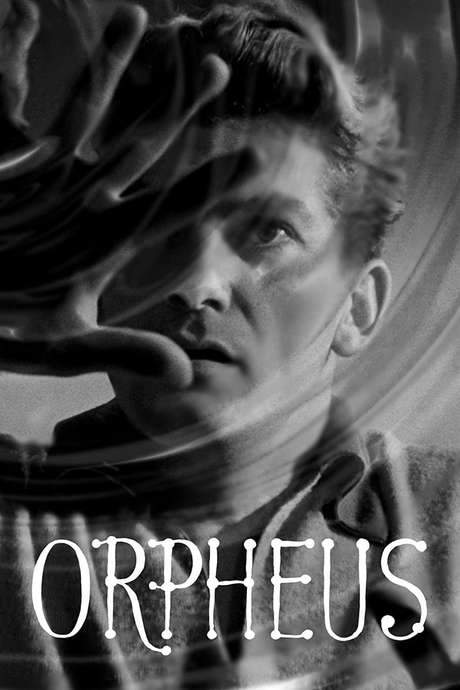
Orpheus 1950


Directed by

Jean Cocteau
Made by

Films du Palais Royal
Where to Watch Orpheus
See current US streaming, rental, and purchase options for Orpheus (1950) via JustWatch.

Artify
HD
Criterion Channel
HD
HBO Max
HD
HBO Max Amazon Channel
HD
Mometu
HDStreaming availability powered by 
Orpheus Plot Summary
Read the complete plot summary and ending explained for Orpheus (1950). From turning points to emotional moments, uncover what really happened and why it matters.
Orpheus [Jean Marais] attempts to read a message tapped out by the horse that looms in their Thracian home—a strange communication that captivates him far more than ordinary poetry. Beside him, Eurydice [Marie Déa] grows jealous of the supernatural creature that steals her husband’s attention from daily life, even as the scene is framed by a mirror on the left wall and a white horse that seems to emerge from a niche at the back. The scene unfolds with a calm, almost ritual intensity as Orpheus explains that the horse is delivering him phrases from the unknown, phrases more astonishing than all the poems in the world. The horse taps out a line that hardens into a fateful message:
Madame Eurydice Reviendra Des Enfers
In a contest, Orpheus attempts to place the poem before the judges, but they are furious when they discover that the initial letters of the words spell MERDE, a crude acrostic that shocks the point of the competition and underscores the film’s defiant, dreamlike humor.
While Orpheus is absorbed in the contest, Eurydice is murdered by her ex-friends, the Bacchantes. Upon his return, he resolves to rescue her from death itself, guided by the angel Heurtebise, Heurtebise [François Périer]. This guide helps him pass through the mirror and complete the perilous journey to bring Eurydice back to life, though their life together is doomed by a rule: he must not look upon her.
The Bacchantes reappear to torment him, accusing him of submitting an obscene poem. In the climactic reversal, Orpheus is decapitated, and Eurydice leads him back through the mirror. The angel places the severed head on a pedestal, where, in response to questions from the police, it declares it is Jean Cocteau and then supplies Cocteau’s address: 10 rue d’Anjou.
Orpheus Timeline
Follow the complete movie timeline of Orpheus (1950) with every major event in chronological order. Great for understanding complex plots and story progression.
Orpheus and Eurydice's Thrace home and the mysterious horse
The scene unfolds in Orpheus and Eurydice's home in Thrace. A mirror on the left wall and a white horse protruding from a niche set a surreal mood. Orpheus tries to interpret the horse's hoof-taps as messages from the unknown, while Eurydice resents the creature that consumes her husband's attention.
The horse reveals a message in a poem
The horse taps out a message that becomes a poem: 'Madame Eurydice Will Come Back From Hell.' Orpheus records the verse and ponders its meaning, sensing a hint of resurrection. The presence of the horse and the stage mirror underscores art, fate, and the supernatural in their life.
Orpheus enters the poem in a contest and faces scandal
Orpheus submits the poem to a contest, hoping to honor the unknown's message. The judges erupt in fury when they discover the initial letters of the words spell 'MERDE' (SHIT), turning the recital into a scandal. The moment blurs the line between performance, blasphemy, and myth.
Eurydice is murdered by her Bacchante ex-friends
While Orpheus is at the contest, Eurydice is murdered by her ex-friends, the Bacchantes. The sudden loss shatters the couple's world and fuels Orpheus's resolve to defy death and bring her back. The event sets in motion a quest that blends tragedy with magical realism.
Orpheus is guided to rescue Eurydice by the angel Heurtebise
Returning from the catastrophe, Orpheus is instructed by the angel Heurtebise to rescue Eurydice from death. He is told to pass through the mirror and bring her back to life. The directive marks a shift from mourning to a perilous, otherworldly journey.
Orpheus passes through the mirror and retrieves Eurydice
Orpheus passes through the mirror and retrieves Eurydice, restoring her to life. Their reunion is miraculous but fragile, because they are not allowed to live together normally. The portal scene emphasizes the perilous boundary between the living world and the realm beyond.
Revived life is restricted: no looking at Eurydice
Even with Eurydice alive, joy is blocked by a prohibitive rule: Orpheus may not look at her as they remain in limbo. The constraint tests their love, turning happiness into a tense, precarious balance. The magical rescue yields a haunting price.
The Bacchantes harass Orpheus again
The Bacchantes return to torment Orpheus, accusing him of presenting an obscene poem and disrupting the returned life with Eurydice. Their harassment tests the couple's fragile arrangement and the limits of the miracle. The scene reinforces the clash between sacred art and societal judgment.
Orpheus is decapitated and Eurydice guides him back through the mirror
Orpheus is decapitated, and Eurydice leads his severed head back through the mirror. The image is surreal and devastating, symbolizing the violence that often accompanies ambition and desire. The lovers' bond persists even as death reasserts its power.
The angel places the head on a pedestal and it speaks to the police
The angel places Orpheus's severed head on a pedestal, where it answers questions from the police. The head declares its identity and provides surreal, self-referential hints about its origin. The scene blends myth, bureaucracy, and meta-cinema in a single, startling image.
The head proclaims itself as Jean Cocteau and reveals his address
The severed head proclaims it is Jean Cocteau and provides his address: 10 rue d'Anjou. This final revelation completes the film's playful boundary-blurring between creator, character, and audience. The ending leaves a lingering sense of self-awareness about art and storytelling.
Orpheus Characters
Explore all characters from Orpheus (1950). Get detailed profiles with their roles, arcs, and key relationships explained.
Orphée — Jean Marais
Orphée is a gifted poet whose devotion to Eurydice drives him to challenge the boundaries between life and death. He interprets the supernatural horse’s hoof-taps as messages from the unknown, yet his passion makes him reckless under mortal rules. He journeys through the mirror to retrieve Eurydice, but his love is entwined with danger and tragedy as he is ultimately decapitated and his head speaks from a pedestal, even naming its creator, Jean Cocteau.
Eurydice — Marie Déa
Eurydice is a mortal beloved whose jealousy of the supernatural horse marks the story’s tensions. Her murder by ex-friends, the Bacchantes, becomes the catalyst for Orphée’s quest to rescue her from death. She returns with Orphée, but their life together remains fragile, as Orphée must not gaze upon her. Her fate critiques desire and the limits of love against mortality.
Heurtebise — François Périer
An angelic guide who instructs Orphée on crossing between the living and the dead. Heurtebise leads Orphée through the mirror and anchors the surreal in a sense of purpose, acting as a threshold guardian between realms. He embodies the film’s moral and metaphysical crossings, offering guidance amid the mythic peril.
Death — María Casares
Death appears as a personified figure who looms over the lovers and intersects with the living world. Her presence accelerates the couple’s jeopardy and underscores mortality as a constant companion in the narrative. The portrayal of Death heightens the surreal tension between finality and the possibility of reversal within the story.
Orpheus Settings
Learn where and when Orpheus (1950) takes place. Explore the film’s settings, era, and how they shape the narrative.
Time period
Timeless mythic era
The narrative unfolds in a timeless dimension that blends ancient myth with surreal theater. Events hinge on prophecies, ritual crossings, and the boundary between life and death. The mirror and magical elements anchor the story in a dreamlike, non-contemporary moment.
Location
Thrace
The scene unfolds in Orphée and Eurydice’s home in Thrace, featuring a mirror on the left wall and a white horse protruding from a niche. The space blends intimate domestic life with uncanny, mythic imagery. This setting establishes a frame where poetry, jealousy, and the supernatural collide.
Orpheus Themes
Discover the main themes in Orpheus (1950). Analyze the deeper meanings, emotional layers, and social commentary behind the film.
💔
Love and Death
Orpheus's attempt to resurrect Eurydice frames a central tension between love's pull and the finality of death. The couple's bond drives the narrative, blurring boundaries between life, afterlife, and art. The journey through the mirror is motivated by devotion, yet fragile, and fate ultimately asserts itself.
🌀
Surrealism and Art
The story fuses poetry, theater, and cinema into a dreamlike unity. Surreal elements—the talking horse, the mirror passage, Bacchante interruptions—reframe ordinary events as symbolic rituals. The initial letters of a contest poem spelling MERDE and the decapitated head as a police comment illustrate art’s power to transcend ordinary reality.
💬
Language and Censorship
A contest poem is sabotaged by the initial letters forming a crude word, exposing censorship and the fragility of artistic communication. The film treats words as magical forces capable of provoking authorities and moral judgment. This tension between expression and judgment recurs as Orpheus’s art and his actions become evidence in a police inquiry.

Coming soon on iOS and Android
The Plot Explained Mobile App
From blockbusters to hidden gems — dive into movie stories anytime, anywhere. Save your favorites, discover plots faster, and never miss a twist again.
Sign up to be the first to know when we launch. Your email stays private — always.
Explore the mobile appOrpheus Spoiler-Free Summary
Discover the spoiler-free summary of Orpheus (1950). Get a concise overview without any spoilers.
In the atmospheric landscape of post-war Paris, reality and myth intertwine to create a stage for a story of artistic obsession. Orpheus, a celebrated poet, finds himself adrift in a society that once admired him, now derided by the Left-Bank bohemians who question his relevance. Amidst this cultural shift, his attention is captivated by strange, otherworldly signals that promise a depth of inspiration far exceeding ordinary poetry, leaving him restless and disconnected from the world around him.
The tension at the heart of the film stems from a tumultuous emotional triangle. While his wife, Eurydice, represents the anchors of daily life and domestic stability, an enigmatic princess emerges as a figure of profound mystery. This princess does not merely offer companionship but serves as a dark muse for Orpheus, drawing him into a web of fascination that threatens to consume him. His pursuit of artistic perfection drives a wedge between the couple, as the poet becomes more entranced by the cryptic and the surreal than by the living, breathing presence of his spouse.
As Orpheus delves deeper into the unknown, the film transforms into a surreal exploration of boundaries—between the living and the dead, the visible and the invisible. The narrative suggests a world where mirrors hold secrets and the rules of existence are flexible. Guided by an enigmatic angel named Heurtebise, the poet prepares to traverse a perilous path, risking everything to follow his obsession into a realm that defies human logic.
Movies with Similar Twists and Themes
Uncover films that echo the narrative beats, emotional arcs, or dramatic twists of the one you're exploring. These recommendations are handpicked based on story depth, thematic resonance, and spoiler-worthy moments — perfect for fans who crave more of the same intrigue.


Featured on this page

What's After the Movie?
Not sure whether to stay after the credits? Find out!
Check out our other apps:

SAT Sphere
Build confidence for the Digital SAT.

Mori Atlas
Discover wild places worth protecting.

Luntero
Search smarter for a home in Amsterdam.

Plot Explained
Unravel movie endings and hidden clues.

Pokechamp
Dive into Pokémon data and battle logic.

Driving Theory
Get ready for your European theory test.

Movie Dust
Plan your next cinema trip with ease.

Musemap
Find art and culture as you travel.

Selkobase
Compare credentials before committing.

Local Manual
Turn an unfamiliar country into practical next steps.

Lernavi
Compare school systems before your next move.

GymRoam
Find a workout stop wherever your plans take you.
Explore Our Movie Platform
New Movie Releases (2026)
Famous Movie Actors
Top Film Production Studios
Movie Plot Summaries & Endings
Major Movie Awards & Winners
Best Concert Films & Music Documentaries
Movie Collections and Curated Lists
© 2026 What's After the Movie. All rights reserved.
Privacy Policy