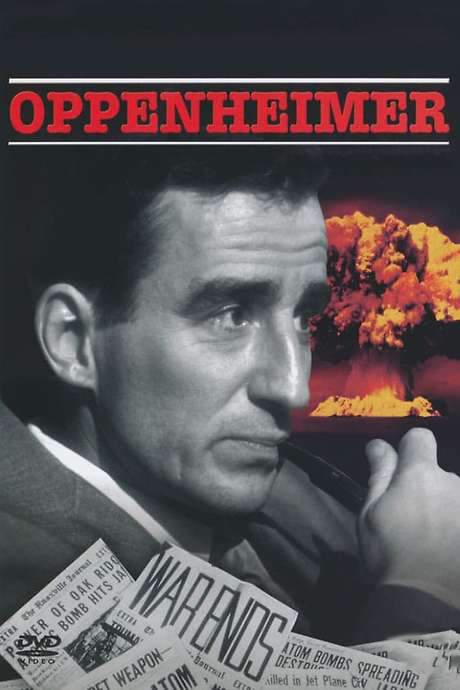


Oppenheimer Plot Summary
Read the complete plot summary and ending explained for Oppenheimer (1980). From turning points to emotional moments, uncover what really happened and why it matters.
The film opens in 1954 with a tense security hearing for the renowned physicist J. Robert Oppenheimer [sam-waterston], focusing on his past associations and political beliefs. Throughout the movie, we see scenes shifting between this present-day investigation and key moments from Oppenheimer’s earlier life, revealing the complex web of personal, political, and scientific conflicts that shaped his career.
The story revisits Oppenheimer’s youthful ambitions in 1924 when he studies physics at Cambridge under the guidance of Patrick Blackett. Eager to attend a lecture by the influential Niels Bohr [kenneth-branagh], Oppenheimer, in a moment of bravado, secretly injects potassium cyanide into an apple on Blackett’s desk to challenge him, but later manages to meet Bohr himself after stopping him from eating the poisoned fruit. Impressed by his sharp intellect and curiosity, Bohr encourages Oppenheimer to pursue further education, believing his potential is best realized through independent study.
Oppenheimer then travels to Göttingen, where he works toward his PhD with notable figures like Isidor Rabi [david-krumholtz] and Werner Heisenberg. His admiration for Heisenberg’s work profoundly influences him. Returning to the United States, Oppenheimer begins teaching at Berkeley, where he earns the affection of students and colleagues alike, including Ernest Lawrence [josh-hartnett], a Nobel laureate. His initial lectures attract only a handful of students but soon grow into a large, vibrant class.
His personal life becomes intertwined with his political views when he attends Communist Party gatherings with his younger brother Frank [dylan-arnold] and makes acquaintances such as Haakon Chevalier. Oppenheimer also carries on a romantic relationship with Jean Tatlock [florence-pugh], with whom he shares intimate moments and intellectually stimulating conversations. After Jean’s death by apparent overdose, Oppenheimer’s troubled mental state surfaces, hinting at underlying guilt and turmoil.
Meanwhile, Oppenheimer’s political leanings and associations draw the attention of government officials. Katherine “Kitty” Puening [emily-blunt], a fellow Communist, becomes his wife, and together they have a son, Peter. The film depicts their tumultuous marriage, marked by Oppenheimer’s infidelity and Kitty’s struggles with alcoholism. Despite personal hardships, Oppenheimer’s reputation as a brilliant scientist leads to his recruitment by General Leslie Groves [matt-damon] to lead the Manhattan Project—a secret endeavor to develop an atomic bomb during World War II.
Oppenheimer assembles a team of top scientists at Los Alamos, including Richard Feynman, Kenneth Bainbridge, Seth Neddermeyer, and others, who work tirelessly on a project shrouded in secrecy. The scene intensifies with the arrival of Edward Teller [david-suchet], who introduces the dangerous potential of the hydrogen bomb, sparking concerns among Oppenheimer and his colleagues about the destructive power they are unleashing upon the world.
The narrative explores the moral and ethical dilemmas faced by the scientists as they realize the destructive capabilities of their work. The team carries out testing at Trinity, culminating in the monumental detonation that produces a massive mushroom cloud. Oppenheimer, witnessing the explosion, famously recalls the quote from the Bhagavad Gita: > “Now I am become Death, the destroyer of worlds.” The success of the test marks a turning point but also weighs heavily on his conscience, especially as Hiroshima and Nagasaki are bombed, causing unprecedented devastation and loss of life.
As the Cold War begins, fears of Soviet espionage and nuclear proliferation intensify. Oppenheimer’s past associations, including his relationship with Chevalier and his left-leaning political views, come under scrutiny. The government, worried about communists infiltrating their project, launches a security hearing to question his loyalty. Key figures like Edward Teller and Leslie Groves give damaging testimonies, and Oppenheimer’s connections to Chevalier, Lomanitz, and other leftists are scrutinized.
During the hearings, Oppenheimer’s personal life is also examined. His ongoing affair with Jean Tatlock is brought up, culminating in her tragic death by apparent overdose, with hints that she may have been murdered to suppress her influence. His marriage to Kitty also suffers, as she grows increasingly resentful and struggles with her own demons.
Amid the investigation, Bohr [kenneth-branagh], who is brought back from Europe, warns Oppenheimer of the terrifying power they have given mankind. The film emphasizes the philosophical and moral implications of their work, with visions of global nuclear catastrophe haunting Oppenheimer’s conscience. Despite some court affirming his loyalty, his security clearance is revoked, and his political influence diminishes, marking a symbolic defeat.
In the final scenes, Oppenheimer reflects on the consequences of his scientific achievements during a conversation with Albert Einstein [tom-Conti]. They discuss the potentially world-ending chain reactions initiated by nuclear weapons. Oppenheimer, in a 1963 scene, receives the Enrico Fermi Award from Lyndon B Johnson, contemplating how their work may have doomed humanity to an uncertain future. Visions of nuclear explosions around the world flash before him, symbolizing the ongoing threat of annihilation.
Throughout the film, themes of ambition, guilt, moral responsibility, and the cost of scientific progress are explored deeply. It paints a poignant picture of one man’s journey from brilliant scientist to a haunted figure burdened by the enormous consequences of his contributions to modern warfare.
Oppenheimer Timeline
Follow the complete movie timeline of Oppenheimer (1980) with every major event in chronological order. Great for understanding complex plots and story progression.
Oppenheimer's Security Hearing (1954)
The film begins with J. Robert Oppenheimer facing a security hearing, questioning his loyalty amid suspicions of communist ties. The scene sets the tone for the story, highlighting the political tensions during the Cold War and Oppenheimer's growing internal conflict over his work on nuclear weapons.
Oppenheimer as a Physics Student at Cambridge (1924)
Oppenheimer starts his studies at Cambridge under Patrick Blackett. He demonstrates his rebellious nature by injecting potassium cyanide into Blackett's apple before attending a lecture by Niels Bohr. His actions reveal his curiosity and daring in the pursuit of scientific knowledge.
Meeting Niels Bohr at the Lecture
Oppenheimer personally meets Niels Bohr after his daring act and impresses him with his knowledge. Bohr advises Oppenheimer to broaden his education and study elsewhere to feel less restrained, encouraging his development as a physicist.
Studying at Gottingen
Oppenheimer moves to the University of Göttingen to pursue his PhD, where he interacts with renowned physicists like Isidor Rabi and Werner Heisenberg. These encounters influence his scientific perspective and inspire his future work in theoretical physics.
Teaching at Berkeley
Returning to the US, Oppenheimer begins teaching at Berkeley. His interactions with students and colleagues, including Nobel laureates, help establish his reputation as a prominent scientist. He starts gaining recognition in academic circles.
Political Involvement and Romance
Oppenheimer attends communist gatherings with his brother and meets Jean Tatlock, with whom he has an affair. He also becomes involved with leftist political groups and supports the Spanish Revolution, raising suspicions among his peers regarding his political allegiance.
Marriage to Katherine 'Kitty' Puening
Oppenheimer marries Kitty Puening after she leaves her marriage. They have a son, Peter, but their relationship is troubled by her alcoholism. Oppenheimer's personal life becomes tumultuous amid his growing political and scientific commitments.
Recruitment for the Manhattan Project
During World War II, General Leslie Groves recruits Oppenheimer to lead the Manhattan Project at Los Alamos. He begins assembling a team of prominent scientists to develop the atomic bomb in secret, marking a major turning point in his career.
The Trinity Test (1945)
The team conducts the first successful test of the atomic bomb, known as the Trinity Test. Oppenheimer witnesses the explosion, famously recalling the phrase, 'Now I am become Death, the destroyer of worlds,' symbolizing the destructive power they have unleashed.
Hiroshima and Nagasaki Bombings
Following the success of the Trinity Test, the US drops atomic bombs on Hiroshima and Nagasaki, ending WWII but causing immense destruction and loss of life. Oppenheimer begins to grapple with guilt over the devastating consequences.
Post-War Political Turmoil and Security Concerns
As the Cold War intensifies, suspicion grows around Oppenheimer’s political associations, including his past communist ties and relationships with figures like Chevalier. The government begins to scrutinize him, leading to hearings that threaten his career.
Security Hearing and Loyalty Questions
Oppenheimer faces a Senate security hearing where his former associates testify against him, citing leftist political activities. His loyalty is questioned after revelations about his relations with Chevalier and others, culminating in revoking his security clearance.
Jean Tatlock’s Death and Personal Crisis
Jean Tatlock dies by apparent suicide after their affair ends, adding emotional turmoil to Oppenheimer’s life. His wife Kitty also struggles with addiction, and their relationship becomes increasingly strained amidst the political pressures.
Oppenheimer’s Advocacy Against the Hydrogen Bomb
Despite pressures to develop even more powerful hydrogen bombs, Oppenheimer advocates for arms control and restraint. His stance puts him at odds with military and political leaders during the escalating Cold War tensions.
Final Reflections and Vision of a Nuclear-Annihilated World
In his later years, Oppenheimer reflects on the destructive potential of nuclear weapons. He receives the Enrico Fermi Award in 1963, and visions of global nuclear catastrophe haunt him, emphasizing the existential threat of his scientific work.
Oppenheimer Characters
Explore all characters from Oppenheimer (1980). Get detailed profiles with their roles, arcs, and key relationships explained.
Robert Oppenheimer (Cillian Murphy)
A brilliant physicist who leads the Manhattan Project, Oppenheimer is portrayed as complex, intellectually driven, and morally conflicted about his role in creating the atomic bomb. His personal and political struggles reflect the burden of scientific discovery on conscience.
Katherine "Kitty" Puening (Emily Blunt)
Oppenheimer’s wife, depicted as a passionate, rebellious, and emotionally complex woman. Her struggles with alcoholism and her relationship with Oppenheimer highlight personal sacrifices and the toll of the nuclear age.
Lewis Strauss (Robert Downey Jr)
A powerful government official and antagonist who questions Oppenheimer’s loyalty and influences the security hearings. His personal vendetta and political ambitions drive much of the conflict.
Jean Tatlock (Florence Pugh)
A psychiatrist and Oppenheimer’s lover, she embodies the personal turmoil he faces. Her relationship with Oppenheimer adds to his moral and emotional conflicts, especially amid political scrutiny.
General Leslie Groves (Matt Damon)
The military leader overseeing the Manhattan Project, portrayed as pragmatic and authoritative. His leadership ensures the project’s secrecy and success, but also reflects the military’s influence over science during wartime.
Oppenheimer Settings
Learn where and when Oppenheimer (1980) takes place. Explore the film’s settings, era, and how they shape the narrative.
Time period
1924, 1947-1954, 1963
The movie spans from the early 1920s, showcasing Oppenheimer’s academic beginnings, through the 1940s during the Manhattan Project, and concludes in the early 1960s with reflections on nuclear weapons and their global consequences. This period covers major geopolitical tensions like World War II, the Cold War, and nuclear arms race.
Location
Los Alamos, Cambridge, University of Göttingen, Berkeley, Ranch in Los Alamos
The film is primarily set in Los Alamos, New Mexico, where the Manhattan Project's secret laboratory was established for developing the atomic bomb. It also features scenes in academic environments in Cambridge, Göttingen, and Berkeley, reflecting Oppenheimer’s academic journey. The ranch in Los Alamos served as a testing and assembly site, isolated to maintain secrecy during the project.
Oppenheimer Themes
Discover the main themes in Oppenheimer (1980). Analyze the deeper meanings, emotional layers, and social commentary behind the film.
🔥
Power
The film explores the destructive power of nuclear weapons and humanity’s ability to destroy itself. Oppenheimer’s journey highlights scientific achievement contrasted with moral and ethical dilemmas, emphasizing how such immense power influences global politics and personal conscience.
⚖️
Ethics
The story delves into moral questions about scientific responsibility and the consequences of technological advances. Oppenheimer’s internal conflict illustrates the dilemma between national security and the potential for global catastrophe.
🔍
Secrecy & Trust
The movie examines themes of loyalty, espionage, and betrayal within the context of top-secret research. The security hearings highlight the tension between trust among scientists and suspicion in the Cold War atmosphere.

Coming soon on iOS and Android
The Plot Explained Mobile App
From blockbusters to hidden gems — dive into movie stories anytime, anywhere. Save your favorites, discover plots faster, and never miss a twist again.
Sign up to be the first to know when we launch. Your email stays private — always.
Explore the mobile appOppenheimer Spoiler-Free Summary
Discover the spoiler-free summary of Oppenheimer (1980). Get a concise overview without any spoilers.
In the shadow of a world teetering between war and uneasy peace, a sweeping drama unfolds across laboratories, lecture halls, and desert outposts. The late‑1930s through the early‑1950s become a crucible where scientific curiosity collides with geopolitical urgency, and every breakthrough feels both triumphant and ominous. The film’s visual palette shifts from the hushed corridors of academia to the stark, expansive landscapes where secret experiments are poised to change history, creating a mood that is at once cerebral and foreboding.
At the heart of this tempest stands J. Robert Oppenheimer, a brilliant yet restless physicist whose mind is as expansive as the equations he wields. Gifted with the ability to synthesize complex ideas into bold visions, he is equally haunted by the ethical weight of his discoveries. Surrounded by figures such as Albert Einstein and Niels Bohr, whose mentorship and rivalry push him to explore the limits of human knowledge, Oppenheimer’s relationships are as intricate as the theories he develops, hinting at personal ties that both anchor and unsettle him.
Beyond the research labs, the story navigates the tightening grip of post‑war suspicion. Admiral Lewis Strauss embodies the rising tide of governmental oversight, representing a world where scientific ambition must contend with political agendas and the ever‑looming specter of ideological scrutiny. The tension between relentless curiosity and the demand for loyalty creates a charged atmosphere, suggesting that the pursuit of truth may come at a cost far beyond the laboratory.
Stylistically, the film marries meticulous period detail with a brooding, introspective tone, allowing the audience to feel the weight of each breakthrough and the quiet dread that follows. It is a portrait of a generation standing at the brink of unprecedented power, where the brilliance of a single mind can illuminate both the promise and the peril of an atomic age.
Movies with Similar Twists and Themes
Uncover films that echo the narrative beats, emotional arcs, or dramatic twists of the one you're exploring. These recommendations are handpicked based on story depth, thematic resonance, and spoiler-worthy moments — perfect for fans who crave more of the same intrigue.


Featured on this page

What's After the Movie?
Not sure whether to stay after the credits? Find out!
Check out our other apps:

SAT Sphere
Build confidence for the Digital SAT.

Mori Atlas
Discover wild places worth protecting.

Luntero
Search smarter for a home in Amsterdam.

Plot Explained
Unravel movie endings and hidden clues.

Pokechamp
Dive into Pokémon data and battle logic.

Driving Theory
Get ready for your European theory test.

Movie Dust
Plan your next cinema trip with ease.

Musemap
Find art and culture as you travel.

Selkobase
Compare credentials before committing.

Local Manual
Turn an unfamiliar country into practical next steps.

Lernavi
Compare school systems before your next move.

GymRoam
Find a workout stop wherever your plans take you.
Explore Our Movie Platform
New Movie Releases (2026)
Famous Movie Actors
Top Film Production Studios
Movie Plot Summaries & Endings
Major Movie Awards & Winners
Best Concert Films & Music Documentaries
Movie Collections and Curated Lists
© 2026 What's After the Movie. All rights reserved.
Privacy Policy