
The Beginning or the End 1947

Directed by
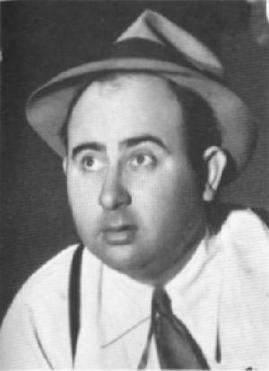
Norman Taurog
Made by

Metro-Goldwyn-Mayer
The Beginning or the End Plot Summary
Read the complete plot summary and ending explained for The Beginning or the End (1947). From turning points to emotional moments, uncover what really happened and why it matters.
An opening newsreel-style sequence sets the tone, presenting atomic energy as a watershed discovery with the gravity to reshape history and even a California time capsule destined to be opened in 2446. Dr. J. Robert Oppenheimer Hume Cronyn speaks with a measured reverence for the breakthrough, praising the power of atomic energy while quietly warning that its dangers must be faced. In the shadows of war, American scientists like Matt Cochran Tom Drake, guided by Dr. Enrico Fermi Joseph Calleia and Dr. Marré Victor Francen, have effectively split the atom and, in doing so, have arguably edged ahead of Germany in the race for a weapon with the potential to end the conflict. The project gains momentum as they brief Albert Einstein on their progress, and a sense of urgent purpose travels up the chain to President Franklin D. Roosevelt Godfrey Tearle, who seconds the extraordinary push toward a wartime breakthrough.
As the United States mobilizes for total war, Roosevelt authorizes a sweeping investment—up to two billion dollars—to advance the Manhattan Project. By December 1942, at the University of Chicago, a pivotal moment arrives: a controlled nuclear chain reaction occurs under the watchful eyes of observers like Lieutenant Colonel Jeff Nixon Robert Walker and a cadre of international experts. General Leslie Groves Brian Donlevy is tasked with uniting scientists, industrial partners, and the defense establishment into a single, formidable effort. In Washington and across laboratories, bureaucratic corridors hum with the sense that history is bending toward a single, terrifying goal. On the military side, General Thomas F. Farrell Henry O’Neill and administrator K.T. Keller John Litel help steer the project through the labyrinth of wartime politics and logistics. The war rages on the Pacific front, and the administration—now under President Harry S. Truman after Roosevelt’s death—continues to back the program, pushing the scientists to accelerate their work.
The narrative then moves to the desert laboratories and the Los Alamos campus, where the project migrates as the work intensifies. Cochran and Nixon are thrust into the core operation: assembling a working atomic device and plotting its delivery to the front lines. The mission unfolds against a backdrop of perilous secrecy, relentless weather, and the constant push-pull between scientific curiosity and battlefield necessity. The film makes real the human dimension of this grand enterprise, threading in close colleagues, families, and the toll of secrecy on daily life. Jean O’Leary Audrey Totter and the Cochran family landscape the emotional stakes, while the crew—led by figures like Capt. William S. Parsons Warner Anderson and others—faces the practical and moral burdens of their assignment.
Tension crescendos as Cochran is exposed to radioactive material during the bomb’s final preparation, a grim reminder of the personal cost behind monumental discoveries. The moment arrives when the Enola Gay drops the first atomic bomb on Hiroshima on August 6, 1945, a turning point that reverberates through every facet of global politics and personal life. In the aftermath, Nixon returns home to deliver the unimaginable news to Cochran’s wife, Anne Cochran Beverly Tyler and to the broader family circle, a stark reminder of the human price paid in service of a wartime goal.
Throughout its running time, the film keeps a careful, contemplative balance between technical triumph and moral consequence. The narrative foregrounds the collaborative effort of scientists, military leaders, and civilians who contributed—often under extreme pressure—to the creation of a device with the power to end a war and redefine the nature of warfare itself. The drama does not flinch from the complexities and ambiguities of invention in wartime, presenting a textured portrait of ambition, responsibility, and the long shadow cast by a decision that forever altered history. A subtle undercurrent of tension—exemplified by the presence of a Nazi Officer Jerry Schumacher—reminds viewers that the stakes extended beyond American shores, shaping the global balance in ways that would continue to unfold long after the war’s immediate end. The conclusion circles back to the film’s opening frame—a reckoning with memory, science, and the enduring question of how humanity should wield great power.
The Beginning or the End Timeline
Follow the complete movie timeline of The Beginning or the End (1947) with every major event in chronological order. Great for understanding complex plots and story progression.
Newsreel prologue and time capsule premise
A newsreel-style prelude presents the film as part of a package about atomic energy. It notes that the atomic bomb is sealed in a time capsule buried in California, to be opened in 2446. The sequence frames the rest of the story as a documentary-style account of scientific power and its consequences.
Oppenheimer praises and warns about atomic energy
Physicist J. Robert Oppenheimer extols the discovery of atomic energy as a milestone in science. He also warns of the tremendous danger if the power is misused. His stance sets up the film's moral tension between scientific achievement and potential catastrophe.
Einstein assists in briefing Roosevelt
Albert Einstein helps frame the briefing to the President about the monumental discovery. The scene underscores the alliance between theoretical breakthroughs and wartime urgency. It signals the government's growing interest in pursuing a nuclear program.
Cochran informs Roosevelt about the discovery
A team including Matt Cochran and other leading physicists informs the President that a monumental scientific breakthrough has been achieved. They outline the potential military applications and stress the wartime urgency driving the effort.
Roosevelt authorizes funding for the Manhattan Project
In 1941, Roosevelt approves up to two billion dollars for the Manhattan Project. The financial commitment underpins the rapid mobilization of scientists and industry. This funding catalyzes the wartime nuclear program.
First nuclear chain reaction achieved at the University of Chicago
In December 1942, scientists achieve the first controlled chain reaction beneath a stadium at the University of Chicago. Lieutenant Colonel Jeff Nixon and international observers witness the milestone, which demonstrates the feasibility of a fission-based weapon. The success validates the core scientific concept behind the project.
Nixon is assigned to General Groves
Lieutenant Colonel Jeff Nixon is assigned to General Leslie Groves, the project chief overseeing the effort. Nixon's role becomes essential for coordinating researchers, engineers, and military components. The assignment links military oversight with scientific teams.
Groves consolidates the project across communities
Groves leads an effort to consolidate scientists, industry, and defense into a cohesive development program. He works to overcome bureaucratic obstacles and keeps momentum toward weapon production. This centralized leadership is crucial for rapid progress.
Roosevelt dies; Truman takes office and Manhattan Project moves to Los Alamos
In 1945, President Roosevelt dies and Harry S. Truman assumes office. Truman continues support for the project, which is relocated to Los Alamos, New Mexico. The move concentrates the effort in a single, specialized site for weapon development.
Truman authorizes use of atomic bomb against Japan
Facing stiff resistance in the Pacific War, Truman orders the use of the atomic bomb against Japan in July 1945. The decision accelerates the war toward its conclusion and marks the onset of a new era in military technology. It puts the weapon from the lab into imminent combat use.
Cochran and Nixon escort the bomb to Tinian
Cochran and Nixon join the crew transporting the bomb to Tinian Island for final assembly. The mission highlights the logistical scale and urgency of preparing the weapon for deployment. It marks a transition from development to operational readiness.
Cochran is exposed to radiation and dies
While assembling the device, Cochran comes into contact with radioactive material and dies. His death underscores the fierce human costs hidden within the scientific race. The tragedy personalizes the broader narrative of wartime technological pursuit.
The Enola Gay drops the bomb on Hiroshima
On August 6, 1945, the Enola Gay drops an atomic bomb on Hiroshima. The bombing demonstrates the weapon's extraordinary destructive power and drives the world toward the war's end. It also triggers a moral and humanitarian reckoning that shapes postwar discourse.
Nixon informs Cochran's wife back home
Nixon returns home to break the news of Cochran's death to Cochran's wife. The moment personalizes the war, juxtaposing scientific achievement with personal tragedy. It emphasizes the human cost behind the monumental scientific endeavor.
The Beginning or the End Characters
Explore all characters from The Beginning or the End (1947). Get detailed profiles with their roles, arcs, and key relationships explained.
Dr. J. Robert Oppenheimer (Hume Cronyn)
A leading physicist who both applauds atomic energy and warns of its dangers. He embodies the tension between scientific curiosity and ethical responsibility, guiding discussions about how the discovery should be used.
Matt Cochran (Tom Drake)
A dedicated Manhattan Project scientist working under Fermi and Marré. He is committed to the mission, but exposure to radioactive material leads to his death, underscoring the personal risks involved.
Dr. Enrico Fermi (Joseph Calleia)
A key physicist guiding the team and accelerating the project; his leadership helps achieve the first chain reaction. He embodies practical genius and collaborative spirit.
Dr. Marré (Victor Francen)
Senior researcher collaborating with Cochran, contributing to the theoretical and experimental work. He navigates technical challenges and the moral implications of the bomb project.
Dr. Chisholm (Richard Haydn)
An international expert on the project who participates in the collaboration; provides theoretical perspective and contributes to debates.
Dr. Vannevar Bush (Jonathan Hale)
Advisor overseeing the integration of science, industry, and government; acts as a bridge between researchers and national policy.
Gen. Thomas F. Farrell (Henry O'Neill)
A military general coordinating the project at the highest level, balancing security concerns with scientific goals.
President Franklin D. Roosevelt (Godfrey Tearle)
The wartime president who authorizes substantial funding and sets priorities for the Manhattan Project.
Maj. Gen. Leslie R. Groves (Brian Donlevy)
Project head who unites scientists, industry, and defense; known for his pragmatic, relentless drive.
Col. Jeff Nixon (Robert Walker)
Colonel assigned to Groves, supervising operations and accompanying the bomb transport crew.
Jean O'Leary (Audrey Totter)
A civilian connected to Cochran, representing the personal stakes and home-front perspective of wartime science.
Capt. William S. Parsons (Warner Anderson)
Navy officer overseeing aspects of the bomb's assembly and deployment during the project.
Anne Cochran (Beverly Tyler)
Wife of Cochran, illustrating the emotional cost and human impact of wartime scientific work.
Waitress (Ellen Ross)
A minor character whose presence humanizes everyday life amid the extraordinary scientific effort.
The Beginning or the End Settings
Learn where and when The Beginning or the End (1947) takes place. Explore the film’s settings, era, and how they shape the narrative.
Time period
1941–1945
Set during World War II, the story spans the period from U.S. entry into the war in 1941 through the intensification of the Manhattan Project in 1942 and its culmination in 1945. The film traces government funding and presidential decisions, the development of the first reactor on a university campus, and the shift from scientific discovery to military deployment. It ends with the bombing of Hiroshima on August 6, 1945 and the immediate personal impact on families.
Location
Chicago, Los Alamos, Tinian, Hiroshima, California
The film traverses key sites of the Manhattan Project: the University of Chicago where the first chain reaction occurred, the remote laboratories of Los Alamos, and the transport route to Tinian for the final weapon. It also depicts the mission that culminates in the bombing of Hiroshima and the personal toll on families back home in California. These locations anchor the story in a wartime landscape of secrecy, innovation, and consequence.
The Beginning or the End Themes
Discover the main themes in The Beginning or the End (1947). Analyze the deeper meanings, emotional layers, and social commentary behind the film.
⚖️
Ethics
Atomic energy is celebrated for its scientific achievement, yet the film repeatedly raises questions about its moral implications. Oppenheimer voices the warning that incredible power must be tempered by responsibility. The narrative treats innovation as a dual-edged force that can save lives or destroy them.
💥
Power & Destruction
The discovery accelerates into a weapon of unprecedented destructive potential. The project’s leaders grapple with how to wield this power, knowing it could end wars or reignite them. The bomb’s deployment on Hiroshima marks a turning point in history and in personal lives.
🤝
Leadership
The story centers on the challenge of coordinating scientists, military leaders, and government officials. Groves and Nixon drive a sprawling, multi-institution effort, balancing secrecy with urgency. The film highlights how decisive leadership can accelerate progress while amplifying risks.
🔬
Science & Progress
The narrative tracks the collaborative rush of theory, experimentation, and engineering. It underscores how ideas from Fermi, Marré, Chisholm, and others converge to achieve a landmark scientific breakthrough. The work reflects both the exhilaration of discovery and the heavy burden of its potential consequences.

Coming soon on iOS and Android
The Plot Explained Mobile App
From blockbusters to hidden gems — dive into movie stories anytime, anywhere. Save your favorites, discover plots faster, and never miss a twist again.
Sign up to be the first to know when we launch. Your email stays private — always.
Explore the mobile appThe Beginning or the End Spoiler-Free Summary
Discover the spoiler-free summary of The Beginning or the End (1947). Get a concise overview without any spoilers.
In a stark, newsreel‑style opening the film presents a world on the brink of a scientific revolution, where the discovery of atomic energy is treated as a forbidden door that could reshape humanity. The narrative frames this breakthrough against the backdrop of a global war, hinting at the soaring aspirations and looming dread that accompany such power. Through a blend of dramatized reenactments and authentic archival footage, the mood is both reverent and unsettling, inviting viewers to contemplate the cost of knowledge before the story truly unfolds.
At the heart of the endeavor stands Dr. J. Robert Oppenheimer, a physicist whose measured awe for the atom is matched by a quiet warning about its dangers. He works alongside a cadre of brilliant but uneasy minds, including Matt Cochran, a young scientist thrust into the project’s inner circle, and Lieutenant Colonel Jeff Nixon, the military officer tasked with translating laboratory triumphs into strategic realities. Overseeing the sprawling enterprise is General Leslie Groves, whose decisive, bureaucratic drive pulls together scientists, industry leaders, and the armed forces. Their interactions reveal a fragile alliance built on urgency, secrecy, and the ever‑present tension between curiosity and responsibility.
The political arena adds an equally weighty layer of intrigue. Presidents and policymakers, first Franklin D. Roosevelt and later Harry S. Truman, allocate unprecedented resources, turning the scientific quest into a national priority. Within the corridors of power, figures such as Jean O’Leary and the Cochran family illustrate the personal stakes that accompany the monumental effort, reminding us that behind every technical milestone lie intimate lives reshaped by secrecy and moral doubt. The film delicately balances these high‑level decisions with the quieter, human moments that echo throughout the laboratory halls.
Stylistically, the movie weaves together period newsreels, meticulous set pieces, and stark documentary aesthetics, creating a contemplative atmosphere that feels both historic and immediate. The tone is one of sober wonder, inviting the audience to linger on the paradox of a breakthrough that promises both salvation and annihilation. By focusing on the collaborative spirit, the ethical quandaries, and the lingering question of how humanity ought to wield such unprecedented power, the story sets the stage for a profound exploration of ambition, responsibility, and the shadows cast by a discovery that changed the course of history.
Movies with Similar Twists and Themes
Uncover films that echo the narrative beats, emotional arcs, or dramatic twists of the one you're exploring. These recommendations are handpicked based on story depth, thematic resonance, and spoiler-worthy moments — perfect for fans who crave more of the same intrigue.
Featured on this page

What's After the Movie?
Not sure whether to stay after the credits? Find out!
Check out our other apps:

SAT Sphere
Build confidence for the Digital SAT.

Mori Atlas
Discover wild places worth protecting.

Luntero
Search smarter for a home in Amsterdam.

Plot Explained
Unravel movie endings and hidden clues.

Pokechamp
Dive into Pokémon data and battle logic.

Driving Theory
Get ready for your European theory test.

Movie Dust
Plan your next cinema trip with ease.

Musemap
Find art and culture as you travel.

Selkobase
Compare credentials before committing.

Local Manual
Turn an unfamiliar country into practical next steps.

Lernavi
Compare school systems before your next move.

GymRoam
Find a workout stop wherever your plans take you.
Explore Our Movie Platform
New Movie Releases (2026)
Famous Movie Actors
Top Film Production Studios
Movie Plot Summaries & Endings
Major Movie Awards & Winners
Best Concert Films & Music Documentaries
Movie Collections and Curated Lists
© 2026 What's After the Movie. All rights reserved.
Privacy Policy