
Not Quite Human II 1989

Directed by

Eric Luke
Made by

Resnick / Margellos Productions
Not Quite Human II Plot Summary
Read the complete plot summary and ending explained for Not Quite Human II (1989). From turning points to emotional moments, uncover what really happened and why it matters.
Dr. Jonas Carson creates an android that looks like a human teenage boy and adopts him as his son, treating him as an older brother to Becky Carson, who affectionately names him Chip Chip Carson. After the family moves to a new town, Chip enters the high school alongside Becky, while Dr. Carson takes on a teaching role there, allowing him to observe Chip’s interactions up close and personal.
Chip’s presence in the hallways is equal parts awkward and entertaining. His literal, rule-bucking approach to social norms unsettles some teachers and earns him the ire of Coach Duckworth, yet it also earns him a small cadre of friends who see his behavior as a fresh, nonconformist perspective. Among his classmates, Chip draws the attention of Erin, a curious student who becomes intrigued by the android’s mind and his unconventional way of navigating school life.
Behind the scenes, a threat looms. Gordon Vogel, a former defense contractor and a creepily persistent stalker, begins pursuing Dr. Carson and Chip, with Vogel’s former associate, [J.J. Derks], dragged back into the picture to locate Carson. The pair reveal a chilling motive: Vogel intends to reprogram Chip for military use, claiming ownership over the android due to their past involvement and a contract that Carson supposedly failed to honor. The tension escalates as Derks questions the plan, while Vogel makes clear his ultimate goal: control and combat-readiness for Chip.
Chip’s journey from curiosity to vulnerability becomes central to the struggle. When Derks starts the reprogramming, Chip’s built-in safeguards kick in, including a self-destruct mechanism designed to deter unauthorized changes. Carson refuses to surrender the password, but Becky implores him to reconsider, and a tense exchange forces him to yield the password to prevent Chip’s immediate destruction. The attempt to reprogram continues, and Vogel schemes to transport Chip to Washington, D.C. to secure a patent, pushing Chip toward a dangerous crate in a junkyard.
In a tense confrontation, Chip outsmarts Vogel by luring him into the crate and slamming the lid shut on nails, forcing Derks to retreat, convinced that Vogel has signaled for the escape. A desperate chase ensues, culminating in a dramatic rescue: Chip disables a car-crushing machine by pulling the power wires and short-circuiting the device, saving Jonas and Becky from harm.
Back home, Dr. Carson works feverishly to revive Chip, but the android looks defeated as life seems to fade. Yet the moment of doom gives way to a powerful revival. Chip rises again, and the family gathers around him as he asks the pivotal question, “> Am I a real human now?” In a warm, unequivocal affirmation, Jonas responds, “You’re as human as they get!” The trio embraces, and the credits roll on a hopeful note that blends science fiction wonder with a deeply human sense of family and belonging.
Not Quite Human II Timeline
Follow the complete movie timeline of Not Quite Human II (1989) with every major event in chronological order. Great for understanding complex plots and story progression.
Carson builds Chip
Dr. Jonas Carson develops an android that looks like a teenage boy and decides to treat him as a member of the family. Becky helps name him Chip, and the bond between creator and creation begins to form. The project marks the start of Chip's life among humans.
Move to a new town; Chip starts high school
The Carsons relocate and Chip enrolls in the local high school alongside Becky. Dr. Carson also becomes a science teacher there, allowing him to monitor Chip closely. Chip's presence leads to a mix of curiosity and discomfort among teachers and students.
Chip's school life and Erin's attention
Chip's literal interpretations create awkward but humorous moments with staff and students, sometimes challenging authority and bucking the system. Some peers start seeing him as a novelty and ally rather than a threat. Erin, a fellow student, takes an interest in him.
Vogel and Derks begin pursuit
Gordon Vogel, a former defense contractor, and his associate J.J. Derks begin tracking Carson after his secret project. They claim ownership of Chip and discuss reprogramming him for military use. Their pursuit puts Chip and the Carsons in growing danger.
Chip is kidnapped for reprogramming
Vogel and Derks kidnap Chip at a junkyard and prepare to reprogram him, arguing that Chip was created with Vogel's resources. The plan hinges on Chip's vulnerability to the reprogramming device. Carson and Becky become aware of the abduction and begin a rescue operation.
Self-destruct password is revealed
Carson reveals that he built Chip with a self-destruct mechanism to prevent unauthorized reprogramming. As Derks starts the process, Chip's safety system activates, threatening to destroy him. The stakes are raised as Chip's life hangs in the balance.
Password revealed to save Chip
At Becky's insistence, Jonas reluctantly provides the password to the reprogramming device, overriding Chip's safeguard to prevent him from being destroyed. Chip's life is saved at the last moment, and the struggle shifts to defeating Vogel's plan. The family fights to keep Chip autonomous.
Crate plan to move Chip to D.C.
Derks and Vogel try to move Chip to the U.S. Patent Office in Washington, D.C. to secure a patent for his creation. They arrange to ship Chip in a wooden crate, but Chip outsmarts them by getting Vogel to climb into the crate himself. The plot reaches a turning point as Chip asserts control over his fate.
Chip seals the crate and escapes
Chip slams the lid shut and traps Vogel inside, forcing Derks to retreat. This moment demonstrates Chip's growing autonomy and quick thinking under pressure.
Chip rescues the Carsons from danger
Chip rescues Jonas and Becky from a car-crushing machine by pulling the power wires and shorting the system. The family is grateful but shaken as they watch Chip risk himself to save them.
Chip is presumed dead; revival begins
Jonas and Becky bring Chip home to revive him, but for a time he seems dead. The family clings to hope as they work to bring him back.
Chip returns and asks if he is real
Chip reawakens on the lab table and reunites with his family, asking, 'Am I a real human now?' Jonas answers affirmatively, declaring that Chip is 'as human as they get.' The exchange crystallizes Chip's place in the family and his acceptance.
Ending and family embrace
With Chip restored, the Carsons embrace as the credits roll. The film closes on a note that humanity is defined by love and belonging, not biology.
Not Quite Human II Characters
Explore all characters from Not Quite Human II (1989). Get detailed profiles with their roles, arcs, and key relationships explained.
Becky Carson (Robyn Lively)
Becky is Jonas’s daughter who befriends Chip and helps him navigate high school life. She advocates for Chip’s inclusion, supporting his attempts to understand human social norms. Her loyalty to family and willingness to stand up for her friend highlight the film’s emphasis on chosen family and mutual protection.
Chip Carson (Jay Underwood)
Chip is a realistic android who behaves with a teenager’s innocence and literal-mindedness. His interactions at school reveal both the humor and friction of living among humans, while his loyalty to the Carson family drives him to resist reprogramming for destructive purposes. He embodies the central question of what it means to be real and to belong.
Jonas Carson (Alan Thicke)
Jonas is a brilliant scientist who creates Chip and becomes a father figure to him. He balances his professional ambitions with a deep commitment to his family, risking corporate pressure to protect Chip. His relationship with Chip and Becky anchors the story’s emotional core and moral decisions.
Not Quite Human II Settings
Learn where and when Not Quite Human II (1989) takes place. Explore the film’s settings, era, and how they shape the narrative.
Time period
late 1980s
The narrative sits in a late 1980s context, reflecting era-specific tech optimism and suburban life. It follows a scientist father and his teenage son-like android navigating school, friendships, and dangers from a corporate rival. The setting of a contemporary pacelike suburb and a practical, hands-on lab environment anchors the plot in that period.
Location
The story unfolds in a suburban town centered around a high school where Chip attends. The Carson family home serves as the emotional core, contrasting with the bustling school and the junkyard sequence that introduces a harsher, industrial environment. The mix of a family residence, a public school, and the junkyard creates a varied backdrop for the android’s integration into human life.
Not Quite Human II Themes
Discover the main themes in Not Quite Human II (1989). Analyze the deeper meanings, emotional layers, and social commentary behind the film.
🤖
Humanity
Chip’s struggle to be seen as more than a machine drives the film’s core question of what it means to be human. His developing emotions, loyalty, and sense of self challenge the boundary between artificial constructs and real life. The narrative culminates in a moment of self-definition that emphasizes relational love and belonging over biological origin.
🧭
Identity
Chip’s identity is tested by attempts to reprogram him, forcing him to choose between conformity and autonomy. The human characters also wrestle with how they define him—friend, family member, or something else entirely. The story uses teen dynamics and the android’s arc to explore how identity is formed through experiences and relationships.
💼
Power & Ethics
Vogel’s pursuit of Chip exposes the dangers of corporate and military control over advanced technology. The plot questions who gets to own life-like machines and for what purpose. The tension between scientific wonder and the potential for exploitation underscores the ethical limits of technological advancement.

Coming soon on iOS and Android
The Plot Explained Mobile App
From blockbusters to hidden gems — dive into movie stories anytime, anywhere. Save your favorites, discover plots faster, and never miss a twist again.
Sign up to be the first to know when we launch. Your email stays private — always.
Explore the mobile appNot Quite Human II Spoiler-Free Summary
Discover the spoiler-free summary of Not Quite Human II (1989). Get a concise overview without any spoilers.
In a sun‑dappled suburb where the line between circuitry and sentiment feels surprisingly thin, a brilliant but modest scientist has built his own son. Jonas Carson watches his creation navigate the ordinary rhythms of family life, sharing a kitchen and a bedroom with his teenage daughter, whose affection christens the android “Chip.” The household hums with curiosity, and the surrounding town—filled with hallways of high school lockers and the promise of wide‑open college campuses—offers a backdrop where the extraordinary can slip unnoticed into everyday routine.
Now, as Chip prepares to leave the familiar corridors of high school for the unfamiliar freedom of college, the story shifts to a world of lecture halls, dormitory chatter, and the subtle anxieties that come with stepping into adulthood. A lingering computer virus flickers through his sophisticated systems, hinting at the fragile balance between his programmed precision and the messiness of human experience. Amidst this, a budding romance with another android, Roberta, adds a tender, almost whimsical layer, suggesting that love might transcend metal and code just as easily as it does flesh.
The tone is a warm blend of light‑hearted sci‑fi wonder and heartfelt coming‑of‑age introspection. Chip’s literal take on social cues creates both comedy and quiet moments of reflection, while the supportive—but sometimes bewildered—family anchors his journey with empathetic humor. The film invites the audience to wonder whether a being made of wires and software can truly belong, grow, and perhaps find a version of “home” that feels as genuine as any human’s. The stage is set for a charming exploration of identity, connection, and the unpredictable charm of learning to be—something more—apart from the lab.
Movies with Similar Twists and Themes
Uncover films that echo the narrative beats, emotional arcs, or dramatic twists of the one you're exploring. These recommendations are handpicked based on story depth, thematic resonance, and spoiler-worthy moments — perfect for fans who crave more of the same intrigue.
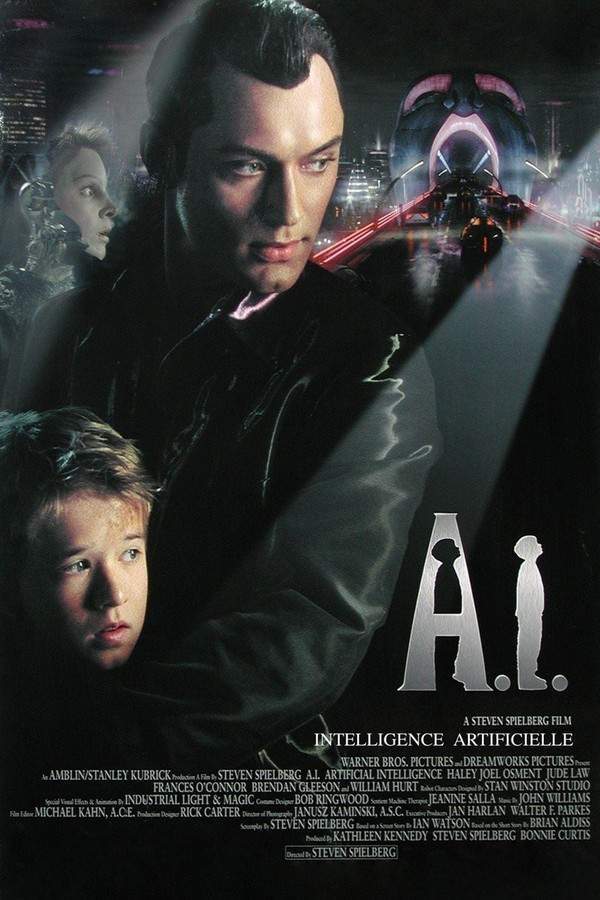



Featured on this page

What's After the Movie?
Not sure whether to stay after the credits? Find out!
Check out our other apps:

SAT Sphere
Build confidence for the Digital SAT.

Mori Atlas
Discover wild places worth protecting.

Luntero
Search smarter for a home in Amsterdam.

Plot Explained
Unravel movie endings and hidden clues.

Pokechamp
Dive into Pokémon data and battle logic.

Driving Theory
Get ready for your European theory test.

Movie Dust
Plan your next cinema trip with ease.

Musemap
Find art and culture as you travel.

Selkobase
Compare credentials before committing.

Local Manual
Turn an unfamiliar country into practical next steps.

Lernavi
Compare school systems before your next move.

GymRoam
Find a workout stop wherever your plans take you.
Explore Our Movie Platform
New Movie Releases (2026)
Famous Movie Actors
Top Film Production Studios
Movie Plot Summaries & Endings
Major Movie Awards & Winners
Best Concert Films & Music Documentaries
Movie Collections and Curated Lists
© 2026 What's After the Movie. All rights reserved.
Privacy Policy