
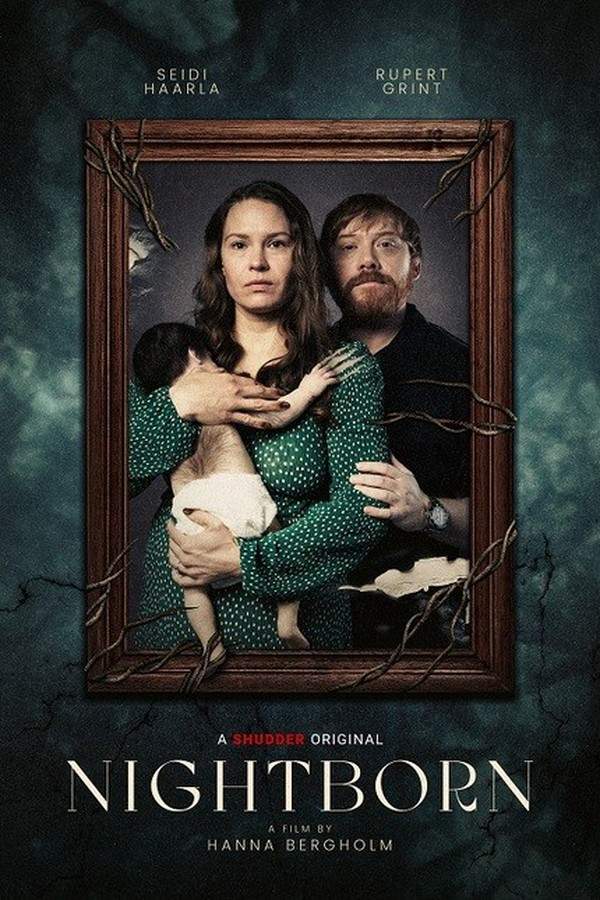
What Is Nightborn About?
The premise of Nightborn in 289 words, with nothing given away. The full story and the ending follow below.
In an isolated stretch of Finnish forest, a weathered family home holds the quiet memories of Saga’s childhood. Together with her British husband Jon, she returns to the house that once belonged to her late grandmother, hoping to transform it into a place where they can finally build the family they have long dreamed of. The surrounding woods are vast, ancient, and watchful, wrapped in a stillness that feels almost alive. As renovations begin, Saga is drawn back to the landscape that shaped her, while Jon embraces the promise of a new beginning far from his own roots.
Their joy reaches a turning point when their son is born, though the birth itself is difficult and shadowed by uneasy silences. From the very first days, Saga feels a deep, unshakable sense that something about her child is not right, a fear that those around her gently dismiss as exhaustion or the anxieties of new motherhood. The infant seems unsettled by the world, and Saga finds herself caught between her own instincts and the reassurances of family, doctors, and the life she has so carefully constructed.
As the seasons change, the marriage that once felt so certain begins to fray. Jon tries to protect his wife and child, but the longer they remain in the house, the more the forest seems to press in around them, its presence growing heavier with each passing night. Saga’s bond with her son deepens into something fierce and private, while Jon struggles to understand the distance growing between them. Shadows lengthen across the floorboards, and what was once a dream of togetherness slowly gives way to an atmosphere of dread, where the line between maternal love and something far more unsettling begins to blur.
What Happens in Nightborn?
The complete story of Nightborn, from the first scene to the last, in 907 words (about 4 minutes). Spoilers throughout. Names in the text link to 5 cast member pages.
Spoilers ahead
In the shadowed Finnish forest, Saga and Jon venture into a derelict house that once belonged to Saga’s late grandmother, a place steeped in memory and quiet foreboding. They discover a tree forcing its way through the floorboards of the bedroom [Saga] shared with her sister, Taru, a sight that feels almost sacred and terrifying all at once. Jon envisions rejuvenating the ruin into a warm family home where they can raise children together, a plan that promises continuity and belonging. Into the surrounding woods they go, and Saga reaches out to a tree whose trunk resembles a pregnant belly, a primal image that lingers as they share an intimate moment amidst the trees. The moment is charged with both tenderness and unease, as if the forest itself is listening.
Saga’s childbirth proves devastatingly difficult, tearing her birth canal in a way that unsettles everyone present, and the infant—a baby boy—emerges disturbingly silent. On the maternity ward, the infant’s cries come only when the curtains are drawn back, a haunting sign of something not right. Breastfeeding leaves Saga’s breasts bloodied and swollen, and the baby’s skin is thick with dark, almost hairlike growth. The newly renovated house soon hosts a nursery where Saga’s childhood bedroom now sits, a stark shift from the girlhood of years past.
During a visit from Saga’s mother, Saga’s mother and Taru, Saga voices a growing fear that something is deeply wrong with the baby, calling him only “it” as if naming him could banish the unease. Her mother remains practical, brushing aside the concerns even after the infant violently tears a piece from Saga’s earlobe, a jolt that unsettles the already strained nerves of everyone in the house. A naming ceremony in the garden unsettles the guests further; the baby’s appearance and his stark, visceral cries unsettle the crowd, while a gust of wind from the forest sweeps a cover over the stroller, shielding him from the sun’s light. Saga declares the baby will be named Kuura, a choice that stings Jon, who had hoped to name him Christian after his father. As the sun retreats, the light leaves dark burns on Kuura’s skin, a troubling omen.
Kuura’s behavior grows increasingly strange. One night, Saga falls asleep while trying to soothe him, and when she wakes, she finds he has slipped from his cot and is transfixed by the tree that has begun to push through the nursery floor again. The next morning, Jon discovers the floorboards ripped apart and Saga sleeping among the tree’s roots, cradling Kuura. A cut on Saga’s hand reveals Kuura feeding on her blood, an act that chills her but also signals a disturbing bond forming between mother and child. At a local clinic, a clinician brushes off Saga’s worries, insisting Kuura is simply advanced for his age and recommending counselling to help her bond with him. In defiance, Saga begins secretly feeding Kuura blood instead of milk, a decision she keeps hidden from Jon.
Meanwhile, Taru recounts the grandmother’s warnings about the forest’s dangers, mentioning that she kept scrap metal around because “cold iron bursts them.” The property’s menacing atmosphere deepens as Jon’s parents visit; his father—John Thomson—blesses Kuura with holy water, an act that has no physical effect on the child, yet the sense of ritual clashes with the growing sense that something elemental and dangerous resides within the boy. Later, when Kuura grasps an unused, cold iron, his hand is severely burned, a cruel coincidence that fuses the supernatural with the mundane in the family’s eyes.
Tensions between Saga and Jon escalate as he worries that Saga is not socializing Kuura properly or seeking the help the clinician suggested. He discovers she hasn’t pursued the referral, and a fierce argument pushes him to leave the house with Kuura, a move that triggers a violent confrontation. Saga awakes to find Kuura’s grip on her, and she locks herself in the bathroom while he tries to breach the door, threatening to end them both. She calls her mother in a panic, admitting a fear that she might need to kill Kuura to protect herself, though her mother insists there is nothing extraordinary at play.
An overnight trip to the city only widens the rift; separated from her son, Saga develops a painful rash that only fades when she hurries back to the house. Kuura’s violence intensifies as a visit from Taru brings Anna, and Kuura bites off Anna’s finger. Jon attempts to feed Kuura ordinary baby food, but the boy rejects it, hurling a jar at him, and Saga begins feeding him raw meat instead. Jon accuses Saga of turning Kuura into a monster, and a desperate, physical struggle erupts when he tries to take Kuura outside the house. Branches erupt through the nursery floor and windows during the clash, fatally impaling Jon through the chest, a brutal, almost inevitable moment in a conflict that has simmered for months. Saga and Kuura, driven by something primal, feed on Jon’s blood and heart, sealing a chilling, intimate bond between mother and son in the wake of tragedy.
In the final, unsettling image, Kuura runs into the garden as a humanoid figure separates itself from one of the trees and approaches with outstretched arms. Saga watches from the porch, a wry, uncertain smile crossing her face as Kuura giggles and returns the smile, suggesting a future that is inseparable from the forest’s reach and the family’s darkest secrets.
Nightborn Timeline: Every Key Event in Order
15 key events in the order they happen, from “Discovery of the derelict house” to “Final confrontation and the ending”. 15 events name a place, across 14 locations.
- 1
Discovery of the derelict house
Saga and Jon explore a derelict house in the Finnish forest and immediately notice a tree growing through the floorboards in the bedroom Saga shared with her sister Taru. They discuss the history of the place and the possibility that it could be renovated rather than abandoned. Jon suggests turning the ruin into a family home, while Saga feels a mix of hope and unease about the plan.
When:Day 1 Where:Derelict house, Finnish forest
- 2
Forest moment and renovation vow
In the surrounding forest, Saga embraces a tree whose trunk resembles a pregnant belly and the moment is charged with danger and intimacy. They make love there, and the encounter strengthens their resolve to create a family home. They decide to renovate the house into a place to raise children together.
When:Evening Where:Forest near the house
- 3
Birth of Kuura
Saga endures a difficult childbirth with the birth canal tearing badly. The baby is unsettlingly silent at first, crying only when the curtains are opened. The room is tense as Kuura arrives.
When:Birth night Where:Maternity ward
- 4
Kuura's fragile start
Breastfeeding leaves Saga's breast bloodied and swollen as she struggles to feed the newborn. Kuura is born with thick black hair covering his skin, adding to the sense that something is not normal. The atmosphere at the maternity ward grows increasingly uneasy.
When:Days after birth Where:Maternity ward
- 5
Nursery and anxious mother
Back at the renovated house, Saga's childhood bedroom is converted into a nursery for Kuura. When her mother and Taru visit, Saga voices concerns that something is wrong with the baby, but her family dismisses her fears.
When:Weeks after birth Where:Renovated house nursery
- 6
Naming ceremony and unsettling sun
During a garden naming ceremony, guests are unsettled by Kuura's appearance and his visceral cries. A gust of wind from the forest sweeps a cover over his stroller, shielding him from the sunlight. Saga also notes the sunlight has left deep burns on Kuura's skin.
When:Naming ceremony day Where:Garden
- 7
Kuura fixates on the tree
Kuura becomes transfixed by the tree that has begun growing again through the nursery floorboards. Saga struggles to calm him as he stares at the living phenomenon. The eerie focus marks a turning point in their home life.
When:Night after naming ceremony Where:Nursery
- 8
Morning discovery
The following morning Jon discovers the floorboards torn up and Saga asleep among the tree roots, cradling Kuura. The house feels increasingly unstable as the forest seems to press in. This finds their family life teetering on edge.
When:Following morning Where:Nursery/house
- 9
Blood exchange begins
Saga accidentally cuts herself on broken glass and Kuura is seen sucking her blood. The moment marks a disturbing shift in their bond and hints at a danger growing within Kuura. The atmosphere becomes darker as the family routines collapse.
When:Same day night Where:Nursery / bathroom
- 10
Clinic dismisses concerns, feeding secret
At a baby clinic, a clinician dismisses Saga's worries and attributes Kuura's development to being advanced for his age, referring her for counselling to help bond with him. Saga leaves with that diagnosis but begins secretly feeding Kuura blood instead of milk at home, signaling a dangerous turn.
When:Soon after Where:Baby clinic, then home
Show the other 5 events of Nightborn Hide the last 5 events
- 11
Forest warnings and holy water
Taru recounts her grandmother's warning that the surrounding forest is dangerous and that cold iron can burst the grip of the malign influence. When Jon's father, a vicar, blesses Kuura with holy water, it has no physical effect, but the moment underscores the child's odd vulnerability. Later, Kuura's contact with cold iron causes a painful burn on his hand.
When:A few days later Where:Garden/house
- 12
Growing estrangement
Jon expresses concern that Saga is failing to socialise Kuura and bonds poorly with him. He confronts Saga about parenting and storms out, leaving her alone with Kuura to cope with the mounting tension.
When:Evening Where:House
- 13
Saga's city trip and a rash
Saga travels to the city to visit friends, and the separation from Kuura triggers a severe rash that disappears only when she rushes home to be with him. The distance between mother and son heightens the sense of danger surrounding Kuura.
When:Overnight trip Where:City
- 14
Kuura's violence escalates
Kuura becomes increasingly violent, biting Anna's finger during a visit from Taru and Anna. Jon tries to feed him, but Kuura shoves the spoon away and hurls a jar at him; Saga then feeds Kuura raw meat, and Jon accuses Saga of turning him into a monster. A brutal confrontation unfolds in the house.
When:Evening Where:Garden / House
- 15
Final confrontation and the ending
During the confrontation, tree branches erupt through the nursery floor and windows, fatally impaling Jon. Saga and Kuura feed on Jon's blood and heart, sealing a nightmarish union. In the aftermath, Kuura runs into the garden where a humanoid figure separates itself from one of the trees and approaches him as Saga watches from the porch, with Kuura smiling back.
When:Aftermath Where:Garden / Nursery
Who Are the Main Characters in Nightborn?
6 characters, among them Saga (Seidi Haarla), Jon (Rupert Grint) and Kuura: who each one is and the part they play in the story. 5 of them link to the actor’s page.
-
Saga (Seidi Haarla)
Played by Seidi Haarla
Saga is a devoted mother whose love for Kuura becomes entangled with fear as the child’s true nature reveals itself. She longs to make a warm home, but the forest and Kuura’s hunger push her toward drastic choices, including covertly feeding the infant blood. Her grip on reality loosens as she grapples with what her son might become.
- 🌿 Maternal
- 🌳 Obsession
- 🩸 Blood ties
-

Jon (Rupert Grint)
Played by Rupert Grint
Jon is Saga's pragmatic partner who wants a stable family life and a safe home. He grows increasingly wary of Kuura and questions Saga's handling of the child, pushing for rational solutions. Their conflict escalates into blunt confrontations, culminating in a fatal confrontation with the forest’s power.
- 🧰 Practical
- 🛡️ Protector
- K
Kuura
Kuura is the baby boy whose birth marks a turning point, described as unusually quiet with a troubling growth of thick black hair. He exhibits increasing violence, bites, and a predatory hunger that disturbs those around him. His bond with the forest deepens, making him both a child and a danger to his family.
- 🍼 Baby
- 🩸 Bloodthirsty
- T(
Taru (Pamela Tola)
Played by Pamela Tola
Taru is Saga's sister who anchors the family with warnings about the forest's danger. She recounts grandmother's cautions and explains protective lore about the property, including iron and other safeguards. She provides grounded insight amid the escalating supernatural events.
- 👭 Sister
- ⚠️ Warning
- SM
Saga's Mother (Pirkko Saisio)
Played by Pirkko Saisio
Saga's mother offers a maternal perspective, often dismissing concerns while trying to remain supportive. She embodies generation-spanning attitudes toward motherhood and safety, reminding Saga of practical realities even as the uncanny unfolds. Her presence grounds the family in familiar, if anxious, ordinary life.
- 👩 Mother
- 🗣️ Voice of reason
- JF
Jon's Father (John Thomson)
Played by John Thomson
Jon's Father is a vicar who briefly blesses Kuura with holy water, a gesture that carries symbolic weight but lacks real protection against the child’s growing threat. He represents a religious or ritual response to the inexplicable events surrounding the family. His involvement underscores the tension between faith and the horror that unfolds.
- 👨 Father
- ⛪ Cleric
Where and When Is Nightborn Set?
Nightborn is set in Finnish forest and derelict house. Here is why the place matters to the story.
Where
Finnish forest, derelict house
The story centers on a derelict house deep in a Finnish forest, the setting that becomes both sanctuary and trap for Saga and Jon. The surrounding woods loom as a silent, ominous presence, shaping the mood with an air of ancient danger. A nursery built atop floorboards from which a tree later grows binds the home to the forest in unsettling, physical ways.
- 🌲 Finnish forest
- 🏚️ Derelict house
What Are the Themes of Nightborn?
3 ideas the story keeps returning to, among them Nature's Hold, Body Horror and Parenthood & Fear.
-
01
Nature's Hold
The forest is an active force that intrudes into the home, turning walls and floors into extensions of the woods. Tree growth through the nursery floor and branches bursting into windows symbolize nature reclaiming space from human plans. The setting uses nature to generate dread, suggesting humanity cannot fully contain or control the environment.
-
02
Body Horror
Kuura's transformation unfolds through grotesque physical signs: an unnerving silence, unusual hair, and feeding that involves blood. His violent impulses escalate, biting and consuming in ways that threaten his family’s safety. The film uses bodily change to explore fear, motherhood, and the limits of parental protection.
-
03
Parenthood & Fear
Saga's maternal instincts are tested as she navigates love, secrecy, and growing danger surrounding Kuura. Jon wants a normal, secure family life but confronts the uncanny reality of their child. The couple's bond erodes under strain, highlighting how love can collide with the unknown.
How Does Nightborn End?
The last act of Nightborn and what it means, in 218 words. The ending lands as ambiguous. Big spoilers: read the plot summary first if you have not seen it.
The final act, in full
Saga stops trying to make Kuura conform to an ordinary human child and begins accepting his appetite and affinity with the forest. Jon, horrified by the raw meat and Saga’s transformation, announces that he will seek divorce and primary custody. When he tries to take Kuura away, the child raises his arms and trees surge through the house; a branch impales and kills Jon. Saga cuts out part of his heart and offers it to Kuura, then opens the door after biting herself. Troll-like forest beings wait outside, confirming that the supernatural signs were not merely a private expression of postnatal fear.
Saga allows Kuura to run toward the beings, but he ultimately chooses to remain with her. The reversal completes a relationship that began with Saga calling him an it and experiencing motherhood as compulsory intimacy with something she could not recognize. Her acceptance is deliberately monstrous rather than comforting: Jon is dead, the domestic house has been reclaimed by trees, and mother and child share an identity rooted in blood and folklore. Yet Kuura’s choice also makes their connection voluntary for the first time. The ending does not restore a conventional family; it lets Saga and Kuura stop performing one and acknowledge the nature that both the home and the people around them tried to suppress.
What Kind of Film Is Nightborn?
Dark in tone, with slow pacing and a moderate story, going by the plot summary.
- Tone
- Dark
- Pacing
- Slow
- Story
- Moderate
- Intensity
- High
- Ending
- Ambiguous
A slow burning, deeply unsettling folk horror that creeps into your skin as a couple's rural family dream curdles into maternal dread and visceral supernatural violence, leaving a lingering sense of wrongness.
- oppressive
- slow burn
- unsettling
- folk horror
- eerie
- dread-filled
- maternal horror
- supernatural child
- forest mythology
- marriage breakdown
Content notes: child endangerment, infanticide, graphic violence, impalement, mutilation, blood and gore.
Quiz
How well do you remember Nightborn? Test yourself on the story.
