Nightborn 2026


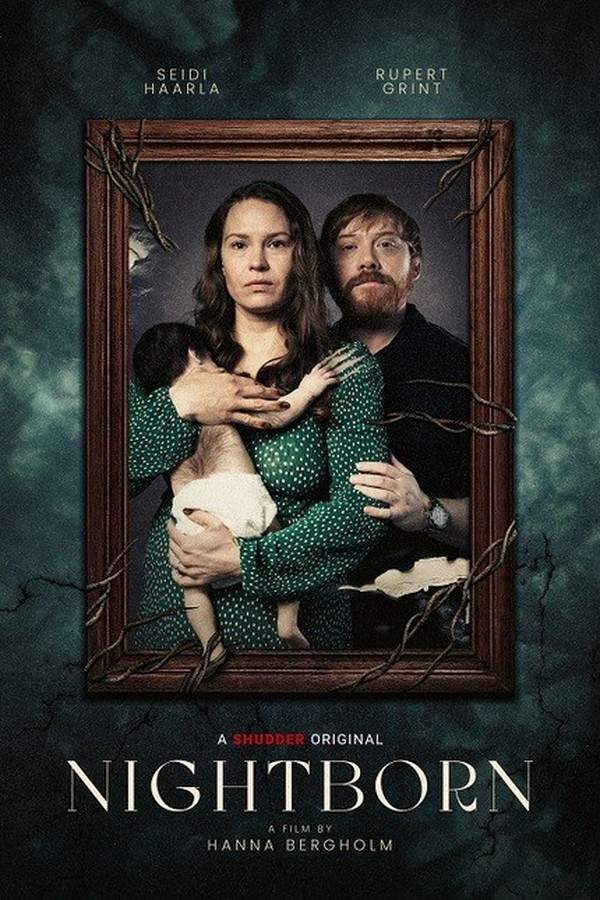
Dreaming of a perfect family, Saga and her British husband Jon move to an isolated house in the Finnish forest where Saga grew up. When their baby is born, Saga feels something is terribly wrong despite others’ reassurances. Their marriage starts to crack as Jon struggles to protect his family while the forest’s eerie influence intensifies.


Does Nightborn have end credit scenes?
No!
Nightborn does not have end credit scenes. You can leave when the credits roll.
Where to Watch Nightborn
See current US streaming, rental, and purchase options for Nightborn (2026) via JustWatch.

AMC Plus Apple TV channel
HD
AMC+
HD
AMC+ Amazon Channel
HD
AMC+ Roku Premium Channel
HD
Philo
HD
Shudder
HD
Amazon Video
HD
Apple TV Store
HD
Fandango At Home
HD
Google Play Movies
SD
YouTube
SD Streaming availability powered by 
Meet the Full Cast and Actors of Nightborn
Explore the complete cast of Nightborn, including both lead and supporting actors. Learn who plays each character, discover their past roles and achievements, and find out what makes this ensemble cast stand out in the world of film and television.

Rupert Grint
Jon

Seidi Haarla
Saga

Amira Khalifa
Saga's Colleague
Pamela Tola
Taru
John Thomson
Jon's Father
Lotta Kaihua
Midwife 1
Jaana Pesonen
Maternity Clinic Nurse
Marjo Lahti
Guest at the party
Satu Tuuli Karhu
Saga's Colleague
Pia Andersson
Guest at the party
Rebecca Lacey
Jon's Mother
Pirkko Saisio
Saga's Mother
Kaisa El Ramly
Doctor
Johanna Kuuva
Saga's Colleague
Silvia Saloranta
Anna
Helena Rängman
Saga's Colleague
Katja Nugent
Midwife 2
Yuha Pihanen
Bemused Guest
Klaara Höglund
Girl at the party
External Links and Streaming Options
Discover where to watch Nightborn online, including streaming platforms, rental options, and official sources. Compare reviews, ratings, and in-depth movie information across sites like IMDb, Wikipedia, Rotten Tomatoes or Metacritic.






Ratings and Reviews for Nightborn
See how Nightborn is rated across major platforms like IMDb, Metacritic, and TMDb. Compare audience scores and critic reviews to understand where Nightborn stands among top-rated movies in its genre.

The Movie Echo Score
Nightborn presents a conceptually bold examination of postpartum distress, yet its execution divides opinion. Critics note its atmospheric ambition while users criticize relentless crying and language barriers, producing an overall mixed reception. Strengths emerge in acting and thematic intent, but visual and auditory choices often undermine clarity. The film offers intermittent insight into maternal alienation, though its uneven pacing and sensory overload limit broader appeal.
The Movie Echo Score Breakdown for Nightborn

Art & Craft
In terms of direction and visual craft, Nightborn exhibits a measured use of dreamlike imagery and distinctive makeup design. Critics acknowledge the film's unpretentious aesthetic, though they also cite a lack of dynamic scare set‑pieces. User comments focus more on dialogue clarity than on cinematography, implying a competent but not striking visual execution. Overall, the art and craft are solid yet unspectacular.

Character & Emotion
When evaluating character work, the lead performance receives consistent praise for conveying a traumatized mother convincingly. Critics describe Sara as a compelling focal point, and several users label the acting as solid or great. Some reviewers note moments of artificiality in the infant prop, but these do not outweigh the emotional resonance achieved. Thus, character depth and performances are a clear strength of the film.

Story & Flow
The narrative of Nightborn blends genre tropes with a study of maternal ambivalence, leading to mixed reactions. Critics mention an excellent screenplay undermined by overzealous execution, while users describe the plot as predictable and the ending as a misstep. Originality is noted, yet pacing suffers due to repetitive baby‑cry sequences. Consequently, the story’s coherence and originality hover in the middle of the rating range.

Sensory Experience
Sensory experience is marked by an omnipresent crying baby that many viewers find intrusive, often drowning dialogue and creating irritation. Critics do not highlight sound design, focusing instead on visual ambience. While some users appreciate the horror’s visceral effect, the constant auditory strain diminishes overall enjoyment. The soundtrack and sound design therefore receive a lower evaluation relative to other aspects.

Rewatch Factor
Rewatch potential is limited by repetitive auditory discomfort and language barriers that impede immersion. Although a few viewers commend the film’s courageous thematic approach and find it worth a single viewing, most users report turning it off early or disengaging after the initial impact. The lack of narrative payoff and sensory fatigue reduce its desirability for subsequent viewings.


81%
TOMATOMETER

0%
User Score
Full Plot Summary and Ending Explained for Nightborn
Read the complete plot summary of Nightborn, including all major events, twists, and the full ending explained in detail. Explore key characters, themes, hidden meanings, and everything you need to understand the story from beginning to end.
In the shadowed Finnish forest, Saga and Jon venture into a derelict house that once belonged to Saga’s late grandmother, a place steeped in memory and quiet foreboding. They discover a tree forcing its way through the floorboards of the bedroom [Saga] shared with her sister, Taru, a sight that feels almost sacred and terrifying all at once. Jon envisions rejuvenating the ruin into a warm family home where they can raise children together, a plan that promises continuity and belonging. Into the surrounding woods they go, and Saga reaches out to a tree whose trunk resembles a pregnant belly, a primal image that lingers as they share an intimate moment amidst the trees. The moment is charged with both tenderness and unease, as if the forest itself is listening.
Saga’s childbirth proves devastatingly difficult, tearing her birth canal in a way that unsettles everyone present, and the infant—a baby boy—emerges disturbingly silent. On the maternity ward, the infant’s cries come only when the curtains are drawn back, a haunting sign of something not right. Breastfeeding leaves Saga’s breasts bloodied and swollen, and the baby’s skin is thick with dark, almost hairlike growth. The newly renovated house soon hosts a nursery where Saga’s childhood bedroom now sits, a stark shift from the girlhood of years past.
During a visit from Saga’s mother, Saga’s mother and Taru, Saga voices a growing fear that something is deeply wrong with the baby, calling him only “it” as if naming him could banish the unease. Her mother remains practical, brushing aside the concerns even after the infant violently tears a piece from Saga’s earlobe, a jolt that unsettles the already strained nerves of everyone in the house. A naming ceremony in the garden unsettles the guests further; the baby’s appearance and his stark, visceral cries unsettle the crowd, while a gust of wind from the forest sweeps a cover over the stroller, shielding him from the sun’s light. Saga declares the baby will be named Kuura, a choice that stings Jon, who had hoped to name him Christian after his father. As the sun retreats, the light leaves dark burns on Kuura’s skin, a troubling omen.
Kuura’s behavior grows increasingly strange. One night, Saga falls asleep while trying to soothe him, and when she wakes, she finds he has slipped from his cot and is transfixed by the tree that has begun to push through the nursery floor again. The next morning, Jon discovers the floorboards ripped apart and Saga sleeping among the tree’s roots, cradling Kuura. A cut on Saga’s hand reveals Kuura feeding on her blood, an act that chills her but also signals a disturbing bond forming between mother and child. At a local clinic, a clinician brushes off Saga’s worries, insisting Kuura is simply advanced for his age and recommending counselling to help her bond with him. In defiance, Saga begins secretly feeding Kuura blood instead of milk, a decision she keeps hidden from Jon.
Meanwhile, Taru recounts the grandmother’s warnings about the forest’s dangers, mentioning that she kept scrap metal around because “cold iron bursts them.” The property’s menacing atmosphere deepens as Jon’s parents visit; his father—John Thomson—blesses Kuura with holy water, an act that has no physical effect on the child, yet the sense of ritual clashes with the growing sense that something elemental and dangerous resides within the boy. Later, when Kuura grasps an unused, cold iron, his hand is severely burned, a cruel coincidence that fuses the supernatural with the mundane in the family’s eyes.
Tensions between Saga and Jon escalate as he worries that Saga is not socializing Kuura properly or seeking the help the clinician suggested. He discovers she hasn’t pursued the referral, and a fierce argument pushes him to leave the house with Kuura, a move that triggers a violent confrontation. Saga awakes to find Kuura’s grip on her, and she locks herself in the bathroom while he tries to breach the door, threatening to end them both. She calls her mother in a panic, admitting a fear that she might need to kill Kuura to protect herself, though her mother insists there is nothing extraordinary at play.
An overnight trip to the city only widens the rift; separated from her son, Saga develops a painful rash that only fades when she hurries back to the house. Kuura’s violence intensifies as a visit from Taru brings Anna, and Kuura bites off Anna’s finger. Jon attempts to feed Kuura ordinary baby food, but the boy rejects it, hurling a jar at him, and Saga begins feeding him raw meat instead. Jon accuses Saga of turning Kuura into a monster, and a desperate, physical struggle erupts when he tries to take Kuura outside the house. Branches erupt through the nursery floor and windows during the clash, fatally impaling Jon through the chest, a brutal, almost inevitable moment in a conflict that has simmered for months. Saga and Kuura, driven by something primal, feed on Jon’s blood and heart, sealing a chilling, intimate bond between mother and son in the wake of tragedy.
In the final, unsettling image, Kuura runs into the garden as a humanoid figure separates itself from one of the trees and approaches with outstretched arms. Saga watches from the porch, a wry, uncertain smile crossing her face as Kuura giggles and returns the smile, suggesting a future that is inseparable from the forest’s reach and the family’s darkest secrets.

Coming soon on iOS and Android
The Plot Explained Mobile App
From blockbusters to hidden gems — dive into movie stories anytime, anywhere. Save your favorites, discover plots faster, and never miss a twist again.
Sign up to be the first to know when we launch. Your email stays private — always.
Explore the mobile appDiscover Film Music Concerts Near You – Live Orchestras Performing Iconic Movie Soundtracks
Immerse yourself in the magic of cinema with live orchestral performances of your favorite film scores. From sweeping Hollywood blockbusters and animated classics to epic fantasy soundtracks, our curated listings connect you to upcoming film music events worldwide.
Explore concert film screenings paired with full orchestra concerts, read detailed event information, and secure your tickets for unforgettable evenings celebrating legendary composers like John Williams, Hans Zimmer, and more.


Unlock the World of Movies with Our Comprehensive Wiki
Dive into our Movie Wiki for in-depth film encyclopedia entries, including cast biographies, production trivia, plot synopses, behind-the-scenes facts, and thematic analyses. Whether you’re researching iconic directors, exploring genre histories, or discovering hidden easter eggs, our expertly curated movie database has everything you need to fuel your cinematic passion.
Quick Links: Summary, Cast, Ratings, More

What's After the Movie?
Not sure whether to stay after the credits? Find out!
Check out our other apps:

SAT Sphere
Build confidence for the Digital SAT.

Mori Atlas
Discover wild places worth protecting.

Luntero
Search smarter for a home in Amsterdam.

Plot Explained
Unravel movie endings and hidden clues.

Pokechamp
Dive into Pokémon data and battle logic.

Driving Theory
Get ready for your European theory test.

Movie Dust
Plan your next cinema trip with ease.

Musemap
Find art and culture as you travel.

Selkobase
Compare credentials before committing.

Local Manual
Turn an unfamiliar country into practical next steps.

Lernavi
Compare school systems before your next move.

GymRoam
Find a workout stop wherever your plans take you.
Explore Our Movie Platform
New Movie Releases (2026)
Famous Movie Actors
Top Film Production Studios
Movie Plot Summaries & Endings
Major Movie Awards & Winners
Best Concert Films & Music Documentaries
Movie Collections and Curated Lists
© 2026 What's After the Movie. All rights reserved.
Privacy Policy