What Is New Delhi Times About?
The premise of New Delhi Times in 298 words, with nothing given away. The full story follows below.
In the bustling corridors of a Delhi newspaper, a restless reporter from a modest town seeks to prove that a pen can still cut through the toughest of power structures. Vikas Pande carries the weight of his small‑town roots into the capital’s fast‑paced newsroom, where deadlines clash with politics and every headline feels like a fragile treaty. The city itself hums with a mixture of ambition and unrest, its streets echoing the undercurrents of a system that rarely reveals its seams.
When a high‑profile politician is violently removed from the public eye, the event sends shockwaves through the capital and the paper’s editorial desk. Vikas is drawn into the story not just as a chronicler but as a reluctant detective, his instincts urging him to follow whispers that point toward a hidden hand inside the halls of parliament. His editor, equally determined, pushes the investigation forward, aware that each question raised could unsettle the fragile balance of authority.
As the investigation deepens, the stakes rise beyond the newsroom. The exposure of senior officials’ involvement threatens to ignite riots in a nearby town, and forces begin to move to suppress the emerging narrative. A palpable tension settles over the city, turning streets into flashpoints and the newspaper’s presses into a battleground for truth. The atmosphere is thick with the urgency of a story that could alter public perception, while unseen powers scramble to keep the silence intact.
Amid the professional turmoil, Vikas finds his personal world intertwined with the quest for accountability. His wife, a steadfast lawyer, provides both emotional ballast and a reminder of the human cost behind every concealed scandal. Their partnership underscores the film’s brooding tone—a blend of journalistic grit, political intrigue, and the quiet courage required to challenge a system that prefers darkness to illumination.
What Happens in New Delhi Times?
The complete story of New Delhi Times, from the first scene to the last, in 812 words (about 4 minutes). Spoilers throughout. Names in the text link to 5 cast member pages.
Spoilers ahead
A gripping political thriller told through the lens of a fearless journalist, Vikas Pande leaves his small-town roots in Ghazipur to steer a major Delhi newspaper and soon finds himself entangled in a web of power, murder, and media manipulation. The story opens with the shocking assassination of a local MLA, Bhaleram, in the circuit house of Ghazipur, and the unsettling disappearance of the circuit house guard. As [Vikas Pande] navigates the fallout, he discovers a pattern of violence and cover-ups that hint at something far bigger than a single crime.
From the newsroom to the streets, the film threads together journalism, corruption, and the machinery of politics. Vikas is determined to expose a brutal scandal involving illegal hooch that has claimed hundreds of lives, a pursuit that quickly becomes more dangerous as the power struggle in the state intensifies. On one side stands the incumbent chief minister Trivedi; on the other, the ambitious MLA Ajay Singh, whose charisma masks a ruthless willingness to do whatever it takes to reach the CM’s chair. Singh is portrayed as a dangerous man, deeply connected to illegal networks—drug trafficking, smuggling, extortion, and more—and his operations are run by his trusted lieutenant, Iqbal.
The tension escalates when Iqbal is arrested in the murder case and the riots in Ghazipur become a recurring backdrop. Vikas travels back to Ghazipur to cover the unrest and in the process amasses circumstantial evidence that points toward [Ajay Singh] as having a hand in Bhaleram’s murder. Yet the case is far from open-and-shut, and the path to the truth is blocked by force, influence, and a carefully controlled narrative that the powerful are eager to keep intact.
Meanwhile, a parallel thread follows Vikas’s wife, Nisha, a lawyer who is approached by an elderly man whose daughter has vanished from her in-laws’ home. The man—Jagannath Poddar—claims that his daughter was misrepresented as mentally ill, and his pursuit of justice for her becomes another front in the larger struggle between truth and the system that protects the powerful. The courtroom scene that unfolds with Iqbal’s testimony becomes a pivotal moment, as he asserts his innocence while laying bare that certain players—like Ajay Singh—could be involved in grave crimes, even if direct evidence is elusive.
As the investigation deepens, the paper’s leadership wrestles with how and when to publish. [Vikas Pande] presses his editors to run a front-page story that ties Ajay Singh to the murder, but the piece hinges on evidence that is not ironclad. The debate within the newsroom mirrors the public’s craving for accountability versus the political machine’s appetite for control. Despite hesitation, the article eventually hits the presses, signaling a bold stand for truth even as the risk to those telling it grows.
A crucial turn comes when the elderly man expresses gratitude to [Nisha] for her steadfast efforts in seeking justice for his daughter. He then reveals a dark underbelly: the guard who disappeared is not simply missing or mentally unwell. The truth, he explains, is that a system of bribery and manipulation has been running deep, with officials and institutions compromised to shield the real culprits. The revelation forces [Vikas Pande] to reexamine the evidence and the narratives that have been constructed around Bhaleram’s murder.
The plot thickens when the guard himself steps forward with the shocking confession that changes everything. He explains that on the day of the murder, his son—who is secretly a mole for Trivedi—visited him, and a deal was struck that effectively bought cover for the crime. After the deal, Bhaleram was killed by goons aligned with Trivedi, not Ajay Singh. This revelation shatters the impression of a straightforward case and forces [Vikas] to confront the horrible possibility that the entire investigation was being steered by those who wield power behind the scenes.
With the pieces in flux, the journalist realizes that the evidence collected up to this point may have been engineered to keep Ajay Singh under control and out of the CM’s chair. The crushing clarity of this realization is tempered by a sense of disillusionment; [Anwar]—a trusted friend—offers quiet solace, reminding [Vikas] that the real culprits deserve accountability for their actions, even if the path to that accountability is messy and fraught with danger.
In the end, the film holds to a sober, cautionary tone about the fragility of truth in a power-driven system. It demonstrates how journalism can illuminate corruption, how political bargains can distort justice, and how individuals—like [Vikas Pande], [Ajay Singh], [Nisha], and [Iqbal]—navigates a landscape in which evidence can be planted, loyalties tested, and the line between right and wrong blurred. The story closes not with a neat resolution but with a hard-won sense that exposing wrongdoing is an act of courage that can leave journalists and truth-tellers exposed to great risk—even as justice, in some form, begins to emerge through the cracks of a compromised system.
New Delhi Times Timeline: Every Key Event in Order
13 key events in the order they happen, from “Assassination at Ghazipur circuit house” to “Anwar's consolation and somber ending”. 13 events name a place, across 9 locations.
- 1
Assassination at Ghazipur circuit house
The film opens with the assassination of local MLA Bhaleram at the Ghazipur circuit house. The guard is missing after the incident, hinting at a larger conspiracy. This event sets off the investigation that follows.
When:Morning Where:Ghazipur circuit house
- 2
Vikas Pande joins New Delhi Times
Vikas Pande, an upright journalist, relocates to Delhi to helm the New Delhi Times. He launches an investigation into the illegal hooch scandal that has claimed hundreds of lives. This move pits him against a powerful nexus of politicians and media moguls.
When:Early days in Delhi Where:Delhi, New Delhi Times office
- 3
Power struggle for chief minister
Amid a power struggle, the incumbent chief minister Trivedi faces a charismatic but ruthless MLA, Ajay Singh, who aspires to the CM chair. Ajay Singh is tied to drug trafficking, smuggling, extortion, and other crimes, with his operations run by his lieutenant Iqbal. The political maneuvering sets the backdrop for the murder plot.
When:Ongoing Where:State capital
- 4
Iqbal arrested in Bhaleram murder
Iqbal, Ajay Singh's right-hand man, is arrested in the murder case of Bhaleram. The arrest strengthens the case against the murder, but also hints at a broader conspiracy. The arrest becomes a flashpoint in Vikas's unfolding investigation.
When:Days after assassination Where:Ghazipur
- 5
Riots in Ghazipur tied to the murder case
Iqbal's arrest sparks rioting and unrest in Ghazipur as the underworld's influence shows its reach. Vikas travels to Ghazipur to cover the riots and gathers evidence suggesting Ajay Singh's link to the murder. The events intensify the clash between reformist reporting and political power.
When:During riots Where:Ghazipur
- 6
Wife seeks help for missing daughter case
Meanwhile, Vikas's wife, a lawyer, is approached by an elderly man whose daughter is missing from the in-laws' home and has been declared mad. She takes up the case, challenging the alleged abduction and the cover-up. The subplot shows how corruption touches ordinary lives.
When:Concurrent with legal case Where:Delhi
- 7
Court hearing and explosive allegations
In a tense courtroom, Iqbal testifies that he is innocent while accusing Ajay Singh of the murder. The testimony becomes front-page news and triggers pressure on Vikas to drop the pursuit. Ajay Singh aggressively denies motive and reveals that he bribed Bhaleram and 13 MLAs to clear his path, exposing the depth of payoffs behind the crime.
When:Court hearing day Where:Delhi court
- 8
Threats and stubborn pursuit
Ajay Singh continues applying pressure on the CM to derail the case, and Vikas is threatened by goons to stop pursuing the murder. Undeterred, Vikas persists in pursuing the truth and warning of the consequences of a compromised system. The tension between power and journalism escalates.
When:During ongoing investigation Where:Delhi
- 9
Publication of a provocative article
Despite limited evidence, Vikas drafts an article linking Ajay Singh to Bhaleram's murder. His editors reluctantly publish the piece, deciding that truth must be faced even if it endangers the newsroom. The published report becomes a catalyst for public scrutiny of the political-media nexus.
When:Publication day Where:New Delhi Times office
- 10
Revelation of the asylum twist
The old man's gratitude leads to a disturbing revelation: his daughter is found in a mental asylum, with staff and police bribed to declare her mad. The guard from the circuit house is also admitted there. This twist ties the circle of corruption to the mechanisms of control used by Trivedi's faction.
When:Revelation day Where:Mental asylum
Show the other 3 events of New Delhi Times Hide the last 3 events
- 11
Guard's confession and the fateful day
Vikas meets the guard, who confesses he is not mentally ill and recounts the day's sequence of events. The guard reveals that Trivedi's mole, a son who visits him, facilitates deals with Ajay Singh. On that day, after the deal is struck, Bhaleram is killed by Trivedi's goons.
When:Fateful day Where:Mental asylum / alternate site
- 12
Evidence planted by Trivedi exposed
Vikas realizes that most of the evidences were planted by CM Trivedi to pin the murder on Ajay Singh and to keep him under control. The discovery reframes the narrative, showing the manipulation of legal and media processes. It leaves Vikas torn between his journalistic duty and the corrupt power structure.
When:Revelation moment Where:Delhi
- 13
Anwar's consolation and somber ending
Anwar consoles Vikas that those who he exposed deserve the consequences of their actions, highlighting a sense of moral ambiguity. The film ends on a somber note about corruption, with a suggestion that accountability remains a distant goal. The final moment underlines the cost of truth in a compromised system.
When:Ending Where:Delhi
Who Are the Main Characters in New Delhi Times?
6 characters, among them Vikas Pande (Shashi Kapoor), Ajay Singh (Om Puri) and Nisha (Sharmila Tagore): who each one is and the part they play in the story. 5 of them link to the actor’s page.
- VP
Vikas Pande (Shashi Kapoor)
Played by Shashi Kapoor
An upright, fearless executive editor of the New Delhi Times who pursues the murder and corruption with relentless integrity. He gathers facts, questions power, and publishes a front-page revelation, despite threats and attempts to derail his investigation.
- 🧭 Integrity
- 🔎 Investigative
- 📰 Journalism
-
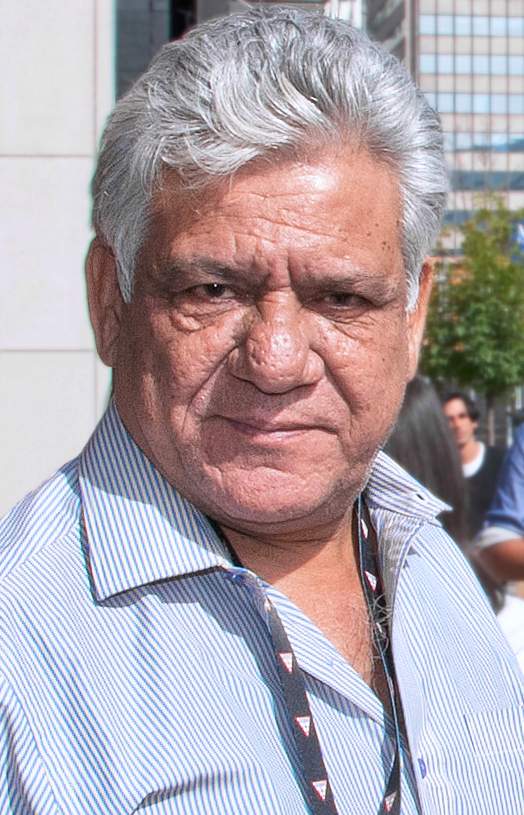
Ajay Singh (Om Puri)
Played by Om Puri
A dangerous, ambitious MLA whose crime network spans drugs, smuggling, extortion, and more. He is a central figure in the murder case and a key obstacle to reform, facing political rivals as he tries to secure the chief minister's chair.
- 🏙️ Politician
- 💸 Corruption
- N(
Nisha (Sharmila Tagore)
Played by Sharmila Tagore
Vikas's wife, a lawyer who fights tough cases and is drawn into the unfolding crisis through a missing-daughter case. She stands as a legal voice amid rising deception and moral ambiguity.
- 💼 Lawyer
- 🗣️ Advocacy
- I(
Iqbal (M.K. Raina)
Played by M. K. Raina
Ajay Singh's trusted lieutenant caught in the web of the murder investigation. He alternates between loyalty to his boss and the risk of exposure when the evidence begins to mount against them.
- 🤝 Loyalty
- 🚨 Crime
- JK
Jugal Kishor (J.K.) (Kulbhushan Kharbanda)
Played by Kulbhushan Kharbanda
A senior political insider whose influence in the power game helps orchestrate or shield key moves in the struggle for control. His role ties the political fabric to the pressures faced by the press.
- 🗳️ Power
- 🗝️ Influence
- B
Bhaleram
Local MLA whose assassination triggers the central investigation and reveals the dirty tricks used to mislead authorities and the public. His killing becomes the catalyst that exposes the deeper collusion between political figures and the media.
- 🔪 Murder
Where and When Is New Delhi Times Set?
New Delhi Times is set in Ghazipur and New Delhi. Here is why the place matters to the story.
Where
Ghazipur, New Delhi
Ghazipur in eastern Uttar Pradesh is the starting ground where a local MLA's assassination sparks unrest and brings power-brokerage into the open. The circuit house murder and ensuing riots reveal how crime, politics and local loyalties intertwine. Delhi serves as the national hub where the New Delhi Times fights to expose corruption and influence in the capital.
- 🗺️ Ghazipur
- 🏙️ Delhi
- 🧭 Media
What Are the Themes of New Delhi Times?
3 ideas the story keeps returning to, among them Corruption, Journalism and Justice.
-
01
Corruption
The film exposes a corrupt nexus between politicians and media barons that shapes outcomes and public perception. It shows bribery, planted evidence, and political maneuvering aimed at controlling who governs and who prints the truth. Riots and intimidation illustrate how power can distort public life to protect the powerful. The story portrays a system where truth often loses out to political calculation.
-
02
Journalism
Vikas Pande embodies fearless investigative reporting, pushing beyond fear to expose a murder and a broader cover-up. The newspaper becomes a battleground where front-page scoops threaten entrenched interests. Threats, bribery, and pressure test the journalist's resolve and ethics. The narrative centers on reporting as a weapon against corruption.
-
03
Justice
The pursuit of justice is fraught with manipulation, bribery, and planted evidence designed to derail the truth. Courtroom scenes reveal how legal processes can be bent to serve political ends. The old man’s search for his missing daughter uncovers a system willing to sacrifice individuals for political convenience. In the end, truth emerges only through persistent scrutiny, not easy victories.
What Kind of Film Is New Delhi Times?
Dark in tone, with steady pacing and a moderate story, going by the plot summary.
- Tone
- Dark
- Pacing
- Steady
- Story
- Moderate
- Intensity
- High
- Ending
- Bittersweet
A steadily paced and intensely gripping political thriller that creates a tense and sobering atmosphere as it follows a journalist's dangerous investigation into systemic corruption and murder.
- tense
- gripping
- suspenseful
- sobering
- anxious
- disillusioned
- political corruption
- investigative journalism
- conspiracy
- murder investigation
Content notes: political murder, riots, intimidation, corruption, kidnapping implied.
Quiz
How well do you remember New Delhi Times? Test yourself on the story.
Where to Watch New Delhi Times
Stream it on Brew and Tubi TV. US availability and prices from JustWatch.
Stream 2
 Brew
Brew  Tubi TV
 Streaming availability in the US, powered by