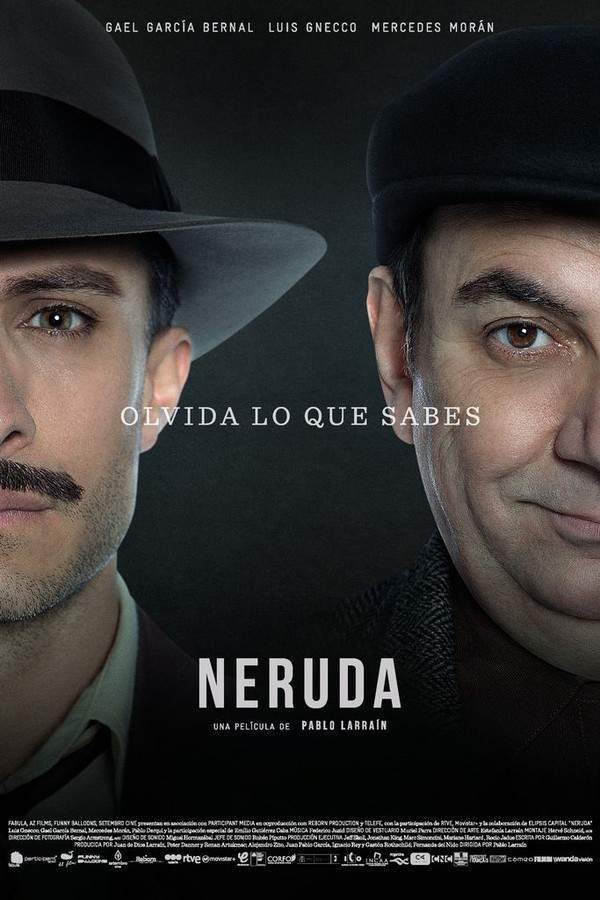
What Is Neruda About?
The premise of Neruda in 340 words, with nothing given away. The full story follows below.
In the wake of World War II, Chile finds itself tangled in a fragile equilibrium of hope and repression. A newly elected president, once supported by communist allies, turns abruptly against them, unleashing a wave of arrests that casts a somber pall over the nation’s bustling streets and quiet mountain passes. The country’s cultural heartbeat—its poetry, its music, its restless yearning for freedom—beats alongside a growing sense of surveillance, making every public square feel both a venue for expression and a potential snare.
Amid this charged atmosphere, Pablo Neruda—the beloved poet whose verses have become the very language of resistance—suddenly discovers himself a wanted man. Once a diplomat and literary icon, he now navigates the shadows of his own homeland, his reputation a double‑edged sword that both protects and endangers him. Opposite him, Oscar Peluchonneau, a young police inspector earnest in his duty, is assigned to track the fugitive poet. To grasp his elusive target, Peluchonneau immerses himself in Neruda’s body of work, searching for clues in rhythm and metaphor as much as in footprints.
What unfolds is less a straightforward manhunt than an elegant, high‑stakes game of wit. Neruda’s reprisals are not violent bursts but carefully crafted gestures that turn each encounter into a poetic tableau, inviting the pursuer to read between the lines. The chase becomes a dance of intellect and imagination, where the chase itself is narrated by verses whispered across mountains and hidden in plain sight. This interplay imbues the film with a tone that is simultaneously tense and lyrical, marrying the stark realism of a political thriller with the dream‑like cadence of verse.
As the pursuit accelerates, the very act of searching begins to reshape both men’s identities. Neruda’s defiant artistry and Peluchonneau’s meticulous curiosity weave together, suggesting that the odds of capture may hinge less on brute force than on the power of story itself. The film thus invites viewers to contemplate how freedom can be forged in the margins of oppression, and how a poet’s legacy may echo louder than any police report.
What Happens in Neruda?
The complete story of Neruda, from the first scene to the last, in 404 words (about 2 minutes). Spoilers throughout. Names in the text link to 2 cast member pages.
Spoilers ahead
In 1946, Chile finds itself at a crossroads of politics and courage. Chile’s president Gabriel González Videla wins the election with Communist support, but soon betrays that backing by banning the party and ordering mass arrests. Senator Pablo Neruda, portrayed by Gael García Bernal, a former ambassador and renowned poet, openly condemns the repression, placing himself in danger as the regime tightens its grip. Neruda and his wife Delia attempt to flee to Argentina through the mountains, yet their path is harshly blocked at the border, forcing them into a perilous hiding.
Entered into this tense landscape is Oscar Peluchonneau, a young policeman played by Luis Gnecco. Tasked with capturing Neruda, Peluchonneau throws himself into the investigation, but rather than a straightforward hunt, he becomes absorbed in understanding his elusive target. He studies Neruda’s life and poetry, trying to map the mind behind the public figure, while Neruda makes unexpected appearances that undermine the hunter’s certainty. The poet leaves volumes of poetry as a quiet, persistent act of resistance, turning the pursuit into a cat-and-mouse game where Neruda is always one step ahead.
As the pursuit intensifies, Neruda’s circle secures smugglers to ferry him across the border by horseback, turning the journey into a fragile, improvised escape. Delia is captured and interrogated by Peluchonneau; in a fierce, piercing remark, she suggests that the policeman is secondary to the story’s larger truth, a line that unsettles Peluchonneau and gnaws at his confidence, hinting that Neruda’s legacy will endure even if Peluchonneau fades into fiction.
The group presses through the snowy forests toward the border, while Peluchonneau presses forward in a relentless pursuit that cannot close the gap. The chase culminates with Peluchonneau dying on a wintry mountaintop, abandoned by his indigenous guides. Neruda later discovers his body, a stark moment that underscores the thin line between reality and myth. Peluchonneau’s grip on reality fractures as he becomes part of the fiction he once chased, a meta turn that echoes Neruda’s enduring impact.
Neruda finally reaches Paris, where he is warmly received by Pablo Picasso and becomes a media sensation. In a public sphere that amplifies his voice, Neruda references Peluchonneau at a press conference, granting the hunter a kind of immortality within the story he once hunted. The film explores themes of memory, power, and the way a poet’s persistence can outlast the men who pursue him, leaving behind a legacy that outlives the chase.
Neruda Timeline: Every Key Event in Order
12 key events in the order they happen, from “1946: Videla's victory and crackdown” to “Press conference keeps Peluchonneau's memory alive”. 11 events name a place, across 10 locations.
- 1
1946: Videla's victory and crackdown
In 1946, Chile's president Gabriel González Videla wins the election with Communist support. He soon betrays that alliance, banning the Communist Party and ordering mass arrests. The move plunges Neruda and his allies into danger and sets the stage for a national crackdown.
When:1946 Where:Chile
- 2
Neruda and Delia flee toward Argentina
Senator Pablo Neruda and his wife Delia attempt to escape the repression by crossing toward Argentina through the mountains. They are turned back at the border and forced into hiding, disrupting their plans and escalating the cat-and-mouse dynamic of the story.
When:Late 1940s Where:Andes Mountains, Chile–Argentina border
- 3
Peluchonneau is assigned to capture Neruda
Oscar Peluchonneau, a young policeman, is assigned to capture Neruda. To understand his target, Peluchonneau studies Neruda's life and poetry, trying to anticipate his moves and motivations. This research begins the strategic cat-and-mouse game that drives the pursuit.
When:Late 1940s Where:Chile
- 4
Neruda uses poetry to mobilize resistance
Neruda makes surprise appearances and leaves volumes of poetry to mobilize resistance. His actions disrupt the authorities and fuel public memory, while Peluchonneau stays one step behind. The chase becomes as much about ideas and symbols as it is about people.
When:Ongoing during crackdown Where:Various locations across Chile
- 5
Smugglers prepare Neruda's border crossing
Neruda's allies arrange for smugglers to carry him across the border on horseback. The plan aims to outpace the police and preserve Neruda's safety as the net tightens. The crossing symbolizes a last bid for freedom before imprisonment becomes inevitable.
When:Approaching border Where:Chile–Argentina border
- 6
Delia's capture and the interrogation
Delia is captured and interrogated by Peluchonneau. She asserts that Neruda's story is bigger than the hunter, claiming the policeman is secondary. Her remark unsettles Peluchonneau and hints that Neruda's legacy will endure beyond his pursuer.
When:During pursuit Where:Border region, Chile
- 7
Snowy forest trek toward the border
Neruda and his group traverse snow-covered forests as they press toward the border. Peluchonneau relentlessly pursues but cannot yet close the gap. The harsh landscape intensifies the sense of peril and inevitability.
When:During chase Where:Snowy Andes / border forests
- 8
Peluchonneau dies on a mountaintop
On a high, icy mountaintop, Peluchonneau dies after being abandoned by his indigenous guides. His death marks a staggering turn in the hunt and foreshadows the collapse of the pursuit's reality into myth.
When:During final pursuit Where:Snowy mountaintop, Andes
- 9
Neruda finds Peluchonneau's body
Neruda later discovers the body of Peluchonneau, a poignant moment where fiction and reality collide. The hunter becomes a memory in the hunted man's world, highlighting the permeable line between enmity and artistry.
When:After death Where:Andes mountains
- 10
Peluchonneau's reality dissolves into fiction
As events unfold, Peluchonneau's grip on reality dissolves and he becomes part of the fiction he once pursued. The pursuit transcends biography, entering Neruda's legend and public imagination. The boundary between the observer and the observed collapses.
When:After death
- 11
Neruda escapes to Paris
Neruda escapes to Paris, where he is welcomed by Pablo Picasso. In exile, he becomes a media sensation and a symbol of resistance. The new life in Paris reframes his legacy and distances him from the pursuit.
When:Post-escape Where:Paris, France
- 12
Press conference keeps Peluchonneau's memory alive
At a press conference in exile, Neruda mentions Peluchonneau, ensuring the hunter is remembered in Neruda's own narrative. The act blurs the line between pursuit and tribute, giving the game a lasting cultural footprint. Peluchonneau's name becomes inseparable from Neruda's legend.
Where:Paris, France (press conference)
Who Are the Main Characters in Neruda?
3 characters, among them Pablo Neruda (Gael García Bernal), Oscar Peluchonneau (Luis Gnecco) and Delia Neruda: who each one is and the part they play in the story. 2 of them link to the actor’s page.
-
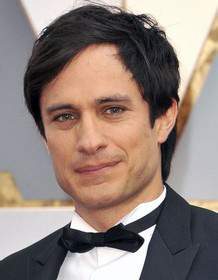
Pablo Neruda (Gael García Bernal)
Played by Gael García Bernal
Neruda is a renowned poet and former diplomat who becomes a symbol of political resistance. He remains calm, perceptive, and strategic, using his poetry to inspire friends and provoke repression. His resolve to survive and to preserve his literary voice drives the action, even as danger closes in.
- ❄️ Poet
- 🛡️ Rebel
- 🎭 Icon
-
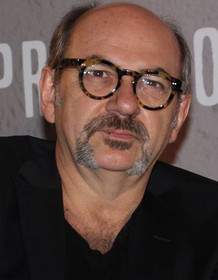
Oscar Peluchonneau (Luis Gnecco)
Played by Luis Gnecco
Peluchonneau is a young policeman assigned to capture Neruda, obsessive and introspective. He studies Neruda's life to anticipate him, yet his confidence frays as the chase unfolds. His demise on a snowbound mountaintop marks the collapse of his worldview, turning his pursuit into fiction.
- 🕵️ Detective
- ⚖️ Pursuer
- 🌀 Tragic
- DN
Delia Neruda
Delia is Neruda's wife, who shares the dangerous journey and is captured and interrogated. Her insistence that the policeman is secondary shifts the balance of power and injects doubt into Peluchonneau's mission. She embodies resilience and the human cost of political strife.
- ❤️ Partner
- 🗺️ Survivor
- 🧭 Ally
Where and When Is Neruda Set?
Neruda is set in Chile, Andes mountains border with Argentina and Paris (1940s). Here is why the time and place matter to the story.
When
1940s
Set in the late 1940s during Gabriel González Videla's presidency, the film follows political repression of the Communist party and Neruda's defiant response. The timeline tracks the danger and escapes across the mountains, the border crossing, and Neruda’s eventual exile to Paris, showing the arc from repression to international recognition.
Where
Chile, Andes mountains border with Argentina, Paris
The narrative moves from Chile's political landscape to the icy borderlands of the Andes with Argentina, where Neruda and Delia attempt to flee and evade capture. Snowy forests and rugged passes shape the chase, turning geography into a battleground of safety and exile. In Paris, Neruda is welcomed by Picasso and becomes a media sensation, cementing his exile and legacy.
- ❄️ Chile
- 🗺️ Andes
- 🗼 Paris
What Are the Themes of Neruda?
3 ideas the story keeps returning to, among them Pursuit, Poetry as Resistance and Myth vs Reality.
-
01
Pursuit
A tense cat-and-mouse dynamic drives the narrative as Peluchonneau hunts Neruda across mountains and forests. The hunter's relentless search exposes the fragility of certainty and the way a target can elusively slip away. The chase blurs lines between reality and fiction as Neruda stays one step ahead.
-
02
Poetry as Resistance
Neruda uses poetry as a political act, leaving volumes to mobilize resistance and to remind people that culture can outlast repression. The act of writing becomes a weapon, a way to sustain hope when faced with arrests and censorship. The verse travels beyond borders, challenging authority and rallying supporters.
-
03
Myth vs Reality
Peluchonneau's obsession with Neruda slips into a narrative of fiction as his grip on reality weakens. Neruda's legend grows through appearances and public moments, while the policeman's story becomes a footnote in a larger myth. The lines between who is hunting whom blur, leaving a legacy that outlives the chase.
What Kind of Film Is Neruda?
Melancholic in tone, with steady pacing and a moderate story, going by the plot summary.
- Tone
- Melancholic
- Pacing
- Steady
- Story
- Moderate
- Intensity
- Medium
- Ending
- Bittersweet
A reflective and melancholic political drama that transforms a tense manhunt into an existential exploration of art, legacy, and the blurry line between fiction and reality.
- suspenseful
- reflective
- melancholic
- political
- literary
- existential
- political repression
- manhunt
- artistic resistance
- legacy
Content notes: political repression, arrests.
Quiz
How well do you remember Neruda? Test yourself on the story.