What Is Nariman About?
The premise of Nariman in 260 words, with nothing given away. The full story follows below.
In a restless corner of Kerala’s legal landscape, a high‑profile murder case haunts the public conscience, its official story pointing a finger at a man many have already condemned. The film opens with that uneasy atmosphere of doubt and bureaucracy, where every official report feels like a sealed envelope and the truth flickers just out of reach. The world feels both familiar and charged with an undercurrent of institutional pressure, setting a stage where the pursuit of justice is as much a battle against paperwork as against any hidden adversary.
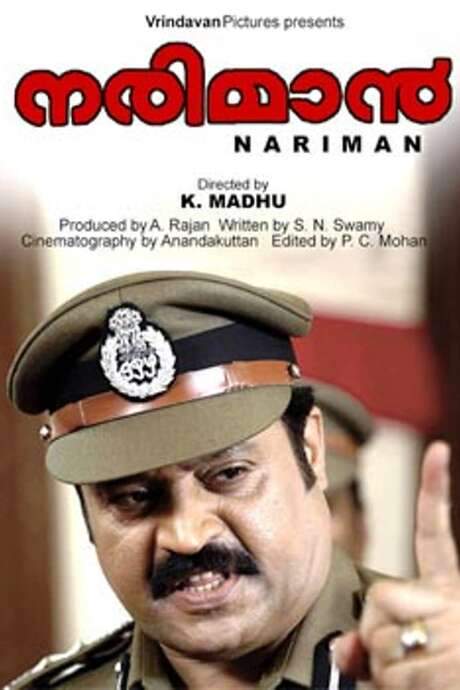
Enter Nariman, an aggressive, no‑nonsense police officer whose reputation for confronting problems head‑on precedes him. He carries the weight of a system that often prefers smooth resolutions over messy truths, and his blunt, relentless style immediately clashes with the cautious, often complacent attitudes of those around him. Yet beneath his tough exterior lies a restless curiosity and an unshakeable belief that the case’s surface may conceal something far deeper, prompting him to pry open doors that many have long since shut.
The tone of the story is a gritty, methodical drama that balances the stark realism of courtroom and police procedure with an undercurrent of suspense. As Nariman begins to untangle the threads of the accusation, the film invites the audience to feel the tension between authority and integrity, between the comfort of a settled narrative and the unsettling possibility of a grave mistake. The atmosphere remains charged with anticipation, hinting that the path to truth will demand both tenacity and a willingness to challenge the very structures people trust.
What Happens in Nariman?
The complete story of Nariman, from the first scene to the last, in 466 words (about 2 minutes). Spoilers throughout. Names in the text link to 5 cast member pages.
Spoilers ahead
Manu, Vijayakumar, is the man accused in a notorious double murder. During a routine prison transfer, he makes a desperate bid for freedom and is shot by the guards. Although gravely wounded, he survives the volley of bullets that rain down on him. Dr. Giri, N F Varghese, a senior surgeon, takes pity on the injured man and begins to doubt Manu’s guilt, sensing there could be more to the story than the official narrative.
Dr. Giri convinces his friend Shekharan, the Chief Minister of Kerala Janardhanan, to reopen the case and hand it to a capable, aggressive police officer, Ashok Nariman Suresh Gopi. Nariman, initially branded as hopeless by legal advisers due to the way the case had been framed, starts to peel back the layers of what happened on the night of the crime. He discovers that the real perpetrators were a tightly knit group led by the shrewd Adv. Padhmanabhan Thampi [Siddique], who worked with his allies Kochunarayanan [Jagathy Sreekumar], a senior police figure represented by SP Philipose [Spadikam George], and the feared Kamal Pasha [Bheeman Raghu]. Nariman lays out how this quartet allegedly executed the murder and how the evidence had been manipulated to seal Manu’s fate.
The case then moves to the Sessions Court, presided over by the Judge [Kozhikode Narayanan Nair], who remains wary of reopening old wounds. The Judge refuses to grant a second hearing, pointing to the prior Supreme Court ruling and the President’s decision on Manu’s fate, a verdict that had already shaped public opinion. Yet Nariman’s work does not end there. He also takes up a new line of inquiry in the Ammini missing case, a case that touches the criminal underworld connected to Kochunarayanan’s illegal liquor network. In this new investigation, the four men—Adv. Thampi, Kochunarayanan, Philipose, and Kamal—are questioned again, with Manu’s defense being contended by Manu’s lawyer Samyuktha Varma.
As the Ammini matter unfolds, Nariman exposes how the earlier murder case may have been built on forged or cherry-picked evidence, crafted to fit a preferred narrative. The revelation shifts the judgment’s momentum and forces the courtroom to confront the possibility that justice had been compromised by powerful interests and clever manipulation. The Judge, though initially stunned, comes to understand that even a revered legal system can be misled when those in power pull the strings.
Ultimately, the Judge grants a second hearing for Manu’s case. In that follow-up, Manu is proved innocent, and the true culprits—Adv. Padhmanabhan Thampi [Siddique], Kochunarayanan [Jagathy Sreekumar], Thomas Philipose [Spadikam George], and Kamal Pasha [Bheeman Raghu]—face the consequences of their actions. The story closes on a note that underscores the fragility of justice when it is tainted by corruption, and the persistence of a determined prosecutor who refuses to abandon a case that could right a dangerous wrong.
Nariman Timeline: Every Key Event in Order
12 key events in the order they happen, from “Escape attempt during prison transfer” to “Justice restored through persistence and courage”. 12 events name a place, across 9 locations.
- 1
Escape attempt during prison transfer
Manu tries to flee during a prison transfer, but the attempt is thwarted by guards and he is shot. He sustains severe injuries yet miraculously survives as bullets rain down on him. The event marks a brutal turning point that keeps him in custody but also sets up questions about his guilt.
When:During transfer to another facility Where:Prison transfer route
- 2
Dr. Giri vows to help and enlists political support
Dr. Giri, a senior surgeon, takes pity on Manu and decides to pursue his innocence. He convinces his friend Shekharan, the Chief Minister of Kerala, to reopen Manu's case and assign it to a sincere but aggressive officer, Ashok Nariman. The decision sparks new efforts to reexamine the evidence that led to Manu's conviction.
When:Soon after the escape incident Where:Hospital and political offices
- 3
Nariman discovers the real culprits behind the couple murder
Nariman, considered hopeless by some legal advisors, begins probing the original murder case and finds loopholes in the prosecution's narrative. He identifies a conspiracy led by Adv. Padhmanabhan Thampi, along with Kochunarayanan, SP Philippose, and Kamal, who orchestrated the crime. His findings set the stage for a critical challenge to the court's earlier ruling.
When:Early in the reexamination process Where:Investigation offices / court corridors
- 4
First case heads to the Sessions Court and stalls
Manu's case is brought before the Sessions Court, but the Judge refuses a second hearing. He cites the earlier Supreme Court ruling and the President's stance as reasons not to reopen the case, dismissing the new arguments as potential publicity. The decision stalls accountability and deepens the mystery of the frame-up.
When:During initial case review Where:Sessions Court
- 5
Nariman shifts focus to the Ammini missing case
Disappointed by the stubborn refusal to reopen Manu's case, Nariman turns his attention to the Ammini missing case. Ammini, an ally tied to the illegal network, holds secrets that could incriminate many, and her survival becomes pivotal to the investigation. Nariman believes uncovering this case could expose the underlying corruption.
When:After the initial case stalls Where:Sessions Court / investigation sites
- 6
Guilt in the Ammini case is established in court
Nariman presents evidence and pushes for accountability, leading to the conviction of the four key conspirators—Thampi, Kochunarayanan, Philipose, and Kamal—for the Ammini murder case. The courtroom sees a clash of seasoned legal minds and a public prosecutor who is learning to navigate a powerful defense. The verdict seems poised to correct a previous miscarriage of justice.
When:During Ammini case trial Where:Sessions Court
- 7
Nariman reveals Ammini is alive and exposes the frame-up
As the judge reads the Ammini verdict, Nariman interrupts to reveal that Ammini is alive and to expose the truth behind the frame-up. He explains how the four were made culprits through fake evidence and a crafted narrative that manipulated the court. His dramatic intervention argues that a corrupt alliance can subvert justice and demands a remedy for Manu.
When:Moments before/ during the judgement Where:Sessions Court / courtroom
- 8
Judge allows a second hearing in Manu's case
The Judge realizes that public institutions can be deceived and agrees to allow a second hearing in Manu's case. This procedural shift creates a renewed path toward truth, driven by Nariman's expose and the leverage provided by Ammini's alive status. The courtroom becomes a potential turning point toward real justice.
When:Immediately after Nariman's interruption Where:Sessions Court
- 9
Months later Manu is exonerated and the real culprits are punished
In a subsequent retrial, Manu is found innocent. The real culprits—Adv. Thampi, Kochunarayanan, Philipose, Kamal—face punishment for their crimes. The truth prevails, validating Nariman's earlier suspicions and undoing the frame-up that had unjustly condemned Manu.
When:Months after the second hearing Where:Courtroom
- 10
Dr. Giri's mercy and public justice converge
Dr. Giri's initial mercy toward Manu culminates in a broader triumph of justice, showing how empathy and professional integrity can challenge a flawed system. The case underscores the importance of courageous individuals who push for truth against powerful interests. The public receives a message about the fallibility of institutions and the possibility of reform.
When:Across the investigation and retrial period Where:Hospital / legal system
- 11
The court acknowledges systemic vulnerability to manipulation
The narrative emphasizes that even courts can be deceived when influential allies push a false narrative. Nariman’s actions reveal how evidence can be manufactured and how publicity can sway verdicts. The events set a cautionary tone about ensuring checks and balances remain vigilant.
When:During and after the retrial Where:Sessions Court / national judiciary
- 12
Justice restored through persistence and courage
Ultimately Manu is exonerated and the true conspirators are punished, affirming that truth can prevail when determined individuals challenge a corrupted frame-up. The film closes on a note of moral vindication, highlighting the value of tenacity in pursuit of justice. The cycle of deceit is broken, and faith in the system is partially restored.
When:End of trial Where:Courtroom
Who Are the Main Characters in Nariman?
13 characters, among them Manu, Ashok Nariman and Padhmanabhan Thampi: who each one is and the part they play in the story. 12 of them link to the actor’s page.
- M
Manu
The accused in the notorious murder case who attempts an escape during a prison transfer and is shot, surviving to face a new interrogation of his guilt. He is initially charged with murdering his elder brother and sister-in-law in a crime framed to exploit lust and an attempted rape. Manu becomes the focal point around which questions of innocence and manipulation of evidence revolve.
- ⚖️ Accused
- 🕳️ Framed
- 💥 Escape attempt
- AN
Ashok Nariman
Played by Suresh Gopi
A sincere yet aggressive police officer who reopens Manu's case and is tasked with pursuing the truth. He uncovers inconsistencies in the original investigation and pushes for a thorough re-examination of the evidence. Nariman embodies relentless pursuit of justice against entrenched interests.
- 🕵️♂️ Investigator
- 🗡️ Determined
- 🧭 Reform-minded
-
Padhmanabhan Thampi
Played by Siddique
An intelligent and ruthless advocate who masterminds the original framing of Manu's case. He leverages powerful allies and manipulated evidence to secure a conviction. His actions illustrate how legal talent and influence can corrupt the system.
- 🎯 Manipulator
- 🧠 Cunning
- 💤 Powerful
-
Kochunarayanan
Played by Jagathy Sreekumar
A key ally of Thampi and a principal conspirator in the murder framing. He participates in the manipulation of the case and the political maneuvering surrounding it. His involvement highlights the reach of corruption across police and legal networks.
- 🤝 Co-conspirator
- 🔒 Connected
- 🕸️ Network
- TP
Thomas Philipose
Played by Spadikam George
The Superintendent of Police who is part of the operational network behind the initial framing. His role symbolizes the complicity of law enforcement in corrupt schemes and the difficulty of overturning established narratives.
- 👮♂️ Authority
- 🕳️ Complicity
- 🧭 Power
- AV
Adv. Vaikuntam
Played by Rajan P Dev
A senior lawyer who represents the defense against Manu in the initial proceedings. His expertise contrasts with the manipulative tactics used to frame Manu, highlighting the tug-of-war between seasoned counsel and unscrupulous schemes.
- ⚖️ Defender
- 🛡️ Legal Skill
- 🧭 Experience
- KP
Kamal Pasha
Played by Bheeman Raghu
A member of the conspiracy tied to illegal activities and the murder framing. His involvement demonstrates how criminal networks intersect with political power to influence outcomes in high-profile cases.
- 🗡️ Criminal Link
- 🕸️ Network
- 🗺️ Influence
- DG
Dr. Giri
Played by N F Varghese
A senior surgeon who takes pity on Manu and believes in his innocence. He advocates for a reconsideration of Manu's case based on medical and ethical grounds, pushing Nariman toward a broader inquiry beyond the courtroom.
- 🩺 Healer
- 🧭 Empathy
- 🧩 Evidence-based
- SV
Samyuktha Varma as Manu's lawyer
Played by Samyuktha Varma
Manu's defense attorney who represents him in legal battles. Her role underscores the importance of diligent advocacy in challenging a deeply entangled frame-up.
- ⚖️ Lawyer
- 🗣️ Advocate
- 🧭 Determined
-

Chief Minister (Shekharan)
Played by Janardhanan
The political leader whose decision to reopen the case demonstrates the influence of government power on legal proceedings. His involvement signals how shifting political winds can alter the course of justice.
- 🏛️ Politician
- 🗳️ Power
- 🧭 Policy
- J
Judge
Played by Kozhikode Narayanan Nair
A seasoned judge who initially refuses a second hearing, reflecting skepticism about publicity-driven reversals. Ultimately, the judge allows a retrial after Nariman presents new evidence, underscoring the judiciary's capacity for reconsideration when confronted with compelling truth.
- ⚖️ Judgement
- 🧭 Impartial
- 🏛️ Authority
- P(
Police (Poojappura Ravi)
Played by Poojappura Ravi
Represents law enforcement on the ground and the procedural side of the case. His presence anchors the narrative in the realities of policing in a high-stakes political/legal environment.
- 👮♂️ Enforcement
- 🗂️ Procedure
- 🧰 Tools
- S
Sruthi
Played by Nithya Das
A supporting figure in the narrative, connected to the legal drama surrounding Manu's case and the courtroom dynamics.
- 👥 Supporting
- 🧭 Contextual
- 🗣️ Courtroom
Where and When Is Nariman Set?
Nariman is set in Kerala, India, Prison and Courtroom (Present-day). Here is why the time and place matter to the story.
When
Present-day
The narrative unfolds in contemporary Kerala within a modern legal and political environment. It follows a current-era murder case, its transfer and investigation, and the high-stakes court proceedings that decide guilt or innocence. The timeline highlights how real-world legal processes—and political pressure—shape outcomes.
Where
Kerala, India, Prison, Courtroom
Set in the Indian state of Kerala, the film centers on a high-stakes murder case and a shaken legal system. Key events unfold inside a prison transfer and the courtroom where pivotal judgments are made. The setting spans political corridors, reflecting power dynamics that influence justice.
- 🎭 Drama
- ⚖️ Legal
- 🏛️ Politics
What Are the Themes of Nariman?
3 ideas the story keeps returning to, among them Justice, Truth and Power.
-
01
Justice
The film probes whether justice is objective or easily bent by power. Manu's case shows how evidence can be framed to steer a verdict. Nariman's pursuit of truth exposes vulnerabilities in the legal system. The story suggests that true justice may require relentless probing beyond official narratives.
-
02
Truth
Investigation drives the plot as Nariman uncovers the manipulation behind the couple murder case. The narrative demonstrates how appearances can mislead and how a single misstep in reasoning can seal a verdict. It emphasizes perseverance in revealing the real truth through parallel cases and deeper inquiry. The Ammini case acts as a catalyst for exposing the frame-up.
-
03
Power
The plot highlights the corrosive influence of politics on justice. The Chief Minister and allied officials are depicted as capable of swaying case outcomes. The story shows how state authority can shape public perception and legal processes. It underscores the tension between political expediency and principled legal practice.
What Kind of Film Is Nariman?
Tense in tone, with fast pacing and a moderate story, going by the plot summary.
- Tone
- Tense
- Pacing
- Fast
- Story
- Moderate
- Intensity
- High
- Ending
- Happy
A fast-paced, high-intensity investigative thriller that maintains a tense and anxious atmosphere as a determined officer uncovers a deep-seated conspiracy, ultimately delivering a cathartic but heavy victory for justice.
- tense
- gripping
- corrosive
- determined
- systemic
- anxious
- false accusation
- judicial corruption
- police investigation
- miscarriage of justice
Content notes: murder, false imprisonment, police corruption, judicial corruption, attempted prison escape shooting.
Quiz
How well do you remember Nariman? Test yourself on the story.
Where to Watch Nariman
Stream it on Sun Nxt. US availability and prices from JustWatch.
Stream 1
 Sun Nxt
 Streaming availability in the US, powered by