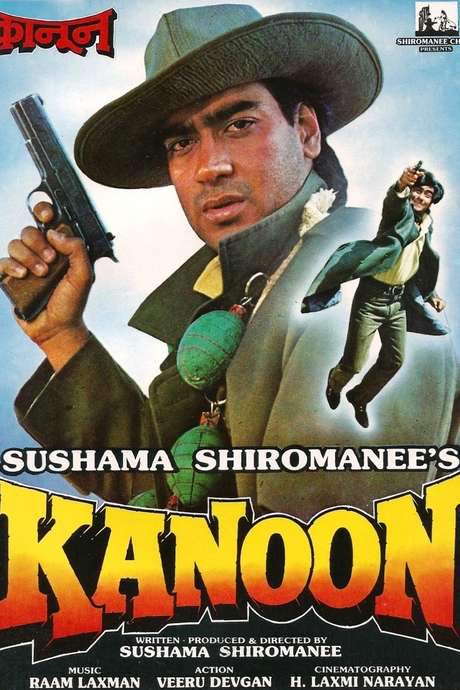
What Is Kanoon About?
The premise of Kanoon in 330 words, with nothing given away. The full story follows below.
In a world where the scales of justice tip unpredictably, the streets pulse with a restless tension that feels both familiar and foreboding. The city’s institutions—courts, police stations, and the quiet homes tucked between them—carry the weight of past judgments, and every hallway seems to echo with the unresolved grievances of those who have passed through. Shadows linger in the corners of bustling markets and deserted alleys alike, hinting at the delicate balance between law and the forces that seek to undermine it.
The story centers on Vishal, a young man freshly returned from police training, eager to apply the discipline and principles he has learned. He comes from a close‑knit family that has always stood as a pillar of moral authority: a father whose reputation as a judge commands respect, a mother who embodies compassion, and an elder brother who has followed a similar path in service. Their bonds are grounded in duty, honor, and a shared belief that the system can correct wrongs. Vishal’s return is marked by a hopeful determination to protect the values his family has upheld.
However, the calm is shattered when a sudden calamity strikes his household, leaving Vishal with a burning resolve to confront the darkness that has intruded upon his world. The tragedy forces him to wrestle with a conflict between his training—steeped in protocol and restraint—and an unyielding desire for retribution. As he steps deeper into the murky underbelly of the city, the line between law‑enforcer and avenger begins to blur, and the weight of his personal mission grows heavier with each passing moment.
The tone remains gritty and intense, laced with moments of introspection that reveal Vishal’s internal struggle. The narrative weaves a tapestry of moral ambiguity, where allies may hide ulterior motives and the pursuit of justice becomes an intricate game of shadows. This atmosphere of suspense and ethical tension invites the audience to question how far one should go when the very foundations of order crumble beneath them.
What Happens in Kanoon?
The complete story of Kanoon, from the first scene to the last, in 698 words (about 3 minutes). Spoilers throughout. Names in the text link to 6 cast member pages.
Spoilers ahead
Vishal [Ajay Devgn] returns from police training to a grim reality: most of his family—his father Dharmadhikari Singh, and his elder brother Pankaj, who was also a police officer—have been murdered by Raja Thakur. Only his sister-in-law Reema Lagoo and his young nephew survive, leaving him with a heavy knot of questions and a burning need for answers. The trauma is not just personal; it exposes a long-standing feud that has eaten away at a once-stable household and pulls Vishal into a web of crime, corruption, and retribution.
This vendetta traces back to a brutal seed: Dharmadhikari Singh, in his role as a judge, sentenced Thakur’s father to death, setting off a chain of retaliation that twists the fates of both families. As the Thakur brothers push their way back into the narrative, their paths repeatedly cross with those of Dharmadhikari and Pankaj, forcing Vishal to confront a landscape where the line between law and lawlessness blurs. The stakes rise as the Thakurs maneuver through legal channels, exploiting every opening to strike back at a system that once failed to protect them.
Thakur’s cause gains a dangerous ally in Dhananjay Dhananjay, a crooked advocate whose cleverness and ruthlessness help the Thakur siblings dodge consequences and keep their reign of fear intact. Dhananjay’s influence grows; at one point, his schemes even extend to manipulating the court by aligning his own interests with those of the Thakurs. The alliance between Thakur’s faction and Dhananjay grows more dangerous as they push the boundaries of legality, using deception and manipulation to shield their criminal activities—a web that becomes harder to pierce as the truth begins to fray around the edges.
Vishal’s life takes another brutal turn when he is blamed for the murder of the son of Police Commissioner Kiran Shroff, a man who had aligned himself with the Thakur camp. The case appears open-and-shut at first, painted by a public prosecutor who uses a controversial motive—an argument that Vishal killed the man following a dispute tied to the pimping of his own sister, Shalu, who is Vishal’s love. The courtroom becomes a stage where truth is obscured by appearances, and Vishal finds himself fighting not only for his freedom but for his name and his integrity in a system that seems bent on condemning him.
Behind bars, Vishal refuses to bow. He uses the same underhanded tactics the Thakurs relied on to gain his freedom—a risky gambit that culminates in a decisive act: Vishal kills one of Thakur’s brothers, sending a message that the hunt for justice will continue, even under the weight of the law. The act is shocking, but it signals a turning point: the veil of impunity that has sheltered the Thakur faction begins to crack, and Vishal moves from a victim of circumstance to an active force in his own defense and in the pursuit of accountability.
The climax tightens its grip as Thakur captures the commissioner and his allies, with the grim intent of finishing off Vishal’s sister-in-law and nephew. Yet Vishal arrives at the crucial moment, turning the tables on Thakur and his henchmen in a hard-fought, merciless showdown. The confrontation ends with Thakur dead and justice reasserted in the most dramatic fashion: Dhananjay is forced to confess in court how he helped Thakur carry out a reign of terror, bringing legal and criminal repercussions down on him as well. The courtroom scene that follows binds the threads of deceit, revenge, and reform into a stark reminder of the consequences that accompany corruption and violence.
In the aftermath, the narrative leaves viewers with a hard-earned sense of closure, tempered by the cost of vengeance and the fragile nature of justice. Vishal, battered but unbroken, stands as a testament to perseverance in the face of a corrupted system, while the fall of Dhananjay and the dismantling of Thakur’s network signal that truth, when pursued with unwavering resolve, can pierce through even the most entrenched cycles of intimidation. The film threads together themes of family, loyalty, and the price of power, weaving a tapestry that stays true to its intense, high-stakes premise while offering a cathartic resolution for a story built on years of grievance and retribution.
Kanoon Timeline: Every Key Event in Order
12 key events in the order they happen, from “Vishal returns home to a tragedy” to “Aftermath: peace and healing”. 12 events name a place, across 9 locations.
- 1
Vishal returns home to a tragedy
Vishal comes back from police training to find most of his family murdered by Raja Thakur. Only his sister-in-law and his nephew survive the massacre. The event ignites Vishal's quest for justice and revenge.
When:Immediately after returning from training Where:Home town
- 2
The feud is born: a judge's judgment sparks enmity
Dharmadhikari Singh, now a judge, sentences Thakur's father to death, fueling a fierce personal vendetta. Thakur's hatred toward the family grows as the consequences of that decision ripple through years. This past judgment sets the stage for future clashes.
When:Years before the main events Where:Courthouse
- 3
Escalation: clashes between Thakur's brothers and the Dharmadhikars
Thakur and his brothers cross paths with Dharmadhikari and Pankaj, leading to escalating confrontations. The legal power struggle blends with personal revenge, widening the conflict. These tensions lay the groundwork for the conspiracies to come.
When:Following the feud Where:City
- 4
Dhananjay aligns with Thakur
Crooked advocate Dhananjay partners with Thakur, helping the siblings evade legal troubles. He even manipulates justice by arranging the killing of his own identical twin to benefit Thakur's clan. The alliance strengthens Thakur's grip on power.
When:After the initial clashes Where:Courts and offices
- 5
Vishal blamed for a high-profile murder
Vishal is blamed for the murder of Police Commissioner Kiran Shroff's son, a case tied to Thakur's faction. The accusation places Vishal at the center of the conspiracy. The public narrative frames him as the culprit.
When:During the investigation Where:Police headquarters / city
- 6
Trial and conviction of Vishal
Dhananjay, now a judge, convicts Vishal and has him imprisoned. The prosecution portrays that Vishal killed the man after a dispute over pimping out his sister Shalu, who is Vishal's love. The courtroom process legitimizes Thakur's manipulation of justice.
When:During the trial Where:Courtroom
- 7
Vishal finds a loophole and strikes back
Vishal uses a subterfuge similar to Thakur's trick to obtain temporary jail release. He leverages this to track and kill one of Thakur's brothers, exacting personal vengeance. The act demonstrates Vishal's willingness to bend the rules to dismantle Thakur's network.
When:During his imprisonment Where:Jail and city streets
- 8
Thakur's final bid: capture and murder
With the commissioner under his control, Thakur plans to kill Vishal's sister-in-law and nephew. The danger tightens as Vishal's family hangs in the balance. The plan sets up the climactic confrontation.
When:Climax Where:Commissioner’s location
- 9
Vishal arrives and ends Thakur's reign
Vishal arrives at the critical moment, shooting down Thakur and his henchmen to stop the killing. The tyrant's rule collapses as his enemies fall. The decisive act closes the main arc of the antagonist's power.
When:Climax Where:Commissioner’s location / confrontation site
- 10
Dhananjay's confession and arrest
In court, Dhananjay confesses how he helped Thakur carry out the reign of terror. His admission exposes the extent of the manipulation and triggers his own criminal proceedings. The confession marks a turning point in the pursuit of justice.
When:Post-climax Where:Courtroom
- 11
Justice pursued and Thakur's downfall
Following the confession, the legal system moves to bring all conspirators to justice. Vishal's vindication grows as the truth is acted upon by the courts. Thakur's criminal empire is dismantled as the case closes.
When:Post-confession Where:Courtroom
- 12
Aftermath: peace and healing
The family tragedy is resolved with a sense that justice has been served, and Vishal resumes life with a renewed purpose. The survivors begin the slow process of healing while public record seals the inquiry into the conspiracy. The film ends on a sober note about power and accountability.
When:End of film Where:City
Who Are the Main Characters in Kanoon?
8 characters, among them Vishal (Ajay Devgn), Raja Thakur (Gulshan Grover) and Dhananjay (Prem Chopra): who each one is and the part they play in the story. 7 of them link to the actor’s page.
-
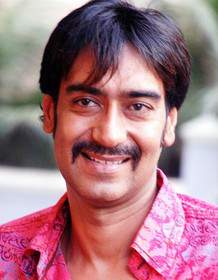
Vishal (Ajay Devgn)
Played by Ajay Devgn
Vishal returns from police training to confront the murder of his father Dharmadhikari Singh and brother Pankaj by Raja Thakur. He is driven by a strong sense of justice and loyalty, willing to bend rules to expose the conspiracy. After being framed for a crime, he uses cunning strategies to bring Thakur and his allies to justice.
- 🎯 Justice-seeker
- ⚖️ Law-abider
- 🗡️ Vengeful
- RT
Raja Thakur (Gulshan Grover)
Played by Gulshan Grover
A ruthless crime lord whose vendetta against Vishal’s family fuels the central conflict. He leverages family ties and corrupt lawyers to manipulate the system and survive legal peril. His ambition and cruelty escalate the violence until Vishal confronts him in a final showdown.
- 💢 Tyrant
- 🕷️ Powerful
- D(
Dhananjay (Prem Chopra)
Played by Prem Chopra
A crooked advocate who helps Thakur escape legal problems while manipulating public perception. He even orchestrates the murder of his identical twin to aid the criminals, highlighting the extent of his scheming. Eventually, he is exposed in court and faces consequences.
- 🧠 Cunning
- ⚖️ Corrupt
- S
Shalu
Shalu is Vishal’s love interest, whose safety and reputation are endangered by Thakur’s schemes. Her presence motivates Vishal to pursue justice and challenge the corrupt power structure.
- 💖 Love-interest
- 💔 Risk
- KS
Kiran Shroff (Kiran Kumar)
Played by Kiran Kumar
Police Commissioner whose son is killed, becoming a focal point of the case. The prosecution’s misdirection leads Vishal to be imprisoned, illustrating how the system can be manipulated.
- 👮 Authority
- 🏛️ Bureaucracy
- DS
Dharmadhikari Singh (Alok Nath)
Played by Alok Nath
A judge who sentenced Thakur’s father to death, setting off a chain of revenge that drives the plot. His legacy and decisions ripple through the lives of Thakur and Vishal.
- ⚖️ Judge
- 🕊️ Legacy
- P(
Pankaj (Arun Govil)
Played by Arun Govil
Vishal’s elder brother and police officer, murdered early in the story. His death serves as the catalyst for Vishal’s vengeance and pursuit of justice.
- 👮 Brother
- 💔 Victim
- S(
Sister-in-law (Reema Lagoo)
Played by Reema Lagoo
The surviving member of Vishal’s family, she embodies the stakes of the feud and the emotional core of the narrative.
- 👪 Family
- 💬 Support
Where and When Is Kanoon Set?
Kanoon is set in India. Here is why the place matters to the story.
Where
India
The story unfolds within an Indian urban milieu where law enforcement, judiciary, and criminal networks collide. The city’s streets and courthouses serve as stages for a vigilante-tinged justice that tests official procedures. Family dynamics and power struggles drive the conflict toward a dramatic courtroom showdown.
- 🇮🇳 Indian setting
- 🏙 Urban environment
- 👥 Social drama
What Are the Themes of Kanoon?
3 ideas the story keeps returning to, among them Justice, Corruption and Family.
-
01
Justice
Vishal's pursuit of justice is complicated by a corrupt alliance between Thakur and Dhananjay. The law is portrayed as powerful yet vulnerable to manipulation, forcing Vishal to improvise. The plot culminates in a courtroom confrontation where truth clashes with deceit.
-
02
Corruption
The Thakur-Dhananjay nexus exploits the legal system to shield criminals and mislead the public. Perception is manipulated to convict Vishal, highlighting how influence can override evidence. The narrative critiques graft at the heart of political power.
-
03
Family
Family loyalties propel Vishal forward even as a blood feud escalates. The murder of his father and brother turns kin into a motive for revenge and a test of justice. The surviving sister-in-law and the nephew symbolize what is at stake and resilience against tyranny. The final act ties personal ties to the larger fight for truth.
What Kind of Film Is Kanoon?
Dark in tone, with fast pacing and a moderate story, going by the plot summary.
- Tone
- Dark
- Pacing
- Fast
- Story
- Moderate
- Intensity
- High
- Ending
- Happy
A tense and dark revenge thriller fueled by anger and grief, delivering a fast-paced narrative of corruption and violent justice.
- vengeful
- tense
- gritty
- angry
- desperate
- cathartic
- revenge
- corruption
- family tragedy
- legal system
Content notes: mass murder, family death, corruption, revenge killing.
Quiz
How well do you remember Kanoon? Test yourself on the story.