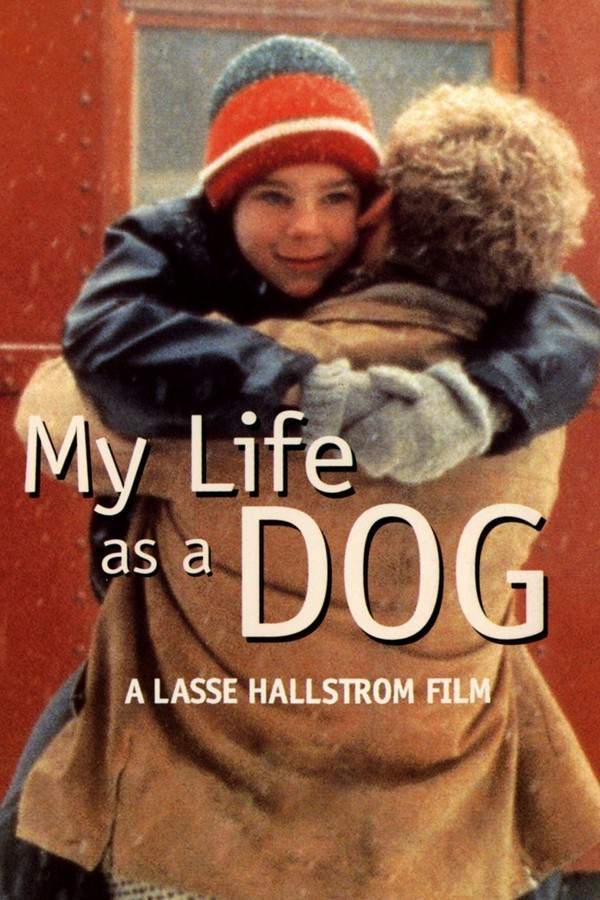
My Life as a Dog 1987


Directed by

Lasse Hallstrom
Made by

Skouras Pictures
Where to Watch My Life as a Dog
See current US streaming, rental, and purchase options for My Life as a Dog (1987) via JustWatch.







My Life as a Dog Plot Summary
Read the complete plot summary and ending explained for My Life as a Dog (1987). From turning points to emotional moments, uncover what really happened and why it matters.
The story unfolds in Sweden during the years 1958 to 1959, centering on Ingemar, a 12-year-old boy who finds himself in the midst of various escapades alongside his beloved dog. As he and his older brother Erik push the limits of their single mother’s patience, little do they know that she is battling a terminal illness. To allow their mother the necessary rest and recuperation, the siblings are separated and sent to live with relatives. Ingemar finds himself in a quaint rural town in Småland, under the care of his maternal uncle Gunnar and his wife Ulla, but is heartbroken to leave his dog behind, which is placed in a kennel against his objections.
During his time with Gunnar, Ingemar shares a special bond over the recording of “Far, jag kan inte få upp min kokosnöt” by Povel Ramel. As he navigates this new environment, he encounters an array of intriguing personalities. One of them is Saga, a bold tomboy of his age who shows her interest by sparring with him in the boxing ring. Among the town’s oddities is Fransson, a man obsessed with repairing his roof, and Mr. Arvidsson, an elderly neighbor who enjoys having Ingemar read amusing readings from a lingerie catalog.
When the boys are eventually reunited with their mother, their joy is short-lived, as her health rapidly declines leading to hospitalization. The brothers find themselves under the care of their uncle Sandberg in the city, although his wife suspects that Ingemar is mentally unwell. After the devastating loss of their mother, Ingemar is sent back to Småland.
Upon his return, he discovers that Mr. Arvidsson has passed away, and his uncle and aunt now share their home with a large Greek family. Despite the crowded conditions, Gunnar tries his best to support Ingemar, though it becomes necessary for him to live with Mrs. Arvidsson in a separate residence. Clinging to the hope of being reunited with his dog, Ingemar continuously pesters Gunnar about the dog’s fate. Concurrently, tensions arise as both Saga and another girl vie for his affection. During a confrontation between them, Ingemar, in a moment of distress, clings to Saga’s leg and begins to bark like a dog. This peculiar behavior leads Saga to react sharply, even proclaiming that Ingemar’s dog has been euthanized—a revelation that shatters him, compounded by the grief of his mother’s death.
Retreating into Gunnar’s one-room “summer house,” Ingemar finds solace in isolation, reflecting on his deep sense of loss and a world that appears to be shifting around him. Throughout this journey, he comforts himself with the thought that “it could have been worse,” pondering distressing scenarios like the unfortunate man struck by a javelin at a track meet and the tragic fate of Laika, the first dog sent into space by the Russians.
The film reaches its climax with a live radio broadcast of the iconic heavyweight boxing match between Swede Ingemar Johansson and American Floyd Patterson. As Johansson snatches victory, the whole town erupts in celebration, while the reconciled Ingemar and Saga peacefully sleep together on a couch, wrapped in each other’s embrace.
My Life as a Dog Timeline
Follow the complete movie timeline of My Life as a Dog (1987) with every major event in chronological order. Great for understanding complex plots and story progression.
Ingemar's Early Life
Ingemar is a 12-year-old boy living in Sweden with his older brother Erik and their single mother. The boys often test their mother's patience with their adventures and mischief, all while being blissfully unaware of her declining health.
Separation from Mother
Due to their mother's terminal illness, Ingemar and Erik are sent to live with relatives for her recovery. This decision marks a significant turning point in Ingemar's life, as he is heartbroken to leave behind his beloved dog, which is put in a kennel against his will.
Life in Småland
Ingemar arrives in the quaint rural town of Småland to stay with his uncle Gunnar and aunt Ulla. Adjusting to this new environment proves difficult for Ingemar as he has to navigate the complexities of his emotions and the new personalities around him.
Bonding with Gunnar
While living with his uncle, Ingemar shares special moments listening to a recording of 'Far, jag kan inte få upp min kokosnöt' by Povel Ramel. This music becomes a source of comfort for Ingemar and helps him connect with his uncle despite the changes in his life.
Meeting Saga
Ingemar encounters Saga, a bold tomboy who shows her interest in him through friendly sparring in the boxing ring. Their playful interactions mark the beginning of a relationship filled with youthful rivalry and affection.
Mr. Arvidsson's Amusing Reads
Ingemar befriends Mr. Arvidsson, an elderly neighbor who delights in having him read entertaining segments from a lingerie catalog. This peculiar bond provides Ingemar with a sense of normalcy amidst the chaos of his family situation.
Return to Mother
After a period of separation, Ingemar and Erik are reunited with their mother. Unfortunately, their joy is fleeting as her health rapidly deteriorates, leading to her eventual hospitalization and deepening the brothers' sense of loss.
New Custodians
With their mother hospitalized, Ingemar and Erik are placed under the care of their uncle Sandberg in the city. Sandberg's wife harbors suspicions about Ingemar's mental well-being, complicating the brothers' already tumultuous emotions.
Loss of Their Mother
The brothers experience the crushing grief of losing their mother. This tragedy forces Ingemar back to Småland, where he must confront his memories and the absence of both his mother and his dog.
Changes in Småland
Upon his return to Småland, Ingemar finds that Mr. Arvidsson has passed away and his uncle's home is now shared with a large Greek family. The new living situation adds to Ingemar's emotional turmoil and feelings of isolation.
Desire for His Dog
Ingemar constantly pesters Gunnar about the fate of his beloved dog. The hope of being reunited with his dog becomes a poignant reflection of his childhood innocence amidst sorrow.
Conflict with Saga
As Ingemar navigates his feelings, tensions arise between him and Saga, along with another girl who is vying for his attention. During an emotional confrontation, Ingemar's grief manifests bizarrely as he clings to Saga's leg and barks like a dog.
Shattering Revelation
Saga callously informs Ingemar that his dog has been euthanized, a revelation that breaks his spirit. This adds yet another layer of grief to Ingemar's already heavy heart following the loss of his mother.
Ingemar's Retreat
Seeking solace from his overwhelming emotions, Ingemar retreats to Gunnar's summer house. In this isolation, he reflects on his profound sense of loss and contemplates the shifting realities of his life, trying to find comfort in the thought that things could be worse.
Historic Boxing Match
The film culminates during the live radio broadcast of the heavyweight boxing match between Ingemar Johansson and Floyd Patterson. The town erupts in celebration as Johansson's victory brings a moment of joy, while Ingemar and Saga find peace together, symbolizing a hopeful future.
My Life as a Dog Characters
Explore all characters from My Life as a Dog (1987). Get detailed profiles with their roles, arcs, and key relationships explained.
Ingemar
Ingemar is a 12-year-old boy navigating the challenges of childhood amid family turmoil. He exhibits resilience and an imaginative spirit, often finding solace in daydreams and his beloved dog. Through heartbreak and fleeting joys, Ingemar displays profound emotional depth as he seeks comfort in friendships.
Saga
Saga is a spirited tomboy who captures Ingemar's interest. She embodies strength and independence, often challenging gender norms through her boxing sparring. As a source of both rivalry and affection, Saga significantly influences Ingemar's emotional landscape.
Gunnar
Gunnar is Ingemar's supportive uncle, who becomes a guardian figure during a tumultuous period. He embodies kindness and patience, providing a nurturing environment despite the challenges faced by his family. Through his efforts, Gunnar represents stability and understanding.
My Life as a Dog Settings
Learn where and when My Life as a Dog (1987) takes place. Explore the film’s settings, era, and how they shape the narrative.
Time period
1958 to 1959
The events take place during a tumultuous time in the late 1950s, a period marked by social change and the lingering effects of post-war life. This era reflects the challenges of childhood amidst familial struggles, where children like Ingemar navigate both joy and grief.
Location
Sweden, Småland
The movie primarily unfolds in Sweden, specifically in the rural region of Småland. Known for its picturesque landscapes and dense forests, Småland offers a serene backdrop for Ingemar's adventures. This quaint setting highlights the simplicity and complexities of life during the late 1950s.
My Life as a Dog Themes
Discover the main themes in My Life as a Dog (1987). Analyze the deeper meanings, emotional layers, and social commentary behind the film.
💔
Grief
Grief is a central theme throughout the movie, as Ingemar copes with his mother's illness and eventual death. The emotional weight of loss profoundly affects his childhood experiences, forcing him to confront the realities of life and death. Ingemar's journey captures the innocence of youth challenged by sorrow.
🐶
Friendship
The bond between Ingemar and his dog symbolizes unconditional love and companionship. Even when separated, Ingemar's thoughts dwell on his loyal friend, showcasing the importance of friendship during difficult times. This theme extends to his interactions with Saga, reflecting the complexities of young love.
🏆
Victory
Victory is illustrated through the excitement surrounding the boxing match between Ingemar Johansson and Floyd Patterson. This triumphant event unites the town and serves as a metaphor for Ingemar's personal battles. Our protagonist learns that triumph can exist even within pain and loss, providing hope for the future.

Coming soon on iOS and Android
The Plot Explained Mobile App
From blockbusters to hidden gems — dive into movie stories anytime, anywhere. Save your favorites, discover plots faster, and never miss a twist again.
Sign up to be the first to know when we launch. Your email stays private — always.
Explore the mobile appMy Life as a Dog Spoiler-Free Summary
Discover the spoiler-free summary of My Life as a Dog (1987). Get a concise overview without any spoilers.
In the gentle light of 1950s Sweden, a quiet rural landscape becomes the backdrop for a boy’s first steps into a world that feels both familiar and suddenly unfamiliar. Ingemar, a perceptive twelve‑year‑old, lives with his single mother and older brother, sharing simple joys and small mischiefs that echo the rhythm of post‑war life. Their days are punctuated by the loyal companionship of a dog, whose presence hints at the deeper bond between a child and his own restless imagination.
When circumstances force the siblings apart, Ingemar finds himself placed under the care of his maternal aunt and uncle in the modest town of Småland. The new household, filled with the warm, if sometimes awkward, dynamics of extended family, introduces a mixture of humor and melancholy that colors his stay. Here the boy encounters a colorful cast of neighbours—an enthusiastic tinkerer, a retired gentleman with an odd pastime, and a spirited girl who matches his energy in unexpected ways—each adding texture to the tapestry of his new life.
The film moves with a gentle, almost lyrical pace, letting the audience feel the texture of the Swedish countryside, the creak of wooden floors, and the soft hum of radio broadcasts that drift through the rooms. Amidst this setting, Ingemar grapples with questions of identity and belonging, his inner world reflecting the subtle shifts happening around him. The tone balances wistful nostalgia with a light‑hearted spark, inviting viewers to linger in the bittersweet moments of childhood resilience.
Through understated comedy and quiet poignancy, the story paints a portrait of a boy standing at the crossroads of loss and growth. As he navigates the expectations of his new family, the lingering pull of his canine companion and the promise of new friendships linger like a soft refrain, promising that even in the most ordinary of places, profound change can quietly unfold.
Featured on this page

What's After the Movie?
Not sure whether to stay after the credits? Find out!
Check out our other apps:

SAT Sphere
Build confidence for the Digital SAT.

Mori Atlas
Discover wild places worth protecting.

Luntero
Search smarter for a home in Amsterdam.

Plot Explained
Unravel movie endings and hidden clues.

Pokechamp
Dive into Pokémon data and battle logic.

Driving Theory
Get ready for your European theory test.

Movie Dust
Plan your next cinema trip with ease.

Musemap
Find art and culture as you travel.

Selkobase
Compare credentials before committing.

Local Manual
Turn an unfamiliar country into practical next steps.

Lernavi
Compare school systems before your next move.

GymRoam
Find a workout stop wherever your plans take you.
Explore Our Movie Platform
New Movie Releases (2026)
Famous Movie Actors
Top Film Production Studios
Movie Plot Summaries & Endings
Major Movie Awards & Winners
Best Concert Films & Music Documentaries
Movie Collections and Curated Lists
© 2026 What's After the Movie. All rights reserved.
Privacy Policy