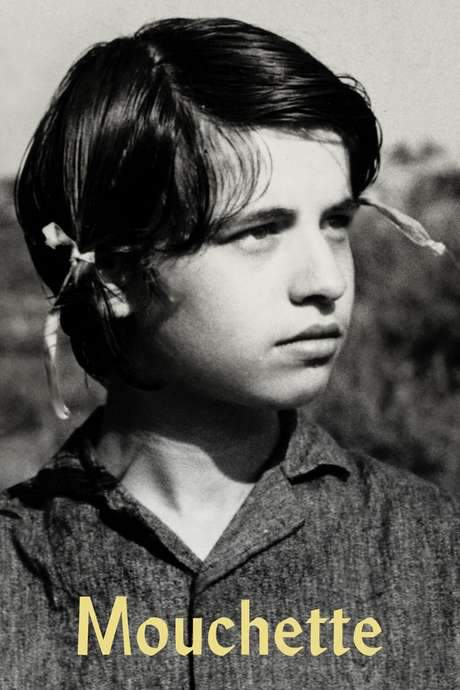
Mouchette 1967


Directed by

Robert Bresson
Made by

Argos Films
Where to Watch Mouchette
See current US streaming, rental, and purchase options for Mouchette (1967) via JustWatch.







Mouchette Plot Summary
Read the complete plot summary and ending explained for Mouchette (1967). From turning points to emotional moments, uncover what really happened and why it matters.
Mouchette, whose name translates to “little fly”, is a young girl living in a secluded French village with her father and her bedridden, dying mother. She takes on the responsibility of caring for her infant brother and handling all the household chores. Despite her efforts, she faces social rejection at school due to her ragged clothes, and her teacher criticizes her for refusing to sing during class, highlighting her isolated and harsh existence.
Once, seeking a brief escape from her bleak reality, Mouchette visits a local fair. There, she is approached by a kind woman who buys her a token, allowing her to ride the bumper cars. During the ride, she mutually flirts with a young man, and they bump into each other’s cars, creating a fleeting moment of innocence and joy. Unfortunately, before she can speak with him afterward, her father intervenes and takes her away, preventing her from pursuing any further connection.
Her daily life takes a darker turn when she is walking home from school during a rainstorm. Lost in the woods, she encounters Arsène, an alcoholic, epileptic poacher. Arsène finds her and takes her to his hut, where he is worried about having possibly killed a man in a previous fight. He tries to use Mouchette as an alibi to clear himself. During this tense encounter, Arsène suffers a seizure, and Mouchette displays a gentle, caring attitude as she tends to him. When he regains consciousness and admits to having wounded and possibly killed the gamekeeper, Mouchette urges him to leave and escape the situation. However, Arsène captures her and rapes her, an act that leaves a permanent scar on her young life. She manages to escape by dawn, proceeding home to tend to her crying, hungry baby brother with care and tenderness, following her weak and dying mother’s instructions.
Later, she wakes to find her mother has passed away, and her verbally abusive father returns. On her way to fetch milk, a kind shopkeeper offers her a free coffee and croissant. When the shopkeeper notices a scratch on her chest, she appears to intentionally damage the coffee bowl, leading him to call her a “little slut”, reflecting the brutal judgment she endures. Elderly women dressed in black are seen heading to church, emphasizing the somber tone of her community.
In the days that follow, Mouchette recounts her troubled experiences to Mathieu, the local gamekeeper, and his wife. She initially pretends that she spent the night at Arsène’s house, claiming he is her lover, illustrating her attempt to hide the truth about her ordeal. Eventually, she is invited to the house of an elderly woman, who provides her with a dress for the funeral and a shroud for her mother. The woman talks to her about worshiping the dead and offers her three beautiful dresses that fit her perfectly. However, in her age’s characteristic harshness, Mouchette insults her and damages her carpet, revealing her inner turmoil.
She then witnesses hunters shooting rabbits, and the scene turns tragic when a wounded rabbit is left unable to hop. Mouchette’s expression reflects her shock and sadness at this cruelty. Later, she changes into a dress by the river, then begins to roll down a hill repeatedly, dirtying her clothes, until she ultimately splashes into the river, never to return. Her journey ends in a poignant silence, symbolizing her despair and longing for escape from her pain.
This story is a stark portrayal of hardship, innocence lost, and the quiet tragedy of a girl burdened by her circumstances, culminating in her quiet, tragic departure from the world.
Mouchette Timeline
Follow the complete movie timeline of Mouchette (1967) with every major event in chronological order. Great for understanding complex plots and story progression.
Mouchette's Daily Life in the Village
Mouchette lives in an isolated French village, taking care of her bedridden mother and infant brother, while doing all the household chores. She faces social ostracism at school due to her ragged clothes and is reprimanded by her teacher for refusing to sing during class. Her life is marked by hardship and loneliness from the very beginning.
Visit to the Fair
To escape her bleak daily life, Mouchette visits a local fair where she is offered a token to ride the bumper cars. She shares a playful and flirtatious interaction with a young man during the ride. Her brief moment of happiness is interrupted when her father comes to take her away from the fair.
Getting Lost in the Woods
While walking home from school, Mouchette gets lost during a rainstorm and seeks shelter in the woods. She encounters Arsène, an alcoholic epileptic poacher, who happens upon her and takes her to his hut. This marks a turning point in her tumultuous journey.
Arsène's Seizure and Assault
At Arsène's hut, he suffers a seizure due to his epilepsy. During this vulnerable moment, Mouchette tends to him, but he begins to see her as a threat. Before she can leave, Arsène captures her and sexually assaults her, compounding her trauma.
Escape from Arsène
Mouchette manages to escape from Arsène's hut early in the morning. She returns home, where she cares for her hungry, crying baby brother and tends to her weak mother. Her return marks a moment of quiet suffering and resilience amid ongoing hardships.
Her Mother’s Death
Mouchette’s weak mother, longing for an end to her pain, requests a bottle of gin to die peacefully. Mouchette finds her mother dead when she checks, leaving her with increased burdens and emotional turmoil. Her mother’s death intensifies her feelings of loss and despair.
Interactions with the Shopkeeper
On her way to buy milk, a shopkeeper offers her free coffee and a croissant. The shopkeeper notices a scratch on her chest and verbally abuses her, calling her a 'little slut.' Elderly women dressed in black are seen heading to church, emphasizing the community's judgmental attitude toward her.
Confrontation About the Night in the Woods
Later, Mouchette discusses her story with the gamekeeper Mathieu and his wife, trying to appear as though she was with Arsène. She reluctantly claims Arsène is her lover, revealing her attempt to cover up her traumatic experience in the woods.
Funeral and Gift of Dresses
Mouchette is invited into an elderly woman’s house, who provides her with dresses and a shroud for the funeral of her mother. The woman advises her on honoring the dead, and gives her three dresses that fit her, symbolizing a moment of fleeting care amidst her suffering. She acts out in anger, insulting the woman and damaging her carpet.
Witnessing the Hunting Scene
Mouchette witnesses hunters shooting rabbits and notices a wounded rabbit that cannot hop away. The scene underscores the cruelty and violence in her environment. The incident deeply affects her, highlighting her sensitivity to suffering and brutality.
Taking Off her Dress and the Final River Scene
In a symbolic act, Mouchette changes into a dress by the river and begins to roll down a hill repeatedly until her clothes are soiled. Eventually, she jumps into the river, a act of surrender and escape, never to return. Her final act encapsulates her tragic descent into despair.
Mouchette Characters
Explore all characters from Mouchette (1967). Get detailed profiles with their roles, arcs, and key relationships explained.
Mouchette (Nadine Nortier)
A gentle and sensitive girl living in a harsh environment, Mouchette is burdened by her family's neglect and societal judgment. Her quiet resilience is contrasted with her internal suffering and tragic fate, making her a symbol of innocence lost.
Arsène (Jean-Claude Guilbert)
An alcoholic epileptic poacher, Arsène is a tragic figure embodying despair and violence. His encounter with Mouchette exposes his inner turmoil and contributes to her traumatic experience, highlighting themes of decay and rejection.
Mathieu (unknown actor, referred to as Mathieu)
The gamekeeper, Mathieu is a character who discusses the previous night's events with others, representing societal authority and the passing of judgment. His role underscores themes of societal indifference and moral ambiguity.
Mouchette Settings
Learn where and when Mouchette (1967) takes place. Explore the film’s settings, era, and how they shape the narrative.
Time period
Mid-20th century
The story is set in a period that appears to be post-World War II France, characterized by traditional rural life and limited technological development. This time period emphasizes the social and economic hardships faced by the characters, especially in isolated village communities.
Location
French village, woods, river
The movie takes place in a remote French village surrounded by dense woods and a river, representing isolation and the natural environment. These locations reflect the solitude and harsh realities of the protagonist's life and serve as symbolic backdrops for her emotional journey.
Mouchette Themes
Discover the main themes in Mouchette (1967). Analyze the deeper meanings, emotional layers, and social commentary behind the film.
🕊️
Innocence
The theme of innocence permeates the film, highlighted by Mouchette's pure and vulnerable nature amidst a hostile environment. Her innocence is contrasted with the violence and cruelty she encounters, symbolizing the loss and fragility of childhood innocence.
🔥
Despair
Despair is a central theme, illustrated by Mouchette's life of hardship, familial neglect, and societal rejection. The film explores how despair can lead to tragic outcomes, emphasizing the harsh realities faced by marginalized individuals.

Coming soon on iOS and Android
The Plot Explained Mobile App
From blockbusters to hidden gems — dive into movie stories anytime, anywhere. Save your favorites, discover plots faster, and never miss a twist again.
Sign up to be the first to know when we launch. Your email stays private — always.
Explore the mobile appMouchette Spoiler-Free Summary
Discover the spoiler-free summary of Mouchette (1967). Get a concise overview without any spoilers.
In the quiet stretches of the French countryside, a small village clings to its routines under a sky that feels both timeless and oppressive. The world of Mouchette is painted in muted colors—a landscape of winding dirt roads, modest homes, and a rhythm dictated by the seasons and the unspoken expectations of a close‑knit community. The atmosphere is heavy with the scent of hearth smoke and the distant echo of church bells, while an undercurrent of hardship whispers through the fields, hinting at lives lived on the edges of endurance.
At the heart of this world is Mouchette, a tender‑aged girl whose name evokes the fragility of a “little fly.” She bears the weight of adult responsibilities far beyond her years, caring for a newborn brother and tending to a household that teeters between poverty and survival. Her parents—her father, whose presence is marked by harsh words, and her mother, a frail figure bound to her bed—form a stark contrast: one embodies the relentless pressures of a harsh environment, the other clings to quiet resignation. School offers little respite, as the girl’s ragged clothes and quiet demeanor set her apart, while the teachers’ expectations feel like distant, indifferent clouds.
Beyond the family home, the village reveals its own complexities. An itinerant man known for his bouts with alcohol drifts through the community, his presence a reminder of the broader social struggles that brush against Mouchette’s life. Small moments of unexpected kindness—a token at a fair, a brief exchange with a stranger—glimmer like brief shafts of light through a dim hallway, offering her fleeting respite from the weight of daily indignities. The film sways between stark realism and poetic melancholy, inviting the audience to feel the quiet tension that defines a young girl’s fight to retain her humanity amid a world that often seems indifferent.
Movies with Similar Twists and Themes
Uncover films that echo the narrative beats, emotional arcs, or dramatic twists of the one you're exploring. These recommendations are handpicked based on story depth, thematic resonance, and spoiler-worthy moments — perfect for fans who crave more of the same intrigue.








Featured on this page

What's After the Movie?
Not sure whether to stay after the credits? Find out!
Check out our other apps:

SAT Sphere
Build confidence for the Digital SAT.

Mori Atlas
Discover wild places worth protecting.

Luntero
Search smarter for a home in Amsterdam.

Plot Explained
Unravel movie endings and hidden clues.

Pokechamp
Dive into Pokémon data and battle logic.

Driving Theory
Get ready for your European theory test.

Movie Dust
Plan your next cinema trip with ease.

Musemap
Find art and culture as you travel.

Selkobase
Compare credentials before committing.

Local Manual
Turn an unfamiliar country into practical next steps.

Lernavi
Compare school systems before your next move.

GymRoam
Find a workout stop wherever your plans take you.
Explore Our Movie Platform
New Movie Releases (2026)
Famous Movie Actors
Top Film Production Studios
Movie Plot Summaries & Endings
Major Movie Awards & Winners
Best Concert Films & Music Documentaries
Movie Collections and Curated Lists
© 2026 What's After the Movie. All rights reserved.
Privacy Policy