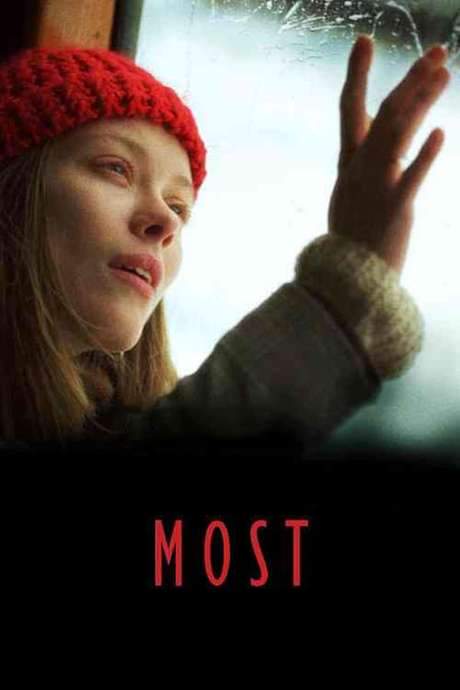
What Is Most About?
The premise of Most in 270 words, with nothing given away. The full story follows below.
In the mist‑kissed outskirts of a Czech town, a solitary railway bridge spans a quiet lake, its iron ribs humming with the rhythm of passing trains. Here, the father tends the massive drawbridge, a custodian of steel and schedule whose days are measured by the rise and fall of gears. The landscape is both stark and lyrical, a place where industrial precision meets the soft echo of water, setting a tone that feels simultaneously grounded and wistful.
The son, eight years old and full of restless curiosity, follows his father to the bridge, absorbing the cadence of the work while searching for the tender moments that linger between the clatter of machinery. Their bond is built on quiet routines and the unspoken promise of protection, a delicate balance of affection and the demands of a job that rarely pauses. During a brief encounter on a passing train, the woman—a passenger whose eyes hint at hidden burdens—crosses paths with the boy, adding an unexpected thread of human fragility that lingers in the air like a whispered secret.
The world of the bridge becomes a liminal space where duty and devotion intersect, each steel cable and lever a reminder of the choices that lie ahead. The film’s atmosphere is poetic and restrained, inviting viewers to feel the weight of responsibility pressing against the yearning of a father’s love. As the river flows beneath and trains roar overhead, the story hints at a pivotal moment where the characters must confront the tension between the call of their work and the pull of their hearts, leaving the audience poised on the edge of anticipation.
What Happens in Most?
The complete story of Most, from the first scene to the last, in 199 words (about 1 minute). Spoilers throughout. Names in the text link to 2 cast member pages.
Spoilers ahead
Most is the story of a single Czech father, Vladimír Javorský who takes his eight-year-old son to work at the railroad drawbridge where he is the bridge tender.
Early on, the boy meets Pavlinka, Klára Issová, a woman boarding a train who struggles with a drug problem. Back at the bridge, the father heads to the engine room and tells his son to stay by the edge of the nearby lake. A ship approaches, and the bridge is raised. Although the train was scheduled to arrive an hour later, it comes early.
The boy sees this and tries to warn his father, who is distracted and unaware of the oncoming train. As the train nears, the boy slips into the drawbridge gear while trying to lower the bridge, leaving the father with a horrific choice: kill his son or let the train crash. The father lowers the bridge, and the gears crush the boy. The train passengers remain oblivious to the tragedy, save for the drug-addicted woman who glimpses the event from her train window.
The movie ends with the man wandering a new city and encountering the former drug-addicted Pavlinka, holding a baby who resembles the dead child.
Most Timeline: Every Key Event in Order
10 key events in the order they happen, from “Encounter at the station” to “A baby that mirrors a lost son”. 10 events name a place, across 10 locations.
- 1
Encounter at the station
On the train station platform, a young Czech boy notices a woman boarding a train who is clearly grappling with a drug problem. Their brief exchange hints at fragility and deeper suffering, planting a quiet thread of tragedy. The boy's curiosity about the world beyond his daily routine begins to wake up.
When:morning Where:Train station platform
- 2
Bridge routine and warning
At the railroad drawbridge, the father returns to the engine room and tells his son to stay by the edge of the nearby lake. He focuses on his work, unaware of the danger looming beyond the water. The quiet moment sets up the son's trust and the father's burden.
When:early afternoon Where:Bridge engine room by the lake
- 3
Bridge raises for a ship
A ship approaches and the drawbridge is raised to let it pass, the routine rhythm of machinery masking the tension beneath. The moment feels normal, the bridge acting as a gatekeeper between land and water. The delay of the ship's arrival hints at a fragile schedule.
When:afternoon Where:Drawbridge over the lake
- 4
Train arrives earlier than expected
Although it was supposed to arrive an hour later, the oncoming train comes earlier than planned, catching everyone off guard. The boy senses danger as the train narrows the gap between metal and water. A moment of impending collision hangs in the air.
When:afternoon Where:Drawbridge approach
- 5
Son's warning, father distracted
The boy spots the approaching locomotive and tries to warn his father, who is not paying attention to the tracks. Fear flashes across the boy's face as the two shuttles of fate collide in his chest. The warning comes too late to alter the outcome.
When:moments after Where:Drawbridge area
- 6
The choice and the crush
As the bridge is lowered to save the passengers, the boy slips into the gearworks. The father makes the horrific choice to sacrifice his son to protect the train, and the gears crush the boy. The act happens in a heartbeat, leaving him paralyzed with guilt and shock.
When:immediate Where:Drawbridge gearworks
- 7
Passengers oblivious; the addict notices
On the train, the passengers remain oblivious to the tragedy unfolding below. Only the drug-addicted woman who had looked out her train window earlier seems to catch a glimmer of what happened, a brief, silent recognition. The contrast between ignorance and sacrifice underscores the film's moral weight.
When:immediately after Where:Train carriage
- 8
Aftermath and silence
The crowd's reactions go quiet as the near-disaster recedes into memory. The father stares into the empty space where his son should be, consumed by guilt and grief. The incident leaves a hush that follows him as he wanders away from the scene.
When:immediately after Where:Bridge
- 9
A new city, a familiar face
Months later, the father wanders into a new city, still carrying the weight of the tragedy. He unexpectedly encounters the same woman from the station, now a stranger shaped by hardship and memory. Their brief exchange hints at a chance for reconciliation through shared pain.
When:months later Where:New city
- 10
A baby that mirrors a lost son
The woman cradles a baby whose features eerily echo the dead boy, triggering a quiet flood of recognition in the man. The moment speaks to the persistence of memory and the possibility of new beginnings amid loss. The film closes on this haunting, ambiguous connection between past and present.
When:dusk Where:New city street
Who Are the Main Characters in Most?
3 characters, among them Father (Vladimír Javorský), Láďa (Ladislav Ondřej) and Troubled Girl (Linda Rybová): who each one is and the part they play in the story. Every profile links to the actor’s page.
- F(
Father (Vladimír Javorský)
Played by Vladimír Javorský
A single Czech father and bridge tender, he carries the weight of providing for his son while confronting an impossible choice. He remains restrained and duty-bound, masking profound grief beneath a calm exterior. The bridge tragedy becomes a defining, lifelong burden, shaping his uncertain path in a new city.
- 👨👦 Family
- ⚖️ Morality
- 💔 Guilt
- L(
Láďa (Ladislav Ondřej)
Played by Ladislav Ondřej
Eight-year-old Láďa is curious and brave, first meeting the drug-addicted woman and then attempting to warn his father. He acts with a child’s courage, but pays the ultimate price when he falls into the drawbridge gears. His death exposes the fragility of life and the cost of adult decisions.
- 👦️ Child
- 💔 Loss
- TG
Troubled Girl (Linda Rybová)
Played by Linda Rybová
A drug-addicted woman who encounters the boy the day before the tragedy; she represents a marginalized perspective often unseen by the train’s passengers. Her presence at the scene is a somber reminder of how society overlooks vulnerable lives. In the film's final moment, she appears again, holding a baby, linking loss to a possibility of new life.
- 💊 Addiction
- 👀 Witness
Where and When Is Most Set?
Most is set in Czech Republic. Here is why the place matters to the story.
Where
Czech Republic
The action centers on a railroad drawbridge by a lake in the Czech Republic. The setting is a stark, working-class landscape where the daily grind of railway life frames a moment of catastrophic choice. The austere location uses industrial space to underscore themes of duty, risk, and tragedy.
- 🏭 Industrial landscape
- 🚉 Railway setting
- 💧 Lake nearby
What Are the Themes of Most?
3 ideas the story keeps returning to, among them Sacrifice, Morality and Witness.
-
01
Sacrifice
A father's protective instinct collides with the needs of strangers when he lowers the drawbridge to save a train, sacrificing his own son in the process. The act is rendered without sensationalism, highlighting the brutal cost of mercy. The film uses this moment to probe how private grief lingers and reshapes a life after an irreversible act.
-
02
Morality
The narrative places the father in a moral dilemma where no easy choice feels right. The consequences of his decision are depicted as heavy and ambiguous, forcing viewers to weigh duty against personal love. The absence of witnesses except for a marginal figure emphasizes the isolation of moral judgment. The story challenges simple judgments and invites reflection on responsibility.
-
03
Witness
A drug-addicted woman, a fleeting observer, is the only witness to the tragedy as the train roars past. Her perspective embodies how ordinary lives intersect with catastrophe, often unseen by society. The final encounter between the survivor and the woman, now with a baby, suggests cycles of life, memory, and renewal beyond the immediate loss. Water imagery and the lakeside setting reinforce the fragile line between life and loss.
What Kind of Film Is Most?
Melancholic in tone, with steady pacing and a straightforward story, going by the plot summary.
- Tone
- Melancholic
- Pacing
- Steady
- Story
- Straightforward
- Intensity
- High
- Ending
- Sad
A deeply melancholic and tense drama that builds slowly toward an overwhelmingly tragic climax, leaving viewers emotionally drained with its portrayal of impossible choices.
- tragic
- melancholic
- heartbreaking
- tense
- somber
- poignant
- parental sacrifice
- grief and loss
- moral dilemma
- tragic accident
Content notes: child death, parental trauma, graphic emotional suffering.
Where to Watch Most
. US availability and prices from JustWatch.
Streaming availability in the US, powered by