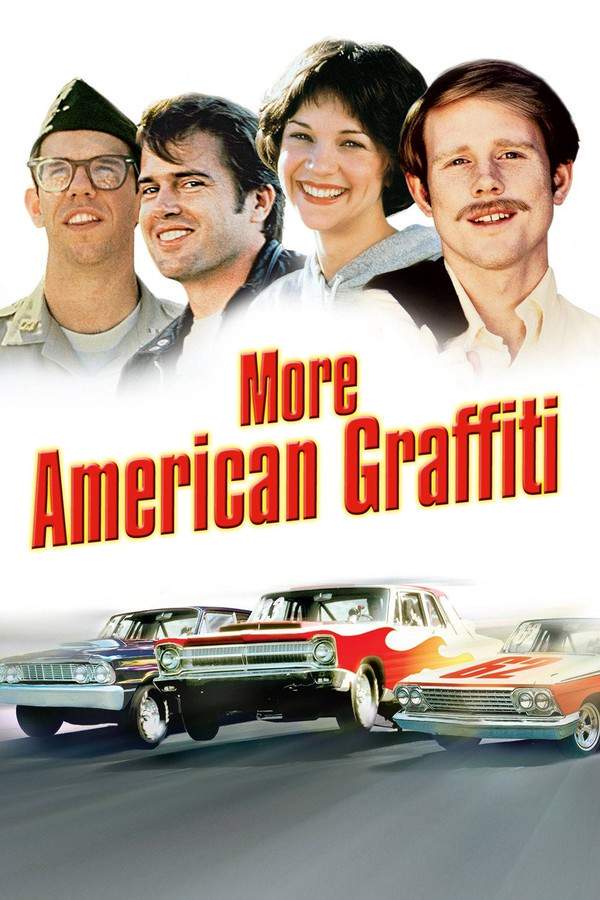
More American Graffiti 1979


Directed by

Bill L. Norton
Made by

Universal Pictures
Where to Watch More American Graffiti
See current US streaming, rental, and purchase options for More American Graffiti (1979) via JustWatch.








More American Graffiti Plot Summary
Read the complete plot summary and ending explained for More American Graffiti (1979). From turning points to emotional moments, uncover what really happened and why it matters.
As the clock strikes midnight on four consecutive New Year’s Eves from 1964 to 1967, this film intricately weaves together seemingly unrelated scenes into a vibrant tapestry of interconnected moments. Each year is vividly depicted through a unique cinematic style that cleverly distinguishes the various narratives for the audience. For example, the scenes set in 1966 pay homage to the iconic documentary filmmaking of Woodstock, using split screens and multiple angles to capture the chaos and energy of that time.
In stark contrast, the Vietnam War-era scenes from 1965 are filmed with a gritty, handheld realism on grainy super 16 mm film, echoing the raw, unrehearsed footage often associated with newsreels. This innovative storytelling technique fully immerses the audience in the tumultuous atmosphere of the period, while characters navigate the ever-changing societal landscape.
The filmmakers delight in capturing the true essence of the 1960s counterculture movement. From the psychedelic ambiance of Haight-Ashbury to campus peace demonstrations and the early women’s liberation movement, every element is crafted meticulously to preserve an authentic feel.
Among the notable moments is when one character, guided by a sense of courage, burns his draft card, serving as a poignant reminder of the sacrifices made by many young Americans during this challenging time. In another tense sequence, characters hurriedly dispose of their marijuana stash before a police traffic stop, illustrating the constant threat of persecution faced by those who dared to rebel against the established order.
Additionally, the film’s portrayal of the authorities’ excessive reactions to anti-Vietnam War protests provides a stark reminder of the intense division and social unrest that characterized this crucial period in American history. As the lives and fates of the main characters unfold, viewers are offered a nuanced exploration of the intricate dynamics between politics, social change, and personal liberty throughout the turbulent 1960s.
More American Graffiti Timeline
Follow the complete movie timeline of More American Graffiti (1979) with every major event in chronological order. Great for understanding complex plots and story progression.
New Year's Eve 1964
The film opens on New Year's Eve 1964, setting the stage for the unfolding narrative over the next few years. The characters come together in a celebratory gathering, symbolizing hope and the promise of change as the 1960s begin.
The Impacts of the Vietnam War
By 1965, the Vietnam War is a significant influence on American society, depicted through powerful scenes that reflect the tension of the era. The filmmakers use a gritty, handheld style to emphasize the urgency and rawness of this tumultuous period.
Draft Card Burning
A key moment occurs in 1965 when a character boldly decides to burn his draft card. This act of defiance symbolizes not just individual choices, but also the broader sentiment of protest against the Vietnam War and the sacrifices young Americans faced.
Peace Demonstrations
Throughout 1965, scenes of campus peace demonstrations are interspersed, capturing the essence of the growing anti-war movement. These gatherings illustrate the rising discontent among students and young people as they take a stand for their beliefs.
Marijuana Stash Disposed
In a tense moment, characters are seen hurriedly disposing of their marijuana stash before a police traffic stop. This scene encapsulates the constant fear of persecution that those involved in the counterculture faced during this period.
Introduction of the Counterculture
As the film progresses into 1966, the essence of the 1960s counterculture movement is further explored. The vibrant atmosphere of the Haight-Ashbury district is highlighted, showcasing the psychedelic lifestyle that defined this era.
Split-Screen Aesthetic
The cinematic style of the 1966 scenes pays homage to iconic documentary filmmaking, employing split screens and multiple angles. This innovative technique immerses the audience in the chaotic and energetic spirit of the time.
Women's Liberation Movement
The film reflects the early women's liberation movement, illustrating the push for gender equality and personal freedoms. Characters engage in discussions and protests that highlight the social changes occurring around them.
Police Response to Protests
As anti-Vietnam War protests escalate in 1966, the authorities' heavy-handed responses are portrayed starkly. Scenes capture the intense confrontation between law enforcement and protestors, emphasizing the division in society.
Reflections on Societal Change
As 1967 approaches, characters reflect on the personal liberties and societal changes they have witnessed. The complexities of their experiences convey a nuanced understanding of the struggle for freedom during the tumultuous 1960s.
Final New Year's Eve
On New Year's Eve 1967, the culmination of the characters' journeys is evident. The celebration is laced with a bittersweet acknowledgment of the challenges ahead, signaling the ongoing fight for civil rights and social justice.
Cinematic Legacy of the 60s
The film concludes with a reflection on the legacy of the 1960s and the impact it still holds on modern society. It captures the enduring message of courage, change, and the importance of standing against oppression.
More American Graffiti Characters
Explore all characters from More American Graffiti (1979). Get detailed profiles with their roles, arcs, and key relationships explained.
Bo Hopkins
Bo Hopkins embodies a dynamic character navigating the tumult of the 1960s. His character's actions often serve as a catalyst for exploring themes of resistance and personal conviction, reflecting the era's struggle for autonomy.
Cindy Williams
Cindy Williams portrays a character caught in the cultural shifts of the time, facing the complexities of love and freedom during an era of protest. Her character provides insight into the evolving identity of women in the 1960s.
More American Graffiti Settings
Learn where and when More American Graffiti (1979) takes place. Explore the film’s settings, era, and how they shape the narrative.
Time period
1964-1967
The years 1964 to 1967 were pivotal in American history, marked by cultural revolutions, the Vietnam War, and significant social changes. This period saw the rise of the counterculture movement, which challenged conventional norms and promoted freedom, peace, and self-expression.
Location
Haight-Ashbury
Haight-Ashbury is a neighborhood in San Francisco known for its role in the 1960s counterculture movement. It became a haven for artists, hippies, and activists, encapsulating the spirit of the era with its vibrant music scene and eclectic shops.
More American Graffiti Themes
Discover the main themes in More American Graffiti (1979). Analyze the deeper meanings, emotional layers, and social commentary behind the film.
✊
Rebellion
The film explores the theme of rebellion against societal norms, particularly during the Vietnam War era. Characters engage in acts of defiance, such as burning draft cards and risking persecution to stand up for their beliefs, reflecting the spirit of a generation seeking change.
📽️
Documentary Style
Utilizing innovative cinematic techniques, the film captures the essence of the 1960s through different filmmaking styles. The stark contrast between gritty realism and stylized sequences helps convey the chaotic energy and emotional weight of the decade's defining moments.
⚖️
Social Change
The narrative delves into the social issues of the time, including the women's liberation movement and anti-Vietnam War protests. It highlights the tension between authority and the quest for personal freedom, showcasing the characters' struggles in an era of significant upheaval.

Coming soon on iOS and Android
The Plot Explained Mobile App
From blockbusters to hidden gems — dive into movie stories anytime, anywhere. Save your favorites, discover plots faster, and never miss a twist again.
Sign up to be the first to know when we launch. Your email stays private — always.
Explore the mobile appMore American Graffiti Spoiler-Free Summary
Discover the spoiler-free summary of More American Graffiti (1979). Get a concise overview without any spoilers.
In the restless summer of the early 1960s, the familiar streets of Modesto pulse with a new kind of energy, as the world beyond their borders swells with music, protest, and the uneasy promise of change. The film opens a door onto a landscape where classic cruisers still glide beneath neon signs, yet the air is charged with the scent of draft cards, vinyl records, and a restless desire to break free from yesterday’s expectations. The tone balances nostalgic warmth with a crisp, almost documentary‑like immediacy, letting viewers feel the texture of a generation standing on the brink of both personal and cultural transformation.
_ Steve Bolander _ returns home to a marriage that feels both familiar and fragile, his once‑steady path now intersecting with the shifting tides of his wife Laurie’s aspirations and the broader societal pressures of the era. Their relationship becomes a quiet lens through which the film examines the challenges of growing up while trying to keep the promise of youthful freedom alive. Across town, John Milner is drawn to the roar of engines and the thrill of late‑night drag races, seeking excitement that mirrors the restless heartbeat of a nation racing toward an uncertain future. Their friendships and rivalries are sketched with a gentle humor that hints at deeper anxieties, allowing the audience to sense the undercurrents of ambition, love, and fear without spelling them out.
The backdrop is a vivid collage of countercultural hotspots: the swirling colors of Haight‑Ashbury, college campuses buzzing with peace demonstrations, and the early stirrings of a women’s liberation movement that whispers through every conversation. Cinematic styles shift subtly from bright, sun‑lit tableaux to grainy, handheld impressions, echoing the fragmented yet interconnected reality of the time. This visual tapestry invites viewers to feel the era’s contradictions—hope tangled with dread, freedom shadowed by looming conflict—while keeping the focus firmly on the characters’ inner journeys.
Through its evocative atmosphere and richly drawn protagonists, the story promises a meditation on identity, the bittersweet passage of time, and the ways ordinary lives become entwined with the sweeping currents of history, leaving audiences eager to see how these young adults will navigate the coming years.
Featured on this page

What's After the Movie?
Not sure whether to stay after the credits? Find out!
Check out our other apps:

SAT Sphere
Build confidence for the Digital SAT.

Mori Atlas
Discover wild places worth protecting.

Luntero
Search smarter for a home in Amsterdam.

Plot Explained
Unravel movie endings and hidden clues.

Pokechamp
Dive into Pokémon data and battle logic.

Driving Theory
Get ready for your European theory test.

Movie Dust
Plan your next cinema trip with ease.

Musemap
Find art and culture as you travel.

Selkobase
Compare credentials before committing.

Local Manual
Turn an unfamiliar country into practical next steps.

Lernavi
Compare school systems before your next move.

GymRoam
Find a workout stop wherever your plans take you.
Explore Our Movie Platform
New Movie Releases (2026)
Famous Movie Actors
Top Film Production Studios
Movie Plot Summaries & Endings
Major Movie Awards & Winners
Best Concert Films & Music Documentaries
Movie Collections and Curated Lists
© 2026 What's After the Movie. All rights reserved.
Privacy Policy