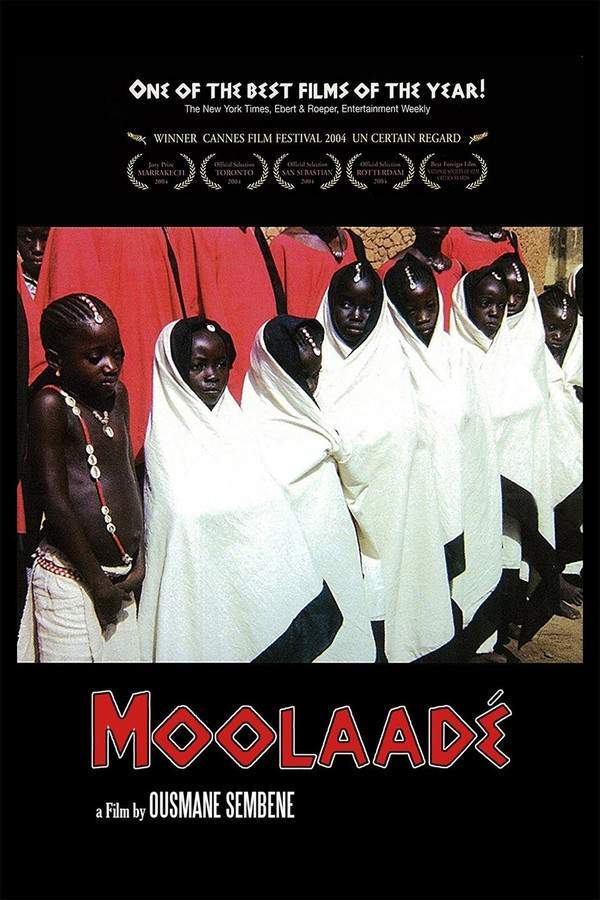
What Is Moolaadé About?
The premise of Moolaadé in 283 words, with nothing given away. The full story follows below.
In a sun‑baked corner of Burkina Faso, a lively Bambara village pulses with the rhythms of drums, radios, and the everyday choreography of communal life. Clay mosques and towering termite mounds frame a landscape that feels both timeless and on the edge of change, as whispers of the wider world drift in on crackling airwaves. The village’s close‑knit fabric is woven from generations of tradition, where rites of passage are honored and questioned in equal measure, creating an atmosphere that is at once warm and quietly tense.
At the heart of this world stands Collé, a confident second wife whose presence commands both respect and curiosity. She shares her home with her spirited daughter Amasatou, whose future hangs on a cultural expectation that the young woman has yet to fulfill. Collé’s fierce protectiveness and personal history give her a perspective that subtly challenges the accepted order, positioning her as a quiet beacon of dissent within a community that reveres its customs. Her relationship with her husband, Ciré, and the other wives adds layers of interpersonal nuance, hinting at the delicate balance of power, love, and duty that defines daily life.
When four frightened girls slip away from a prescribed ritual, Collé extends a simple yet potent gesture of sanctuary, drawing a colorful rope—known locally as Moolaadé—across her threshold. This act creates a palpable tension between the desire to uphold age‑old practices and the yearning for compassionate change. Around them, the village’s modern voices, embodied by Ibrahima, a young man returned from abroad, echo the same undercurrents of transformation. Together, these characters embody a story of quiet courage, cultural crossroads, and the subtle power of one person’s stand to ripple through an entire community.
What Happens in Moolaadé?
The complete story of Moolaadé, from the first scene to the last, in 622 words (about 3 minutes). Spoilers throughout.
Spoilers ahead
The film unfolds in a vibrant Bambara village in Burkina Faso, marked by termite mounds and a clay mosque, resembling a colossal hedgehog. This picturesque village symbolizes the essence of green Africa, serving as a living relic yet still vulnerable to the encroachments of the modern world.
Collé, the second wife of a thoughtful and composed man, enjoys a favored position among her husband’s wives. Her daughter, Amasatou, is engaged but has not undergone the traditional female genital cutting, which poses a significant hurdle in her path to marriage as viewed by local customs. Collé stands firmly against this practice, drawing ire from the village elders, both men and women, who scorn her daughter for not conforming. Meanwhile, Amasatou feels pressured to undergo the procedure to secure her societal standing and marriage prospects, but Collé remains resolute in her stance.
When four frightened girls flee from the impending ritual, Collé symbolizes their hope by drawing a colorful protection rope, known as Moolaadé, across her family’s threshold. This act of defiance effectively barricades the village elders—who have been searching for the fleeing girls—from entering her home.
Initially, Collé’s rival, the first wife, seems unsupportive; however, she later reveals her own opposition to genital cutting, secretly helping Collé all along. Confronted with Amasatou’s persistent pleas for circumcision, Collé recounts her painful past, emphasizing her desire to spare her daughter from the suffering she endured, which included two harrowing pregnancies that nearly cost her life.
In a poignant flashback, Collé’s painful sexual encounters with her husband are depicted, showcasing her anguish as she silently bears the torment of her marital duties, a reflection of the larger patriarchal constraints on African women. As Collé’s daughter’s fiancé, Ibrahima, returns from France, he embodies the progressive voice challenging the traditions of his native village. He is horrified to witness a funeral for two young girls who took their own lives to escape genital mutilation. Despite familial pressures urging him to abandon Amasatou, Ibrahima stands firm, declaring his commitment to her, despite her perceived “impurity.”
The women of the village find solace in their radios, which broadcast music and news from beyond their community—items the male elders deem dangerous. In a display of control, the elders demand that Collé’s husband, Ciré Bathiliy, shame her publicly, insisting that he whip her until she renounces Moolaadé. Under immense pressure, Collé refuses to yield, embodying strength against the cacophony of dissent from both men and women. Just when she appears on the brink of collapse, a merchant known as Mercenaire intervenes.
Mercenaire, a savvy war veteran turned trader, berates Ibrahima and his family, indirectly revealing the underlying issues of child abuse tied to marrying young girls who have undergone genital cutting. His presence only complicates matters further, as he tries to sell brightly colored plastic goods to the villagers at exorbitant prices. Ultimately, however, Mercenaire faces dire consequences for his actions and is eradicated from the village.
As chaos unfolds, one desperate mother abducts her daughter in hopes of having her genitals cut, resulting in the child’s tragic demise during the procedure. This calamity ultimately catalyzes a shift in perception among the other mothers, sparking a movement against female genital cutting. Encouraged by this change, Collé revokes her previous protection, returning the girls to their families.
The villagers eventually unite against the oppressive traditions, pledging to end genital cutting. Collé boldly calls for the surrender of the knives used for this practice, symbolizing a significant victory over the age-old customs. Ibrahima, emboldened by his love for Amasatou, confronts his father defiantly, declaring his intent to marry her despite familial threats. The movie concludes with the powerful image of radios ablaze, representing both the triumph of voicing dissent and the threat of silencing.
Moolaadé Timeline: Every Key Event in Order
15 key events in the order they happen, from “Introduction to the Village” to “Symbolic Closure”.
- 1
Introduction to the Village
The film begins in a vibrant Bambara village in Burkina Faso, characterized by termite mounds and a striking clay mosque. This picturesque setting exemplifies the beauty of green Africa while concurrently highlighting its vulnerability to modernization.
Where:Bambara village, Burkina Faso
- 2
Collé's Position
Collé is introduced as the second wife of a thoughtful and composed man, enjoying her favored status among the household. However, her daughter Amasatou faces societal challenges due to the absence of traditional female genital cutting.
- 3
The Conflict Over Amasatou
Amasatou's engagement is clouded by the local customs that deem her unfit for marriage without undergoing genital cutting. Collé stands against this practice, making her and her daughter targets of scorn from the elders in the village.
- 4
Fleeing from Ritual
In a desperate act, four frightened girls escape the impending ritual of genital mutilation. Collé offers hope by drawing the protection rope, or Moolaadé, across her home, preventing the village elders from entering.
- 5
Support from the Rival
Initially, Collé's rival, her husband's first wife, appears unsupportive. However, it is revealed that she secretly opposes the genital cutting and assists Collé in her quest, showcasing a bond forged in mutual defiance.
- 6
Collé's Painful Past
Facing her daughter's pleas for circumcision, Collé recounts her own painful experiences, including two nearly fatal pregnancies. Her revelations deepen the connection between maternal protection and the fight against harmful traditions.
- 7
Ibrahima's Return
Ibrahima returns from France, representing a progressive voice challenging patriarchal traditions. He is disturbed by witnessing a funeral for two girls who took their lives to escape genital mutilation, which galvanizes his commitment to Amasatou.
- 8
The Elders' Intervention
The village elders, fearing the influence of modernity embodied by the women’s radios, exert control over Collé's husband, urging him to publicly shame her. However, Collé’s refusal to submit demonstrates her strength and resilience in the face of adversity.
- 9
Mercenaire's Complication
A trader known as Mercenaire, a war veteran, complicates the situation by revealing underlying issues related to child abuse and genital cutting. His presence only intensifies the conflict as he attempts to exploit the villagers with his goods.
- 10
Desperate Measures
A tragedy unfolds when a desperate mother abducts her daughter to force her into the cutting ritual. The child's death during the procedure serves as a catalyst, igniting a movement among the other mothers against the harmful practice.
Show the other 5 events of Moolaadé Hide the last 5 events
- 11
Collé Reverses Protection
Moved by the tragic event, Collé decides to revoke her protective stance and returns the fleeing girls to their families. This acts as a turning point that encourages dialogue and action against genital cutting within the community.
- 12
Village Unity Against Tradition
The villagers, inspired by the latest events, unite to denounce the oppressive traditions surrounding genital cutting. This collective resistance represents a significant cultural shift, marking the beginning of a communal fight for women's rights.
- 13
Call for Surrender
Collé boldly calls for the surrender of the cutting knives, symbolizing a crucial victory over past customs. This act of defiance becomes a watershed moment in the village's confrontation with ingrained traditions.
- 14
Ibrahima's Defiance
Ibrahima, fueled by his love for Amasatou, confronts his father's threats, declaring his intention to marry her despite familial pressure. This act of bravery enriches the narrative of love prevailing over oppressive societal norms.
- 15
Symbolic Closure
The film concludes with villagers burning radios, a powerful symbol of the triumph over the silencing of dissent. This imagery marks both a victory for the women and a poignant reminder of the ongoing struggle against patriarchal oppression.
Who Are the Main Characters in Moolaadé?
4 characters, among them Collé, Amasatou and Ibrahima: who each one is and the part they play in the story.
- C
Collé
Collé is a resilient and determined woman who stands against the oppressive practice of female genital cutting in her village. As the second wife of a thoughtful man, she shows strength and compassion towards her daughter, Amasatou, fighting to spare her from the suffering she herself experienced.
- 👩👧 Mother
- ✊ Defiant
- A
Amasatou
Amasatou is Collé's daughter, caught between tradition and her mother's protective instincts. She grapples with societal pressure to conform to customs that would ensure her marriage but ultimately seeks to carve her own path and identity.
- 👧 Struggling
- 💔 Victim
- I
Ibrahima
Ibrahima, Amasatou's fiancé, returns from France as a progressive figure, challenging the norms of his village. His commitment to Amasatou, even in the face of familial opposition, showcases his strong values against traditional practices.
- ❤️ Supportive
- 🌍 Progressive
- M
Mercenaire
Mercenaire is a savvy war veteran turned trader who complicates the village's dynamics with his dubious trading practices. His character illustrates the blend of traditional issues with modern complications, highlighting societal challenges faced by the villagers.
- 💼 Trader
- ⚔️ Complicated
Where and When Is Moolaadé Set?
Moolaadé is set in Bambara village and Burkina Faso. Here is why the place matters to the story.
When
The movie reflects contemporary issues faced by women in African societies, particularly regarding traditional practices such as female genital cutting. It reveals the clash between long-standing customs and emerging progressive values, highlighting the struggles women endure in seeking autonomy over their bodies.
Where
Bambara village, Burkina Faso
The film takes place in a vibrant Bambara village in Burkina Faso, characterized by its distinctive termite mounds and a clay mosque that resembles a hedgehog. This picturesque setting embodies the essence of green Africa and serves as a cultural relic, navigating the challenges brought by modernization.
- 🏜️ Village
- 🌍 Africa
What Are the Themes of Moolaadé?
3 ideas the story keeps returning to, among them Empowerment, Tradition vs. Progress and Suffering.
-
01
Empowerment
The central theme of empowerment resonates throughout the film, particularly through Collé's determination to protect her daughter from harmful traditions. The narrative emphasizes women's strength in challenging oppressive practices, fostering a movement that ultimately leads to social change within the community.
-
02
Tradition vs. Progress
The conflict between tradition and progress is evident as characters like Ibrahima and Collé embody the struggle against outdated practices. The story illustrates the tension between adhering to cultural norms and embracing progressive ideals that prioritize women's rights and safety.
-
03
Suffering
The theme of suffering is poignantly depicted through Collé's recollections of her painful experiences with childbirth and the repercussions of genital mutilation. The film sheds light on the emotional and physical trauma endured by women in a patriarchal society, driving home the importance of advocating for change.
What Kind of Film Is Moolaadé?
Tense in tone, with steady pacing and a moderate story, going by the plot summary.
- Tone
- Tense
- Pacing
- Steady
- Story
- Moderate
- Intensity
- High
- Ending
- Happy
Intense and emotionally heavy, this film builds steady tension as it explores community conflict over tradition, culminating in a hard-worn but hopeful sense of change and resistance.
- tense
- dramatic
- oppressive
- uplifting
- resolute
- somber
- female genital mutilation
- tradition vs modernity
- feminism
- resistance
Content notes: child abuse, torture, suicide, child death, female genital mutilation, public humiliation.
Quiz
How well do you remember Moolaadé? Test yourself on the story.