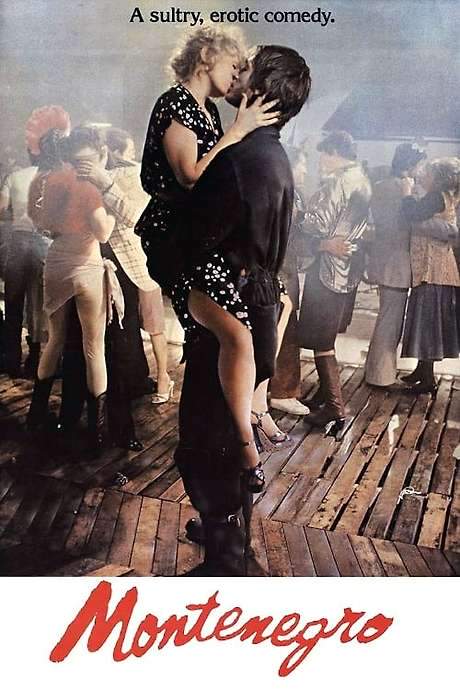


Montenegro Plot Summary
Read the complete plot summary and ending explained for Montenegro (1981). From turning points to emotional moments, uncover what really happened and why it matters.
Marilyn Jordan is a bored, depressed American housewife living a glossy suburban life with a rich Swedish businessman and two seemingly perfect children. In a bid to inject some spark into her routine, she unleashes a reckless streak that becomes increasingly volatile: she devours the family dinner, sets the bedclothes ablaze, and even poisons the dog’s milk while coolly telling it not to drink. This reckless impulse unsettles the calm surface of her marriage and triggers concern from her husband, who turns to a psychiatrist to intervene. The attempt to diagnose and “fix” her only fans the flames of her restlessness, nudging her toward a deeper disquiet she cannot articulate.
On a business trip that should have been ordinary, Marilyn misses her flight after a run-in with airport security, an event that becomes the doorway to an unexpected encounter. Befriended by a group of Yugoslavs, she is drawn away from the familiar world and into the foreign, vividly odd atmosphere of a club they operate—an enclave with the enigmatic name Zanzi-Bar. Here, the boundaries between reality and fantasy blur, and Marilyn enters a surreal, sensory playground where shovel fighting, lamb roasting, striptease, and open, unrestrained affection mingle in provocative, almost magical ways.
In this liberated, theatrical world she meets a young man named Montenegro, who works at a zoo, and they share a charged, intoxicating romance that feels fierce and unbalanced all at once. The night spent with Montenegro illuminates a crucial truth for Marilyn: while she adores this world’s wild abandon, she remains a stranger within it. The realization shatters her, and she snaps, returning home with a brittle calm that cannot erase what she has learned about herself.
Back in her ordinary life, she serves her family a decadent gourmet dinner, followed by a light dessert of fruit, a detail highlighted by a caption that reveals the fruit is poisoned. The final intertitle seals the unsettling message: the story was based on real events. The film travels a tense line between satire and tragedy, tracing how a woman’s craving for meaning and excitement collides with a society that both seduces and restrains her. The narrative unfolds with clinical observation and stark, haunting imagery, inviting viewers to question the boundaries of sanity, consent, and the price of chasing belonging.
Montenegro Timeline
Follow the complete movie timeline of Montenegro (1981) with every major event in chronological order. Great for understanding complex plots and story progression.
Home life erupts into dangerous mischief
Marilyn Jordan, a bored American housewife, tries to spice up her life by lashing out during dinner. She eats the entire meal, sets the bedclothes on fire, and poisons the pet dog's milk while telling it not to drink. The dog refuses to drink, underscoring that her plan threatens more than her family suspects.
Husband arranges psychiatric evaluation
Martin, Marilyn's husband, decides to have a psychiatrist assess her behavior, hoping to restore order in their gilded suburban life. The move signals the first serious intervention into their fragile marriage. Marilyn's sense of control begins to fray in the wake of this arrangement.
Psychiatrist visit backfires
Marilyn’s session with the psychiatrist sparks rather than eases her distress, revealing growing frustration and a sense of displacement. The encounter seems to deepen her alienation from the life she’s supposed to lead. Her disturbances become more outward and theatrical.
Missed flight derails the plan
On a business trip with her husband, Marilyn is detained by airport security on a technicality, delaying her departure. The incident abruptly disrupts the planned schedule and opens a door to an unknown path. She ends up missing the plane, setting the stage for what comes next.
Befriended by Yugoslavs; enters Zanzi-Bar
After being detained, Marilyn is befriended by a group of Yugoslavs who take her to their club, the Zanzi-Bar. She steps into a surreal world of shovel fighting, lamb roasting, striptease, and free love. The experience marks a stark departure from her suburban routine.
Romance with Montenegro begins
Within the club, Marilyn begins a passionate fling with Montenegro, a young man who works in a zoo. The affair provides exhilarating escape but also deepens her sense of otherness from the world she left behind. The relationship becomes a focal point of her impetuous departure from reality.
Night of passion; morning's realization
Marilyn spends the night with Montenegro and awakens to the realization that she is a stranger in this wild world. The enchantment wanes as she confronts the emptiness beneath the fantasy. The surreal environment starts to fracture in her mind.
Killing Montenegro
In a sudden, decisive snap, she kills Montenegro after recognizing the hollow nature of the world she embraced. The act marks a drastic break from fantasy and forces a return to harsh reality. The event foreshadows her return to her domestic life with a grim resolve.
Return home
Marilyn returns home, resuming her role as wife and mother, but the memory of the night lingers beneath the surface. The contrast between her familiar life and the alien world she escaped into becomes more pronounced. She moves through the house with a brittle calm.
Gourmet dinner and poisoned dessert
Back in the family’s routine, she serves a sumptuous dinner, followed by a light fruit dessert that signals danger though it remains unspoken. The caption later reveals the dessert to be poisoned, echoing the earlier disruption of their home life. The act brings tragedy full circle, tying her crisis to the family’s fate.
Final intertitle and question of reality
The film closes with an intertitle stating that the story was based on real events, casting a chilling note of ambiguity over the narrative. Viewers are left to question the boundary between fiction and reality. Marilyn’s arc ends with a haunting sense of consequence for a life gone awry.
Montenegro Characters
Explore all characters from Montenegro (1981). Get detailed profiles with their roles, arcs, and key relationships explained.
Marilyn Jordan
A bored, depressed American housewife married to a rich Swedish businessman, Marilyn longs to spice up her life. Her experiments with chaos—eating the dinner, setting the bedclothes on fire, and poisoning the pet’s milk—reflect a growing sense of stagnation and a desire to break from routine.
Martin Jordan
Marilyn's husband, a wealthy Swede, whose plan to enlist psychiatric help for his wife only fuels her unraveling. He embodies bourgeois security and the rational attempt to fix a problem that resists conventional solutions.
Tirke
A character portrayed as part of the European domestic circle; her presence anchors some social norms within the narrative. She contributes to the sense of a structured, conventional world toward which Marilyn temporarily recoils.
Montenegro
A young man who works in a zoo and becomes Marilyn's romantic liaison in the Zanzi-Bar. His involvement propels her into a dreamlike romance that she ultimately treats as a dangerous escape.
Dr. Aram Pazardjian
The psychiatrist figure invoked by Marilyn's husband, representing the medicalization of marital dissatisfaction that fails to address underlying desires.
Jamie Jordan
Marilyn and Martin's child who belongs to the conventional suburban world that contrasts with the club's alternative universe.
Cookie Jordan
A member of the Jordan family, symbolizing the domestic sphere that Marilyn inhabits and sabotages.
Rita Rossignol
A figure representing the social circle surrounding the Jordan family, contributing to the film's sense of social codes and appearances.
Grandpa Bill
An elder in the family network who anchors the domestic environment Marilyn returns to after her adventures.
Bo Ivan Peterson
A club or street contact who interacts with the main group; part of the film's wider supporting cast.
Mustapha
A member of the Yugoslav group or club attendees; a symbol of the international vignette around the Zanzi-Bar.
Hassan
Another member of the Yugoslav group who contributes to the club's surreal atmosphere.
John Parkinson
Piano player who adds to the club's ambience with music that underscores the dreamlike interludes.
Montenegro Settings
Learn where and when Montenegro (1981) takes place. Explore the film’s settings, era, and how they shape the narrative.
Time period
The narrative shifts between Marilyn’s ordinary married life and the club’s liberated environment, highlighting a clash between domestic routine and a transgressive subculture. The juxtaposition suggests a tension between bourgeois norms and a desire for personal authenticity. The events imply that freedom from constraint comes with its own risks.
Location
Zanzi-Bar, Yugoslavia
Zanzi-Bar is a bohemian club run by Yugoslavs, where evenings unfold with surreal entertainments such as shovel fighting, lamb roasting, striptease, and free love. The club’s atmosphere contrasts with Marilyn’s orderly suburban life, offering a gateway to a wild, liberating world. This setting signals a fracture between conventional society and a countercultural underworld.
Montenegro Themes
Discover the main themes in Montenegro (1981). Analyze the deeper meanings, emotional layers, and social commentary behind the film.
🧭
Escape
Marilyn seeks excitement beyond her privileged routine, using the club and its dangers as a lure. The experiences promise freedom but destabilize her sense of self. The contrast with home life exposes a deep longing for authenticity over conformity.
🌀
Reality-Fantasy
The surreal, intoxicating atmosphere of Zanzi-Bar blurs the line between dream and reality. Marilyn's flirtation with Montenegro and the club's rituals shows how fantasy can feel more real than ordinary life, yet it comes with real risks. The film uses this tension to critique bourgeois restraint and its consequences.
🏠
Domestic vs Liberation
Back at home, a glossy dinner becomes a stage for Marilyn's reintegration into conventional life, yet the memory of liberation haunts her. The juxtaposition underscores the fragility of the traditional family unit when faced with unbridled desires. The ending implies that freedom from constraint comes at a price.

Coming soon on iOS and Android
The Plot Explained Mobile App
From blockbusters to hidden gems — dive into movie stories anytime, anywhere. Save your favorites, discover plots faster, and never miss a twist again.
Sign up to be the first to know when we launch. Your email stays private — always.
Explore the mobile appMontenegro Spoiler-Free Summary
Discover the spoiler-free summary of Montenegro (1981). Get a concise overview without any spoilers.
In the upscale suburbs of Stockholm, Marilyn Jordan drifts through a meticulously arranged life with a successful Swedish husband and two picture‑perfect children. Beneath the polished surface, she feels an unrelenting restlessness that pushes her toward impulsive, almost theatrical acts—tiny rebellions that crack the veneer of domestic bliss. The film places her yearning for something more than the prescribed role of a comfortable housewife at the heart of a world that blends Scandinavian restraint with a simmering undercurrent of sensual absurdity.
A missed flight and an encounter with a young Yugoslav woman become the portal that draws Marilyn into an unexpected community on the fringes of the city. Here, an eclectic enclave known as the Zanzi‑Bar pulses with a chaotic mix of music, open affection, and a carnival‑like atmosphere where strangers clash, flirt, and perform for one another. The setting feels both exotic and oddly familiar, a liminal space where cultural borders blur and everyday norms dissolve into a spontaneous, almost primal tableau.
Within this vibrant backdrop, Marilyn meets Montenegro, a charismatic figure whose own life seems to orbit the same border between order and anarchy. Their connection hints at a deeper, intoxicating chemistry that promises both liberation and conflict. As the story unfolds, the tone flits between dry, satirical observation and a lingering, almost tragic melancholy, inviting the audience to wonder how far a woman will go to taste something beyond the safe confines of her world, and what hidden costs such cravings might entail.
Movies with Similar Twists and Themes
Uncover films that echo the narrative beats, emotional arcs, or dramatic twists of the one you're exploring. These recommendations are handpicked based on story depth, thematic resonance, and spoiler-worthy moments — perfect for fans who crave more of the same intrigue.



Featured on this page

What's After the Movie?
Not sure whether to stay after the credits? Find out!
Check out our other apps:

SAT Sphere
Build confidence for the Digital SAT.

Mori Atlas
Discover wild places worth protecting.

Luntero
Search smarter for a home in Amsterdam.

Plot Explained
Unravel movie endings and hidden clues.

Pokechamp
Dive into Pokémon data and battle logic.

Driving Theory
Get ready for your European theory test.

Movie Dust
Plan your next cinema trip with ease.

Musemap
Find art and culture as you travel.

Selkobase
Compare credentials before committing.

Local Manual
Turn an unfamiliar country into practical next steps.

Lernavi
Compare school systems before your next move.

GymRoam
Find a workout stop wherever your plans take you.
Explore Our Movie Platform
New Movie Releases (2026)
Famous Movie Actors
Top Film Production Studios
Movie Plot Summaries & Endings
Major Movie Awards & Winners
Best Concert Films & Music Documentaries
Movie Collections and Curated Lists
© 2026 What's After the Movie. All rights reserved.
Privacy Policy