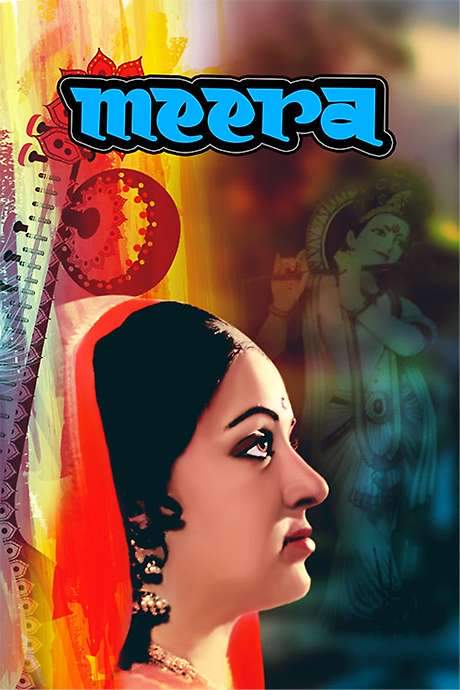


Where to Watch Meera
See current US streaming, rental, and purchase options for Meera (1979) via JustWatch.

Streaming availability powered by 
Meera Plot Summary
Read the complete plot summary and ending explained for Meera (1979). From turning points to emotional moments, uncover what really happened and why it matters.
Set around 1480, in the era of King Akbar, the story unfolds in Medta, a Rajasthan province ruled by Biramdev Rathod, [Shreeram Lagoo], a king who governs with a blend of lineage duty and personal conviction. He has two daughters, Meera [Hema Malini] and Krishna [Vidya Sinha], and a son, Jaimal [Dinesh Thakur]. Kunwarbai, Biramdev’s wife and Meera’s mother, [Dina Pathak], brings a steady, practical voice to a family swept up in politics and faith.
Meera is quietly consumed by a spiritual devotion to Lord Krishna, whom she believes is her true husband. This intense, personal love sits in stark contrast to the arranged world around her, where royal alliances and duties pull at her life. The court and palace swirl with advisers, saints, and musicians, shaping a time when religion and power mingle as tightly as duty and desire.
To strengthen Medta’s position against the growing strength of Akbar, Medta forges an alliance with Raja Vikramjeet Singh Sesodia, [Shammi Kapoor]. As part of this political bargain, Meera is married (against her wishes) to Rana Bhojraj Sesodia, [Vinod Khanna], Vikramjeet’s son. Despite the match and the expected duties of a wife, Meera continues to live by her own ideals, her devotion to Krishna undimmed and increasingly at odds with Bhojraj’s expectations and the strict norms of his family. The court’s spiritual undercurrents—embodied by figures like Saint Raidas, [A.K. Hangal], and the musical magnificence surrounding Tansen, [Bharat Bhushan]—frame a social world that confronts Meera’s courage head-on. Kunwarbai and other mentors stand by her in different ways, and the palace itself becomes a stage where faith, love, and power clash.
When Meera’s stance is interpreted as a betrayal of her duties—to husband, family, and society—she is branded an outcast and traitor. A public trial is ordered, and the verdict seems sealed in a climate of harsh judgment and rigid codes. Yet her inner fortress of spirituality remains unshaken, and she faces the ordeal with a quiet defiance that doesn’t bend to fear or humiliation. The threat of death looms as she is sentenced to drink a cup of venom in front of the crowd, a ritual meant to seal her fate.
In a moment that tests the boundary between earthly punishment and divine devotion, the venom fails to crush her spirit. After drinking it, she walks out of the royal court singing the praises of Lord Krishna. The city follows her in a wave of devotion, a living emblem of faith that transcends punishment. She enters the Krishna temple and, in a final, luminous fusion of lover and divine, becomes one with Krishna, leaving a community forever moved by the power of unwavering belief.
Meera Timeline
Follow the complete movie timeline of Meera (1979) with every major event in chronological order. Great for understanding complex plots and story progression.
Medta faces a rising threat from Akbar
In the late 15th century, Akbar's power grows, prompting smaller provinces to seek alliances. Biramdev of Medta aligns with Raja Vikramajit to counter the expansion. The stage is set for Meera's fate amid political maneuvering.
Meera's devotion to Krishna
Meera regards Krishna as her husband and spiritual guide, a belief that shapes her life. Her love remains steadfast even as political pressures mount. Her private devotion becomes a defining hallmark of her character.
Meera's arranged marriage to Rana Bhojraj
As part of the alliance with Vikramajit's family, Meera is married to Rana Bhojraj. The marriage is pressured by political calculations rather than her own choice. Yet her inner devotion to Krishna continues to guide her actions.
Life in Bhojraj's household
Meera's ideals clash with Bhojraj and his family's expectations. She defies conventional duties, keeping her devotion to Krishna at the forefront. The household becomes a place of tension around her unconventional piety.
Meera is branded an outcast
Meera is declared a traitor and estranged from society for not conforming to wifely and maternal duties. The community turns against her and she is ostracized. Her spirituality, however, remains a source of strength.
A public trial is ordered
With her status questioned, a public trial is arranged to decide her fate. Meera faces judgment with calm resolve, drawing on her spiritual beliefs. The proceedings become a stage for her defiant devotion.
Death sentence pronounced
The court sentences Meera to drink venom in front of the gathered crowd. The decree seems final, yet her inner faith remains unshaken. The moment is both brutal and ceremonial in its display of power.
Meera drinks the venom
Meera consumes the venom, and astonishingly, it does not break her spirit. She continues to chant Krishna's praises, demonstrating the power of her faith. The crowd watches in stunned silence as her serenity persists.
She walks out and the town follows
Instead of dying, Meera rises and walks out of the court singing kirtan. News spreads and the townspeople pour into the streets, drawn by her devotion. The public mood shifts from judgment to veneration.
Meera reaches the Krishna temple
The procession leads to the Krishna temple, where her devotion culminates in a sacred moment. The temple becomes the stage for her union with the divine. Her voice fills the crowd as she nears the idol of Krishna.
Meera becomes one with Krishna
In a transcendent finale, Meera is described as becoming one with Lord Krishna. The boundaries between devotee and deity blur as her soul merges with the divine. The town's devotion turns into a living legend.
Legacy of Meera's fearless devotion
The story closes on a note of inspiration, with Meera's unwavering love celebrated in song and memory. Her defiance against societal norms is remembered as a symbol of spiritual steadfastness. The tale remains a testament to the power of faith.
Meera Characters
Explore all characters from Meera (1979). Get detailed profiles with their roles, arcs, and key relationships explained.
Meera Rathod (Hema Malini)
Meera is Biramdev's daughter who loves Krishna more than any marriage or royal duty. Her heart remains devoted to the deity even as she is married off to royally align with Vikramajit's lineage. Her resilience under public condemnation and her ultimate defiance of social norms shape the film's core conflict.
Rana Bhojraj Sesodia
Rana Bhojraj is the prince by political alliance who marries Meera under duress. He represents conventional expectations of marriage and duty, often clashing with Meera's irrepressible devotion. His position puts him at the center of tension between love, loyalty, and social norms.
Raja Vikramjeet Singh Sesodia
Raja Vikramjeet is the king who negotiates Medta's alliance with the Medta state, using dynastic marriages to secure power. He embodies old-world political pragmatism and authority, orchestrating arrangements to strengthen his realm. His actions drive the plot's political dimension and the fate of Meera.
Biramdev Rathod
Biramdev is the king of Medta, ruler of a desert province and father to Meera and Jaimal. He navigates alliances and royal duties to safeguard his kingdom while balancing internal pressures. His decisions reflect the burdens and responsibilities of kingship in a volatile era.
Kunwarbai (Mrs. Biramdev Rathod)
Kunwarbai is Biramdev's wife, a courtly matriarch who carries dynastic expectations and palace influence. She embodies the weight of tradition and the complexities of maintaining family honor within the royal household. Her role underscores the social dynamics and pressures faced by royal women.
Badshah Akbar
Emperor Akbar is the rising power whose expansion imperils Medta and other provinces. The era’s geopolitical tension shapes court politics and drives alliances that define Meera's destiny. His strength anchors the film's broader historical context.
Saint Raidas
Saint Raidas serves as a spiritual guide to Meera, offering counsel and wisdom in the face of persecution. He embodies compassion and the endurance of faith, reinforcing the film's devotional core. His presence links Meera's personal journey to a larger spiritual tradition.
Jaimal Rathod
Jaimal is Biramdev's son, a prince in the Medta court who represents the dynastic line and potential succession. While not the film's focal point, his presence situates the royal family within the power structure of the story.
Meera Settings
Learn where and when Meera (1979) takes place. Explore the film’s settings, era, and how they shape the narrative.
Time period
around 1480s
The narrative is set in the late 15th century, during a period of shifting power as regional kingdoms navigate the rising influence of Emperor Akbar. Alliances are sealed through marriages and political maneuvering, reflecting a tense balance of power. Social norms for women and royal duties dominate public life, framing Meera's devotion as both a personal and political act.
Location
Medta, Rajasthan, India
Medta is a royal province in Rajasthan, ruled from a grand palace by King Biramdev Rathod. The story unfolds within opulent courts and desert landscapes that shape politics and loyalties. The setting emphasizes dynastic duties, court intrigue, and the performative nature of honor in a regal society.
Meera Themes
Discover the main themes in Meera (1979). Analyze the deeper meanings, emotional layers, and social commentary behind the film.
🙏
Divine Love
Meera's devotion to Krishna defines her identity more than royal expectations. The film centers devotion as a personal, transformative force that withstands social pressure. It contrasts sacred longing with public judgment, showing faith as a source of resilience. Ultimately, her spiritual love reshapes the community's sense of virtue.
⚖️
Societal Norms
Arranged marriages and strict family duty drive the social order in Medta. Meera's defiance triggers a public trial and its accompanying stigma, highlighting gendered double standards. The narrative critiques how tradition can suppress individual freedom in the name of honor. The tension between personal belief and communal rules propels the plot.
🕯️
Sacrifice
Meera's act of drinking venom and walking toward the temple frames sacrifice as a spiritual act rather than a political statement. The moment of public faith, with crowds singing her devotion, reframes death as union with the divine. The finale uses this act to explore how devotion can redefine a community's values and memory.

Coming soon on iOS and Android
The Plot Explained Mobile App
From blockbusters to hidden gems — dive into movie stories anytime, anywhere. Save your favorites, discover plots faster, and never miss a twist again.
Sign up to be the first to know when we launch. Your email stays private — always.
Explore the mobile appMeera Spoiler-Free Summary
Discover the spoiler-free summary of Meera (1979). Get a concise overview without any spoilers.
In the late 15th‑century realm of Medta, a rugged province of Rajasthan, the court swirls with the weight of empire and the flicker of devotion. Ruled by the stoic king Biramdev Rathod, whose reign balances lineage duty with personal conviction, the palace is a tapestry of political intrigue, poetry, and the ever‑present shadow of Akbar’s expanding empire. The royal family—Kunwarbai, the practical matriarch, and their children—navigate a world where alliances are forged as often as verses are sung.
At the heart of this world stands Meera, a young princess whose soul is bound not to a throne but to Lord Krishna, whom she reveres as her eternal husband. Her love is expressed through poetry, song, and an unshakable inner light that sets her apart from the conventional expectations of a royal bride. When the kingdom seeks a strategic union with the neighboring house of Sesodia, Raja Vikramjeet Singh Sesodia offers his son Rana Bhojraj Sesodia as a match. The arrangement threatens to bind Meera to a life of courtly duties that clash with her singular devotion, creating a subtle but growing dissonance within the marble corridors.
Surrounding her are mentors and muses—court saints, poets, and musicians such as Saint Raidas and the legendary Tansen—who echo the era’s intertwining of power and piety. The palace becomes a stage where Meera’s serene conviction meets the relentless expectations of royalty and tradition. As whispers of dissent stir and the eyes of the kingdom turn toward her, the story hints at a profound confrontation between personal faith and societal obligation, inviting the audience to wonder how a single soul’s devotion might reshape the very fabric of a kingdom.
Movies with Similar Twists and Themes
Uncover films that echo the narrative beats, emotional arcs, or dramatic twists of the one you're exploring. These recommendations are handpicked based on story depth, thematic resonance, and spoiler-worthy moments — perfect for fans who crave more of the same intrigue.

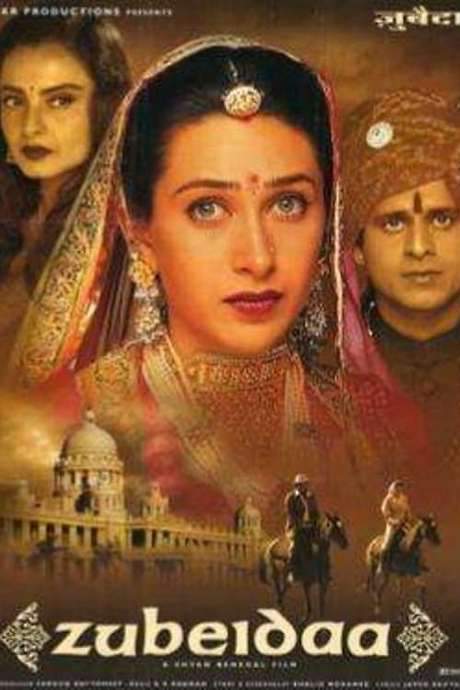


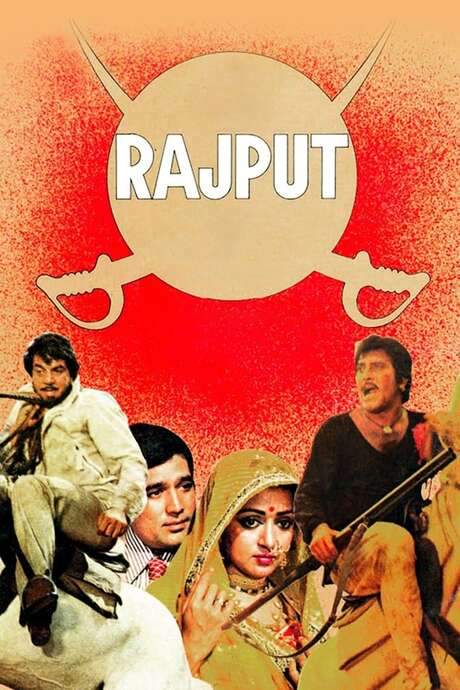



Featured on this page

What's After the Movie?
Not sure whether to stay after the credits? Find out!
Check out our other apps:

SAT Sphere
Build confidence for the Digital SAT.

Mori Atlas
Discover wild places worth protecting.

Luntero
Search smarter for a home in Amsterdam.

Plot Explained
Unravel movie endings and hidden clues.

Pokechamp
Dive into Pokémon data and battle logic.

Driving Theory
Get ready for your European theory test.

Movie Dust
Plan your next cinema trip with ease.

Musemap
Find art and culture as you travel.

Selkobase
Compare credentials before committing.

Local Manual
Turn an unfamiliar country into practical next steps.

Lernavi
Compare school systems before your next move.

GymRoam
Find a workout stop wherever your plans take you.
Explore Our Movie Platform
New Movie Releases (2026)
Famous Movie Actors
Top Film Production Studios
Movie Plot Summaries & Endings
Major Movie Awards & Winners
Best Concert Films & Music Documentaries
Movie Collections and Curated Lists
© 2026 What's After the Movie. All rights reserved.
Privacy Policy